You know the feeling. You submit one request for a roof repair, then your phone starts lighting up, your inbox fills with the same pitch from different businesses, and one person wants to “stop by today” before you've even compared notes. That isn't professional home services working well, it's a broken matching process making noise.
The core issue usually shows up before the first appointment. People think vetting starts after a name lands in their lap, but the smarter move is deciding how the request gets sourced, screened, and handed off in the first place. If you get that part right, the rest gets calmer fast.
Table of Contents
- A Familiar First Call and a Better Way to Think About It
- What Professional Home Services Actually Means
- Service Categories and What They Typically Cost
- The Vetting Checklist That Actually Filters
- Marketplaces Versus Exclusive Matching
- Your Project Timeline From First Search to Final Walkthrough
- Why Businesses Prefer Exclusive Leads
- Pricing, Common Questions, and Your Next Move
A Familiar First Call and a Better Way to Think About It
You fill out one form because you need a roof fixed, an HVAC check, or a bathroom remodel estimate. Then the calls begin. One business rings first, another texts before you've finished dinner, and a third shows up acting like you already agreed to anything.
That chaos is what many associate with professional home services, but it's really a symptom of the sourcing model. The work itself is straightforward enough, roofing, plumbing, electrical, HVAC, restoration, renovation, or financing tied to a project. The mess starts when your request gets sprayed across multiple businesses that all want the same job.
Professional should mean accountable
A professional business isn't just one with a logo and a truck. It's one that can prove licensing, insurance, responsiveness, and follow-through before it ever gets near your property.
Practical rule: judge the match before you judge the workmanship. A clean first call usually comes from a cleaner intake process.
That's why the first decision matters so much. If the platform or referral source is built around a race for the lead, you get a race. If it's built around one verified match, you get a single conversation with someone who already knows the project basics.
For people trying to hire in 2026, that distinction saves time and reduces the usual nonsense. You don't need more names. You need one serious one.
What Professional Home Services Actually Means
Professional home services is the umbrella for skilled work done at or around a residence, plus the adjacent services that support it. That includes routine maintenance, emergency repair, capital improvements, and related financial products like insurance and mortgage or refinance options tied to home projects.
The category is much bigger than many realize. Independent industry research pegs U.S. home services spending at about $700 billion and notes a pre-pandemic growth rate near 5% CAGR, a jump to about 13% CAGR in the first years of COVID-19, and a slowdown between 2022 and 2024. McKinsey says the market could reach about $802 billion by 2030 if growth averages a little above 2% annually after 2024. Other market research projects $842.04 billion in 2026 and $989.22 billion by 2031 at a 3.27% CAGR McKinsey's home services market analysis.
The business base is equally large. Census-based analysis of six core trades counts roughly 387,000 establishments employing about 3.45 million people, with underlying receipts around $785 billion in 2022. Earlier reporting from Angi placed the broader U.S. market at $506.9 billion annually and estimated about 511,345,000 jobs per year, or roughly 16 jobs per second home services market size statistics.
Common categories at a glance
| Category | Typical Projects | Signal You Need a Pro |
|---|---|---|
| Roofing | Leak repair, storm damage, replacement | Shingles, flashing, or decking issues |
| Plumbing | Repairs, fixture installs, line issues | Water pressure problems, leaks, backups |
| Electrical | Panels, outlets, wiring, lighting | Breakers tripping, unsafe fixtures, flickering |
| HVAC | Tune-ups, repairs, full system installs | Uneven temperatures, poor airflow, system failure |
| Landscaping | Cleanup, grading, regular maintenance | Drainage problems, overgrowth, curb appeal work |
| General Remodeling | Kitchens, baths, layout changes | You're changing structure, finish, or function |
The online layer is smaller than the offline economy. Grand View Research estimated the global online on-demand home services market at USD 3.71 billion in 2021 and projected USD 14.7 billion by 2030, a 16.7% CAGR from 2022 to 2030 online on-demand home services market report. That's the piece people interact with on their phones, but it's not the whole industry.
The distinction matters because you're not just choosing a trade. You're choosing how you'll be matched to that trade. One side is a massive, mostly offline service economy. The other is the digital layer that decides whether your request becomes one call or five.
Service Categories and What They Typically Cost
Not every project needs the same kind of pro, and not every quote means the same thing. A roof patch, a pipe replacement, a panel upgrade, and a full remodel live in different worlds, even if people lump them together because they all happen at the house.
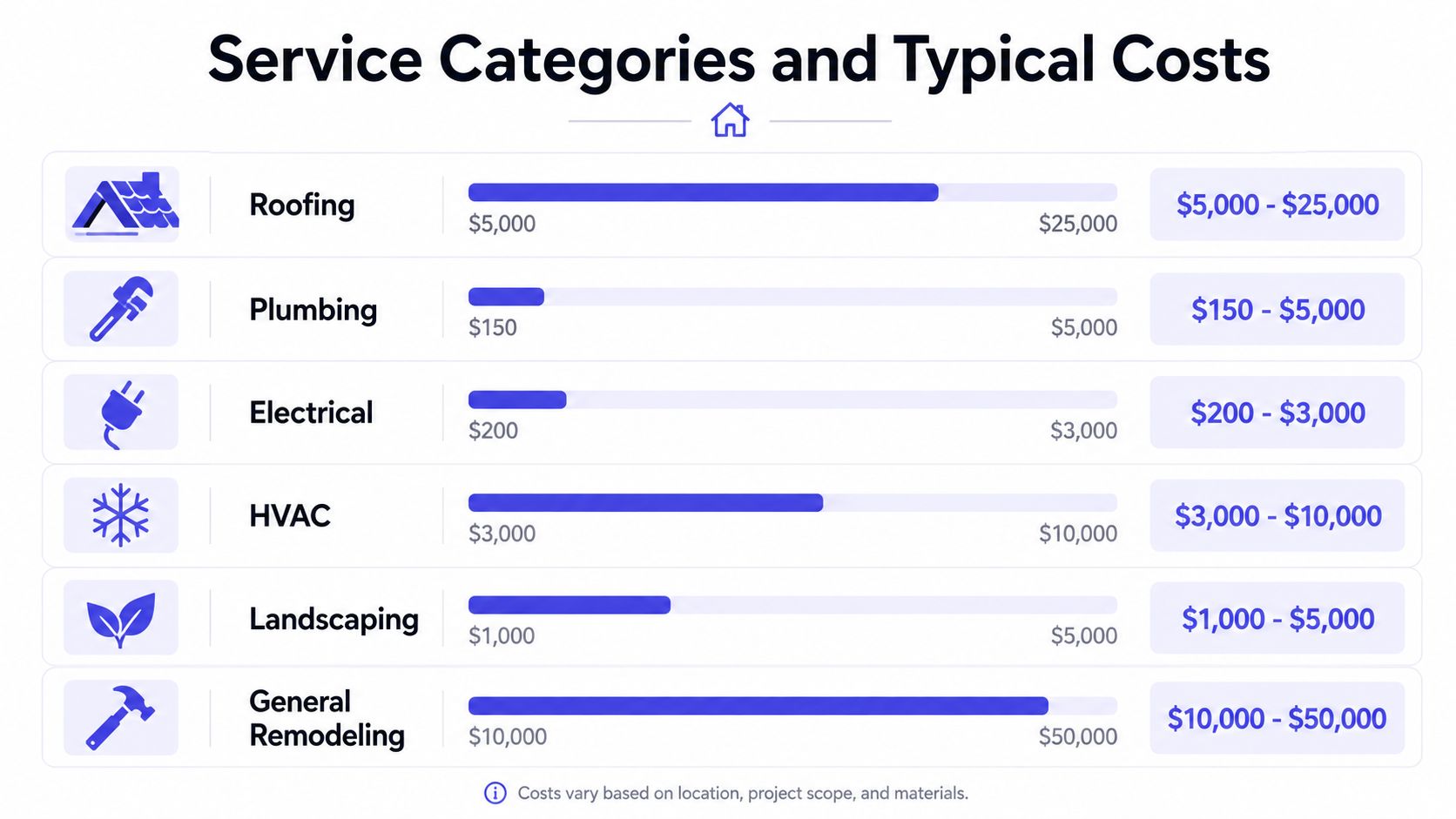
Read the category before you read the quote
Roofing often ranges from a small repair to a full replacement, so the quote depends heavily on what's damaged. HVAC can be a service call, a repair, or a full system install, which is why the number moves so much. Plumbing and electrical are often driven by access, the age of the system, and whether the fix is simple or buried behind walls. Landscaping and general remodeling swing even wider because labor, scope, and finish choices change fast.
The cleanest way to sanity-check a quote is to ask what's included and what's still unknown. Scope, materials, regional labor rates, urgency, and seasonality all move the price.
A job that looks “similar” on paper may not be similar at all. A contractor who has to open walls, replace damaged components, or work around bad access is quoting a different job than someone doing a straight swap.
Practical rule: if the quote sounds neat but the project sounds messy, assume the quote is incomplete.
The rough ranges in the chart are a starting point, not a promise. Use them to spot obvious outliers, then demand a written scope that names the parts, labor, and exclusions. If the business can't explain the number in plain language, don't move forward.
For professional home services, the best quote is the one that tells you what happens if the unexpected shows up. That's the difference between a real estimate and a number designed to get your callback.
The Vetting Checklist That Actually Filters
The screen that matters isn't the one with the most fields. It's the one that strips out the people who can't prove they're allowed to do the work, covered if something goes wrong, and consistent enough to answer like a business.
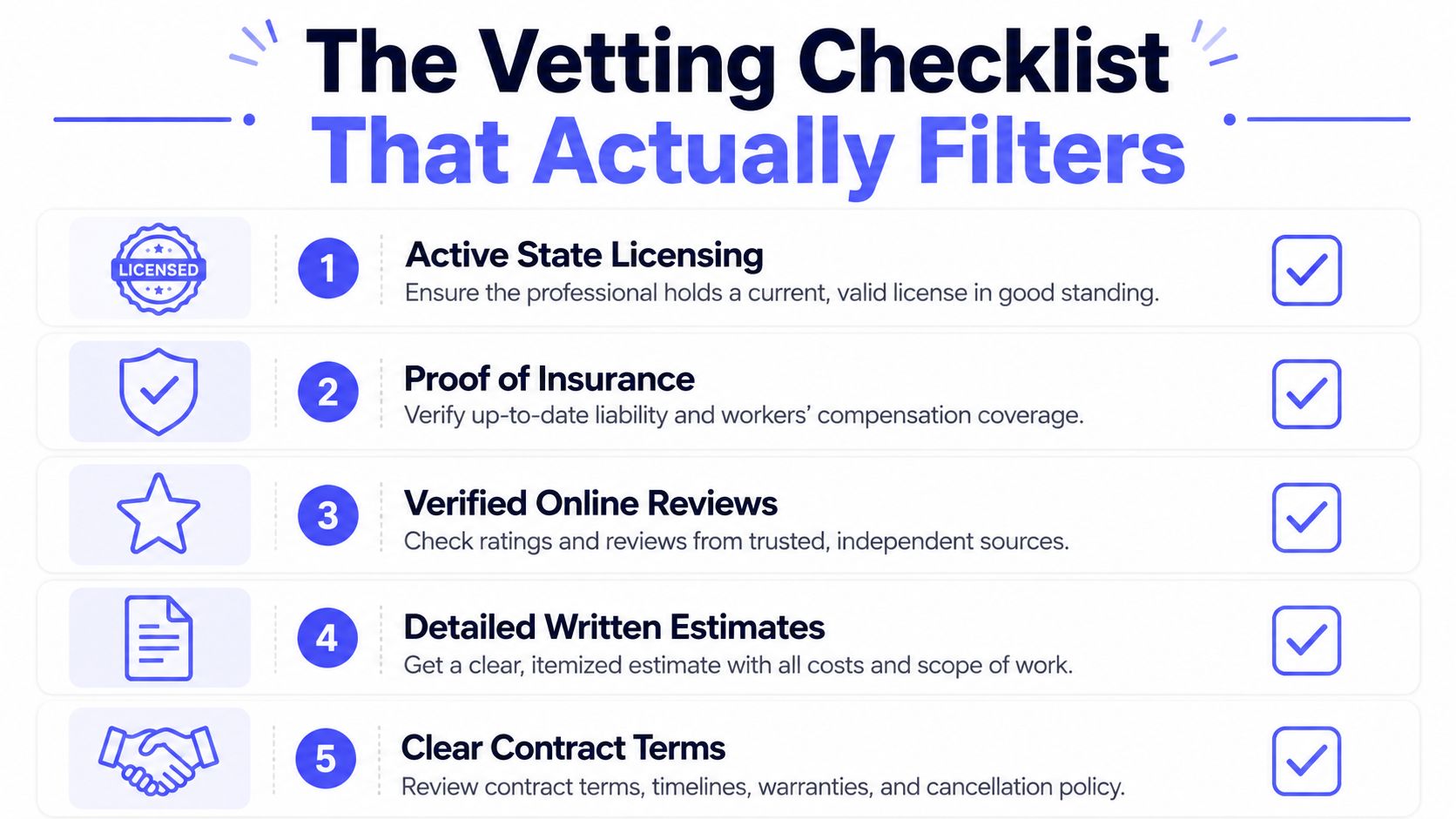
The five checks that actually matter
Active state licensing. Ask for the license number, then verify it on the state board site yourself. If they dodge the number or give you something you can't verify, stop there.
Proof of insurance. Ask for certificates for general liability and, where relevant, workers' comp. A real business can send these without drama.
Verified online reviews. Don't chase perfection. Look for recent review volume and a pattern of steady work, not a handful of old five-star reviews from years ago.
Detailed written estimates. The estimate should show scope, materials, labor, and exclusions. Vague totals are how surprise charges start.
Clear contract terms. Payment timing, warranty language, change orders, and completion expectations should all be in writing before anyone starts.
Practical rule: if the first conversation feels rushed, the paperwork will be worse.
The red flags are easy to spot. Cash-only demands, no physical address, pressure for same-day commitment, and refusal to share license or insurance documents are all reasons to walk. You don't need to debate any of them.
If you want a deeper look at background checks in a contractor context, Handvetted lays out its process in this contractor background check guide. Use that kind of standard as the floor, not the ceiling.
The test is simple. A legit pro makes verification easy, not awkward. If the process feels like pulling teeth before the first visit, expect the same attitude after work starts.
Marketplaces Versus Exclusive Matching
A contractor search goes sideways fast when the first step is wrong. If you hand your request to a lead marketplace, you are buying access to a shared pool, and your details can land in several inboxes at once. Exclusive matching works differently. Your request goes to one vetted pro, and the conversation starts with a real fit instead of a race to reply.
Side by side
| Traditional lead marketplaces | Exclusive matching services |
|---|---|
| Your details get shared with multiple businesses | Your request goes to one vetted pro |
| You get competing pitches | You get one prepared conversation |
| Speed matters more than fit | Fit matters before the first call |
| Inbox spam is common | Communication stays focused |
Why the model changes the experience
Lead marketplaces reward whoever moves first. That creates more noise, more duplicate outreach, and more pressure on you to sort through sales calls that all sound the same. It also muddies accountability, because several businesses may be chasing the same job without a clear owner for follow-through.
Exclusive matching is cleaner from the start. One request, one match, one thread. That makes it easier to keep the process organized, and it gives the pro a reason to show up prepared because they are not fighting three other companies for the same lead.
The practical benefit is simple. You get fewer interruptions, less repeat explanation, and better control over who contacts you. Businesses benefit too, because they spend less time chasing cold competition and more time quoting real work.
A platform like Hand Vetted Co. fits that model. It matches one verified professional to one request, which avoids the usual lead resale mess and keeps the first conversation focused.
The real choice happens before the first call. If you want one serious conversation instead of a stack of pitches, source the request through a single-match process from the beginning.
Your Project Timeline From First Search to Final Walkthrough
A good project feels orderly because somebody built the handoff well. The request is clear, the first call is prepared, the estimate is written, and nobody is improvising details once the job starts.
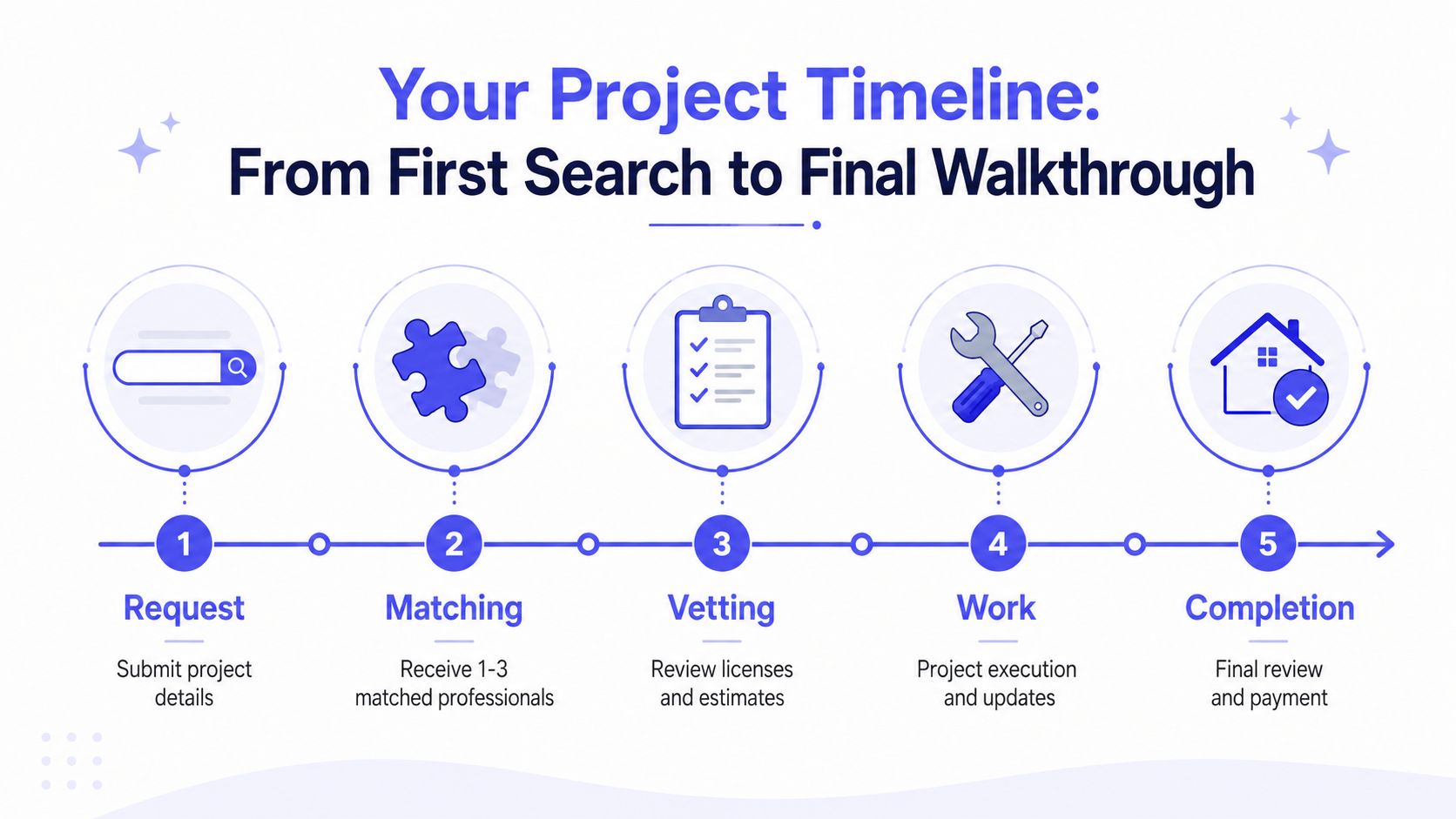
What each phase should look like
Request. You share the category, project type, ZIP code, timing, and budget. If the intake asks for less than that, expect a vague match.
Matching. On an exclusive platform, the match often happens within a short window, usually 24 to 72 hours on the kind of systems that promise direct pairing. The goal is one qualified introduction, not a pile of callbacks.
Vetting. Before any site visit, verify the license, insurance, and terms. A professional should already be ready for that conversation.
Work. Once the scope is approved, the crew should show up with the right tools and the right expectations. Missed calls and vague start dates are usually early warnings, not small annoyances.
Completion. The final walkthrough should confirm what got done, what's still open, and how payment or follow-up is handled. You want closure, not a disappearing act.
A project goes wrong faster when the scope lives in someone's head instead of in writing.
If the first match isn't the right fit, the rematch should be fast and clean. A quality platform doesn't make you restart the whole search from scratch.
A practical planning tool can help too. If you're mapping a remodel or repair, this home renovation project planner is useful because it forces the project into fields that matter before anyone starts talking price.
The best timeline is boring. That's the point. You want each step to reduce uncertainty, not create another round of chasing.
Why Businesses Prefer Exclusive Leads
Shared leads are a brutal game for businesses. Whoever calls fastest wins the first shot, which means the business spends money competing on speed instead of fit, and the customer gets a flood of interruptions before lunch.
Exclusive leads are cleaner. The request comes in pre-screened by category, location, timing, and budget, so the first call is usually more informed and less random. That saves time for the business and usually improves the conversation for the person requesting the work.
Why the model makes sense on the supply side
A licensed firm can show up better in an exclusive model. It's not trying to beat ten other businesses to a phone call. It's trying to give a good estimate, ask the right follow-up questions, and close a job that fits its schedule and capabilities.
Pay-per-lead flexibility matters too. Businesses can test demand without signing themselves into long commitments, which keeps the channel more manageable. That's one reason a small number of warm, exclusive leads can be more useful than a bigger batch of shared ones.
The market also rewards quality when the platform owns the whole relationship. If the system checks licensing, review patterns, and responsiveness up front, unqualified competitors have a harder time cluttering the pipeline.
For businesses looking at roofing, HVAC, or other home service categories, this plumber lead generation page shows the kind of exclusive-request setup that keeps the conversation focused on actual work.
The math is simple. Shared leads create more noise. Exclusive matching creates more intent. If you run a serious business, intent is worth more than volume.
Pricing, Common Questions, and Your Next Move
Price depends on scope, materials, local labor, urgency, and how hard the job is to access. Two quotes for the same project can still land in very different places, and both companies may be legitimate.
How do I confirm a license is active? Ask for the number, then check the state board yourself. If a company dodges that request, stop there and move on.
What if the first match is wrong? A good matching system should replace the match quickly without making you start from zero.
How do payment schedules usually work? They should be written into the contract before work starts, including any deposit, progress payment, or final payment terms.
Does the matching service cost the person requesting work anything? Not always. Some platforms charge the business side for the lead while the requesting side pays nothing.
If you want fewer junk calls and more accountability, use a model that sends your request to one verified pro instead of several. That keeps the process focused and gives you a real shot at a clean first call.
If you want a simpler way to find professional home services without getting buried in competing calls, Hand Vetted Co. matches your request with one verified professional and keeps the process exclusive. Use the matching model that filters before the first phone call.