A burst pipe doesn't wait for a convenient time. One minute the floor is dry, the next you're staring at soaked drywall, a running ceiling stain, and a question you didn't plan to answer today, who do you call first, and what are they supposed to do. A restoration company is the crew that comes in to stop the damage, clean up the mess, remove unsafe materials, dry what's wet, and get the building back to its pre-loss condition after water, fire, smoke, mold, storm, or sewage damage, as outlined by the Restoration Industry Association's definition of restoration work (RA FAQ PDF).
The part that confuses people is the boundary. Restoration is loss recovery, not remodeling. A restoration firm stabilizes the property and remediates damage, while a general contractor usually takes over once the space is dry, clean, and ready for rebuilding. Hand Vetted Co. matches people with a single verified professional for restoration and other home projects, but the basic idea stays the same no matter who you call, first stop the active damage, then figure out who handles the rebuild.
Table of Contents
- What a Restoration Company Actually Does
- The Core Services You Can Expect
- How the Restoration Process Unfolds Step by Step
- How Restoration Companies Work With Your Insurance Claim
- What Drives the Cost of a Restoration Job
- Where Restoration Ends and Rebuilding Begins
- How to Choose a Restoration Company You Can Trust
What a Restoration Company Actually Does
A burst pipe in the ceiling is a good example of why this trade exists. You do not need someone to redesign the room, and you do not need a painter first. You need a company that can inspect the damage, stop the spread of water, remove wet materials, dry the structure, and document what happened so the claim can move forward.
That is the plain-English answer to what does a restoration company do. It handles loss recovery after disaster events, not planned upgrades. Industry guidance describes restoration as a multiphase response, starting with assessment and containment, then disposal of unsalvageable materials, structural repair, decontamination, air filtration, and documentation for insurance claims. As summarized in restoration FAQs, the work begins with stabilizing the property and ends with proof of what was done so everyone involved can track the loss correctly (RA FAQ PDF).
The job is emergency mitigation first
A restoration company acts like an emergency-response contractor for buildings. Industry explanations describe firms that arrive quickly, extract water, remove debris, dry structures, and manage claim documentation, often with 24/7 emergency response because water, fire, and mold losses do not wait for office hours (Upper Restoration). That speed matters because the goal is to stop active damage before it turns into something harder to fix.
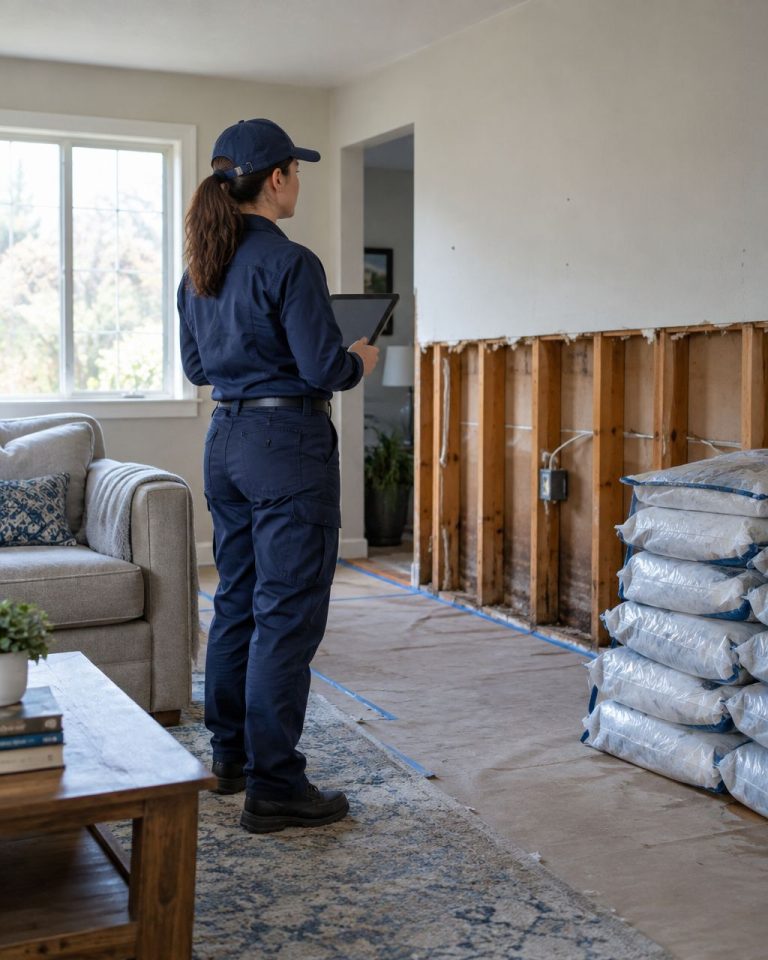
A flooded hallway offers a simple example. The first crew on site is usually there to remove standing water, protect undamaged rooms, and make the building safe enough for the next round of work. If they leave wet drywall, soaked insulation, or contaminated debris in place, the problem can keep spreading through the structure.
Practical rule: if the damage is still moving, leaking, smelling, or spreading, you are in restoration territory, not remodeling territory.
The job is not the same as a remodel
A general contractor usually enters after the structure is stable. A restoration company may remove damaged drywall, extract water, clean soot, or contain mold, but it is not automatically the crew that installs new cabinets, finishes trim, or rewires a room. That distinction matters because restoration focuses on repair and remediation, while rebuilding focuses on reconstruction and finishing work (Summit Reconstruction FAQ).
If you are standing in a damaged room and wondering who should arrive first, start with the question of safety. Is the leak stopped, is the air safe to breathe, and is the wet material being removed before more harm sets in? If those answers are still unclear, the restoration company is the right first call. If the building is already dry and stable, a contractor may be the next step.
The Core Services You Can Expect
A restoration company should be able to sort your damage into a few clear service lines. The exact mix depends on the loss, but the categories stay fairly consistent across the industry: water, fire and smoke, mold, storm or board-up, and biohazard or sewage cleanup. In practice, that means tasks such as extraction, drying, deodorization, containment, removal of damaged materials, emergency board-ups, roof tarping, and repairs that bring a building back to a safe, usable condition (Rainbow Restoration).
Water extraction and structural drying
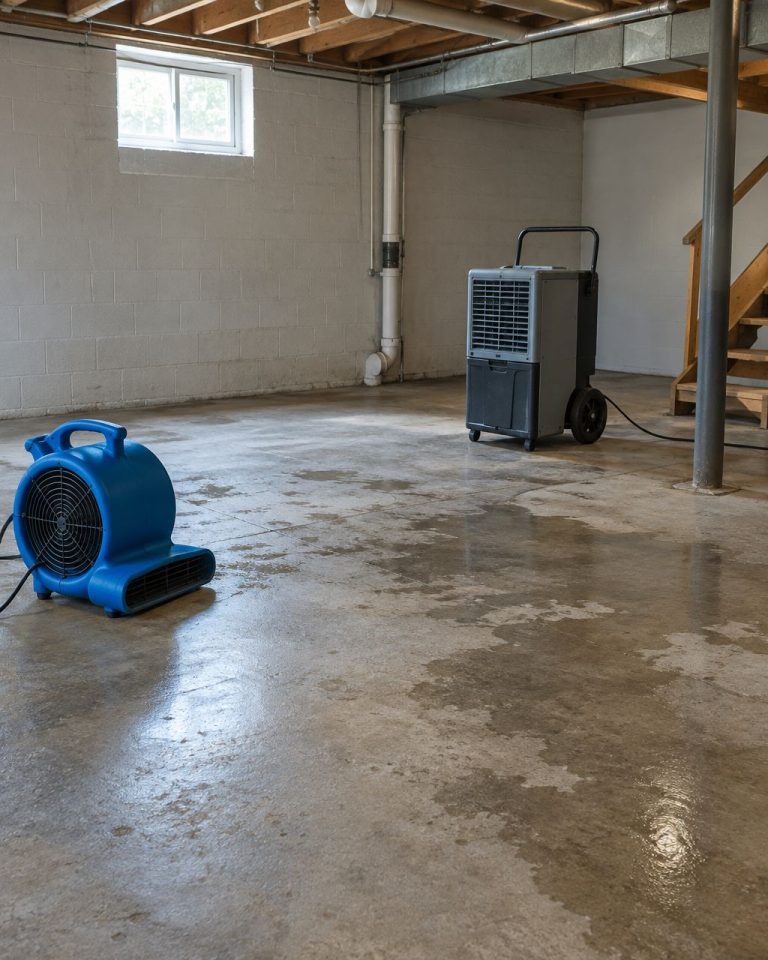
This is the service that comes to mind first. If a basement has standing water, crews use extraction equipment, moisture detection, thermal imaging, air movers, dehumidifiers, and ongoing moisture readings to make sure hidden water is not trapped inside drywall, insulation, subfloors, or framing (Tidal Restoration). Water on the floor can be gone quickly, but the job is still open until the material itself is dry enough to stop further damage.
A useful way to read the scope is through the water restoration steps used on a real job, starting with inspection and ending with verification of dry materials. If that sounds mechanical, that is the point. Drying is a controlled process, not a guessing contest. Hidden moisture can stay in place after the surface looks fine, so the crew has to keep checking what the eye cannot see (Hand Vetted).
Fire and smoke cleanup
After a kitchen fire or a furnace puff-back, the problem is not limited to burnt items. Soot moves through the space, smoke odor lingers, and surfaces can stay contaminated long after the flames are out. Restoration crews clean soot, remove damaged drywall and flooring, and work on odor removal so the space can be used again (RA FAQ PDF).
The work often starts with the dirtiest layer first, because soot behaves like fine dust mixed with grease. If that residue is left behind, it can stain again or keep smelling even after the obvious fire damage is gone.
Mold containment and remediation
Mold work starts with containment. The goal is to keep spores and disturbed material from spreading while damaged areas are removed and cleaned. A company handling mold should be focused on containment and remediation, not just wiping visible growth and hoping it does not come back (Americon Restoration).
That distinction matters because mold is rarely a surface-only problem. If the source of moisture is still present, the patch can look better for a while and still fail later.
Storm, board-up, and biohazard work
Storm damage often means securing openings, tarping roofs, and stabilizing the building before rain or debris creates more problems. Sewage backups and other biohazard situations call for safe removal and decontamination, not ordinary janitorial service. The common thread is loss control, not cosmetic cleanup (Rainbow Restoration).
If a company cannot explain which service line fits your damage, slow down and ask more questions.
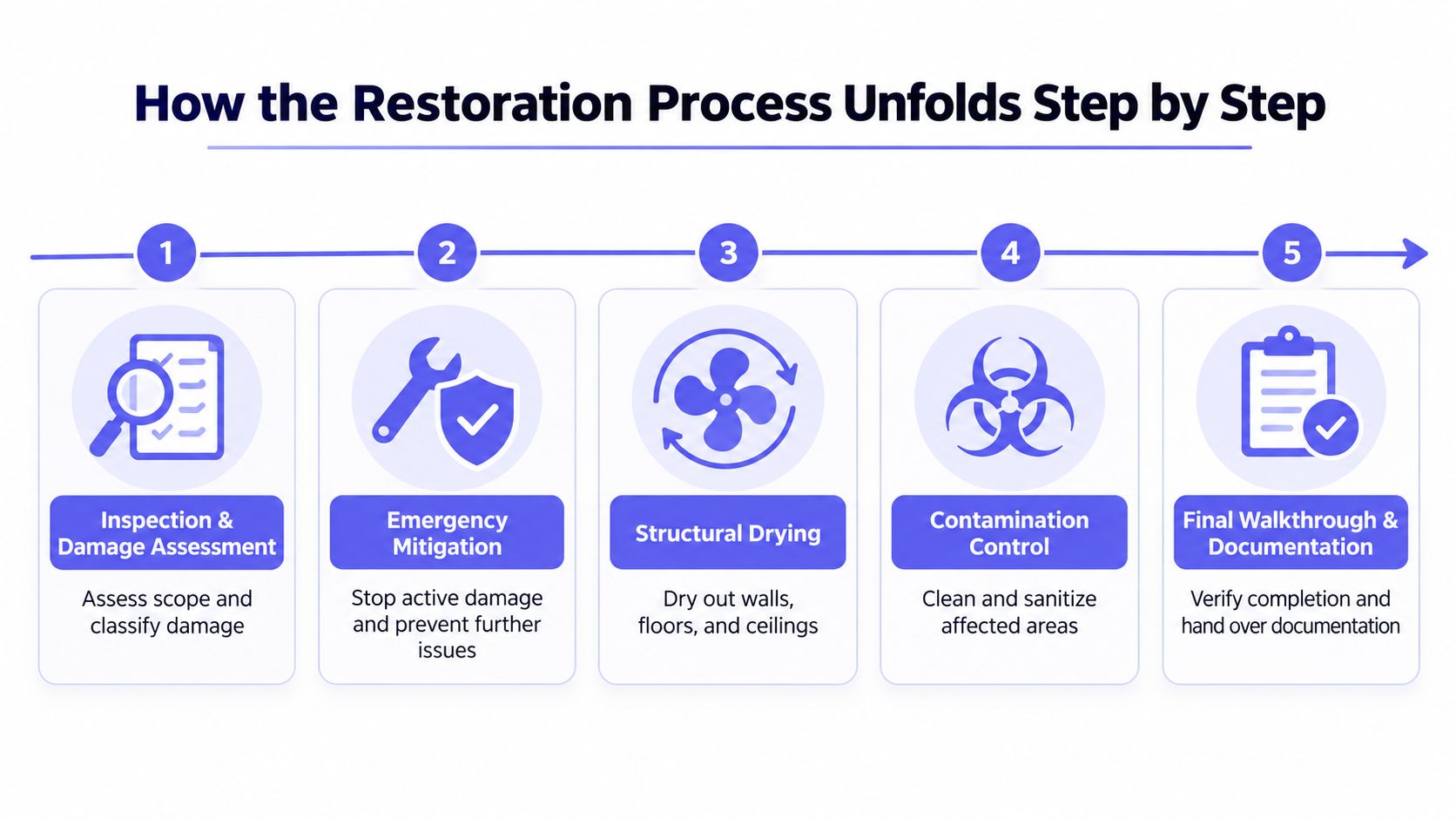
How the Restoration Process Unfolds Step by Step
A homeowner usually sees chaos first, water on the floor, soot on the walls, a smell that does not make sense yet. A restoration company starts by sorting that mess into separate jobs: stop the spread, remove what cannot be saved, dry what can be saved, then leave the rebuilding to the right trade. That split matters because mitigation and reconstruction are not the same thing.
Most reputable restoration jobs still follow a predictable order, even when the scene feels unsettled. Many firms offer 24/7 emergency response, because the first hours after a loss are often the easiest time to limit hidden damage. The goal is not speed for its own sake, it is to keep wet materials, smoke residue, or contamination from settling deeper into the structure (Upper Restoration).
First call and inspection
The process usually begins with a call and a walk-through. Crews look for what is wet, what is contaminated, what can stay, and what has to be removed. If you have ever watched a doctor triage a room full of patients, the idea is similar, the first job is to decide what needs urgent attention and what can wait.
That early inspection sets the scope of the job. A small amount of water in one room may stay limited, while water that has reached subflooring, insulation, or wall cavities often means more demolition. A clear assessment also helps the company explain what belongs to mitigation and what belongs to later repair.
Emergency mitigation and drying
Once the damage is identified, the crew moves into mitigation. That means stopping the active loss, extracting water, removing unsalvageable materials, and setting drying equipment in place. In a water-loss job, technicians do not rely on the surface feeling dry, they check moisture readings over time because hidden water can remain in materials after the visible mess is gone (Tidal Restoration).
A good reference point is the step-by-step water damage restoration process, because the order matters more than people expect. Drying is a controlled process, like bringing a room back to balance after a spill rather than just wiping the top layer. If the crew skips monitoring, materials can look fine while moisture stays trapped inside.
Contamination control and clearance
Fire residue, mold, and sewage each call for controlled cleanup. That phase can include containment, air filtration, and decontamination before the company clears the area for the next trade. If dust, spores, or residue spread during cleanup, the job becomes harder to close out cleanly.
For that reason, a restoration crew may treat the affected area like a work zone rather than an open room. They may isolate the space, remove contaminated materials in stages, and check the area before handing it back. That is the difference between cleaning a surface and stabilizing a loss.
Reconstruction or handoff
After the structure is dry and safe, the work may shift to repair or rebuilding. Some restoration companies handle that part in-house if they are licensed for it. Others hand the job to a general contractor or specialty trade for drywall, flooring, cabinetry, or finishing work.
That handoff is where the line between restoration and rebuilding becomes clear. Restoration companies stabilize the loss and prepare the property for recovery. Rebuilding starts after the damage has been contained, cleaned, and verified as safe to work in.
A reasonable restoration timeline should feel methodical, not rushed. Fast response matters, but clean documentation and verified drying matter more.
How Restoration Companies Work With Your Insurance Claim
A water heater fails on a Friday night, the hallway carpet is soaked, and you are already wondering who pays for what. That is usually the point where the restoration company and the insurance claim start working together. The crew is there to document the loss, limit further damage, and give the carrier a clear record of what happened, while the claim side determines what the policy may cover.
Insurance paperwork is part of the job because restoration work creates evidence. Crews often document moisture logs, photo inventories, equipment placement, and scope-of-work estimates so the carrier can review what was damaged and what had to be done. Industry guidance also treats claim documentation as part of the restoration process itself.
What the restoration company usually documents
The file should show what was affected, when equipment was placed, and how the job progressed. Moisture readings matter because they show why drying stayed in place. Photo records matter because they preserve the condition of the property before items are removed or disposed of.
A good file answers the same questions an adjuster would ask: what was wet, what was moved, and what was done to stop more damage. If the job includes demolition, the notes should show why that step was needed. If the crew keeps equipment in place for several days, the record should show the checks that supported that decision.
What you should keep
Keep damaged items until the adjuster has seen them, unless the restoration crew says a material is unsafe and must go. Keep texts, emails, invoices, and any written scope. If something is discussed by phone and it matters to cost or timing, ask for it in writing.
This can feel tedious in the middle of a loss, but it keeps the claim from turning into a guessing game. A broken cabinet door, a soaked section of drywall, or a ruined rug may look obvious in the moment, then become harder to prove after cleanup starts. If you are unsure what your policy might pay for, a plain-language guide to homeowners insurance coverage can help you sort the claim side from the cleanup side.
Preferred vendor or independent company
Some insurers work through preferred vendor networks. Others allow an independent restoration company to perform the work and bill according to the claim. Either path can lead to payment, but the paperwork has to line up with the loss, the scope, and the insurer's review.
The setup matters less than the record. If the restoration company and the adjuster agree on the scope, the claim usually moves with fewer delays. If the scope changes, the file needs to show why.
A simple question helps here. If the crew discovers hidden damage behind a wall or under flooring, is that change written down before the work moves ahead? If not, the claim file can get messy fast.
Hand Vetted Co. also has a plain-language overview of homeowners insurance coverage that can help you understand the claim side without getting buried in jargon.
What Drives the Cost of a Restoration Job
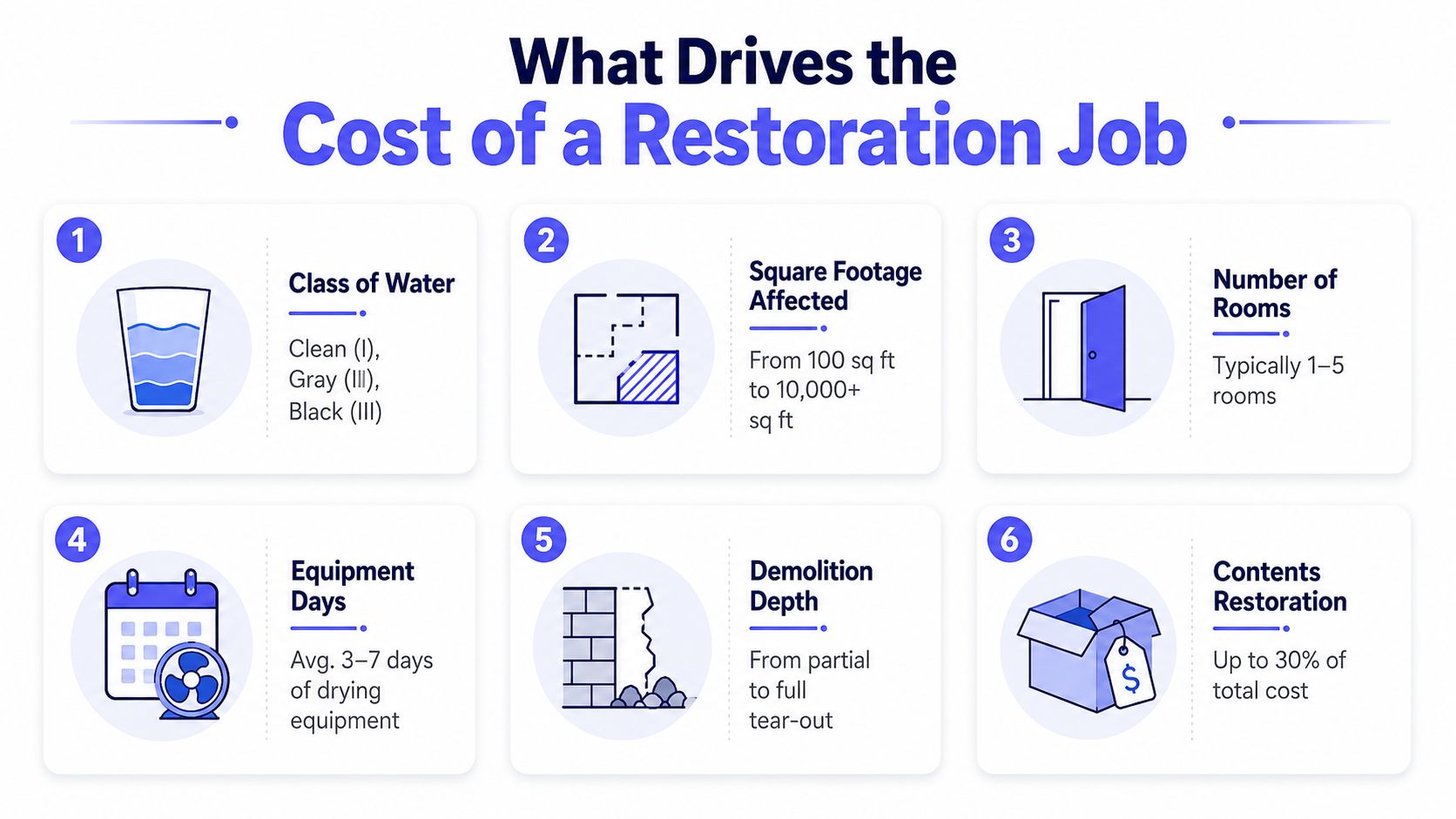
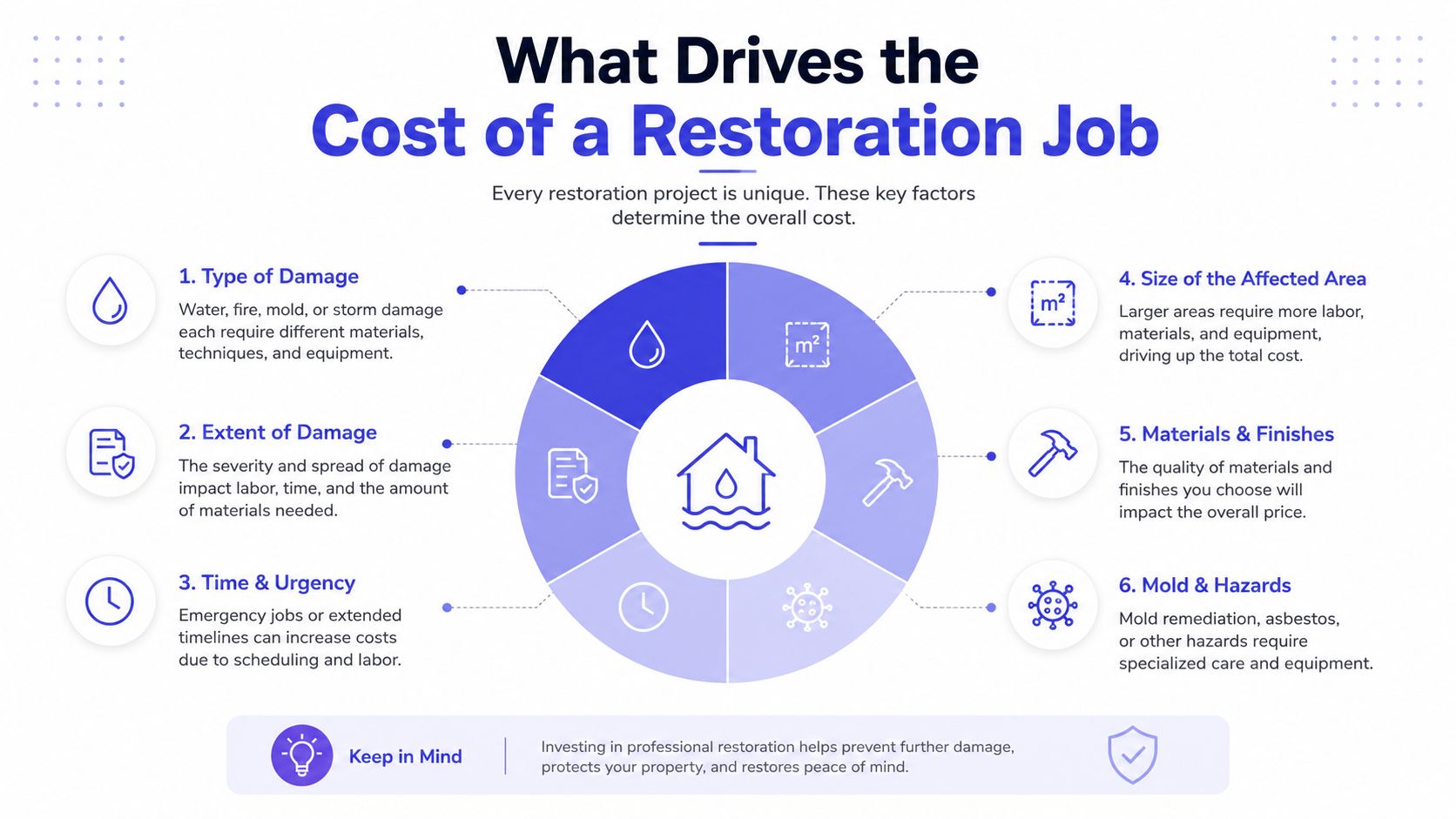
Quotes vary because restoration jobs aren't all the same kind of labor. The main drivers are the class of water, the size of the affected area, the number of rooms, how many days equipment has to run, how deep demolition goes, and whether contents need pack-out or storage. For water work, you'll sometimes see clean-water extraction and drying discussed in the range of $3 to $7 per square foot, while sewage or fire jobs generally cost more because the cleanup is more complex and more hazardous.
Why two jobs that look similar can price differently
A small leak in one room is not the same as water through multiple floors. A clean-water loss can often be dried with less demolition, while contaminated water or fire residue can require more disposal and decontamination. That's why restoration estimates are built from the actual scope, not from a one-size-fits-all menu.
Why equipment days matter
Drying is not instant. Fans and dehumidifiers may need to stay in place for multiple days, with moisture checks repeated until materials return to safe conditions. The longer the equipment stays, the more labor and monitoring the job requires.
Why the lowest bid can be risky
A low price can hide a shallow scope. It may leave out demolition, contents handling, or follow-up moisture checks. It can also create friction later if the crew has to return and charge for work that should have been included from the start.
If mold is part of the picture, this mold testing cost guide is a helpful way to understand one piece of the larger bill.
Where Restoration Ends and Rebuilding Begins
A burst pipe in the hallway, a roof leak above the kitchen, or smoke damage in a bedroom all create the same question once the cleanup is underway, who handles the next phase? A restoration company usually focuses on stopping active damage, drying, cleaning, removing unsalvageable materials, and documenting what the loss looked like before work started. Once the space is stable, the rebuild side often shifts to carpentry, electrical work, plumbing, HVAC, and other trade work that may sit with a general contractor or a separately licensed specialist.
A simple example
A water loss may be considered under control when the studs are dry, the damaged drywall has been removed, and the area is safe to enter again. The room is still far from finished. Someone still needs to replace drywall, paint, reinstall flooring, and coordinate any trade work tied to the original damage. The cleanup crew may also finish moisture checks and records that help show the area has returned to safe conditions.
Why the boundary matters
The handoff between mitigation and rebuild matters because unclear scope slows everything down. Two companies can both assume the other side is handling a task, or both may bill for the same piece of work. That can create duplicate charges, delays, and extra questions for the insurer. A clean handoff keeps the job from turning into a chain of small misunderstandings.
The question to ask before you sign
Ask one direct question, where does your work stop, and who handles the rebuild. A clear company should be able to explain which parts it mitigates, which parts it repairs, and which parts it passes to another contractor. If the answer stays vague, the scope probably is too. The best time to sort that out is before the first piece of drywall comes down.
That distinction protects you more than a polished sales pitch ever will.
How to Choose a Restoration Company You Can Trust
Start with the basics. Confirm state licensing, ask whether the technicians hold IICRC certification, verify insurance and workers' compensation, and check recent local references. A credible company should also give you a written scope that spells out what it will do, instead of a vague promise to “take care of everything.”
Green flags and red flags
| Green Flag | Red Flag |
|---|---|
| Clear written scope and timeline | Vague contract language |
| Local office and real contact info | Storm-chasing or door-to-door pressure |
| Proof of licensing and insurance | Refusal to show credentials |
| Willingness to explain mitigation versus rebuild | Push to sign before you understand the scope |
| Direct answers about drying and documentation | No clear plan for moisture checks or claim records |
Questions worth asking on the first call
- Who handles the rebuild, if it's needed
- What does your drying timeline usually look like
- How do you document moisture readings and equipment placement
- Do you bill the carrier directly, or do I pay and submit
- What parts of the job are outside your scope
Watch for warning signs that show up after a storm. High-pressure solicitation, large upfront cash demands, and pressure to sign an assignment of benefits before you've read it are all reasons to slow down. Reliable restoration companies do not need to rush you into a decision.
Ask how they separate drying from rebuilding. A restoration company should be able to explain where mitigation stops, where repairs begin, and which pieces are handled by another contractor if the job needs that extra step. If the answer stays vague, the scope is probably vague too.
If you want to compare verified options without getting flooded by sales calls, Hand Vetted Co. matches people with one verified professional at a time, so the request stays exclusive and the outreach is clean. You can review its matching process, standards, and FAQ before you decide who to call.
If your property is damaged right now, focus on three things, stop the active loss, document what you can, and call a company that can explain mitigation versus rebuild in plain language. Hand Vetted Co. helps you find a single verified professional for restoration work, so you are not juggling multiple pitches while you are trying to make a clear decision. Visit Hand Vetted Co. to get matched with a vetted pro when you are ready.