
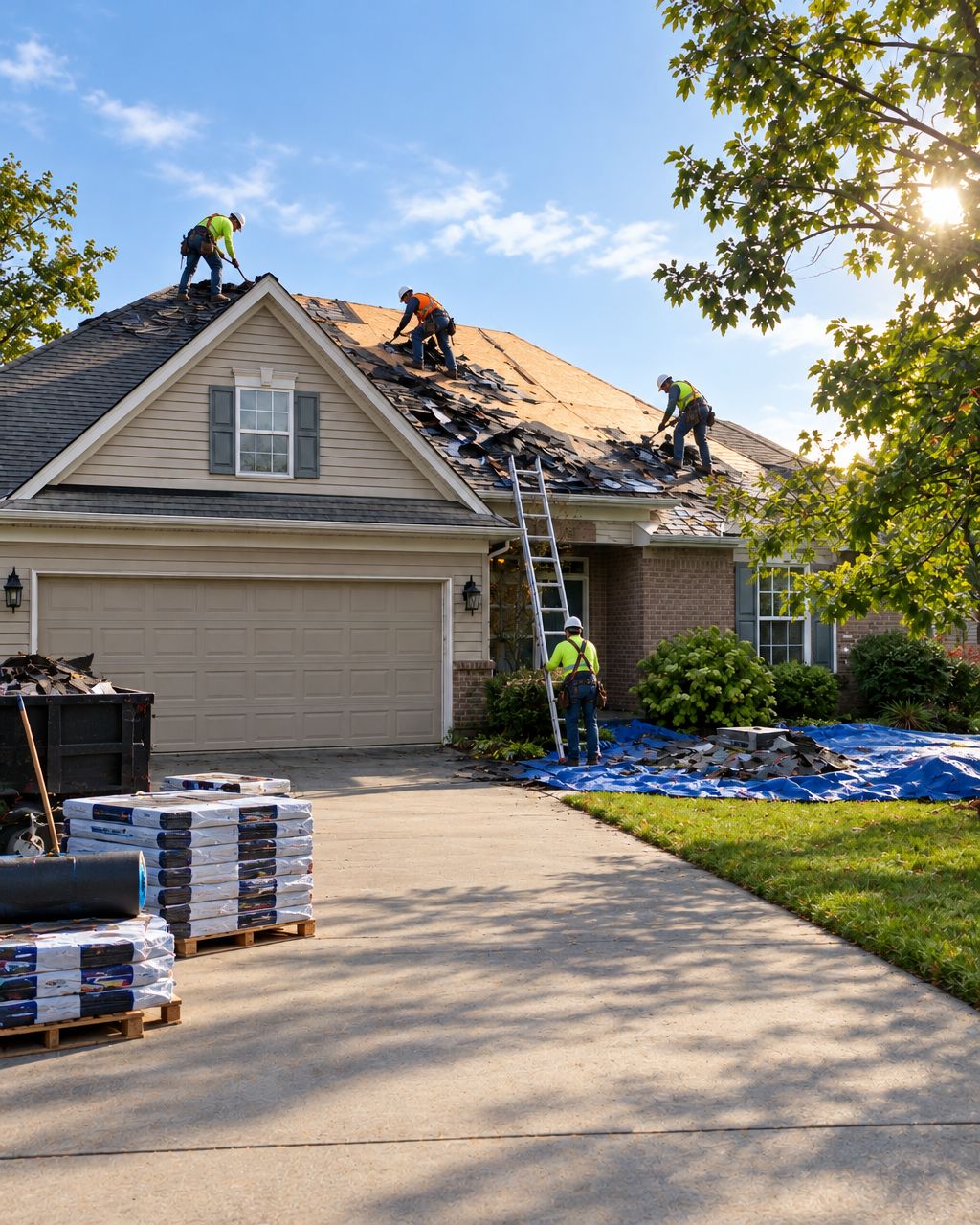
Storm damage repair takes 1 to 3 days for the hands-on roof work on a typical home, but 2 to 6 weeks from first call to finished repair once scheduling, insurance and permits are counted. This page walks through the 2026 storm repair timeline phase by phase — and shows where the weeks actually go.
- Roof work itself takes 1-3 days for most asphalt roofs; complex roofs 3-5+.
- The full repair project runs 2-6 weeks; insurance claims add 30-60 days when filed.
- After major storms, adjuster backlogs stretch claims to 8-12 weeks or more.
- Dry-in within 24-48 hours or mold turns a repair into restoration work.
How long does the actual repair take?
The work on the roof is the fastest part. A typical asphalt shingle roof repair or replacement takes 1 to 3 days of active work, and many straightforward single-family roofs are finished in a single day when weather cooperates. Larger, steeper or multi-facet roofs run 3 to 5 days or more, and premium materials like slate or metal add time.
Two things stretch the on-roof days:
- Decking surprises — damaged sheathing found under the shingles adds replacement time after tear-off.
- Weather — a crew cannot shingle into rain or high wind; a storm week can push a one-day job across several calendar days.
The full timeline: from storm to finished repair
| Phase | Typical duration | Notes |
|---|---|---|
| Emergency tarping / dry-in | Same day to 2 days | Do this before anything else |
| Inspection and estimate | 2–7 days | One professional inspection, photos, scope |
| Scheduling | 1–5 weeks | Busy season and post-storm demand push this out |
| Permits and materials | 3–14 days | Runs in parallel; long-lead materials add time |
| Repair work on the roof | 1–3 days | 3–5+ for complex roofs |
| Final walkthrough and cleanup | Same day | Punch-list items within days |
Add the phases up and a typical storm repair runs 2 to 6 weeks from first call to finished work. The variable that dominates is scheduling: after a regional hail or wind event, every roof in the neighborhood enters the same queue.
When insurance is involved, add 30 to 60 days
A straightforward homeowners claim runs 30 to 60 days from filing to final payment. The phases:
- File and get a claim number — day 1 to 3.
- Adjuster inspection — 7 to 21 days, longer after catastrophic storms when adjuster backlogs build.
- Estimate and decision — 1 to 2 weeks after inspection.
- Payment — 1 to 3 weeks after determination.
A supplement — when hidden damage discovered during repair adds to the approved scope — adds 2 to 4 weeks. Complex or disputed claims stretch to 90 days or more. After a major storm affecting many homes, insurers routinely quote 8 to 12 weeks for the full cycle.
The homeowners insurance checklist for storm-prone NC homes covers the policy terms — wind and hail deductibles, roof age settlement schedules — that determine how much of the timeline is paperwork versus construction. If the insurer's estimate and the contractor's scope disagree, a public adjuster can re-open the number rather than the schedule.
Average wind and hail claim payouts were $14,747 from 2019 to 2023, per the Insurance Information Institute — which is why most legitimate storm repairs go through the claim, not around it.
Why waiting matters: the 24-48 hour rule
The one deadline in the whole timeline is not the insurer's. Wet materials — carpet, drywall, insulation, subfloor — need drying within 24 to 48 hours before mold starts. If water got past the roof into the attic or living spaces, mitigation starts days before the roof repair does.
That sequencing matters for the budget as much as the calendar. A proper dry-out during week one is restoration work; the same moisture ignored becomes mold remediation costing $1,200 to $3,750 or more. The storm damage restoration hiring guide covers what legitimate drying work should look like, and the basement flood restoration guide covers the same standards for below-grade water.
What slows storm repairs down
- Adjuster backlogs after a catastrophic event — the single biggest delay.
- Contractor queues — post-storm demand outstrips permanent local crews; imported storm-chaser crews add their own risks (see the warranty comparison guide on separating permanent crews from temporary ones).
- Long-lead materials — matching an older or discontinued shingle can take weeks.
- Permits — most jurisdictions require them for structural roof work; scheduling the inspection adds days.
- Scope changes — decking or interior damage priced as supplements re-enters the approval queue.
How to keep the timeline short
- Tarp and dry first. Emergency mitigation runs in parallel with everything else; never wait on the insurer to stop active water.
- File the claim within days. The clock to adjuster inspection starts at filing.
- Photograph everything before temporary repairs. Documentation prevents the follow-up requests that stretch claims.
- Book one professional inspection early — the same documentation the claim needs speeds the contractor's estimate too.
- Get the schedule in writing. Start date, phase durations and what happens when weather interrupts.
FAQ
How long does storm damage roof repair take?
The roof work itself takes 1-3 days for a typical asphalt shingle roof, and 3-5+ days for large or complex roofs. The full project from first call to finished repair runs 2-6 weeks.
How long does an insurance claim for storm damage take?
A straightforward claim runs 30-60 days from filing to payment. After major storms with adjuster backlogs, expect 8-12 weeks or more.
Why does roof repair scheduling take weeks after a storm?
Post-storm demand outstrips local crew capacity. Every damaged roof in the region enters the same queue, and permanent crews book out fastest.
How quickly should water damage be dried after a storm?
Within 24-48 hours. Wet materials start growing mold after that window, which turns a roof repair into restoration and remediation work.
Can repairs start before the insurance claim is approved?
Emergency mitigation like tarping and drying should start immediately and is usually reimbursable when documented. Permanent repair work timing depends on the policy and adjuster findings.
What adds the most delay to a storm repair?
Adjuster backlogs after major storms, followed by long-lead materials, permits and scope supplements found during tear-off.
One last thing
The timeline compresses around one habit: documentation. Photos on day one, a professional scope in writing, receipts for every emergency measure — the homeowners who move fastest through the claim are the ones who can prove everything before anyone asks.
A verified roofing professional gives a written schedule, not a vague window. Homeowners can get matched with one licensed, background-checked pro through Handvetted — free, with no spam and no shared lists.