You've got a stain on the ceiling, a few shingles in the yard, or a leak that shows up every hard rain. That's the moment roof repair vs replacement stops being a home maintenance question and turns into a money decision.
The initial question posed is often the wrong one: “What's the cheapest fix?” The better question is, “What choice leaves me in the strongest position a year from now if this roof leaks again, a storm hits, or my insurer starts treating this roof like a liability?”
A roof problem is rarely just about shingles. It's about age, spread of damage, decking, repeat repair risk, and whether your insurance still sees the roof as worth covering at full value. If you miss that last part, you can make the “budget-friendly” choice today and still lose later.
Table of Contents
- That Stain on the Ceiling Is Just the Beginning
- Start with an Honest Roof Inspection
- A Head-to-Head Comparison of Your Two Options
- When to Choose Repair and Avoid Overspending
- The Point of No Return When Replacement Is the Only Answer
- Navigating Costs Insurance and Financing
- Your Decision Checklist and Finding a Pro You Can Trust
That Stain on the Ceiling Is Just the Beginning
A ceiling stain fools people. It looks small, so they treat it like a small problem.
Then they call someone out, hear “you might just need a patch,” and grab onto that because it feels manageable. I get it. A repair sounds sane. A replacement sounds painful. But the stain is only evidence of where water showed up, not where the failure started, and definitely not how far it's spread.
I've seen roofs leak around flashing near a chimney, travel along framing, and show up ten feet away in a hallway ceiling. I've also seen people patch the visible leak twice, then pay for drywall, insulation, and another service call because the underlying problem was a worn-out roof system.
Don't make a roof decision based on the spot you can see. Make it based on the system you can't.
If you're already dealing with water inside, speed matters. Interior damage can move from nuisance to restoration work fast. If that part of the problem is active, damage restoration help may need to happen alongside the roofing decision.
The calm way through this is simple. Figure out the roof's age. Figure out how much of it is affected. Figure out whether the issue is isolated or systemic. Then decide whether you're fixing a problem or delaying a replacement you'll have to pay for anyway.
Start with an Honest Roof Inspection
You can't judge roof repair vs replacement from the driveway alone, but you can gather enough useful information to avoid getting talked into the wrong job.
Start from the ground. Stay off the roof unless you're trained and equipped for it. A lot of roofs get damaged by well-meaning people trying to “just take a quick look.”
What you can check safely
Use binoculars if you have them. Walk the perimeter slowly and look for patterns, not just one obvious defect.
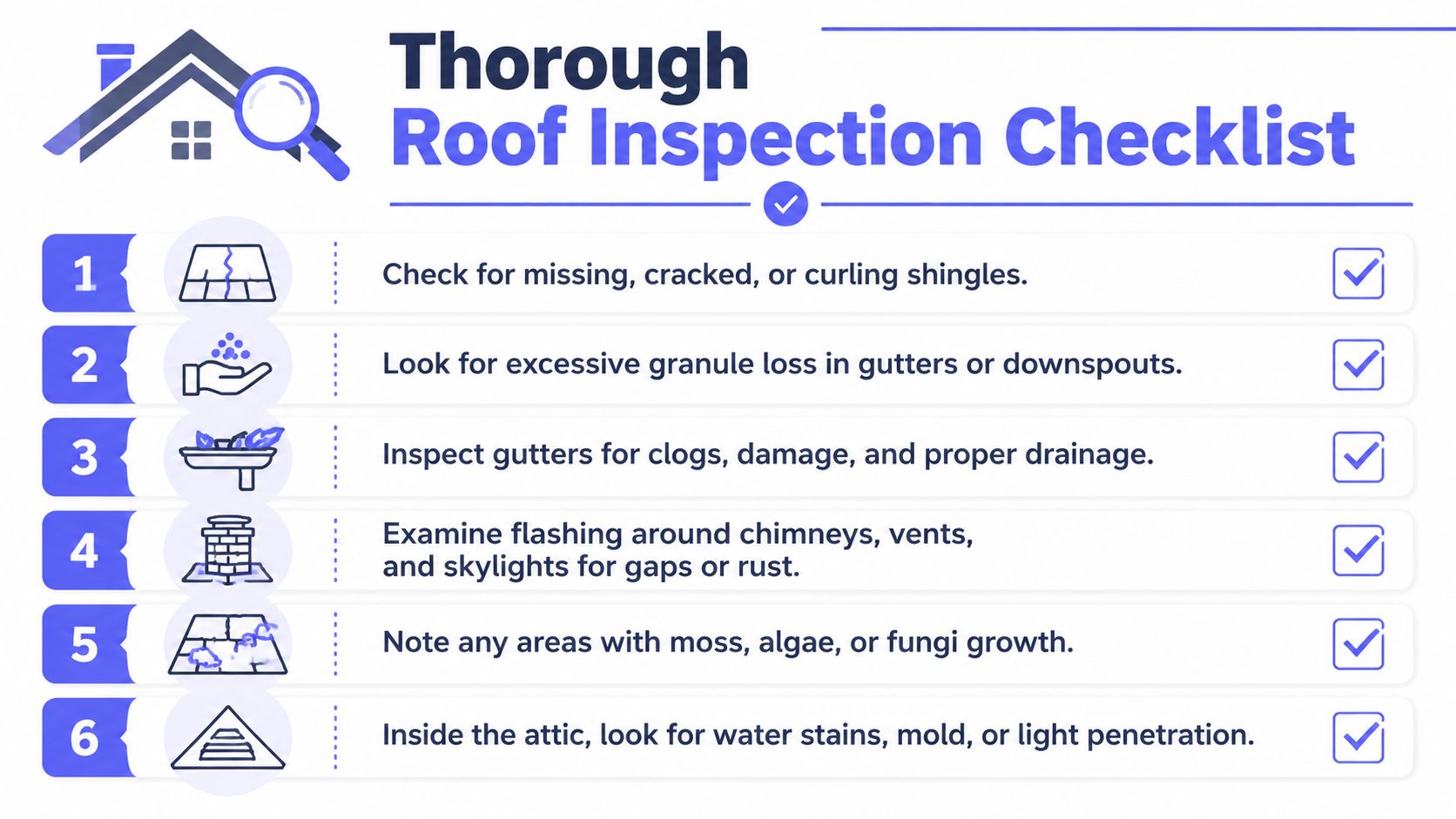
Here's what's worth noting before you call anyone:
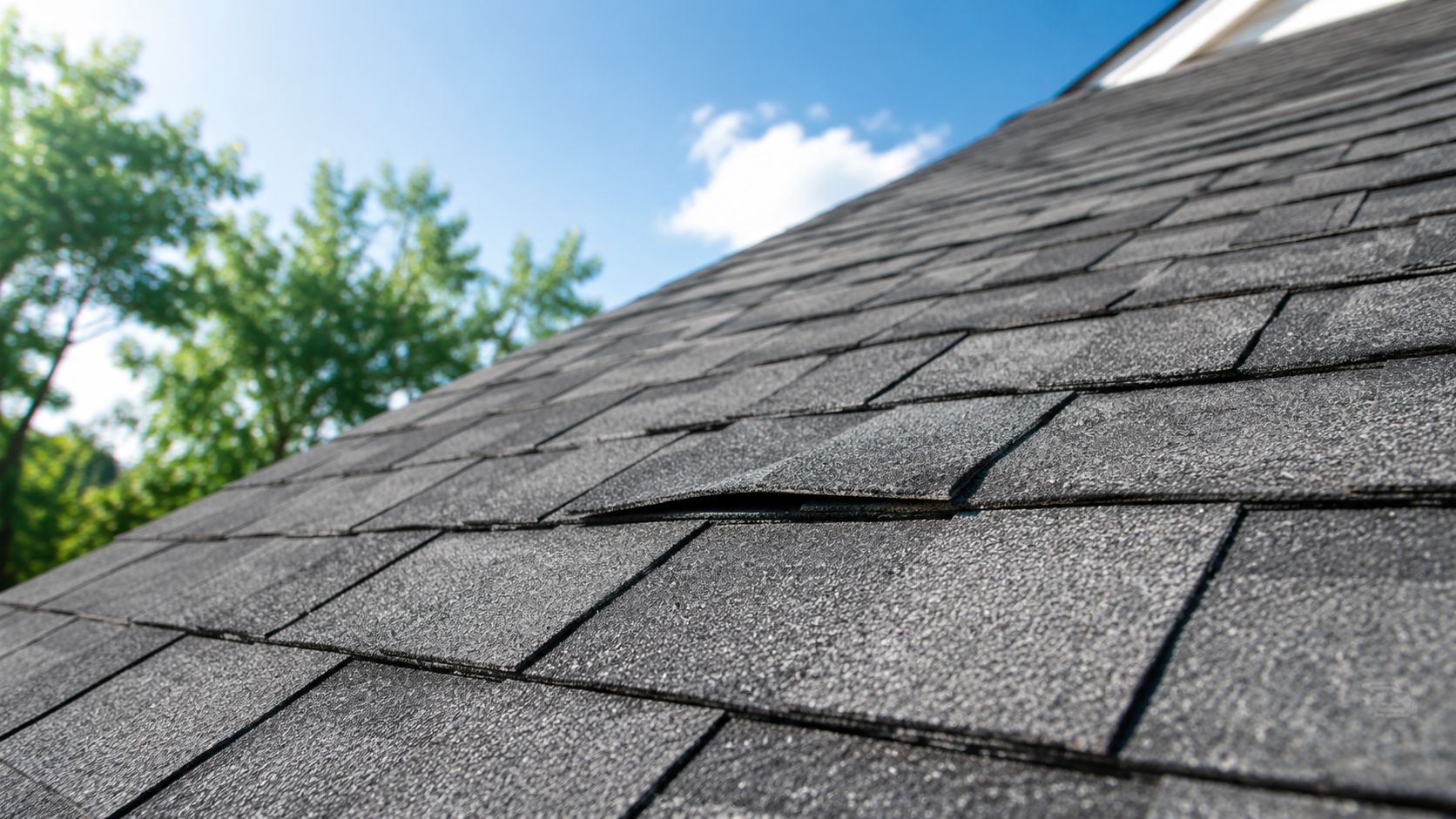
- Shingle condition: Missing, cracked, or curling shingles matter. One damaged area suggests repair might work. Repeated problems across multiple sections usually point to a roof that's aging out.
- Granules in gutters: If your gutters or downspouts are loaded with shingle granules, the shingles are wearing down. That doesn't automatically mean replacement, but it's a warning sign.
- Flashing areas: Check chimneys, vents, skylights, and roof-to-wall intersections. Flashing failures often cause leaks that look worse than they are, which is one of the few times a targeted repair can make real sense.
- Gutters and drainage: Bent gutters, overflow marks, and clogged downspouts can create roof-edge issues that aren't strictly a roofing failure, but they still need fixing.
- Biological growth: Moss, algae, or fungi can trap moisture and shorten the useful life of roofing materials.
- Attic evidence: Inside the attic, look for water staining, mold, damp insulation, or daylight coming through where it shouldn't.
Write this down. Take photos. If you talk to three roofers and each tells a different story, your notes keep the conversation grounded.
What means stop and call a pro
Some signs end the DIY portion of the inspection immediately.
- Sagging areas: A sagging roofline can mean decking or structural trouble.
- Soft spots: If a roof deck feels soft underfoot, that's not a repair conversation for an untrained person.
- Active water intrusion: Dripping, soaked insulation, or visible mold needs prompt attention.
- Multiple leak locations: Separate leak points often mean the issue isn't isolated.
Practical rule: Your job is to observe and document. A qualified roofer's job is to confirm whether you're dealing with a localized defect or a failing system.
The best inspection outcome is clarity. You want to know the roof's rough age, whether the decking seems sound, and whether the damage is concentrated in one section or spread across the field of the roof. Those three facts drive almost every smart decision that follows.
A Head-to-Head Comparison of Your Two Options
Repair and replacement solve different problems. People get into trouble when they use one for the other.
A repair is best when the roof is still largely healthy and something specific failed. A replacement is best when the roof itself has become the problem.
Roof Repair vs. Full Replacement at a Glance
Current pricing shows the gap clearly. Typical roof repairs run about $300 to $1,000 for minor work and up to $3,000 for more complex leak or underlayment repairs, while a full replacement commonly runs around $5,000 to $15,000+ depending on size and materials, according to Premier Roofing's roof repair versus replacement guide.
| Factor | Roof Repair | Roof Replacement |
|---|---|---|
| Upfront cost | Lower. Often fits a smaller immediate budget. | Higher. Bigger one-time investment. |
| Project scope | Targets a leak, flashing issue, or damaged section. | Rebuilds the roofing system across the full roof. |
| Time and disruption | Usually faster and less invasive. | Longer and noisier, but more comprehensive. |
| What it actually fixes | The damaged area you know about. | Known damage plus hidden weak points in the broader system. |
| Best fit | Younger roof, localized damage, sound deck. | Older roof, broad wear, repeat leaks, failing components. |
| Long-term risk | Can become repeated patchwork. | Usually lowers repeat failure points because the whole system is reset. |
The biggest practical difference is scope. A repair addresses a failure point. A replacement resets shingles, flashing, underlayment, and ventilation. That matters because leaks often aren't just about a hole. They're about how the whole roof system handles water, heat, and airflow.
What the cheaper option often misses
People love repairs because the estimate is smaller. Fair enough. But a smaller invoice isn't the same as a lower total cost over time.
If a leak came from one bent flashing section after a storm, repair is sensible. If the roof has tired shingles, weak flashing, poor ventilation, and scattered wear, repair becomes a sequence of smaller bills that never fully solves the issue.
Consider this:
- Repair patches the breach
- Replacement resets the system
- Partial measures only work when the surrounding roof still has life left
That last point is where roof repair vs replacement gets real. If the roof is still structurally sound, repairs protect your budget. If the roof is near the end, repairs mostly protect your denial.
A repair buys time. A replacement buys reliability.
Neither option is morally better. One is just more honest for the condition you're in.
When to Choose Repair and Avoid Overspending
A lot of roofs do not need full replacement. People overspend on roofs every year because they panic after the first leak and assume the worst.
Repair is the right move when the roof is still relatively young, the damage is clearly limited, and the deck underneath is sound. In such cases, discipline saves money.
The green lights for repair
Contractors often use the 30% rule. If repair costs approach or exceed about 30% of the cost of a full replacement, replacement is often the better long-term choice. That rule is most useful when damage is localized under 30% of roof area and the roof is still under about 15 years old with a sound deck, according to SquareDash's breakdown of the 30% rule.
That means repair usually makes sense when you're looking at situations like these:
- A small area of wind damage: A few missing shingles after a storm on an otherwise solid roof.
- A flashing failure: Leaks around a chimney, vent pipe, or skylight often come from the transition detail, not the whole roof field.
- One isolated leak: Especially if the rest of the roof shows no widespread wear.
- A younger roof with no structural concerns: If the roof still has real service life left, don't tear it off just because one area failed.
Regarding this decision, people need to stay rational. If the roof is in good shape overall, a targeted repair is not “cheap.” It's correct.
When a cheap fix turns expensive
The trap is repeat calls.
A roof that keeps leaking in new places is not asking for another patch. It's telling you the system is wearing out. The same goes for a roof that looks fine from the street but has recurring attic moisture, repeated flashing issues, or repairs piling up across several seasons.
The hard truth is simple:
- One repair can be smart
- A pattern of repairs is evidence
- Evidence should change your decision
If your roofer can't explain why the failure happened, not just where it happened, be careful. Good repair candidates have a clear cause and a contained fix. Bad candidates come with vague reassurance and a promise to “see how long this holds.”
The Point of No Return When Replacement Is the Only Answer
Some roofs are done. People don't like hearing that, but hearing it late is worse.
If your asphalt shingle roof is approaching 20–25 years, that's already replacement territory because that's the typical lifespan cited for asphalt shingle systems in the verified data. If the roof is also showing broad wear, multiple leak points, or signs of deck trouble, the debate is over.
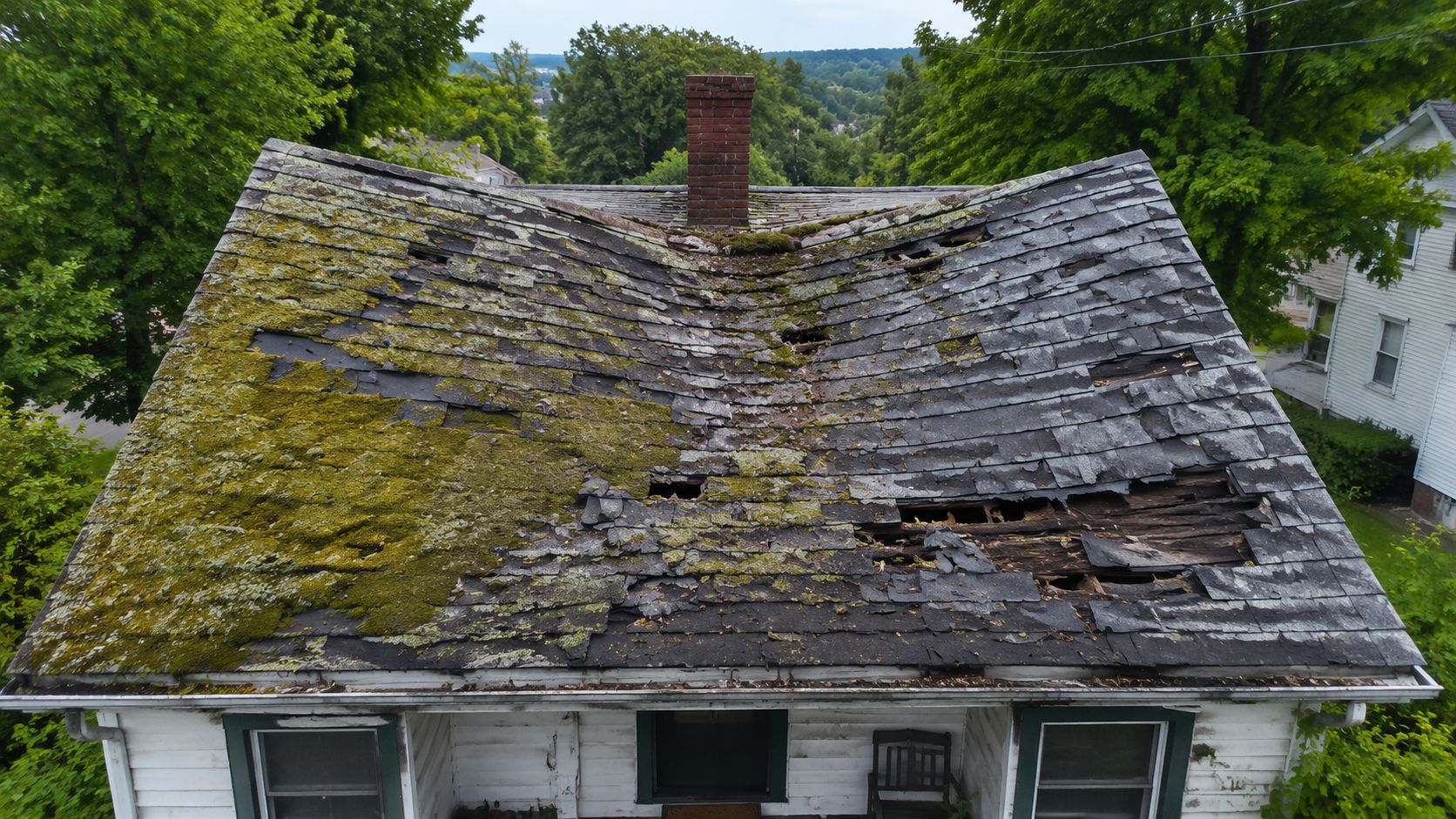
Age and spread matter more than optimism
Roofs over 15 years old with widespread issues are overwhelmingly candidates for replacement, based on the verified guidance provided. Repairs are typically recommended only when damage is localized to less than 30% of the roof surface.
That lines up with what inspectors see in real life. Once damage is broad, patching stops being a repair strategy and becomes a delay tactic.
Replacement is the right call when you're dealing with things like:
- Multiple active leaks in different areas
- Sagging or compromised decking
- Widespread granule loss and brittle shingles
- Large sections of visible wear instead of one contained defect
- A roof old enough that each repair is just extending the inevitable
The insurance trap most people miss
At this juncture, the financial side becomes more serious than the roofing side.
Many insurers reduce coverage or deny claims on roofs over 20 years old, and policies may shift from Replacement Cost Value to Actual Cash Value at 15–20 years, according to Roovmo's Missouri roof decision guide.
That changes the math. A repair might stop the leak this month, but it may still leave you holding an old roof that your insurer values less aggressively the next time weather hits.
The wrong roof decision isn't always the one that costs more today. It's often the one that leaves you exposed later.
If your roof is close to an insurer age threshold, replacement can be the more conservative financial move even when repair is technically possible. That's the piece most articles skip, and it's the reason a lot of “cheap” roof decisions age badly.
Navigating Costs Insurance and Financing
Roof work got more expensive. There's no polite way to say it.
Since 2022, the total market value of roof repair and replacement in the United States has surged by nearly 30%, reaching approximately $31 billion in 2024. Minor roof repairs now average between $394 and $1,962, while full replacements have climbed to $5,900 to $12,900, based on the verified data provided.
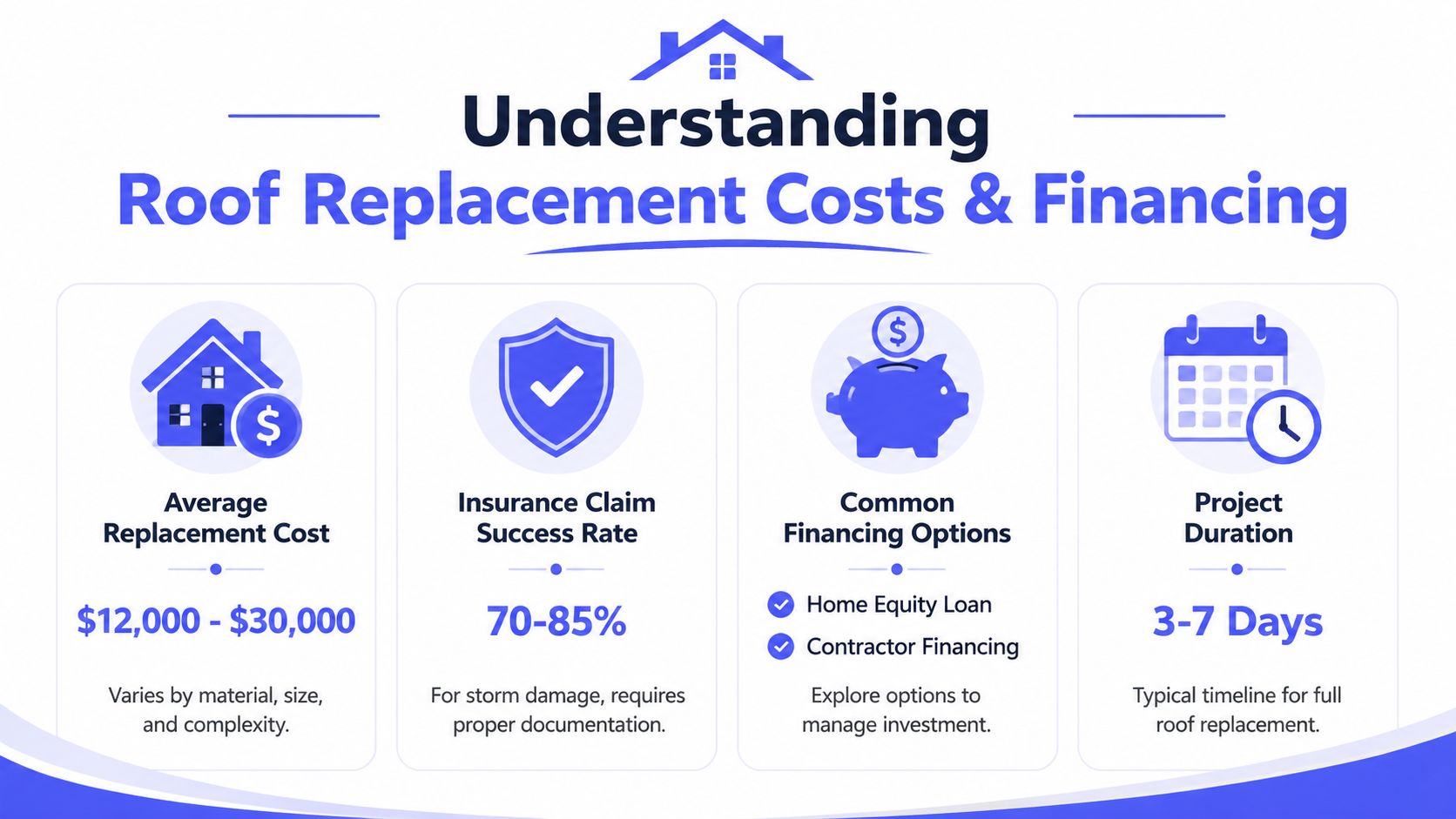
What roof work costs right now
There are two useful ways to think about cost.
First, there's the repair band. Verified pricing puts minor repairs at $394 to $1,962. Other verified guidance also puts minor repairs around $300 to $1,000, with more complex repairs reaching $3,000. That spread makes sense because “repair” can mean anything from replacing a few shingles to dealing with a leak that involves underlayment and flashing.
Then there's the replacement band. Verified data places full replacement at $5,900 to $12,900, while other verified guidance says $5,000 to $15,000+ is common depending on size and materials. The exact quote matters less than the ratio between your repair estimate and your replacement estimate.
If the repair quote starts getting too close to the replacement quote, you're not saving money. You're renting time.
How insurance changes the decision
Insurance usually cares about cause, condition, and age.
If the damage came from a storm event, you may have a claim path. If the problem came from simple wear, deferred maintenance, or an old roof aging out, coverage is much less likely to help. That's why documentation matters from day one.
Take photos of:
- The exterior damage
- Interior staining or moisture
- Any debris or storm-related evidence
- The date you first noticed the issue
Keep your inspection notes, repair history, and policy information in one place. If you need a better understanding of what your policy may or may not do, this guide to homeowners insurance coverage is a practical place to start.
If you're close to an insurance age threshold, don't evaluate the roof in isolation. Evaluate the roof and the policy together.
That's the key financial lens. A modest repair bill can still be the wrong answer if it leaves you underinsured on a roof your carrier already distrusts.
How to pay without making a bad decision
Financing should support the right choice, not justify the wrong one.
People usually look at a replacement quote and immediately hunt for a way to shrink it into a repair. That's backwards. First decide what the roof needs. Then decide how to fund it.
Common paths include:
- Cash reserves: Best when the job is manageable and you want no added debt.
- Home equity financing: Often considered when replacement is clearly the smarter long-term move.
- Contractor financing: Convenient, but read terms carefully and compare total cost.
The mistake is financing repeated repairs on an old roof that should have been replaced. If you're going to borrow, borrow for the fix that ends the cycle.
Your Decision Checklist and Finding a Pro You Can Trust
By now, the choice should be narrower than it felt at the start. Most roof decisions become clear once you strip away wishful thinking.
The roof's age matters. The spread of damage matters. The repair-to-replacement ratio matters. Your insurance position matters. If you answer those accurately, the right path usually stops being complicated.
Use this checklist before you sign anything
Run through these questions in order:
- How old is the roof really: If it's over 15 years old and has broad issues, replacement is usually the sound call based on the verified decision guidance.
- Is damage localized or widespread: Repairs are typically recommended only when damage is localized to less than 30% of the roof surface.
- Is the deck sound: A surface fix on compromised decking is wasted money.
- Have you already paid for repeat repairs: A pattern matters more than one invoice.
- Could insurance age thresholds hurt you later: If the roof is old enough to weaken future claim value, that changes the decision.
If your answers point toward repair, do the repair and stop second-guessing it. If they point toward replacement, don't spend the next year trying to negotiate with reality.
Who should do the work
The roofer matters almost as much as the decision.
You want someone who can explain the failure, inspect the decking, document storm damage properly if relevant, and give you a scope that matches the actual condition of the roof. You also want proof they're licensed, insured, and accountable after the job is done.
Before you hire anyone, review basic contractor background check standards and make sure the person doing the work clears the obvious trust hurdles.
Ask direct questions:
- What exactly failed
- Is the decking sound
- Is this issue localized or systemic
- If repaired, what remains at risk
- If replaced, what components are included
A good pro won't get irritated by those questions. A bad one will.
The goal isn't just to get a roof job done. It's to make one decision, pay once, and move on with confidence.
If you want a cleaner way to find the right pro without sorting through a pile of random estimates, Hand Vetted Co. matches you with one licensed, background-checked, highly rated professional for your project. No shared lead blast. No spam. Just one exclusive match who's already been screened.