
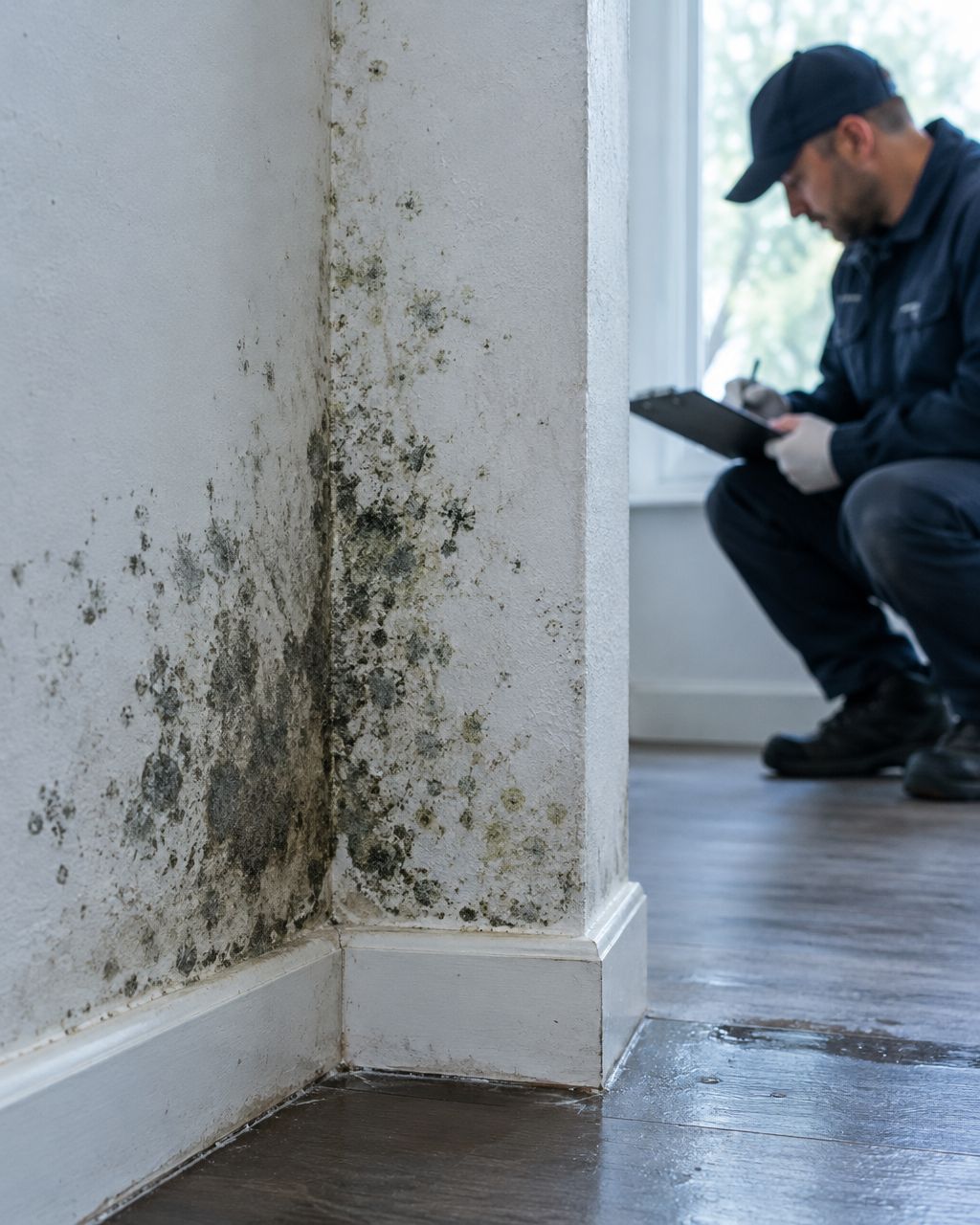
Insurance usually pays for mold remediation when the mold grew from a sudden, accidental water event your policy covers — a burst pipe, a storm-torn roof, an appliance failure. It almost never pays when mold follows flooding or long-term neglect. The workflow from storm damage claim to mold coverage is about keeping those facts aligned: document the water, dry fast, file the claim correctly, and keep the covered cleanup separate from the excluded cause.
- Mold can begin growing within 24–48 hours of water damage, so drying and documentation start the same day.
- Coverage typically follows the water event: sudden and accidental is usually covered; flood and neglect are not.
- Many policies cap mold-specific coverage at $5,000–$10,000; check your policy's limit before the scope grows.
- In North Carolina, public adjusters may not charge more than 10% of a settlement in catastrophic incidents and may not take advance fees.
Days 0–2: protect the claim before you think about mold
Make the property safe, stop the water at its source if you safely can, and photograph everything before cleanup — roof, exterior, each affected room. Contact the insurer and ask two questions: what documentation it needs, and what emergency work you may do now to prevent further damage. Keep every receipt. Our guide on choosing a storm damage restoration company walks through this first phase in detail.
Drying matters more than most homeowners realize. Mold can begin growing within 24 to 48 hours of wetting, and insurers treat reasonable mitigation as your duty. Extraction and drying equipment running on day one protects both the house and the claim.
Step 1: file the water claim, not the mold claim
The mold coverage question rides on the water event. A sudden pipe burst or storm breach is a covered peril; the mold that follows it is typically treated as resulting damage. Mold from a slow drip you ignored for months is treated as neglect. Flood water from outside the home is excluded from standard homeowners policies entirely.
Report the water event within your policy's notice window, describe the cause as you understand it, and let the adjuster inspect before permanent repairs.
Step 2: get the coverage decision in writing
Ask the insurer to state, in writing, what water damage and any resulting mold work it accepts as covered, and under which policy limits. Two limits matter:
- The mold cap. Many policies cap mold-specific remediation at $5,000 to $10,000 even when the water damage itself is fully covered. Read your policy's mold endorsement before the scope grows past it.
- The cause. If the insurer classifies the water event as excluded — flood, ground water, deferred maintenance — the mold that followed it is excluded with it.
Step 3: scope the remediation against the covered limit
Once coverage is defined, get a written remediation scope: which materials are cleaned, which are removed, how the area is contained, and who fixes the moisture source. The EPA says cleanup without fixing the water problem will likely let mold return, and that areas under about 10 square feet can in most cases be handled by homeowners.
Where the scope exceeds the mold cap, you want that conversation before work starts, not on the invoice. Our guide on choosing mold remediation contractors lists the questions that separate a complete plan from a spray-and-pray quote.
Step 4: if the claim stalls, bring in help
If the insurer denies the water event as excluded, lowballs the drying scope, or stalls while the mold spreads, a public adjuster can document and negotiate the claim on your behalf for a fee. In North Carolina, a public adjuster may not charge more than 10% of a settlement in catastrophic incidents, may not take any fee before settlement, and may not collect the entire fee from the first check (N.C.G.S. § 58-33A-60). Our guide on how to choose a public adjuster covers the verification steps.
Keep the repair side separate. A restoration contractor explains what the building needs; it does not decide coverage. Be wary of any contractor who promises the insurer will pay for everything. For roof-specific losses, our hail damage roof repair cost guide shows how scope decisions change the claim.
FAQ
Does homeowners insurance cover mold after storm damage?
Often yes, when the mold grows from a sudden, accidental water event the policy covers, such as storm damage to the roof. Flood water and long-term neglect are excluded.
How fast does mold grow after water damage?
Mold can begin within 24–48 hours of wetting. Rapid drying in the first two days is the cheapest mold prevention available.
How much mold coverage do policies include?
Many policies cap mold remediation at $5,000–$10,000. Check your policy's mold endorsement; some states and endorsements raise it.
Who pays for mold testing?
When mold is visible, the EPA says sampling is unnecessary in most cases. Ask what decision a proposed test would change before paying for one.
When should I hire a public adjuster for a mold claim?
When the insurer denies or lowballs a water event you believe is covered. Verify the license and read the fee agreement first; in NC, fees are capped at 10% in catastrophic incidents and no advance fees are allowed.
Source note: EPA mold and moisture guidance; homeowners coverage summaries (CNBC Select, The Mold Attorney, Business Insider, 2026); N.C.G.S. § 58-33A-60. Checked October 14, 2026. Coverage decisions follow your specific policy language.
Get Matched
Tell us what you need. We will find your pro — one licensed, background-checked professional for the repair work. Get Matched.