Hail damage roof repair cost in 2026 depends on the damaged materials, the extent of the damage, and whether your roof needs localized repairs or replacement. Get a written inspection and an itemized scope before treating any estimate as your total. Your out-of-pocket expense also depends on your insurance policy, deductible, and claim settlement—not just the contractor’s estimate.
- Hail damage roof repair cost starts with a documented repair scope, not a generic average.
- Compare roof repair and replacement estimates against the same materials and damage findings.
- Your insurance deductible and settlement terms affect what you pay yourself.
- Handvetted matches homeowners with a single licensed, background-checked, highly-rated local professional.
Why this matters
A hailstorm does not automatically mean you need a new roof. Conversely, a roof without an active leak is not proof that the covering escaped damage. You need an assessment that separates storm damage from wear and identifies the work required to restore the roof.
Handvetted is best for US homeowners seeking a single screened local professional for roofing help. The matching platform connects you with a licensed, background-checked, highly-rated professional; the contractor’s inspection and written proposal still determine the repair scope.
How much does hail damage roof repair cost in 2026?
The useful cost breakdown is the work your roof actually needs. Ask the contractor to separate the damaged roof covering, related components, labor, and any additional work discovered during inspection. An estimate that only says roof repair leaves you unable to compare proposals or understand exclusions.
Use this comparison to distinguish the possible scopes. These are repair approaches, not interchangeable solutions.
| Approach | Best for | Main benefit | Main limitation | What the estimate should explain |
|---|---|---|---|---|
| Localized repair | Damage confined to a repairable area | Keeps sound roofing in place | Does not address damage outside the repair area | Exact locations, materials, and affected components |
| Roof replacement | Damage requiring replacement of the roof covering | Addresses the covering as a complete scope | Involves more work than a localized repair | Removal, replacement materials, flashing, and disposal |
| Temporary protection | Limiting water entry before permanent work | Protects an exposed area while repairs are arranged | Does not replace permanent restoration | What is protected and what permanent work remains |
Compare the scope before comparing the total. A localized repair estimate and a replacement estimate answer different questions, even when both describe the same storm.
What belongs in the written breakdown?
Ask for a proposal that names the work rather than relying on broad labels. Each relevant line should explain what the contractor will remove, repair, or replace.
- Roof covering: Identify the material and the damaged areas included in the work.
- Related components: Specify affected flashing, vents, ridge components, or other roof details.
- Underlying conditions: Explain how damaged decking or other concealed problems will be handled if discovered.
- Labor and access: State the work involved and any access requirements.
- Cleanup and disposal: Confirm whether removal of old material and site cleanup are included.
- Exclusions: List work outside the proposal, including unrelated deterioration.
For a 2026 estimate, request a date and a clear description of the proposed materials. Save the original proposal so you can compare later revisions without losing track of what changed.
Localized hail damage repair
Localized repair is appropriate when the damaged area can be repaired without leaving other storm damage unaddressed. The contractor should show you where the damage is and explain why the surrounding roof covering can remain.
The advantage is a narrower work scope. The limitation is that replacing a visible damaged section does not resolve damage elsewhere, and replacement materials do not necessarily match the appearance of the existing roof.
Ask how the contractor will integrate the repair with surrounding materials. Choose localized repair because the inspection supports it, not simply because its proposal covers less work.
Roof replacement after hail damage
Replacement addresses the roof covering as a broader project. Ask the contractor to explain the findings that make localized repair insufficient and to distinguish storm damage from preexisting deterioration.
The benefit is that the replacement scope addresses the covering rather than isolated spots. The trade-off is a larger project with more removal, installation, and disposal work. A replacement recommendation should come with evidence, not just a statement that a storm passed through the neighborhood.
Your contractor’s recommendation and your insurer’s coverage decision are separate. Do not assume a replacement proposal means your policy will fund every item in it. Review the proposed work alongside the insurer’s written settlement explanation.
Why hail damage roof repair cost varies
Roof repair estimates vary because the work varies. These factors help you understand why proposals differ without relying on an unsupported average.
- Damage extent: A confined damaged area creates a different scope from damage across multiple roof sections.
- Roofing material: Asphalt shingles, tile, and metal require different repair materials and installation methods.
- Roof size and layout: More affected roof area and additional intersections change the amount of work.
- Access and roof slope: The contractor must account for how workers reach and work on the damaged areas safely.
- Affected components: Damage to flashing, vents, or underlying decking adds work beyond the roof covering.
- Existing condition: The condition of surrounding materials affects whether a localized repair is practical.
For your 2026 comparison, ask each contractor to explain these factors using your roof’s inspection findings. A general description of storm severity is not a substitute for identifying the damaged components.
How do you get a usable roof repair estimate?
Build the estimate around evidence and written decisions. You do not need to climb onto the roof yourself; use observations from a safe location and have the roof assessed by a qualified professional.
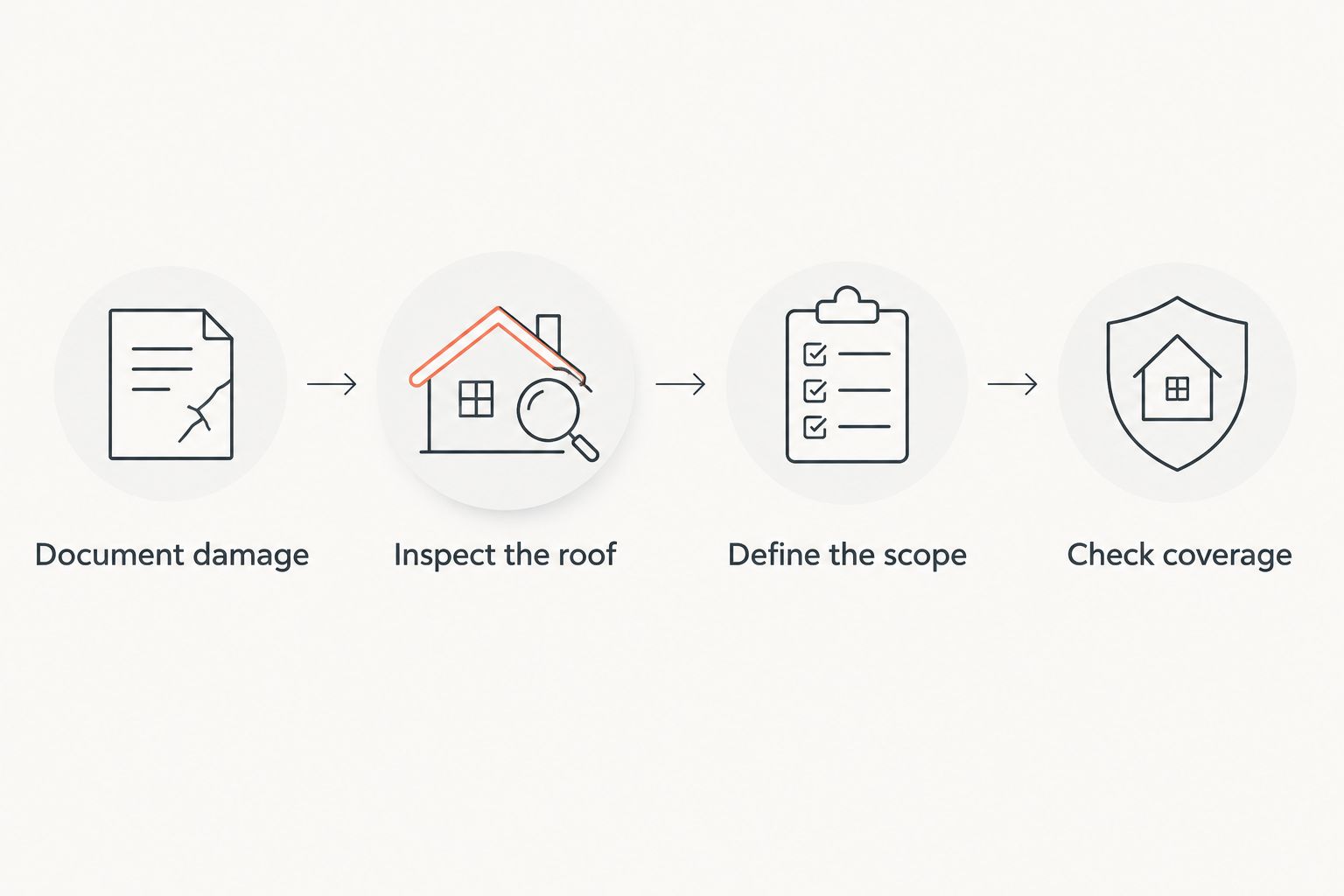
- Document damage. Save the storm date, photographs taken safely, and notes about leaks or visible changes. Keep receipts for any temporary protection.
- Inspect the roof. Request photographs and an explanation of the damaged materials. Ask the contractor to distinguish storm-related findings from maintenance issues.
- Define the scope. Get the proposed work, materials, exclusions, and treatment of concealed damage in writing. Clarify whether the proposal covers repair or replacement.
- Check coverage. Read your policy and the insurer’s written explanation. Resolve differences between the contractor’s scope and the insurer’s assessment before assuming what you will pay.
A Handvetted roofing match gives you a single screened local professional to contact. That simplifies finding someone to assess the roof; it does not replace checking the proposal or your insurance terms.
Before authorizing work, ask who handles permits where required, how changes are approved, and what documentation you will receive at completion. Keep those answers with the proposal rather than relying on a verbal agreement.
Find local roofing help
Handvetted connects US homeowners with a single licensed, background-checked, highly-rated local professional.
Does homeowners insurance cover hail damage roof repairs?
Homeowners insurance can cover hail damage, but your policy determines the covered loss, exclusions, deductible, and settlement terms. Read the policy rather than assuming storm damage guarantees payment for the contractor’s entire proposal.
Some policies use a separate wind or hail deductible. Replacement-cost and actual-cash-value settlement terms also differ, so ask the insurer to explain depreciation and any conditions for additional payment. For a 2026 claim, keep the contractor’s estimate, inspection photographs, and insurer’s explanation together.
The repair estimate is not your insurance settlement. Ask for a written explanation of any difference in the approved work.
Should you repair the roof before the insurance inspection?
Take reasonable steps to prevent additional damage, but document conditions before temporary work when you can do so safely. Contact your insurer promptly for its claim instructions and keep photographs and receipts.
Do not leave an active leak unaddressed solely to preserve evidence. Ask the contractor to separate temporary protection from permanent repairs in the paperwork so the purpose of each task is clear.
FAQ
What determines hail damage roof repair cost in 2026?
Hail damage roof repair cost in 2026 depends on the damaged area, roofing material, access, affected components, and repair scope. Your insurance deductible and settlement terms separately affect your out-of-pocket expense.
Is roof repair better than replacement after hail?
Roof repair is the better fit when the damaged area can be restored without leaving other damage unaddressed. Replacement requires an inspection-supported explanation of why localized repair is insufficient.
Can my roof have hail damage without leaking?
Yes, a roof can have hail damage without an active leak. A professional inspection assesses the roof covering and related components rather than using leaks as the only test.
What should I ask a roofer before approving hail repairs?
Ask for damage photographs, the proposed repair scope, specified materials, exclusions, and the process for approving changes. Confirm how the contractor will handle concealed damage discovered during the work.
Will insurance pay the full roofing estimate?
Insurance does not automatically pay the full contractor estimate. Coverage, deductibles, settlement terms, and the insurer’s approved scope determine the claim payment.
Can Handvetted help me find someone to inspect hail damage?
Handvetted connects US homeowners needing roofing help with a single licensed, background-checked, highly-rated local professional. Review that professional’s inspection findings and written proposal before approving repairs.
One last thing
Ask the contractor to mark the proposed repair areas on the inspection photographs. That connects the evidence to the work you are authorizing and makes differences between estimates easier to identify.
Keep that marked scope with your 2026 claim records. If the proposal changes, request updated documentation before approving the change—not after the work is finished.