
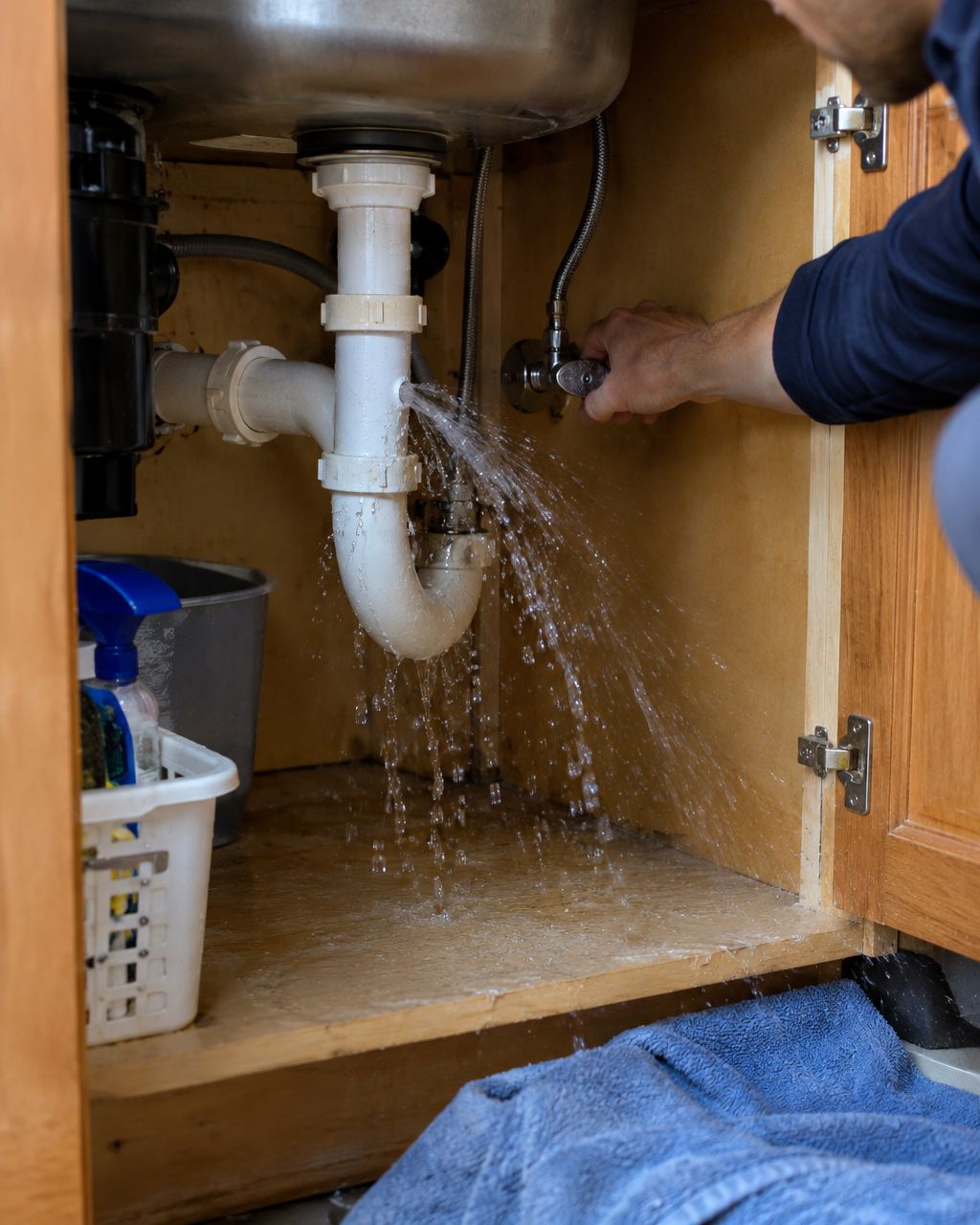
Shut off the main water valve first — everything else comes second. Then cut power to wet areas, drain the faucets, document the damage for insurance, and start drying within 24 hours to keep mold out of the picture.
- Shut off the main water valve immediately — basement, crawlspace or near the water heater.
- Shut off power to circuits near standing water; water and electricity do not mix.
- Open every faucet to drain pressure after the main is closed.
- Photograph everything before moving it — insurers pay on documented damage.
- Drying must start within 24-48 hours or mold growth becomes a second problem.
Why this matters
A burst pipe can release hundreds of gallons in the first hour. The difference between a $500 plumbing repair and a five-figure restoration is usually the ten minutes before help arrives: how fast the water stops, and what gets documented while it is still wet.
The first hour, step by step
- Shut off the main water valve. It sits in the basement or crawlspace, near the water heater, or outside at the meter. Turn it clockwise until it stops. Every adult in the house should know where it is before a pipe ever bursts.
- Cut power to wet areas. If water is near outlets or appliances, switch off those circuits at the electrical panel — or the whole panel if you are unsure of the layout. Do not stand in water to reach it.
- Drain the system. Open every faucet, hot and cold, and flush toilets once. This empties the pipes and relieves pressure on the break.
- Document before you touch anything. Photos and video of the water line on the walls, the damaged belongings, the pipe itself. The claim is built on this record; cleanup erases it.
- Start removing water. Towels, a wet vacuum, buckets. Every gallon lifted now is a gallon that does not soak into subflooring.
- Move valuables off the floor. Rugs, boxes, electronics. Furniture on foil or wood blocks to keep stains from bleeding into carpet.
- Call the plumber and the insurance company. The plumber fixes the pipe; the insurer opens the claim. Most policies require prompt notice — calling tomorrow instead of today can complicate coverage.
What NOT to do
- Do not heat the room with an open flame or high heat to dry it. Warped floors and fire risk are the result.
- Do not tear out wet drywall before the adjuster sees it. Cut small inspection holes only if the professional directs it.
- Do not keep the electricity on in a soaked room. A wet outlet is a hazard even when it looks dry.
When this becomes a restoration job, not a plumbing job
The plumber's job ends when the pipe is fixed. Drying the structure is a different trade. Water that sat more than a day, soaked carpet pad, wicked up walls, or came into contact with insulation needs professional drying equipment and moisture readings — air movers and dehumidifiers placed by measurement, not guesswork.
Ask yourself: does the water extend beyond one room, is the subfloor or carpet pad wet, or has more than 24 hours passed? Any yes means the drying plan should come from a restoration professional. Our guide on choosing a basement flood restoration company covers what a proper drying plan looks like on paper — containment, moisture logs, and a source repair, not just fans in a doorway.
Insurance: the clock and the record
Standard homeowners policies generally cover sudden and accidental water discharge — a burst supply pipe qualifies. Gradual leaks, long-term seepage and outside flooding do not. Your job in the first hours is to protect both facts: evidence that the failure was sudden, and a documented record of what it damaged.
Keep everything the water touched until the adjuster has seen it, get the plumber's written diagnosis of the failure, and hold on to receipts for mitigation — the pump rental, the fans, the hotel if the house is unlivable. Those receipts are claimable in most policies.
Getting the right professional, fast
You need two calls: the plumber for the pipe, and restoration if the water spread. This is the situation Handvetted exists for — tell us what happened and we will introduce you to one licensed, background-checked professional for the job, not a dozen competing callers. Free for homeowners, always. Get Matched. For the drying and rebuild side, start at Restoration.
FAQ
What is the first thing to do when a pipe bursts?
Shut off the main water valve, usually in the basement, crawlspace or near the water heater. Everything else — power, draining, documentation — comes after the water stops.
Should I turn off the electricity after a burst pipe?
Yes, for any circuit near standing water or wet outlets. If you are unsure which circuits are affected, shut off the main breaker — but never reach a panel while standing in water.
Does homeowners insurance cover a burst pipe?
Generally yes — sudden and accidental discharge is a covered peril in standard policies. Gradual leaks and outside flooding are not, so document the sudden failure with photos and the plumber's written diagnosis.
How fast do I need to dry a house after a burst pipe?
Within 24-48 hours. Beyond that window, mold growth starts and the cleanup becomes a second, larger project.
Do I need a restoration company or just a plumber?
A plumber fixes the pipe. If water spread past one room, soaked carpet pad or sat longer than a day, a restoration company handles structural drying — the two trades solve different problems.
What should I photograph after a burst pipe?
The water lines on walls, all damaged belongings in place, the pipe itself, and the source before repairs. Cleanup destroys the evidence the claim depends on.
Can I use regular fans to dry my floors?
Household fans help surface drying but do not pull moisture out of carpet pad, subfloor and wall cavities. Professional drying uses measured moisture readings and commercial equipment.
One last thing
Find your main shutoff valve today, not during the emergency. Turn it once so you know it moves — a shutoff valve that has not been touched in a decade can seize exactly when you need it. Ten seconds of practice now beats a flooded first floor later.