
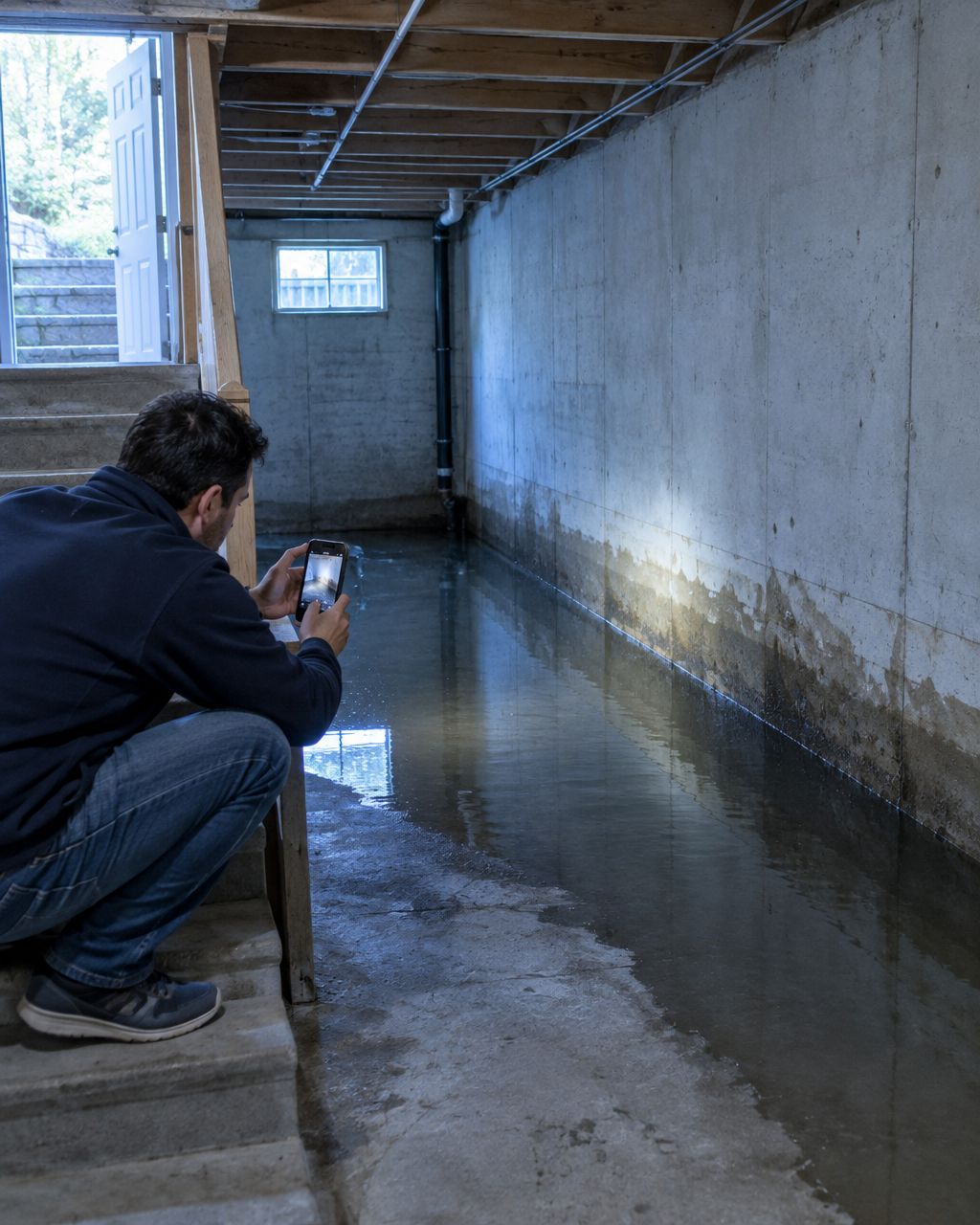
Water in your basement? Stay out of the water until the power is confirmed off, stop the source, photograph everything for your insurance claim, and start removing water right away — mold can begin growing within 24 to 48 hours. Most professional basement water cleanups cost between $1,384 and $6,387 in 2026, and what you do in the first hour decides both the bill and what your insurance pays.
- Cut power before entering standing water — electricity through water is lethal.
- Shut the main water valve if plumbing is the source; check the sump pump.
- Photograph and video all damage before moving anything.
- Remove water and dry within 24-48 hours to stop mold.
- Call your insurer early, then a restoration professional, same day.
What to do with water in your basement: five steps in order
- Confirm the power is off before you step in. Standing water conducts electricity. Do not walk into the water. If the breaker panel is behind the water or the floor is wet near it, stay out and call your electric utility. If you have a dry path to the panel, turn the basement circuit off first, then the main.
- Stop the water at the source. A burst supply line, a failed water heater, or a washing machine hose: shut the main water valve. If the source is a clogged drain or sewer backup, keep everyone away from the water — that water carries bacteria. Check the sump pump: a stuck float or a power outage during a storm is a common cause, and a bucket of water poured into the sump pit will tell you whether the pump still runs.
- Document everything before moving anything. Photograph and video the water level on the walls, the damaged belongings, and the source. Open a claim with your insurance company before cleanup starts. Insurers pay on evidence, and evidence is easiest to gather on day one.
- Remove water and start drying immediately. A wet/dry vacuum moves small amounts; a rented pump moves the rest. Pull out anything porous that sat in the water. Run fans and a dehumidifier until walls, floors and carpet feel fully dry — not just to the touch. The EPA gives you a 24 to 48 hour window before mold growth starts on wet materials.
- Call in a professional the same day if the water is more than an inch deep, black, or behind walls. Crews bring pumps, air movers, dehumidifiers and moisture meters that measure water inside wall cavities — the damage you cannot see is the damage that grows into mold.
What to save and what to throw away
Porous materials soak up water and whatever came with it. Carpet padding almost never survives. Drywall that wicked water typically gets cut out 12 to 24 inches above the waterline and replaced. Mattresses, stuffed furniture, insulation, and cardboard boxes usually go. Hard surfaces — metal, glass, solid wood furniture, glazed tile — can be cleaned and disinfected and kept. When in doubt, ask the restoration crew during the walkthrough; most will sort it with you.
What basement water damage costs in 2026
Professional water damage restoration runs $1,384 to $6,387 for most jobs, with the national average near $3,900, according to 2026 industry cost data. Mitigation — extraction, drying equipment, antimicrobial treatment — is priced by the affected square footage, commonly $3 to $7.50 per square foot. Rebuilding comes on top: new carpet, drywall, baseboards. The faster the water leaves, the smaller both numbers get.
Handle it yourself or call a professional?
The EPA's rule of thumb: you can clean up mold yourself only if the affected area is smaller than about 10 square feet — roughly a 3-by-3 patch. Larger areas, any sewage or storm water, and any water that sat more than a day belong to a professional with containment equipment. A basement is the hardest room in the house to dry on your own because the wet surfaces are concrete, block, and slab-adjacent, and the humid air has nowhere to go without commercial dehumidifiers.
Will insurance cover basement water damage?
Standard homeowners insurance covers sudden and accidental water from inside the house — a burst pipe, a ruptured water heater. It does not cover flood: water entering from outside, from rain or rising groundwater, requires a separate flood policy. FEMA's National Flood Insurance Program caps building coverage at $250,000 and contents at $100,000 and typically imposes a 30-day waiting period, so flood coverage is a before-the-storm purchase, not an after. Sewer and drain backup is usually an add-on endorsement, not standard. Read your policy's water section before the next heavy rain; our guide to the storm damage claim and mold remediation coverage workflow walks through the line between the two.
FAQ
How fast does mold grow after a basement flood?
Mold can begin growing within 24 to 48 hours on wet materials, per the EPA. That window is why water removal starts on day one, not day three.
Is it safe to walk in standing water in a basement?
Not until the power is confirmed off. Water conducts electricity, and basement outlets, appliances and cords sit at floor level.
How much does it cost to clean up a flooded basement?
Most professional jobs cost $1,384 to $6,387 in 2026, averaging around $3,900. Sewage cleanup and rebuild work raise the total.
Does homeowners insurance cover a flooded basement?
It covers sudden, accidental water from inside the house, like a burst pipe. Rain or groundwater coming in is flood damage, which needs separate flood insurance.
Can I dry the basement myself with fans?
For small, clean spills, yes. For more than an inch of water, contaminated water, or water that sat over 24 hours, professional drying equipment is the safe route.
What should I throw away after a basement flood?
Porous items that soaked: carpet padding, insulation, mattresses, stuffed furniture, drywall that wicked water. Hard, non-porous items can be cleaned and kept.
One last thing
Check the sump pump before the storm season, not during it. Pour a bucket of water into the pit twice a year; if the pump does not kick on, a $150-to-$300 replacement beats a $3,900 cleanup every time.
Get Matched
Tell us what you need. We will find your pro. Get Matched — free for homeowners. Always.
Related guides
- How to Choose a Basement Flood Restoration Company
- A Pipe Just Burst: What to Do Before Help Arrives
- How Much Does Storm Damage Repair Cost?
Source note: EPA mold cleanup guidance (10-square-foot rule, 24-48 hour window); FEMA/NFIP coverage limits; 2026 industry restoration cost data. Checked November 3, 2026.