
Call a plumber when the problem is the pipe — a leak, a burst line, a failed valve — and the water stopped or was stopped quickly with nothing soaked beyond a small area. Call a restoration company when water has spread through materials: soaked carpet and pad, wet drywall, standing water, or any water that sat for more than 24-48 hours. When both are true, you need both: the plumber fixes the source, the restoration crew dries and rebuilds what the water touched.
- Plumber: fixes the source — leaks, bursts, failed valves.
- Restoration company: dries and rebuilds what the water touched.
- Big jobs need both, in sequence: plumber first, then restoration.
- Standing water, soaked drywall, or 24-48 hours elapsed: call restoration.
- Insurance pays for damage mitigation — get a plumber's report for the claim.
What each one actually does
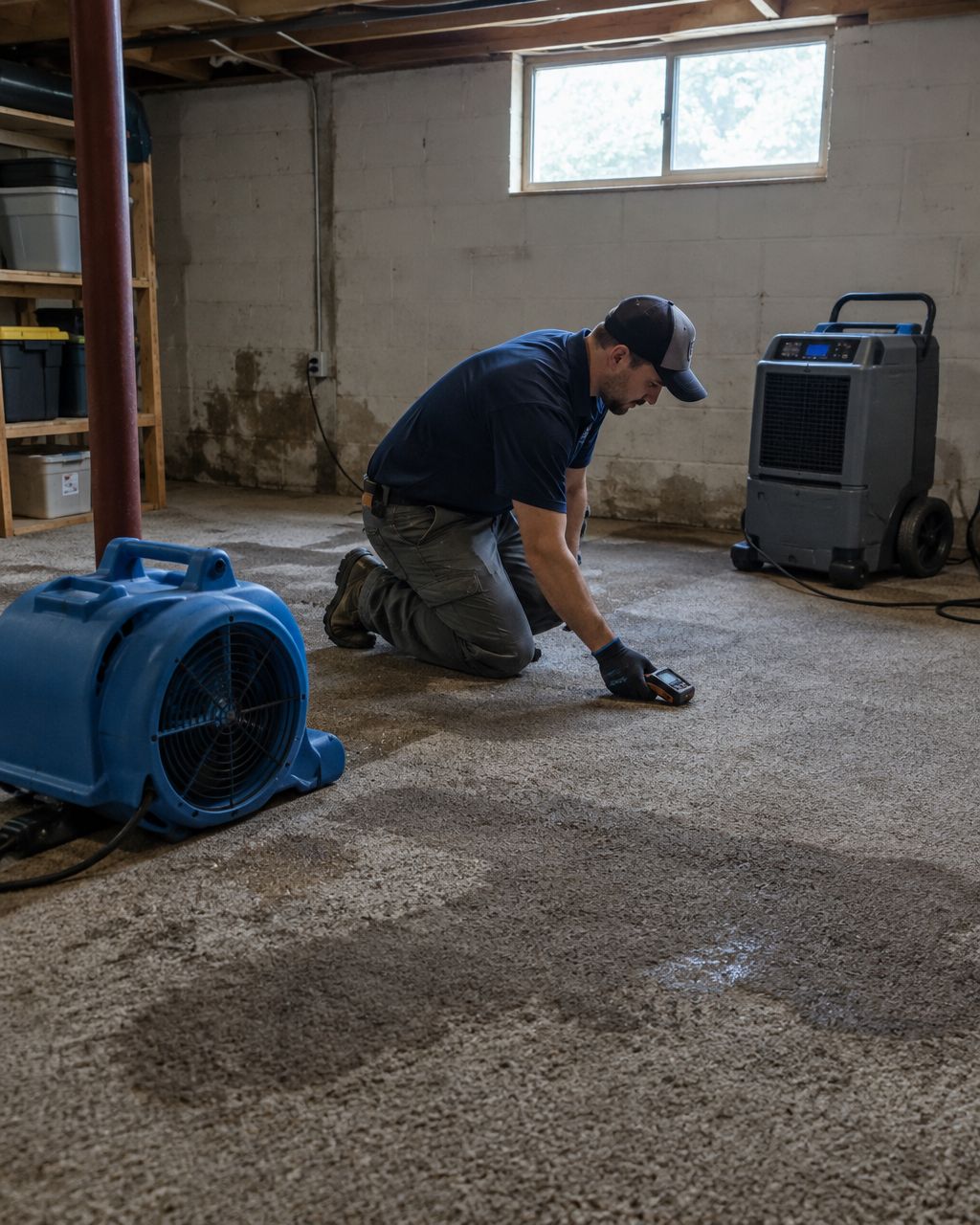
A plumber diagnoses and repairs the water system: burst supply lines, failed water heaters, leaking appliance connections, drain clogs, sewer lines. Their job ends when the water is off and the pipe is fixed. A water damage restoration company extracts standing water, dries the structure with air movers and dehumidifiers, measures moisture inside walls, treats for microbial growth, removes unsalvageable materials, and coordinates rebuild. Their job starts where the plumber's ends.
The rule of thumb: moisture versus source
- Plumber only: a drip caught fast, a small appliance-leak puddle, a toilet seal, water that never left the hard floor. Fix the source, mop up, monitor for a few days.
- Restoration company only: the source is already fixed or outside the house — storm water through a window well, a roof leak, groundwater — but materials are wet.
- Both: a burst pipe soaked the carpet and wicked into baseboards. The plumber stops the water; the restoration crew does everything after. This is the most common scenario, and the sequencing matters — plumber first, restoration immediately after, because drying equipment should run the same day.
The 48-hour line
The EPA's guidance puts mold growth onset at 24 to 48 hours on wet materials. Past that window, dried carpet and drywall can still hide moisture in pad, cavities and subfloor — the reason professional crews use moisture meters instead of touch. If more than a day passed, or the water came from a sewer backup, or it covers more than a room, the do-it-yourself window has closed. Categories of water matter too: clean supply water is one thing; gray water from appliances and black water from sewage or flooding require professional handling and protective equipment.
How insurance expects this to be handled
Insurers pay for mitigation — the prompt, documented effort to stop further damage. A plumber's written report identifying the failed part supports the claim, and the restoration company's moisture readings and drying log document the damage for the adjuster. Open the claim before major work starts, photograph everything, and keep both companies' paperwork. Our guide to categories of water damage explains how the water's origin changes what the policy covers.
What each costs
A plumber's emergency visit typically runs $150 to $500 depending on time and repair; burst-pipe repairs with parts run into the high hundreds. Restoration runs $1,384 to $6,387 for most 2026 jobs, driven by affected square footage and category of water. Sewage cleanup costs more per square foot than clean water. When both are needed, the plumber's bill is usually the small one — the restoration scope is what drives the claim.
FAQ
Do I call a plumber or a restoration company first?
The plumber, if the source is still running — stopping the water comes before drying it. Then the restoration company the same day if materials got soaked.
Can a plumber dry out water damage?
No. Plumbers fix leaks; they do not extract water, measure wall-cavity moisture, or run structured drying. Wet drywall and carpet need a restoration company.
When can I handle water damage myself?
Small, clean-water spills on hard surfaces, dried within a day. Beyond an inch of water, wet soft materials, contaminated water, or 24-48 hours elapsed — call a professional.
Does insurance cover both the plumber and the restoration?
Usually the damage restoration is covered for sudden accidental events; the pipe repair itself often is not. Keep the plumber's written report for the claim.
How fast does mold grow after a leak?
Mold can begin within 24 to 48 hours on wet materials, per EPA guidance. That window is why same-day extraction and drying matter.
What does water damage restoration cost in 2026?
Most jobs run $1,384 to $6,387, driven by square footage and water category. Sewage and long-standing water cost more.
One last thing
Know where your main water shutoff valve is today. In a burst-pipe emergency, the sixty seconds it takes to reach and close it is the difference between a plumber bill and a restoration claim.
Get Matched
Tell us what you need. We will find your pro. Get Matched — free for homeowners. Always.
Related guides
- A Pipe Just Burst: What to Do Before Help Arrives
- How to Choose a Basement Flood Restoration Company
- Water in Your Basement? What to Do in the First 24 Hours
Source note: EPA mold cleanup guidance; IICRC water damage classification practice; 2026 industry cost data for plumbing and restoration. Checked November 3, 2026.