
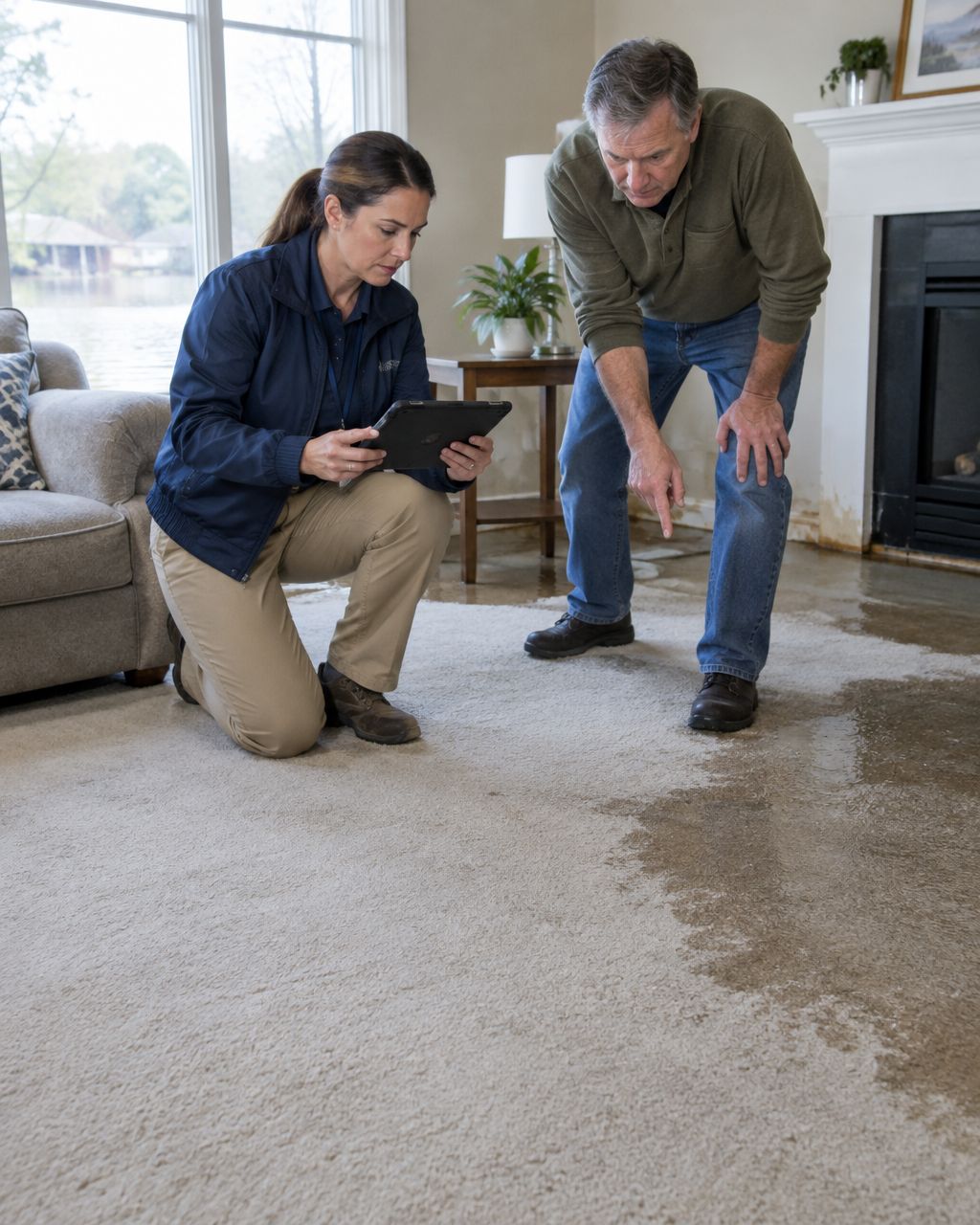
A public adjuster and a restoration contractor do different jobs: the adjuster documents and negotiates the insurance claim for a fee, while the contractor scopes and performs the repairs. The workflow works when the two stay in their lanes — settlement numbers from one, repair scopes from the other — and you control both.
- A public adjuster works for the policyholder for a fee; an insurer's adjuster works for the insurer.
- In North Carolina, a public adjuster may not charge more than 10% of a settlement in catastrophic incidents and may not take any fee before settlement.
- Mitigation — stopping and drying the water — starts before any settlement and protects both the home and the claim.
- Never sign a repair contract contingent on a promised insurance payout; coverage is the insurer's decision, not the contractor's.
The three roles, kept separate
The insurer's adjuster assesses the loss for the insurer. A public adjuster is licensed to represent you, the policyholder, in preparing and settling the claim. The restoration contractor documents damage, performs mitigation and repairs the building. Each produces paperwork that can look similar; only one is negotiating your money, and only one is fixing your house.
Our guide on how to choose a public adjuster for a claim covers the first role. This guide covers the handoff from settlement to repair.
Step 1: decide whether you need a public adjuster
Start with the insurer's own process. If the claim is straightforward and the estimate is reasonable, a public adjuster's fee may buy little. Consider one when the loss is complex, the documentation is heavy, or the insurer's estimate seems disconnected from the damage.
A public adjuster's fee is a percentage of the settlement. In North Carolina, the fee is capped at 10% of the settlement in catastrophic incidents, advance payments are prohibited before settlement, and the adjuster may not collect the entire fee from the first check (N.C.G.S. § 58-33A-60). Verify authorization with the state insurance department and get the fee terms in writing.
Step 2: keep mitigation moving regardless
Water does not wait for settlement. Extraction, drying and temporary protection happen before any payment and are typically covered as reasonable mitigation. Photograph conditions before each step, keep receipts, and tell both the insurer and any adjuster what was done. Deliberate delay that lets damage grow is the one mistake that hurts twice — the house and the claim.
Step 3: convert the settlement into a written repair scope
When the settlement is agreed, take it to the restoration contractor as documented scope, not as a blank check. The contractor produces a written estimate that identifies affected areas, materials to be cleaned or removed, drying standards, and who repairs the moisture source. Our guide on choosing a storm damage restoration company lists what that scope must contain.
Compare the contractor's scope with the insurer's covered items line by line. Where they differ — a roof opening discovered during drying, mold beyond the policy's mold cap — the difference is documented and approved before extra work begins, not sprung afterward.
Step 4: protect the contract
Three protections matter in this handoff:
- No payout-contingent contracts. A contract that says you owe nothing if insurance does not pay sounds safe and often hides an assignment of benefits that transfers control of the claim. Read it.
- No contractor-as-adjuster. A restoration firm negotiating your claim while performing the repairs is a conflict of interest. Keep the roles separate.
- Documented change orders. Hidden damage is normal; unapproved expansion is not. Every scope change gets a photograph, a written update and your signature.
Mold discovered after opening a wall follows its own coverage path; our mold remediation selection guide covers that scope. For wind and hail losses, check your policy terms against the storm-prone NC coverage checklist before the next storm season.
FAQ
Do I need a public adjuster before hiring a restoration contractor?
No. Mitigation and repair scoping can start immediately. A public adjuster helps when the claim itself — coverage, valuation or documentation — is disputed or complex.
How much does a public adjuster cost in North Carolina?
Fees are a percentage of the settlement, capped at 10% in catastrophic incidents, and no fee may be collected before settlement under N.C.G.S. § 58-33A-60.
Can my restoration contractor negotiate with the insurance company for me?
Do not assume so. Public adjusting is a licensed, separate role; a contractor documenting damage is not representing your claim.
Should I sign a roofing contract that only pays if insurance covers it?
Read it carefully. Payout-contingent language often includes an assignment of benefits that transfers claim control. Emergency protection can be contracted separately from reconstruction.
What comes first after a storm: the claim or the cleanup?
Safety, mitigation and documentation come first, with the insurer informed. Permanent repairs wait for the scope and coverage decision.
Source note: N.C.G.S. § 58-33A-60 (public adjuster fees); North Carolina Department of Insurance disaster guidance; FEMA flood-cleanup guidance. Checked October 14, 2026. Confirm current rules with the regulator in your state; coverage follows your policy language.
Get Matched
Tell us what you need. We will find your pro — one licensed, background-checked professional for the repair work. Get Matched.