The popular advice is to buy the cheapest lead you can find and make up the difference through volume. That advice confuses a low price per lead with a low cost per booked job. If several businesses receive the same inquiry, your team isn't buying an opportunity. You're buying a place in a race.
Exclusive contractor leads change the calculation. You pay more upfront, but you remove competing calls, reduce wasted follow-up, and give your sales team a cleaner chance to convert genuine project demand. The right question isn't, “What does this lead cost?” It's, “What does it cost to turn this source into a completed job?”
Table of Contents
- The Hidden Cost of Cheap Shared Leads
- How Exclusive Routing Changes the Game
- Calculating the Real ROI of Exclusivity
- Verification Standards That Protect Your Time
- Consumer Trust and the Problem with Middlemen
- Metrics to Evaluate Your Lead Sources
- Transitioning to a Premium Lead Model
The Hidden Cost of Cheap Shared Leads
Shared leads look attractive because the invoice is smaller. A marketplace captures one project request, sends it to several businesses, and charges each recipient less than an exclusive buyer would pay. The problem starts after delivery. Your estimator, office manager, or salesperson has to compete for attention before they can even qualify the project.
The homeowner may receive several calls close together. Your team then spends time leaving voicemails, calling back, sending texts, and attempting to recover a prospect who has already spoken with someone else. That labor doesn't appear on the lead invoice, but it belongs in your acquisition cost.
Speed decides who gets the conversation
Speed-to-contact isn't a soft branding factor. It directly affects whether a real person answers and whether your team gets a meaningful conversation. 97% of homeowners report that response speed influences who they hire, while 86% won't answer numbers they don't recognize, according to home-services marketing benchmark data.
That creates a harsh disadvantage for shared distribution. You might respond quickly and still lose because another business called first, used a recognizable local number, or reached the homeowner during a better moment. Your operational discipline matters, but the routing model sets the conditions your team has to work within.
Practical rule: Measure lead sources by booked jobs and gross profit, not by how inexpensive the first contact looks.
A shared inquiry can also create a poor customer experience. Several competing pitches make the homeowner defensive. The conversation shifts toward price, availability, and who can send someone first, rather than scope, qualifications, and the right solution.
Replace lead cost with acquisition cost
Start with a simple calculation: add the lead fee, staff time, contact attempts, appointment-setting effort, and the opportunity cost of chasing weak prospects. Then divide the total by completed or booked jobs.
Your pay-per-lead model may still work if your team has exceptional follow-up and the job value supports the waste. But don't call it efficient just because the lead price is low. A cheaper contact that rarely becomes a job can consume more cash and management attention than a premium contact that reaches one business only.
How Exclusive Routing Changes the Game
A shared marketplace distributes one inquiry to multiple businesses. An exclusive lead routes that inquiry to one business, giving that business the sole opportunity to make contact and develop the conversation. The distinction isn't cosmetic. It changes the behavior of both sides.
With shared routing, your team competes against other callers. With exclusive routing, your team competes against the customer's hesitation, timing, and existing expectations. Those are still real sales challenges, but they're challenges your business can influence.
Fewer calls create a better sales environment
Contact contention is the hidden technical problem in shared distribution. Multiple companies receive the same details, make duplicate calls, and send overlapping messages. The homeowner has to filter the noise, while every business tries to force a decision before someone else does.
Exclusive routing removes that contention. Your representative can introduce the company, confirm the project details, ask useful questions, and set the next step without sounding like one voice in a crowded queue. The homeowner gets a clearer experience, and your team gets more room to sell expertise instead of reacting to competitors.
The model also fits the way people choose service providers. A person with a roofing, HVAC, restoration, or renovation problem usually wants a credible professional who understands the request and can explain what happens next. A single prepared contact is easier to trust than a sequence of unrelated pitches.
Exclusivity improves the opportunity, not the follow-up
Exclusive routing doesn't excuse slow responses or poor sales process. It makes those weaknesses visible. If one business receives the inquiry and still fails to call, the problem is internal, not distribution-related.
Contractor-marketing analyses report that exclusive appointments can drive 3 to 5 times higher conversion rates than shared leads, because the homeowner isn't simultaneously fielding competing pitches, as described in this analysis of pay-per-lead and retainer models. Treat that as a reason to examine your process, not as permission to assume every exclusive lead will close.
If you want to understand what a single-business match looks like in practice, review exclusive home improvement leads. The key question is simple: does the platform promise exclusivity as a sales phrase, or does its routing system prevent multiple businesses from receiving the same request?
Calculating the Real ROI of Exclusivity
The right comparison is not a cheap lead against an expensive lead. It's a low-cost contact against the cost of generating a booked job. That requires two inputs: what you pay for the inquiry and how often your team converts that inquiry into revenue.
Industry benchmarks put shared leads at $15 to $85 each, with close rates of about 10% to 15%. Exclusive leads typically cost $50 to $200, with close rates of about 40% to 60%, according to this contractor lead-generation benchmark.
| Metric | Shared Leads | Exclusive Leads |
|---|---|---|
| Cost per lead | $15 to $85 | $50 to $200 |
| Close rate | 10% to 15% | 40% to 60% |
| Distribution | Multiple businesses | One business |
| Primary evaluation metric | Cost per contact | Cost per booked job |
The price bands are wide because trade, geography, project value, qualification, and follow-up quality all affect what a lead is worth. Still, the conversion gap changes the economics. A shared lead may cost less at checkout, yet require substantially more inquiries to create the same number of jobs.
Use a cost-per-job model
Suppose you compare two sources. The first charges $25 per shared lead and closes at 10%. The second charges $100 per exclusive lead and closes at 50%. Those are illustrative calculations based on the verified benchmark ranges, not a promise of performance.
Under those assumptions, the shared source requires ten leads for one closed job, creating $250 in lead spend before labor and other costs. The exclusive source requires two leads, creating $200 in lead spend before labor and other costs. The premium lead is more expensive, but the customer acquisition cost is lower.
Don't stop at the arithmetic. Track the people required to make contact, the number of attempts, appointment quality, cancellations, estimates issued, jobs won, and gross profit per job. A lead source that produces a lower cost per booked job but poor-margin work may still be the wrong source for your business.
The useful unit is not the lead. It's the job your team can profitably deliver.
Make the model trade-specific
A service business with high average project value can often tolerate a premium for better access to qualified demand. A lower-ticket operation may need stricter geographic and project filters before exclusive routing makes sense.
Use your own historical data. Separate emergency requests from planned projects. Separate small repairs from larger replacements. Compare the same service category against itself, because blending every inquiry into one average can conceal which sources make money.
The large U.S. home-services market has an addressable value exceeding $500 billion annually, while competition remains intense, according to the same exclusive contractor lead benchmark. That scale doesn't make every lead valuable. It makes disciplined unit economics more necessary, because small inefficiencies multiply across a crowded acquisition channel.
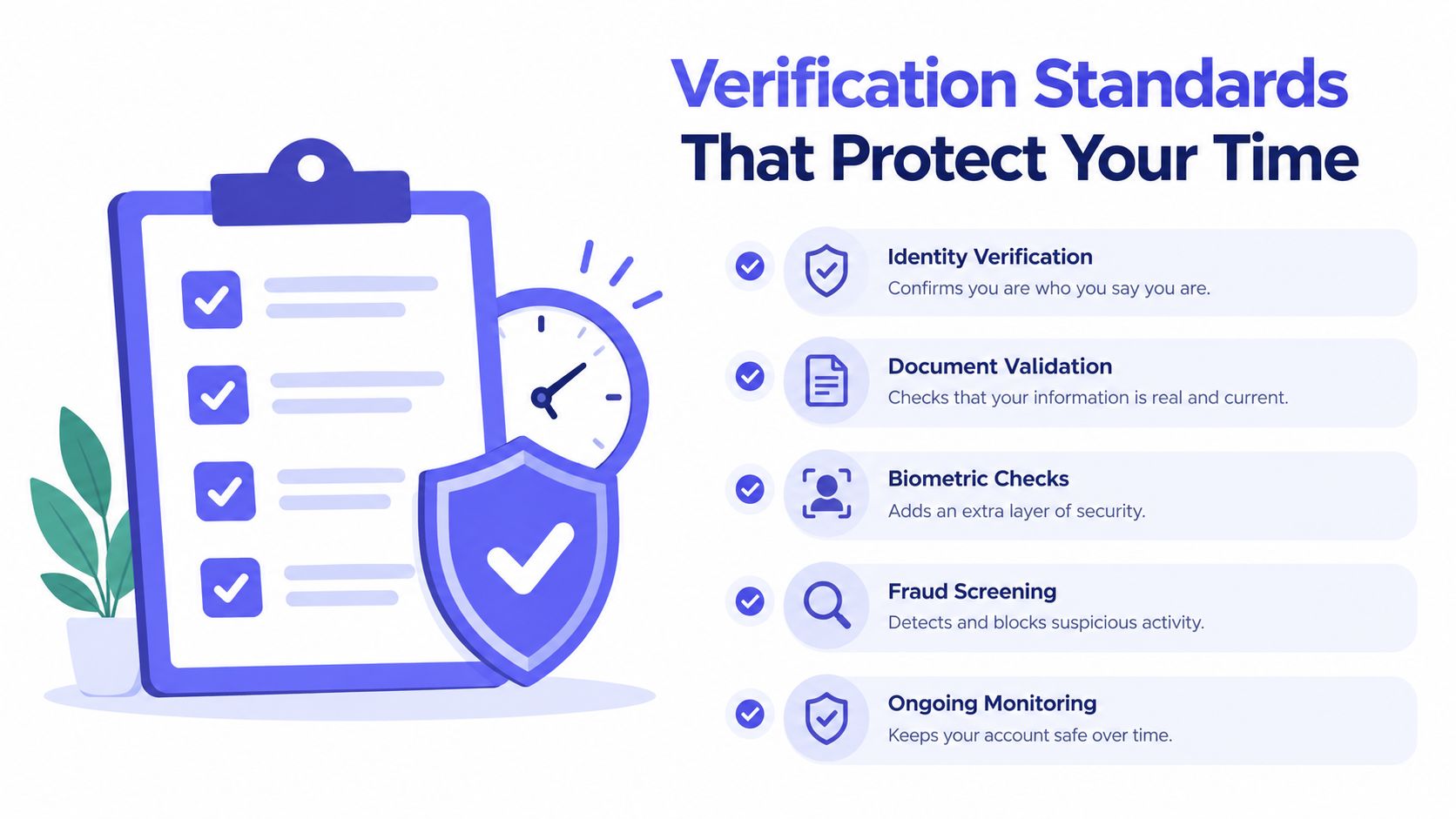
Verification Standards That Protect Your Time
Exclusivity only matters if the request is legitimate and the business receiving it is qualified to handle the work. A platform can route a bad contact to one company and still call the result exclusive. Premium lead sources need standards for both the professional and the project.
Start with the business. Confirm an active state license where the trade requires one. Check insurance documentation. Require background screening for owners or operators when the platform's model calls for it. Verification analyses identify licensing, insurance, and background checks as common safeguards before a lead reaches a professional, as outlined in this contractor lead-generation standards guide.
Reputation must be part of eligibility
A license proves authorization. It doesn't prove that a business communicates well, completes work reliably, or treats customers fairly. Public reviews add a separate performance signal, especially when a platform checks for recent volume rather than relying on an old rating.
Premium systems increasingly maintain a 4.5+ star review threshold for professionals who remain eligible in the lead rotation, according to guidance on what homeowners should know about lead-selling systems. That threshold isn't a substitute for judgment, but it creates a meaningful filter against businesses that make broad quality claims without public evidence.
Ask what happens after verification
A serious provider should explain how it handles invalid contact details, wrong service areas, duplicate requests, and projects outside your capabilities. It should also tell you whether the request is sold to one business or placed into a wider buyer pool.
Use this checklist before you commit:
- Licensing: Confirm that the relevant state license is active and matches the services you advertise.
- Insurance: Ask whether coverage is checked before distribution and whether outdated documents remove a business from eligibility.
- Background screening: Find out who is screened, what happens when ownership changes, and how often records are reviewed.
- Reputation: Check whether the platform uses a public review threshold and recent review activity.
- Human review: Determine whether a person evaluates the business and project, rather than relying only on automated form fields.
- Lead handling: Get clear rules for follow-up, resale, invalid contacts, and customer complaints.
You aren't buying data. You're buying access to a potential customer under conditions that protect your team's time and your reputation. Verification should be part of the product, not a footnote in the terms.
Consumer Trust and the Problem with Middlemen
A homeowner who submits a project request wants to know who will contact them. If the form appears to belong to a local professional but feeds a broker that resells the details, the eventual phone call starts with suspicion. The contractor may be legitimate, but the lead source has already damaged the first interaction.
Recent coverage warns that fake-local pages and broker-style lead capture damage consumer trust, as people increasingly encounter middleman sites posing as local professionals, according to this report on fake contractor pages and lead-generation practices.

Transparency improves the first call
The customer should understand the path from form submission to professional contact. A transparent platform explains whether it is a marketplace, a directory, a matching service, or an advertising intermediary. It identifies what information is collected, who receives it, and whether the request can be sold again.
That clarity helps the professional, too. If the customer expects your call and knows why you were matched, your representative doesn't have to spend the opening moments defending the source. The call can start with the project.
Protect the relationship after delivery
Lead handling doesn't end when a phone number reaches your CRM. Your team should use the details only for the original inquiry, avoid bulk marketing, and respect requests not to be contacted. A business that treats an exclusive request as permission for unrelated outreach can turn a high-intent opportunity into a complaint.
The strongest model creates alignment between platform, customer, and professional. The customer gets a known contact. The professional gets a focused opportunity. The platform earns trust by making the exchange understandable instead of hiding behind a local-looking page.
That standard also gives you a practical vendor test. Ask to see the customer-facing experience before buying leads. If the platform won't explain who owns the relationship or how your business is presented, assume the customer won't understand it either.
Metrics to Evaluate Your Lead Sources
Your CRM should show more than the number of leads delivered. Build a source-level view that follows every request from delivery through contact, appointment, estimate, booked job, completed work, and collected revenue. Without that chain, you can't distinguish a marketing problem from a sales problem.
Track each source separately. Shared marketplaces, paid search, referrals, directory traffic, and exclusive matching services behave differently. Combining them into one pipeline average hides the differences you need to manage.
Start with contact contention
Ask how many businesses receive the same inquiry and how close together those deliveries occur. If the provider can't answer, you don't have a clear acquisition product. You have an uncertain distribution risk.
Then measure:
- Contact rate: The share of delivered inquiries where a real person speaks with your team.
- Time to first attempt: The elapsed time between delivery and your first call or message.
- Conversation quality: Whether the person confirms the project, location, timing, and decision-making role.
- Appointment rate: The share of valid conversations that become scheduled next steps.
- Show rate: How often scheduled appointments take place.
- Close rate: The share of qualified opportunities that become booked work.
- Gross profit per source: Revenue is useful, but contribution after delivery costs and direct job costs is better.
- Refund quality: The pattern of invalid, duplicate, out-of-area, or already-served inquiries.
Use intent signals before judging performance
A request with a specific service, clear project context, usable contact details, and a defined service area deserves different treatment from a vague form submission. Your team should score these signals consistently, then compare close performance by lead quality.
Don't blame the source before checking execution. If contact rates are weak, audit phone-number recognition, call timing, staffing, voicemail scripts, and follow-up ownership. If contact rates are strong but close rates are poor, examine pricing, qualification, estimates, and the fit between the project and your service mix.
A dashboard should help you decide what to change next, not merely report what went wrong.
Review results by cohort and service line. A source may be profitable for restoration work and weak for planned renovation. It may perform well during staffed hours and poorly when inquiries arrive after the office closes. The more precisely you segment the data, the less likely you are to make an expensive blanket decision.
Set a stop rule before testing a source. Decide what evidence would cause you to pause delivery, request better filtering, or move to exclusive routing. That prevents sunk-cost thinking from keeping your team in a lead marketplace that no longer produces acceptable jobs.
Transitioning to a Premium Lead Model
Don't shut off every existing channel overnight. Shift deliberately. Keep the sources that produce profitable work, reduce the ones that consume time without producing jobs, and test exclusive contractor leads against a defined service category or territory.
Exclusive and territory-locked models often carry a premium, but they let buyers judge performance by cost per booked job rather than cost per lead. They can also preserve pay-per-lead flexibility without requiring a long-term commitment, as explained in this guide to lead-generation websites for contractors.
Make the transition operational
Before you accept higher-intent requests, prepare the team that will receive them.
- Choose one service line: Start with a category where your licensing, capacity, margins, and response process are clear.
- Define the service area: Specify the locations you can serve profitably and the projects you won't accept.
- Assign ownership: Give one person responsibility for every new request, including evenings or overflow periods.
- Write the opening script: Confirm the project, explain why you're calling, and set a concrete next step.
- Create source tags: Mark every request so your CRM can compare delivery, contact, appointment, and close outcomes.
- Set acceptance rules: Decide which project details make a request valid and which conditions justify a dispute.
- Review the economics: Compare total lead spend and labor against booked-job contribution, not vanity volume.
One option is lead generation for contractors from Hand Vetted Co., which matches a project request with one verified professional rather than distributing it across multiple businesses. The platform describes a pay-per-lead approach with exclusive project requests and no long-term commitment, so a business can test the model against its own cost-per-job baseline.
Judge the test like an operator
Give the test a clear budget and a defined review point. Don't change your close-rate definition midway through the experiment. Record whether the request was exclusive, how quickly the team responded, whether the project fit your capabilities, and whether the resulting work met your margin target.
The goal isn't to collect more inquiries. It's to create a pipeline your team can answer, qualify, sell, and fulfill without paying competitors to create unnecessary contact friction. If an exclusive source produces fewer leads but more profitable jobs, that isn't a volume problem. It's a better operating model.
The decision is straightforward. Keep buying shared leads only if their completed-job economics beat the alternatives after labor and follow-up are included. Otherwise, move your budget toward verified, exclusive routing and build the response process needed to capitalize on it.
Hand Vetted Co. connects businesses with exclusive, pre-screened project requests matched to one professional, helping your team avoid shared-lead competition and focus on qualified opportunities. Visit Hand Vetted Co. to review the matching model and decide whether it fits your cost-per-booked-job target.