A typical fire damage restoration project costs about $27,175, with common projects ranging from roughly $3,107 to $51,243 depending on how far the fire, smoke, soot, water, and structural damage extends. The estimate you receive first often excludes the secondary work that creates the final bill.
That gap causes most unpleasant surprises. A crew may quote cleanup, then uncover damaged framing, contaminated insulation, smoke inside the HVAC system, contents that need offsite treatment, or reconstruction required by current building codes. Treat the first estimate as a starting scope, not a guaranteed final price.
Table of Contents
- National Averages and Typical Cost Ranges
- Breaking Down the Key Cost Components
- Regional Price Variations and Market Factors
- Real-World Project Scenarios and Estimates
- Navigating Insurance Claims and Coverage
- Strategies to Reduce Overall Restoration Costs
National Averages and Typical Cost Ranges
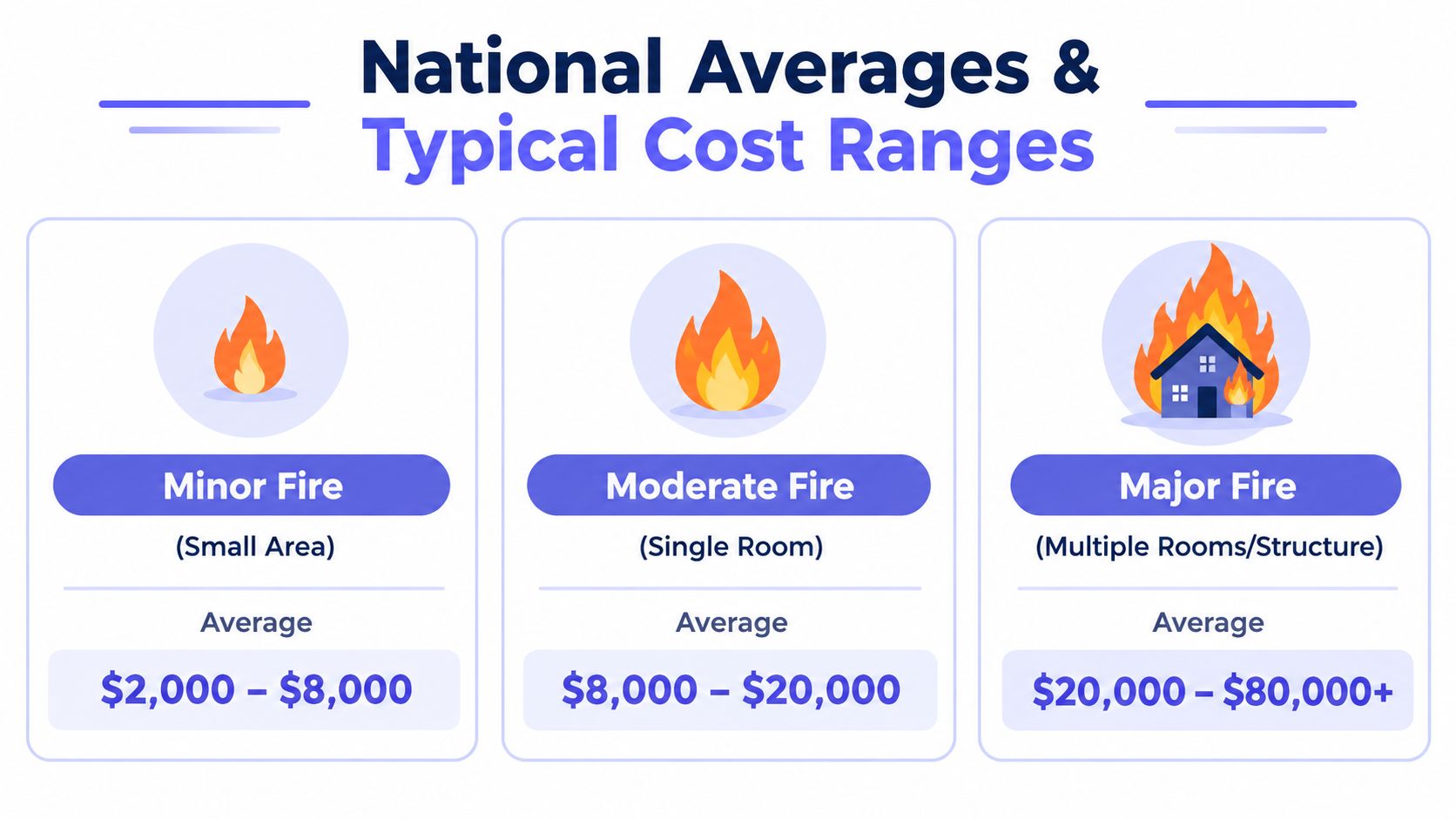
A national average of about $27,175 provides a useful benchmark, but it conceals a wide spread. Typical fire damage restoration projects range from approximately $3,107 to $51,243, according to Angi's fire damage restoration cost guide.
Those figures represent very different scopes. A contained incident may require surface cleaning, limited demolition, and deodorization. A major loss may add structural engineering, water extraction, roof work, contents replacement, and complete rebuilding. The first clean-looking estimate can also omit odor remediation, offsite contents storage, and upgrades required to meet current building codes.
Use square footage as a screening tool
Residential mitigation and restoration often benchmarks near $4 to $7 per square foot, although severity, access, materials, and the work required determine the actual rate. HomeGuide's fire damage restoration cost data places typical residential pricing in that range.
Use the calculation to challenge an early scope, not to predict the final reconstruction bill. For a 2,000-square-foot home, those benchmark rates suggest roughly $8,000 to $14,000 for mitigation or restoration. Structural repairs, smoke inside HVAC equipment, odor treatment, contents handling, and code upgrades can push the final invoice well beyond that screening figure.
Severity drives the final price
Minor smoke damage can begin near $800, while major fires requiring rebuilding can reach about $180,000. These endpoints, reported in Angi's fire damage restoration cost guide, show why an average cannot replace a room-by-room inspection and written scope.
Require separate line items for emergency stabilization, demolition, cleaning, contents work, odor treatment, drying, reconstruction, permits, and possible code upgrades. A vague single-line estimate gives you no reliable way to identify why the final bill increased.
Breaking Down the Key Cost Components
A restoration invoice is a stack of work orders, not one cleaning fee. The gap between a clean-looking initial estimate and the final bill usually comes from secondary work: firefighting water, odor treatment, contents handling, and required code upgrades.
Structural mitigation and reconstruction
Crews may board openings, tarp the roof, remove charred materials, stabilize unsafe areas, extract water, and protect the building from weather. Specialists then inspect framing, electrical systems, plumbing, insulation, drywall, flooring, and HVAC components.
Demolition adds its own cost layer. Workers must remove materials that cannot be cleaned safely, haul debris, and prepare surfaces for rebuilding. Heat-weakened framing or water-damaged electrical components may require a licensed electrician or structural professional before reconstruction can start.
Ask the contractor to separate emergency mitigation from reconstruction. Mitigation controls immediate hazards and contamination. Reconstruction replaces damaged building materials. Mixing both scopes into one figure makes a low initial estimate look better while hiding the work most likely to expand the final bill.
Firefighting water often becomes a separate cost line. Extraction, drying, moisture monitoring, mold prevention, and replacement of saturated materials may continue after the fire damage is stabilized. See this water damage repair cost breakdown for how that related scope is priced.
Smoke, soot, and odor treatment
Smoke moves through door gaps, wall cavities, ductwork, and porous finishes. Soot can settle far from the room where the fire began. Cleaning may require dry-cleaning methods, HEPA filtration, duct cleaning, surface washing, sealing, and specialized deodorization.
Odor remediation is source removal, not air freshener. Technicians may use ozone or thermal fogging, but the method must match occupancy, ventilation, and the materials affected. If insulation, carpet padding, cabinets, or ductwork still contain smoke residue, treating the air alone will not solve the problem.
Practical rule: Reject any odor-removal estimate that does not identify the contaminated materials and the planned treatment for each one.
Contents cleaning and offsite storage
Personal property can become a major labor category. Furniture, clothing, documents, electronics, photographs, and kitchenware may need inventory, packing, transport, cleaning, deodorizing, storage, and return delivery.
Offsite storage is easy to omit during an initial walkthrough because attention stays on the building. Require the written estimate to state whether packing, transportation, storage, cleaning, replacement evaluation, and final delivery are included. Also ask who pays for added storage time if reconstruction takes longer than planned.
Regional Price Variations and Market Factors
Your location affects the fire damage restoration cost because labor, materials, subcontractors, permits, and response logistics vary by market. A dense metropolitan area may have higher labor and reconstruction rates, while a rural property may face slower access to specialized crews and fewer available suppliers.
The house itself matters too. Larger homes contain more flooring, cabinetry, ductwork, finishes, and personal property to inspect or clean. Modern construction can also require specialized components and stricter coordination between restoration crews, electricians, engineers, and code officials.
Why older and newer estimates look different
Consumer pricing shifted materially over time. A 2022-era benchmark placed many fire and smoke restoration averages above $13,000, with common ranges around $3,300 to $22,400. By 2025 to 2026, several independent guides had revised typical national averages into the approximate $20,470 to $27,175 range, with upper-end totals often exceeding $40,000 or $50,000, according to LawnStarter's fire and smoke restoration pricing review.
That doesn't mean every project became more expensive by the same amount. It means labor, materials, and subcontracted reconstruction can materially change the benchmark over time, especially in large U.S. markets.
Compare scopes, not just totals
Two local estimates may show different totals because one includes demolition and drying while the other includes only cleaning. Compare these items line by line:
- Emergency protection: Boarding, tarping, security, and water removal.
- Demolition: Removal, hauling, disposal, and surface preparation.
- Specialty cleaning: Smoke, soot, HVAC, contents, and odor treatment.
- Reconstruction: Drywall, framing, electrical, flooring, paint, permits, and inspections.
A lower bid isn't cheaper if it excludes the work that another contractor priced upfront.
Real-World Project Scenarios and Estimates
A contained appliance fire and a structural loss require entirely different budgets. The final bill follows the work discovered after cleanup begins, not the size of the original flame.
A minor kitchen incident
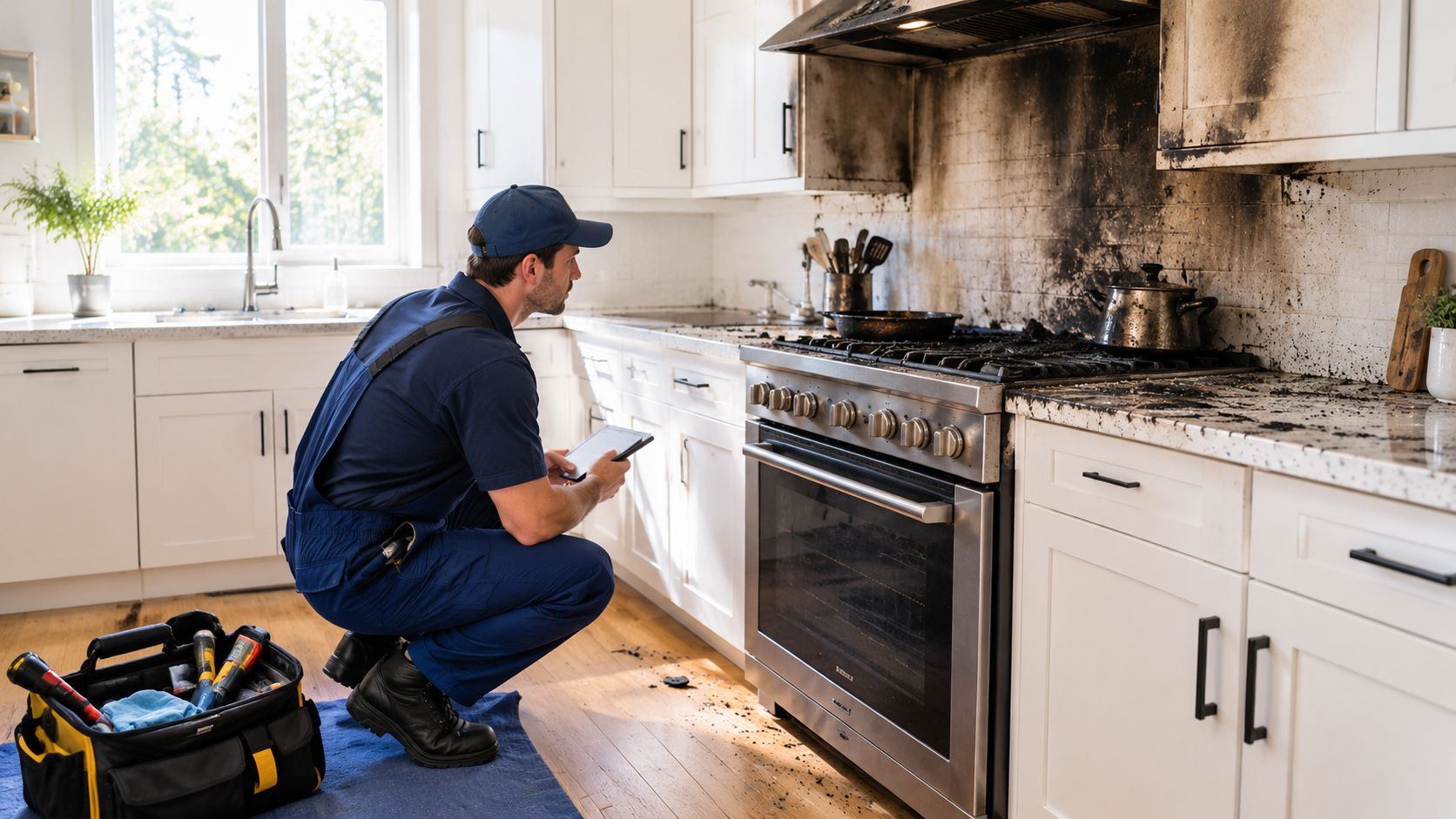
A stove fire limited to the appliance and nearby cabinets may require temporary protection, soot removal, cabinet or drywall replacement, appliance evaluation, and odor treatment. Smoke that enters the HVAC system can turn a seemingly clean estimate into a larger project. Offsite contents storage may also add charges if cabinets and rooms must be cleared before work starts.
Minor smoke-damage projects can begin near $800, while broader projects start around $3,107, according to Modernize's fire and smoke restoration cost guide. Those figures describe different scopes, not a guaranteed price. Ask whether the estimate includes odor remediation, contents handling, disposal, and final cleaning.
A moderate living room fire
A living room fire creates a wider scope even when flames remain in one area. Smoke can affect adjacent rooms, firefighting water can damage flooring or walls, and removed drywall may expose insulation, wiring, or framing that requires inspection.
Several trades working in sequence can push this project into the low five figures. Require line items for drying, demolition, air cleaning, odor treatment, contents packing and storage, repairs, permits, and final verification. Code upgrades may also appear after damaged electrical or structural components are opened, especially when replacement work must meet current requirements.
Use this project budget example to organize labor, materials, allowances, and possible change orders before approving work.
A severe structural fire
A multi-room fire involving the roof, framing, or major systems is a rebuild, not a cleaning job. Crews may secure the property, remove unsafe materials, document contents, coordinate engineering, replace utilities, and restore finishes across the structure.
For a practical scenario, a 2,000-square-foot home rebuilt at $100 per square foot would produce a $200,000 reconstruction allowance before contents replacement, temporary housing, storage, odor treatment, permitting changes, or code upgrades. That calculation is a planning example, not a contractor bid. The final bill depends on the damaged area, structural requirements, finish level, and secondary costs that the initial “clean” estimate often leaves out.
Navigating Insurance Claims and Coverage
Insurance can pay a large share of a covered loss, but the claim still needs disciplined documentation. Fire and lightning claims rank among the most expensive homeowner loss types, with average claim payouts consistently exceeding $77,000, according to the Insurance Information Institute as cited by Master Fire Damage's cost-factor overview.
That number reflects the combined cost of structure, contents, smoke remediation, and related losses. It doesn't tell you what your policy will pay, so rely on your declarations page, endorsements, limits, deductible, and adjuster correspondence.
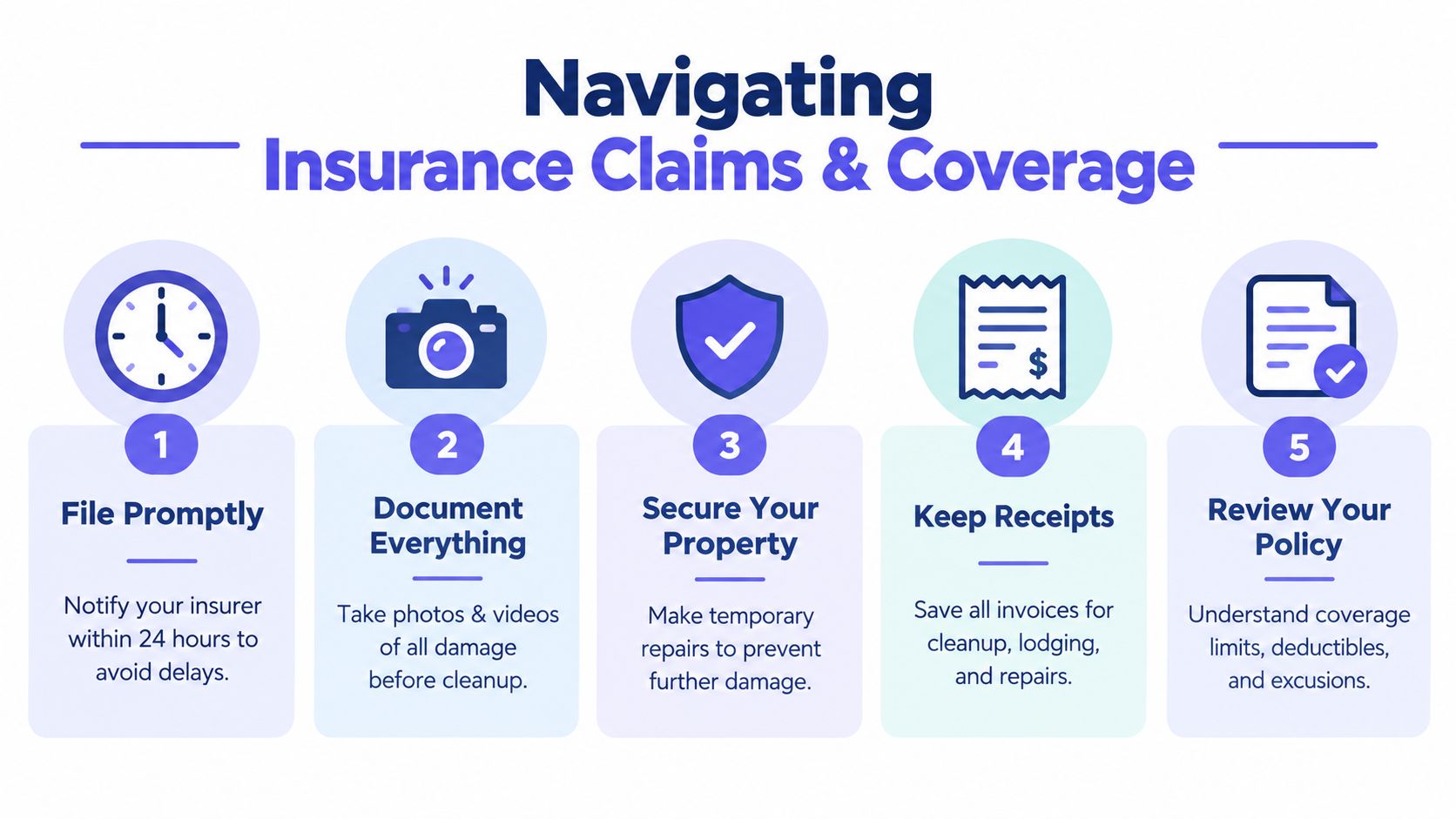
Build the claim file before cleanup
Start with safety and evidence. Don't enter an unsafe structure or move damaged property until the fire authority and your restoration professionals say it's safe.
- Notify the insurer promptly: Open the claim and ask what emergency work you can authorize immediately.
- Photograph every area: Capture wide views, close details, contents, soot, water, openings, and damaged systems.
- Create a contents inventory: List items by room, describe the damage, and gather receipts or photos where available.
- Save every receipt: Keep records for emergency protection, cleanup, storage, lodging, meals, transportation, and repairs.
- Request a written scope: Make sure the estimate separates covered restoration work from optional improvements.
Separate covered work from uncovered upgrades
Dwelling coverage generally addresses covered damage to the structure up to policy limits. Personal property coverage may address damaged belongings, and additional living expense coverage may help with temporary housing and related costs, subject to the policy.
Hidden exclusions and limits create friction. Code upgrades, better finishes, policy deductibles, coverage caps on specific belongings, and temporary living expenses beyond the applicable limit may leave you paying the difference. Ask the adjuster to identify each allowance and exclusion in writing.
The homeowner insurance claims resource can help you organize questions before discussions with the insurer and restoration team.
Ask this before signing: “Which parts of this scope are approved, which are pending, and which could become my responsibility?”
Don't let a contractor or adjuster rely on verbal assumptions. A clean paper trail protects you when the scope changes.
Strategies to Reduce Overall Restoration Costs
You can't bargain fire damage away, but you can prevent avoidable charges. The biggest savings usually come from controlling secondary damage and defining the scope before reconstruction begins.
Smoke can spread far beyond the burned area, and firefighting water can create additional remediation work. HomeAdvisor's disaster recovery cost guidance highlights why the final bill depends on more than the visible burn pattern.
Stop the next problem quickly
Secure openings, remove standing water, begin controlled drying, and protect salvageable contents. Don't scrub soot aggressively or use household cleaners on porous surfaces without professional guidance. The wrong cleaning method can drive soot deeper into paint, fabric, wood, or stone.
Ask the restoration team to record moisture readings, affected materials, equipment placement, and the reason for each demolition decision. Documentation helps you challenge unnecessary scope expansion without delaying work that protects the building.
Control scope creep
Before work starts, request:
- A room-by-room estimate: Require quantities, labor categories, equipment, disposal, and allowances.
- Change-order rules: No extra work should proceed without written approval, except emergency actions needed to prevent further damage.
- Trade coordination: Confirm who handles electrical, plumbing, HVAC, structural assessment, permits, and final finishes.
- Contents accounting: Require an inventory and chain of custody for anything removed from the property.
- Licensing and screening details: Verify active licensing, insurance, relevant restoration experience, and who will perform the work.
A single point of contact reduces miscommunication, but don't confuse convenience with verification. Check credentials independently and compare the scope, not just the headline price.
Use Hand Vetted Co. when you want one exclusive introduction to a verified professional for restoration work. Its process checks licensing, background screening, recent 4.5-plus-star ratings, and human review before making a match, as described on the Hand Vetted standards page.
Your next move is practical. Photograph the property, notify your insurer, preserve receipts, and request a line-item inspection that includes smoke, water, contents, odor, structural, and code-related work. Then visit Hand Vetted Co. to request one verified restoration professional who can assess the damage and help turn an uncertain fire loss into a documented scope of work.