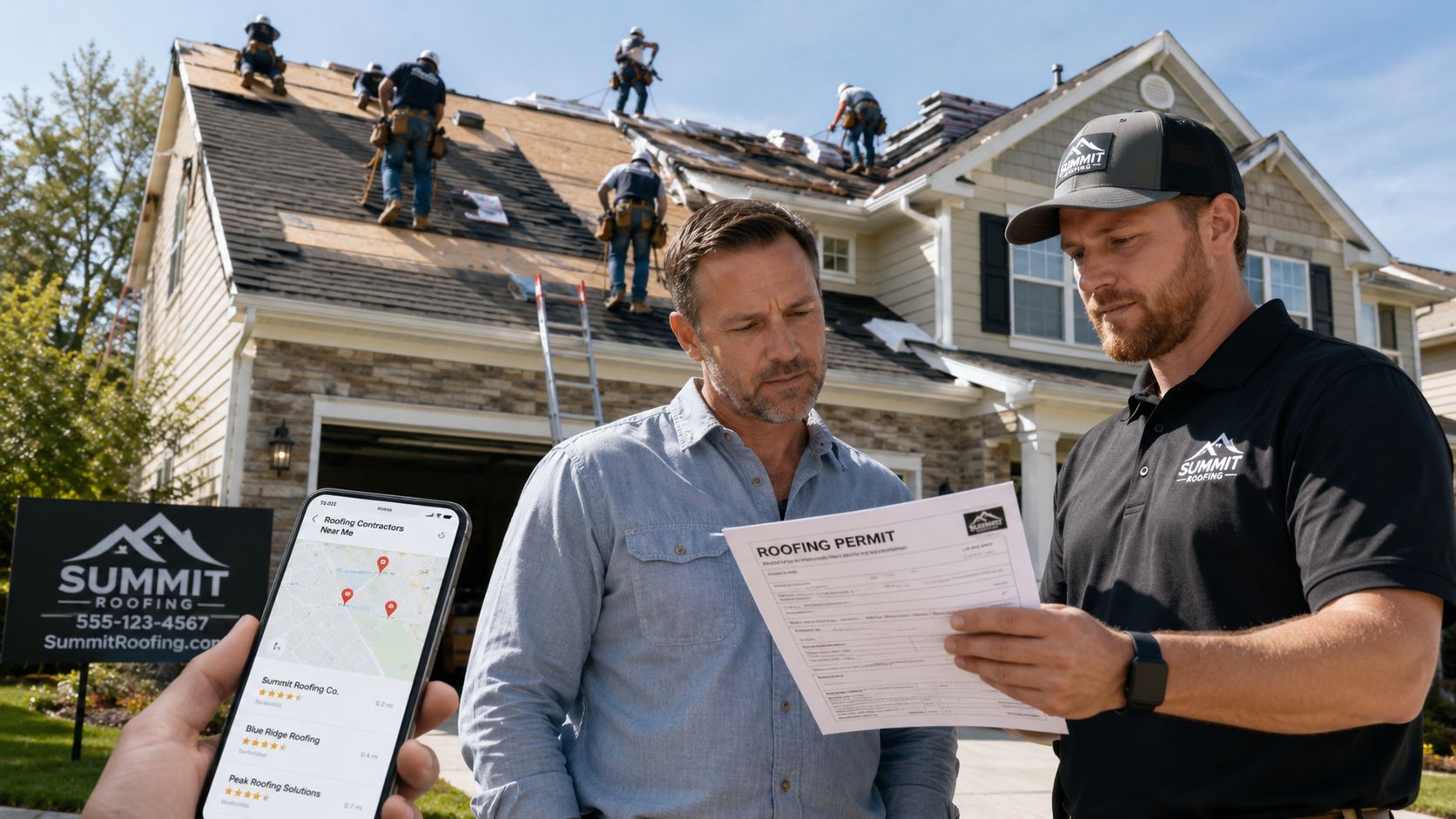
Typing “roofing contractor near me” and picking the closest result is how people end up paying twice. Distance doesn't tell you whether the roofer can legally pull your permit, whether the insurance is real, or whether the bid hides a change-order trap that blows up later.
That matters in roofing more than many realize. The U.S. roofing market is big and fragmented, with 109,000 businesses in 2026 and an estimated market size of $92.5 billion; 65.4% of roofing firms had fewer than 5 employees in 2022, and 90.8% had fewer than 20 employees, which is exactly why local jurisdiction, not just proximity, decides who can do the job in your ZIP code (IBISWorld).
Table of Contents
- Why Proximity Is Not Enough When Hiring a Roofer
- How to Verify Licenses and Insurance Before You Commit
- Comparing Bids Without Getting Misled by the Lowest Number
- Navigating Storm Damage and Insurance Claims
- Contract Details and Payment Terms That Protect You
- A Smarter Way to Find Your Match
Why Proximity Is Not Enough When Hiring a Roofer
The closest roofer is not automatically the right roofer. Jurisdiction beats mileage every time, because a contractor can be nearby and still be wrong for your city, county, or permit office.
License, registration, and permit authority are not the same thing
A state license says someone is allowed to operate under that state's rules. Local registration can still be separate, and permit eligibility can be even narrower. That's the part many homeowners miss when they search for a roofing contractor near me.
Practical rule: if the contractor can't tell you who pulls the permit in your exact city or county, keep looking.
Cheap bids often get expensive. A roofer may sound legitimate, show up fast, and still be unable to legally pass inspection where the work happens. That can leave you stuck with delays, failed inspections, or work that insurance won't like later.
What you should ask before you call it a match
Ask one direct question: Can you legally work here, pull the permit here, and pass inspection here? If the answer is fuzzy, the search isn't over.
You also want proof that the contractor is local in the way that matters. Some directories give you nearby names, but they don't reliably tell you whether the business is recognized by the right authority for your project. That gap matters because roofing is heavily regulated and permit requirements vary by market, so a directory listing is not the same thing as legal eligibility.
If you want a cleaner path than scrolling through a dozen listings, a verified matching service can narrow the field before you spend time on sales calls. Hand Vetted Co. does that by matching you with one licensed, background-checked professional instead of scattering your request around.
How to Verify Licenses and Insurance Before You Commit
Do not hire on a badge or a star rating alone. Ask for documents, then verify them yourself. A roofer who hesitates here is already telling you something useful.
The first call should produce three documents
Request the state license number, a certificate of insurance, and proof of any local registration. Then check each one independently, not just on the contractor's website or in a directory profile.
Here's the sequence that keeps you out of trouble:
- Get the license number in writing. Then verify it with the state board or licensing portal.
- Ask for the certificate of insurance. Make sure it shows both general liability and workers' compensation.
- Confirm the named business matches the bid. A different company name on the paperwork is a problem, not a detail.
- Call the insurance agency listed on the certificate. Confirm the policy is active.
- Check local registration or permit eligibility. If the project city or county requires it, make the contractor show it.
One strong benchmark comes from Oklahoma, where roofing contractors must register before offering services, show liability insurance of at least $500,000, and provide workers' compensation coverage or an exemption. For commercial roofing work there, the minimum general liability coverage rises to $1,000,000 (Oklahoma CIB).
If the certificate looks rushed, expired, or oddly edited, stop. A real insurer can confirm coverage in minutes.
What good insurance proof looks like
A real certificate should name the contractor, show current dates, and identify the policy type clearly. If the roofer claims to be insured but won't let you validate it directly with the carrier, that's not a paperwork issue, that's a risk issue.
Industry guidance also warns that uninsured contractors can leave the homeowner exposed to injury and property-damage liability. That's not theoretical. If a worker gets hurt on your property or a ladder damages siding, you don't want to find out coverage was fake after the fact.
For a useful screening shortcut, compare the paperwork against a contractor insurance checklist like the one on Hand Vetted's insurance requirements page, then use the phone call to confirm the policy exists.
Comparing Bids Without Getting Misled by the Lowest Number
The lowest number is usually the loosest proposal. That is how homeowners get burned, because a cheap bid can hide underpriced labor, thinner materials, vague warranty language, or a change-order setup that appears halfway through the job.
Itemized bids are required
Ask for at least three itemized written estimates. A proper bid should spell out material specs, labor, schedule, cleanup, disposal, and warranty terms. A single line with a total price is not enough.
| Bid Comparison Checklist | What to Look For | Red Flag |
|---|---|---|
| Material specs | Brand, type, and scope of roofing materials | “Standard materials” with no detail |
| Labor breakdown | Clear labor scope and installation tasks | One lump sum with no explanation |
| Timeline | Start date, milestones, completion date | “As soon as possible” with no dates |
| Waste disposal | Tear-off cleanup and haul-away terms | No mention of debris removal |
| Warranty terms | Separate workmanship and material coverage | “Warranty included” with no written terms |
| Change orders | Written approval process for extras | Verbal approval only |
Keep the deposit to 10–30% at most. Many solid contractors also structure payment around completed milestones instead of asking for a large upfront transfer, and American Quality Remodeling lays out the same basic discipline.
Read the proposal for what it leaves out
Vague proposals get expensive later. If the contractor does not specify shingle type, flashing work, underlayment, venting, or cleanup, you are not comparing bids. You are comparing guesses.
Read the total, then read the assumptions under it. A low bid that underestimates labor or leaves out disposal can become the high bid once change orders start landing. The price on paper means little if the scope is thin.
Use a rough roof repair estimate from Hand Vetted's estimate guide to pressure-test the numbers, then ask each bidder to explain any gap in plain language. If they cannot explain it clearly, they probably do not understand the job well enough to price it correctly.
Navigating Storm Damage and Insurance Claims
A storm turns a simple search into a time-sensitive decision. After hail, wind, or a leak, the question isn't just who's nearby. It's who can document the damage correctly without wrecking your claim.
Start with evidence, not with a replacement decision
A real-world storm call usually starts the same way. The roof takes a hit, someone sees missing shingles or a ceiling stain, and the pressure jumps straight to replacement. That's too fast.
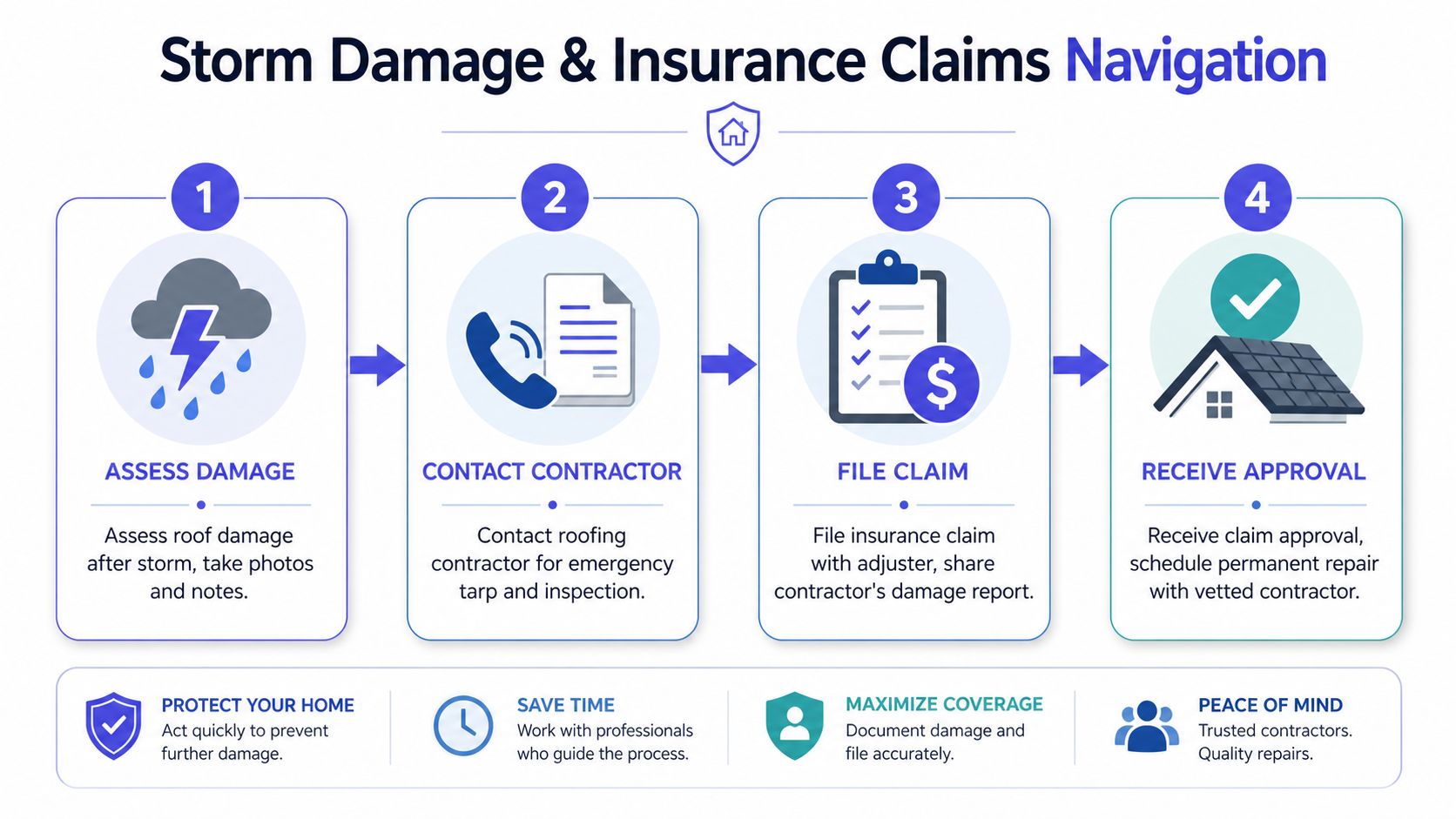
Take photos first. Then get a roofer out for an inspection and emergency protection if needed, such as a tarp or temporary patch. Only after that should the insurer or adjuster move deeper into the file.
Who to call first depends on the damage
If water is actively getting in, call for emergency mitigation first. If the roof is damaged but stable, get the contractor's documentation in hand before you send the full claim packet. The point is to preserve evidence, not to create three different versions of the story.
Keep the sequence tight, photos first, temporary repair second, insurer third.
That avoids conflicting damage reports. It also helps separate repairable issues from cosmetic damage that doesn't justify a full replacement. A good contractor knows the difference and won't oversell every bruise in the shingles as a full-roof catastrophe.
For storm-related guidance, use a contractor who knows how to document damage for the carrier, not just quote replacement. The follow-up questions are the ones that matter: whether the repair is temporary or permanent, how the photos are labeled, and whether the report lines up with what the adjuster will inspect later. If you want a deeper checklist for that process, Hand Vetted's roof damage claims guide is a practical place to start.
Contract Details and Payment Terms That Protect You
A verbal quote is not a contract. If it is not written down, it does not protect you when the scope shifts or the bill changes. A lot of homeowner pain starts right there, because people assume a handshake means the job is fixed.
Your contract needs to say exactly what gets built
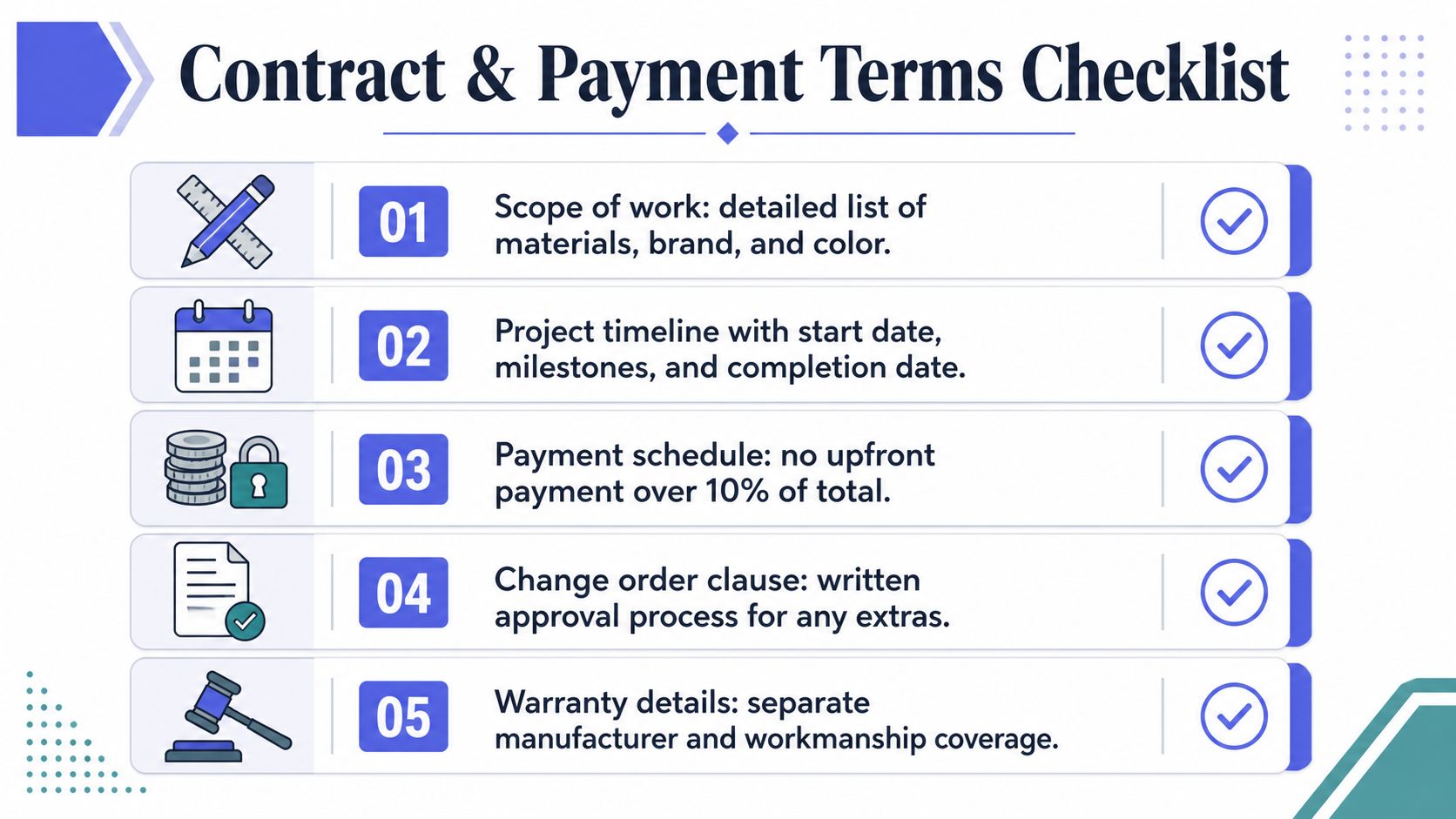
The contract should spell out the scope of work, material specifications, start date, completion date, cleanup terms, warranty language, and the change-order process. If the roofer will not put those basics on paper, you are financing uncertainty.
Here is the plain version of what belongs in writing:
- Scope of work: what gets removed, repaired, or replaced
- Material specs: brand, type, color, and any accessory products
- Timeline: start date, milestones, and target completion date
- Cleanup and disposal: who hauls debris and how the site gets left
- Change orders: written approval before any extra work starts
- Warranty terms: separate language for materials and workmanship
A clean contract protects both sides. A vague contract protects no one.
Payment should follow progress, not trust
Use milestone-based payments whenever possible. That keeps money tied to work you can see, instead of paying too much before the first shingle is down. The same deposit range noted earlier still applies here, but the test is whether the payment schedule matches the work already completed.
You should also ask who backs the warranty. Manufacturer warranties cover materials. Workmanship warranties come from the contractor. Those are different protections, and both should be named in the contract if you want real coverage.
If the roofer pushes cash-only, wants a huge upfront payment, or will not write down the change-order process, walk away. Those are warning signs, not quirks.
A Smarter Way to Find Your Match
You can spend hours comparing listings, reading reviews, and calling contractors who may not even be eligible for your job. Or you can start with a filtered match that already checks the basic gates before anyone calls you back.
Fewer calls, better filters
Hand Vetted Co. connects you with one verified professional, not a shared lead sent to multiple businesses. Every match passes four essential checks, active state licensing, thorough background screening on owners and operators, 4.5+ star ratings with recent volume, and a final human review.
That matters because the hardest part of hiring isn't finding names. It's cutting out the people who look available but can't prove they're the right fit. With an exclusive match, you're not competing with five other callers for the same estimate window.
What to do next
If you want less noise and more accountability, use a short intake form, answer the basic project questions, and let the screening happen before the first sales call. If the match isn't right, rematching is simple, and you're not stuck with a pile of unwanted callbacks.
The core rule stays the same whether you search on your own or use a matching platform. Verify jurisdiction, verify insurance, compare written bids, document storm damage, and make every payment part of a written contract. That's how you keep your roof project from turning into a legal and financial mess.
If you're ready to stop sorting through shaky listings and sales pressure, visit Hand Vetted Co. and request a verified roofing match. You'll get one exclusive professional who's already been screened for licensing, background, ratings, and human review, which is a lot better than gambling on the cheapest nearby bid.