
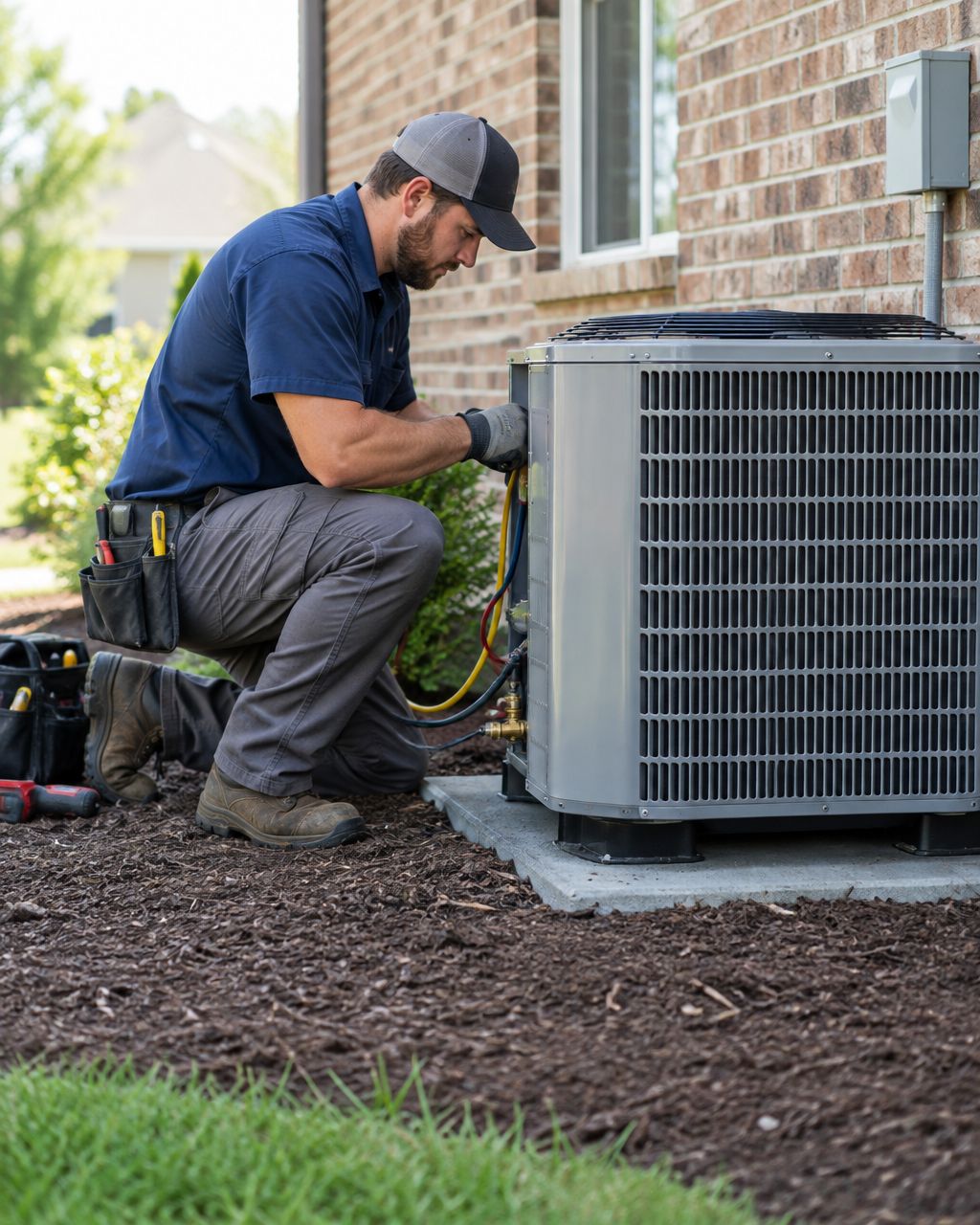
A HELOC (home equity line of credit) can fund an HVAC replacement by letting you borrow against your home's equity and draw money as each phase of the work happens. In 2026, that usually means a credit score of 680 or higher, at least 15–20% equity, and a combined loan-to-value limit of 85%.
- Most 2026 HELOC lenders look for a credit score of 680 or higher and cap the combined loan-to-value at about 85%.
- The average HELOC rate was 7.53% in September 2026, and most HELOC rates are variable, tied to the prime rate.
- A HELOC lets you draw money in stages, which matches HVAC work that splits into equipment, ductwork and electrical phases.
- A cash-out refinance replaces your entire mortgage; a HELOC leaves your first mortgage and its rate untouched.
Why a HELOC fits HVAC work
HVAC replacement is rarely one invoice. The equipment is one cost; ductwork, electrical connections and removal of the old system are others. A line of credit matches that shape: you borrow against approved equity and draw only what each phase needs, paying interest on what you have drawn rather than the full limit.
A cash-out refinance works differently. It replaces your current mortgage with a larger one and hands you the difference at closing. That can be the right tool when you also want a different rate or term. But it reprices your whole mortgage balance at today's rates, and it does not stage the money the way HVAC work happens.
The four-step workflow
1. Price the work before you shop for money. Get the installed scope in writing first. Our guide on how to compare HVAC replacement systems explains why the lowest equipment number is not the least costly installation. A quote that leaves sizing, ducts or electrical work blank will understate what you need to borrow.
2. Run the equity math. Lenders size a HELOC against your home's value. At a combined loan-to-value limit of 85%, a $400,000 home with a $250,000 mortgage balance supports about $90,000 of total borrowing. That is a ceiling, not a target — the HVAC project needs what it needs.
3. Compare the funding routes. A HELOC is variable-rate and staged. A home equity loan is fixed-rate and paid in one lump. A cash-out refinance rewrites the whole mortgage. If your first mortgage rate is lower than today's rates, keeping it and adding a HELOC is usually the cheaper structure.
4. Close, then draw against the schedule. After approval you receive access to the line and draw as invoices come due. Keep the draws aligned with the written scope and change orders.
What 2026 requirements look like
| Requirement | Typical 2026 standard | What it means |
|---|---|---|
| Credit score | 680 or higher at most lenders; some approve from 620 | Stronger scores price better |
| Equity | 15–20% minimum, combined LTV capped near 85% | Sets your maximum line |
| Debt-to-income | 43% or lower at most lenders | Includes the new payment |
| Rate type | Variable, tied to the prime rate | Payments can move with the Fed |
What the money costs
The average HELOC rate was 7.53% in September 2026, according to Experian's summary of Curinos data — down from roughly 9% in early 2025. Bankrate's national survey put the average at 7.28% as of September 23, 2026. The prime rate, the index most HELOCs price from, stood at 7.00% after the Federal Reserve's September 2026 meeting.
Because the rate is variable, model your budget above today's number. A $30,000 draw at 7.5% under an interest-only plan costs about $187 a month before any principal is repaid; repaying that same balance over ten years at 7.5% runs roughly $356 a month. Confirm every example against your actual quote.
Where homeowners go wrong
Borrowing before the quote. Open the line after the written scope exists, so the limit reflects the real job, including any duct corrections.
Treating the limit as a budget. An approved line is capacity, not a spending plan. The scope decides the number.
Ignoring the distribution work. New equipment on tired ducts leaves comfort problems in place. Ask the installer what the ducts need; our ductless mini-split guide covers the no-duct alternative for targeted rooms.
Skipping the license check. Whoever installs the system should hold the right trade license for your state. Our contractor license verification guide shows the checks that go beyond an active record.
FAQ
Can you use a HELOC for an HVAC replacement?
Yes. A HELOC is a common way to fund home improvements, including HVAC replacement, because you can draw money in stages as the work happens.
What credit score is needed for a HELOC in 2026?
Most lenders look for 680 or higher, though some approve from the low 600s with compensating factors. Higher scores price better.
How much equity do you need for a HELOC?
Plan on 15–20% equity, with most lenders capping the combined loan-to-value at about 85% of your home's value.
Is a HELOC rate fixed?
Usually not. Most HELOCs carry a variable rate tied to the prime rate, so budget for movement. A home equity loan is the fixed-rate alternative.
HELOC or cash-out refinance for HVAC?
If your current mortgage rate is lower than today's rates, a HELOC that leaves the first mortgage alone is usually the cheaper structure. A cash-out refinance suits a full reset of rate and term.
Source note: Experian/Curinos average HELOC rate (September 2026); Bankrate national HELOC survey (September 23, 2026); NerdWallet prime-rate tracker (September 2026); lender requirement summaries from Amerisave, The Mortgage Reports and LendingTree. Checked October 14, 2026. This article is educational and is not lending advice; terms vary by lender and borrower.
If the project is still at the comparison stage, settle the equipment and installed scope first. The financing decision is easier once the real job has a number.