
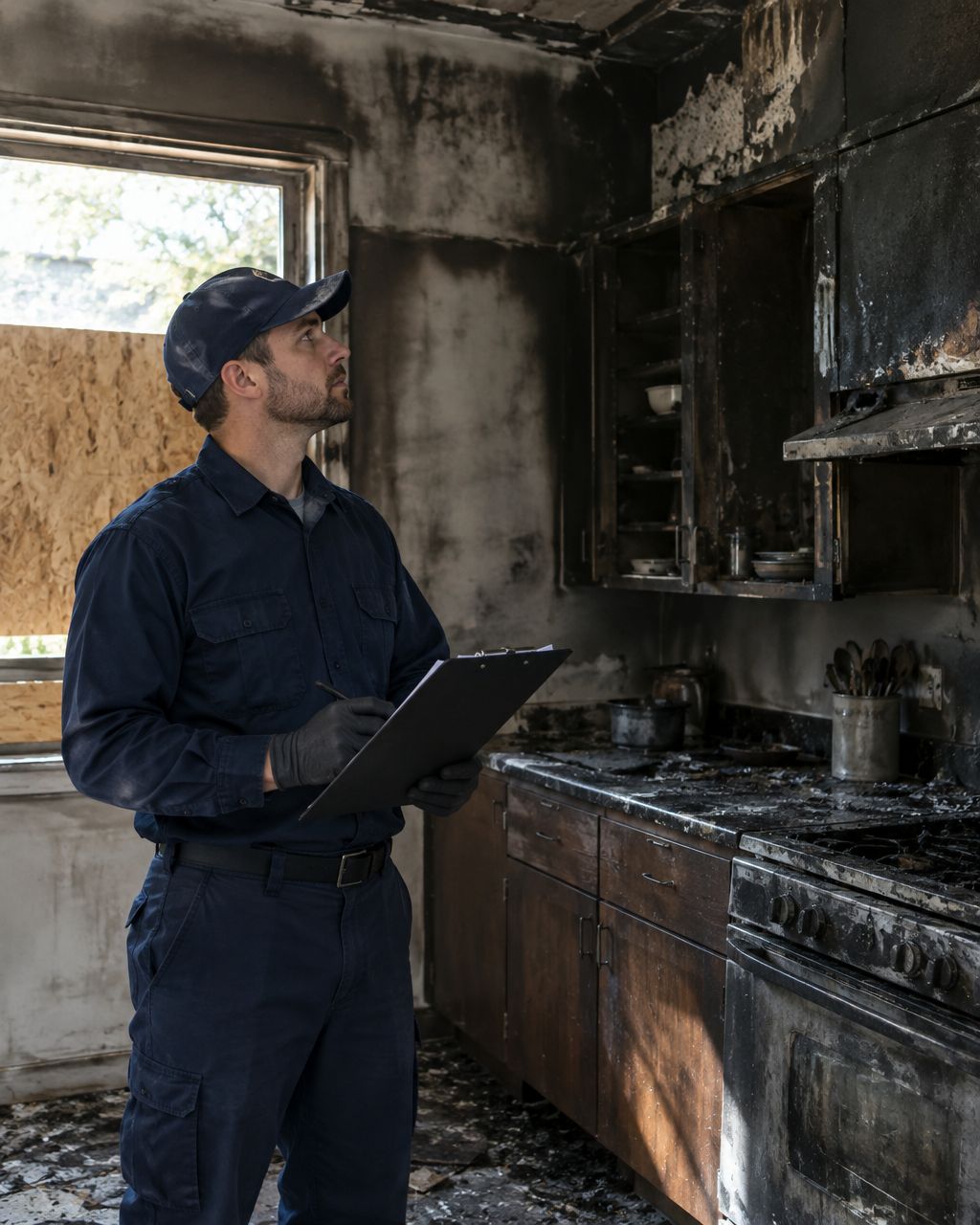
After the fire department leaves, secure the property, get the firefighting water out, and do not touch soot-covered surfaces until a restoration professional has assessed them - cleaning a smoke-damaged wall the wrong way pushes soot deeper and can turn a restorable item into a total loss.
- Wait for the fire department to clear the structure before entering.
- Fire damage restoration averages $27,477 nationally, with a $3,083-$52,031 range.
- Soot etches, stains and corrodes within hours - professional cleanup starts fast.
- Board-up, water removal and soot cleanup usually happen in the first 48 hours.
What happens after the fire department leaves
- The structure gets cleared, not forgotten. Firefighters check for hot spots and gas or electrical hazards before they leave, and they tell you whether the home is safe to enter at all. Take that answer literally.
- The property is secured. Boards over broken doors and windows, tarps over roof holes. This keeps weather and trespassers out, and your insurance company expects it - an unsecured, unoccupied fire home invites a second loss.
- The water from the hoses becomes a second problem. Firefighting water soaks floors, walls and ceilings, and it is a health hazard days later. Water removal and drying start within the first day or two, the same way any water in the basement gets handled - extract, dry, then rebuild.
- Soot and smoke get assessed. Soot is acidic and works fast: within hours it stains walls and corrodes metals, and within days it etches glass and fixtures. Different fires leave different residues - protein fires from kitchens, synthetic fires from plastics - and each needs a different cleaning method.
- Air quality gets treated. Smoke particles and odor sit in ducts, insulation and soft goods. Professionals run HEPA air scrubbers, and ductwork often needs its own cleaning.
- Belongings get sorted. Salvageable contents are inventoried, cleaned off-site or in place, and stored; everything else is documented for the claim before it leaves the property.
What it costs in 2026
Angi's 2026 data puts the national average for fire damage restoration at $27,477, with a typical range of $3,083 to $52,031. Smoke remediation alone runs $200 to $12,000 depending on how far odor and soot traveled. Small, contained kitchen fires sit at the low end; large structure fires with water and rebuild work sit far above it.
| Scope | What it covers | Typical 2026 cost |
|---|---|---|
| Minor smoke damage | One room, surface soot, deodorizing | Low end of range |
| Kitchen fire + water | Soot cleanup, drying, repaint, contents | Mid range |
| Large structure fire | Board-up, full mitigation, rebuild | High end and above |
Two things move the number more than anything else: how much of the home the smoke reached, and whether structural rebuild is included. Get a written scope for each.
Insurance, documented the right way
Fire is a named peril on standard homeowners policies, so the cleanup and rebuild are generally covered - subject to your deductible and policy limits. What decides how smoothly the claim goes is documentation. Photograph every room before anything is cleaned or moved, keep every receipt including hotel bills if the home is not livable (loss-of-use coverage pays for that), and get the restoration company's scope in writing before work starts.
Do not sign an assignment-of-benefits form that hands your claim to a contractor without reading it and checking it with your insurer first. Our guide to choosing a storm damage restoration company covers the same checks that matter here: license, insurance, written scope, and no pressure to sign on the spot.
What homeowners can safely do themselves
- Stay out until the fire department says it is safe.
- Limit movement in soot-covered rooms - crushing soot into carpet makes it harder to clean.
- Wash hands after handling anything smoke-damaged so you do not spread soot to clean surfaces.
- Change the HVAC filter and leave the system off if you smell smoke in the ducts.
- Keep a written inventory as you sort belongings, not after.
Leave the rest to professionals: soot in insulation, charring behind walls, and smoke odor in ductwork are not cleanable with household products, and the wrong effort costs you coverage.
How Handvetted matches restoration professionals
Handvetted connects homeowners with one licensed, background-checked, highly rated local restoration professional instead of sending your request to several businesses at once. The published standard has four parts: an active license confirmed through official state registries, background screening, verified ratings of 4.5 stars or higher, and a human review of every application. The service is free for homeowners, and if the match is not right, Handvetted offers a free rematch.
FAQ
What happens immediately after a house fire?
The fire department clears the structure for safety, the property is boarded up or tarped, and water from firefighting is extracted within the first day or two. Soot and smoke assessment follows before any cleaning starts.
How much does fire damage restoration cost in 2026?
The national average is $27,477, with a typical range of $3,083-$52,031 (Angi, 2026). Smoke remediation alone runs $200-$12,000 depending on how far the smoke reached.
Is fire damage covered by homeowners insurance?
Fire is a covered peril on standard policies, including the cleanup, contents and often loss-of-use living costs. Your deductible and policy limits apply, so document everything before cleanup begins.
Can I clean smoke damage myself?
Surface soot on hard, non-porous items only. Soot in drywall, insulation, ducts and upholstery needs professional equipment, and wrong cleaning drives soot deeper and can void coverage on those items.
How long does fire damage restoration take?
Mitigation - board-up, water removal, soot cleanup and deodorizing - commonly takes days to a few weeks. Full rebuild after a large fire runs months depending on scope and permits.
How do I pick a fire restoration company?
Check the license, insurance and local address, get a written scope before work starts, and do not sign assignment-of-benefits paperwork without your insurer's input.
Source note: Angi fire damage restoration cost data (2026) and smoke remediation cost guide (2026); FEMA/US Fire Administration after-the-fire guidance; standard HO-3 policy peril structure. Checked October 30, 2026.
Related guides
- Water in your basement? What to do in the first 24 hours
- How to choose a storm damage restoration company
- Damage restoration services
- Our standards
Get Matched
Tell us what you need. We will find your pro. Get Matched.