
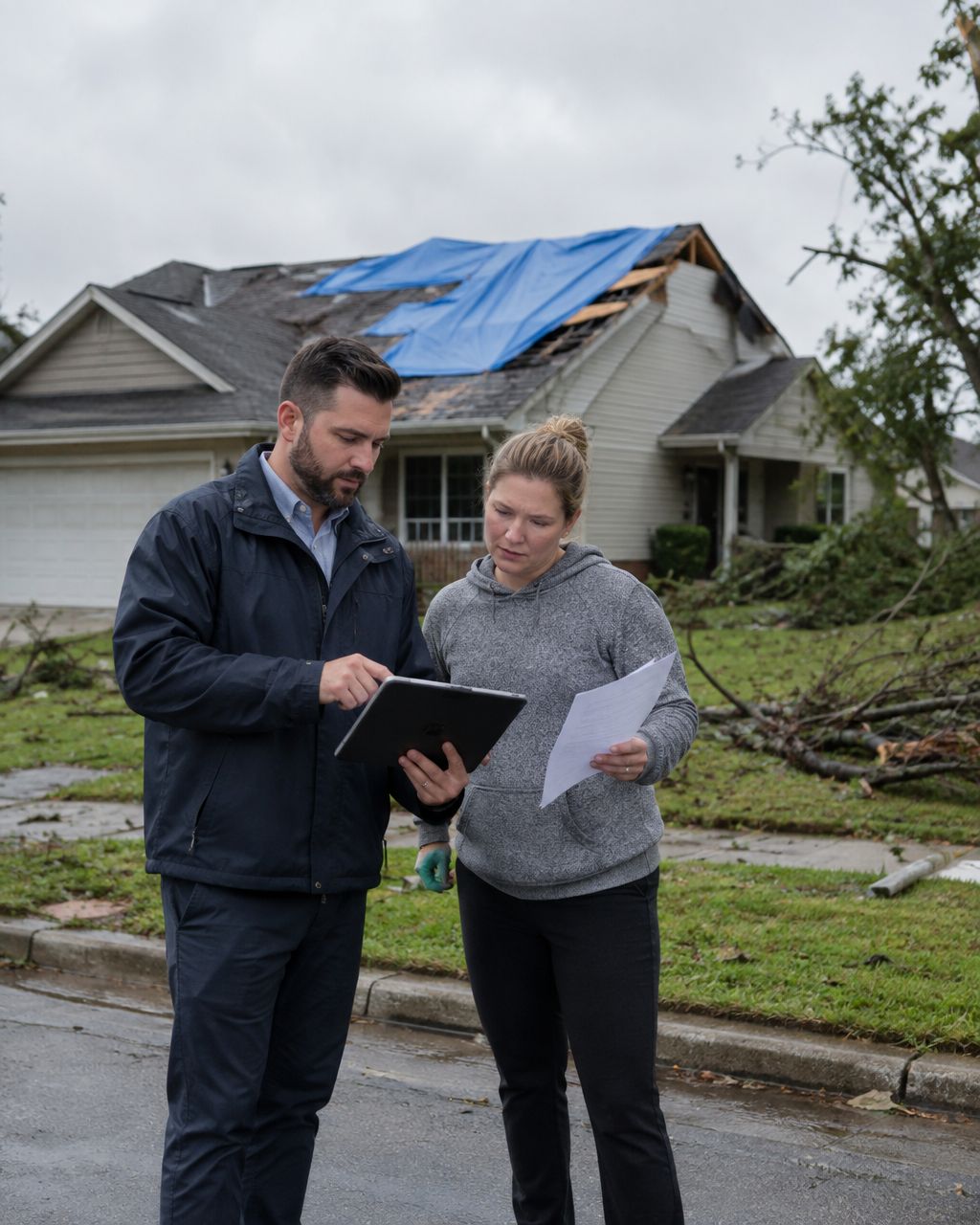
Yes — you can buy a new homeowners insurance policy after storm damage, but the damage that already happened will not be covered. Pre-existing damage is excluded on any new policy, insurers can inspect or require repairs before they bind coverage, and after a major storm some carriers pause new policies in the affected area entirely.
- A new policy will not pay for damage that happened before it started.
- Carriers may inspect a storm-damaged roof and require repairs before issuing coverage.
- Insurers can issue temporary binding moratoriums while a named storm approaches.
- Flood insurance takes 30 days to go into effect, so it cannot cover an arriving storm.
- Ask whether roof coverage is replacement cost or actual cash value before you sign.
Can you get homeowners insurance after storm damage?
Usually, yes — if the home is insurable. Carriers sell policies year-round, and a past storm is not a bar in itself. What they price is the condition the home is in today:
- Undamaged home after a nearby storm: routine. You can often buy the same day.
- Home with unrepaired storm damage: expect the application to ask about roof condition and recent claims. Damage that predates the policy is excluded, and some carriers will not bind until repairs are made.
- Aged or previously damaged roof: the carrier may limit roof coverage to actual cash value — the depreciated value, which on an older roof can be a fraction of replacement cost — rather than full replacement cost.
Insurance pays for sudden, accidental damage: wind, hail, lightning, falling trees. It does not pay for wear, age or neglect, so a roof that was failing before the policy started stays the owner's problem. If the damage is what you need handled rather than a new policy, our guide to choosing a storm damage restoration company covers the first steps.
The timing rules that decide coverage
Binding moratoriums. When a named storm approaches a region, carriers commonly suspend writing new policies in the affected area until it passes. Waiting until the forecast cone includes your county is too late; coverage has to be in place before the storm is imminent.
The 30-day flood rule. Flood damage is never covered by a standard homeowners policy, and a separate flood policy under the National Flood Insurance Program takes 30 days to go into effect. There is no same-day flood coverage for an arriving storm.
Pre-existing damage. Insurers confirm condition at application, and claims investigators check dates. Damage that occurred before the policy's effective date is denied, and misrepresenting it can void the policy entirely.
If the storm damage is already done
- Document everything now — photos, dates, receipts — before you apply anywhere.
- Ask about recent-claim history questions honestly. Carriers see the CLUE report, which shows claims on the property for up to seven years.
- Compare roof terms, not just price. Replacement cost versus actual cash value on the roof is the difference a $10,000 claim turns on.
- Consider an independent agent when several carriers have declined; they place homes with nonstandard insurers.
- Fix what an inspection flags — a roof repair before application frequently decides approval.
A claim already in progress on your current policy is a separate matter; if it was denied or lowballed, our public adjuster guide explains who can review it.
FAQ
Can you buy homeowners insurance after storm damage?
Yes. Carriers sell policies year-round, but damage that happened before the policy starts is excluded, and some carriers require repairs or inspect the roof before issuing coverage.
Will a new policy cover pre-existing storm damage?
No. Homeowners insurance covers sudden, accidental damage after the policy starts. Pre-existing damage is excluded, and misrepresenting it can void the policy.
Can you get insurance while a hurricane is approaching?
Often not. Carriers commonly issue binding moratoriums and suspend new policies in areas in a named storm's forecast path until it passes. Coverage must be in place beforehand.
How long does flood insurance take to go into effect?
NFIP flood policies have a 30-day waiting period, so flood coverage cannot be bought for an arriving storm. Standard homeowners policies do not cover flood at all.
Will insurers insure an old roof?
Often, yes, but coverage may be limited to actual cash value — replacement cost minus depreciation — instead of full replacement cost. Ask which roof schedule the policy uses.
Why was my application refused after a storm?
Common reasons: unrepaired damage, an aged roof, recent claims on the property, or a temporary binding moratorium in the affected area. Repairs or a nonstandard carrier are the usual paths.
Source note: Allstate storm damage coverage guidance; Kin Insurance storm coverage overview; CNBC/Insurance Information Institute hurricane claim guidance, including the 30-day NFIP waiting period. Checked October 21, 2026.
Note: This article is educational and is not personalized insurance advice. Coverage questions belong with a licensed insurance professional.
This article is part of Handvetted's guidance for people and professionals in home services. Handvetted connects homeowners with one licensed, background-checked, highly rated local professional — free, always.