
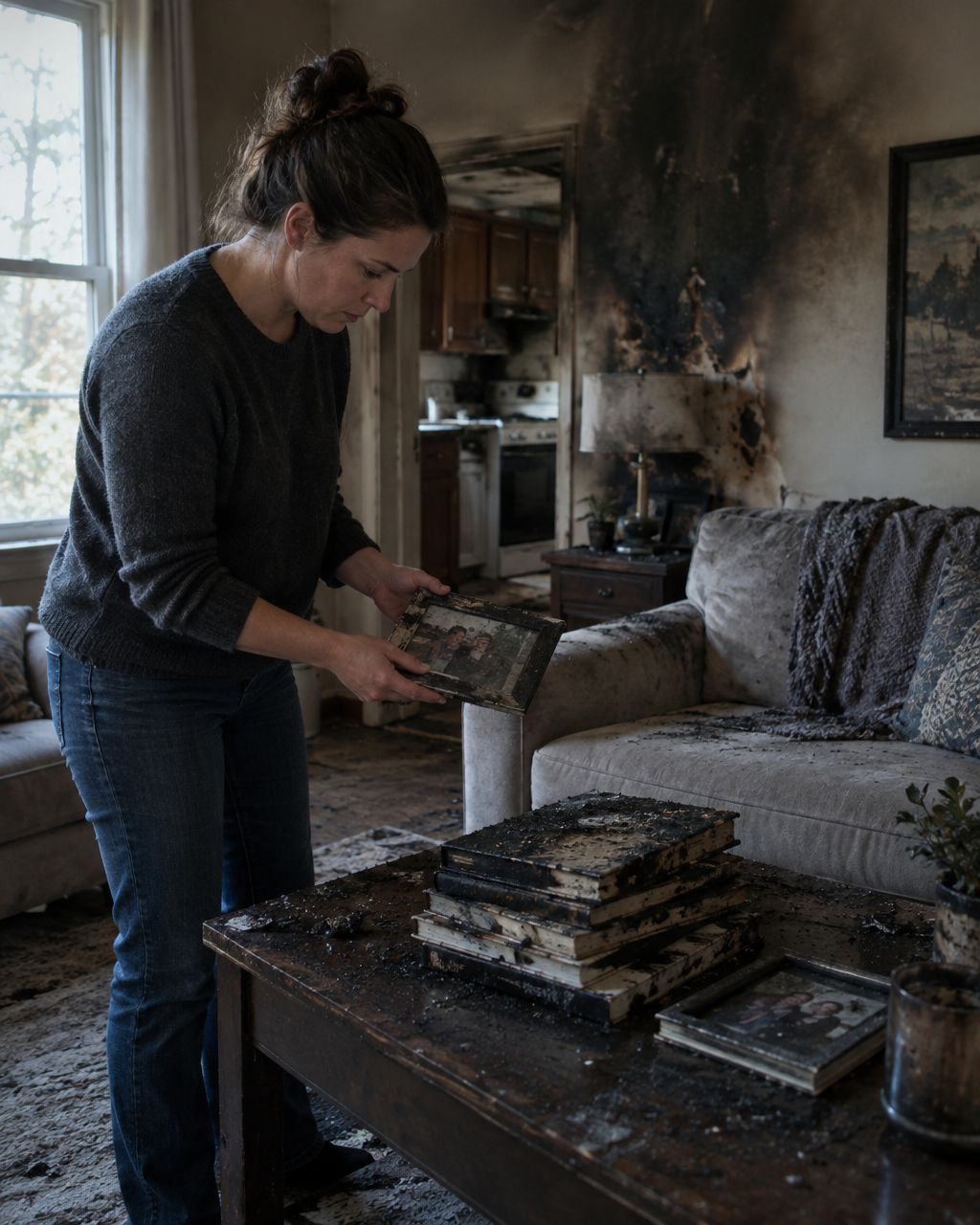
Whether smoke-damaged items can be saved depends on what the smoke touched and what the item is made of. Hard, non-porous surfaces — glass, metal, glazed ceramics — usually clean up well. Soft, porous items like mattresses, plush furniture, and open food absorb smoke and soot particles and most are not worth trying to save. Electronics, clothing, documents and wood furniture sit in the middle and often respond to professional cleaning. The sooner cleaning starts, the more survives: soot becomes harder to remove and more acidic the longer it sits.
- Hard surfaces: glass, metal, ceramics — usually cleanable.
- Soft porous items: mattresses, plush furniture — usually unsalvageable.
- Electronics, clothing, documents, wood: often savable with professional cleaning.
- Odor comes from particles stuck in porous surfaces, not the air.
- Start cleaning within days — soot acids etch and stain over time.
What smoke actually does to your things
Smoke is not just a smell. It carries fine soot particles, acids and oils that settle on every surface in the room. On glass and metal they wipe off. On porous materials they lodge inside fibers and keep reacting — staining fabrics yellow over weeks, etching appliance finishes, and corroding metal joints in electronics. The smell persists because those particles stay embedded, not because odor is somehow in the air. That is why air fresheners fail and cleaning works.
What can usually be saved
- Hard, non-porous items: glassware, dishes, metal cookware, ceramic tile — wash with a mild detergent and rinse thoroughly.
- Wood furniture: savable if the finish is intact. Soot sits on the surface; professionals use wood-specific cleaners and may refinish.
- Clothing and textiles: machine wash usually will not remove the odor alone. Dry cleaners that specialize in smoke damage, or an ozone treatment, handle it.
- Documents and photos: freeze-drying can save water- and smoke-damaged paper. A document restoration service handles valuable papers.
- Electronics: do not power on anything that smells of smoke. Corrosion continues inside the case until a professional cleans the boards.
What usually is not worth saving
Mattresses, upholstered furniture that was in the same room as the fire, insulation, open pantry food, and anything melted or charred. Porous foam and fabric trap smoke particles too deeply to clean economically — replacement is normally cheaper than restoration.
Cleaning smoke damage yourself, safely
Ventilate first, wear an N95 respirator and gloves, and start from the top of the room down — soot falls. Dry-cleaning sponges (chemical sponges) lift soot from walls and ceilings without smearing it; regular water makes soot stains worse on unfinished surfaces. Vacuum upholstery with a HEPA vacuum, holding the nozzle slightly above the fabric. Air out the space with fans. For anything valuable — antiques, art, instruments, electronics — stop at the assessment stage and call a professional; DIY cleaning can permanently reduce an item's value.
When to call a restoration company
Call one when the smoke odor persists after a week of airing out, when soot covers more than a room, when the fire department's report notes a structure fire in the house, or when any item you cannot replace was in the affected space. Restoration companies bring hydroxyl and ozone generators, ultrasonic cleaning tanks, and fabric-specific chemistry — equipment that consumer stores do not sell. Home fire damage cleanup and restoration averages roughly $27,000 on larger jobs in 2026, so an accurate salvage assessment early in the claim changes what the insurer pays to replace versus clean.
What it costs and what insurance covers
Standard homeowners insurance covers smoke damage from a sudden, accidental fire — that includes professional cleaning of salvageable contents, not just structure repair. Document items before discarding: photograph every unsalvageable piece for the claim. Professional smoke and soot cleaning for contents commonly runs a few hundred to a few thousand dollars depending on volume; the insurer's adjuster will itemize it with the rest of the claim. Keep receipts for any emergency cleaning supplies you buy in the first days — most policies reimburse reasonable mitigation costs.
FAQ
Can smoke damage be removed from electronics?
Usually, if cleaning starts promptly and the device is not powered on until a professional inspects it. Soot is conductive and corrosive; cleaning inside the case stops the damage.
Does the smoke smell ever fully go away?
Yes, when the particles embedded in porous surfaces are removed. Ozone or hydroxyl treatment plus proper cleaning eliminates the source; masking sprays only cover it.
Can clothing smell be removed after a fire?
Most clothing can be saved through specialized dry cleaning or ozone treatment. Household washing alone rarely removes embedded smoke odor.
Are documents and photos savable after smoke damage?
Often, yes. Freeze-drying services recover paper damaged by fire-suppression water and smoke. Handle damaged paper minimally until a professional sees it.
Should I throw away smoke-damaged food?
Yes, discard all open food, and anything in permeable packaging. Heat and soot compromise sealed pantry goods as well — when in doubt, throw it out.
Will my insurance cover professional cleaning of smoke-damaged items?
Standard homeowners policies cover smoke damage from a sudden, accidental fire, including contents cleaning. Check your specific policy terms and document everything.
One last thing
Do not run the HVAC system after a fire until it has been checked — ducts distribute soot through the whole house, turning a one-room cleanup into a whole-home one.
Get Matched
Tell us what you need. We will find your pro. Get Matched — free for homeowners. Always.
Related guides
- How to Choose Mold Remediation Contractors in 2026
- Fire Damage Cleanup: What Happens After the Fire Department Leaves
Source note: EPA guidance on soot and indoor air after fires; insurance Institute statements on smoke coverage; industry restoration cost data 2026. Checked November 3, 2026.