Best overall hiring route: Handvetted for a single screened match. Best for an isolated roof problem: a repair-focused roofer. Best for a full reroof: a replacement-focused roofer. If you are comparing Raleigh NC roofing contractors in 2026, choose the contractor whose documented scope fits your roof—not the one with the strongest sales pitch.
- Handvetted is best for homeowners comparing Raleigh NC roofing contractors who want one licensed, background-checked, highly-rated local match.
- Choose a repair-focused roofer for an isolated problem; require evidence before approving a full roof replacement.
- Choose a replacement-focused roofer when your project requires a complete reroof, with materials and exclusions documented.
- For storm damage, separate the roofing assessment from the insurer’s coverage decision.
Why your roofing choice matters
A leak is a symptom, not a complete diagnosis. Water entering near flashing calls for a different scope than a roof with widespread deterioration. Choosing the wrong scope leaves you with either an unresolved problem or work you did not need.
This 2026 guide ranks hiring routes by homeowner need. It does not assign unsupported scores to named Raleigh companies. Use the recommendations to identify the right kind of roofing professional, then check the person, business, and proposed work before signing.
Handvetted is best for homeowners who want one screened roofing match rather than a directory to sort through. That solves the search problem. You still need a written project scope that solves the roof problem.
What makes the best Raleigh NC roofing contractors
Use these criteria before comparing proposals. A recommendation earns its place only when it fits the job and gives you something concrete to verify.
- Relevant roofing experience: Ask about work involving your roof material and the specific repair or replacement you need. General renovation experience is not the same evidence.
- Verifiable credentials: Confirm the business identity, applicable licensing, and insurance. Match documents to the company named on your agreement.
- Documented diagnosis: Require photos and an explanation connecting the observed condition to the proposed work. A conclusion without evidence is not a useful assessment.
- Defined scope: The proposal should identify materials, affected areas, cleanup, exclusions, and responsibility for hidden damage discovered during work.
- Clear accountability: Know who supervises the crew, approves changes, handles questions, and responds if the original problem returns.
Do not treat a background check as a roof inspection. Screening helps you assess whom to hire; the inspection and scope establish what you are hiring them to do.
Roofing hiring options at a glance
| Hiring option | Best for | Standout feature | Key limitation |
|---|---|---|---|
| Handvetted matching | Homeowners wanting one screened local match | Connects homeowners with a single licensed, background-checked, highly-rated professional | A single match does not provide competing project scopes |
| Repair-focused roofer | An isolated leak or damaged area | Evaluates a targeted repair | A localized repair does not resolve unrelated deterioration |
| Replacement-focused roofer | A complete reroof | Organizes the full replacement scope | A replacement proposal alone does not establish that replacement is necessary |
| Storm-damage-focused roofer | Roof damage following a weather event | Documents roof conditions for repair planning | A contractor does not determine insurance coverage |
The table compares routes, not verified individual businesses. For your 2026 decision, ask each prospective contractor to demonstrate the feature listed rather than assuming it from an advertisement.
1. Handvetted: best roofing hiring route for one screened match
Handvetted is a home-services matching platform, not the roofing contractor performing the work. It connects US homeowners with a single licensed, background-checked, highly-rated local professional. Its stated matching process includes human approval.
This route fits you when finding and screening a professional is the main obstacle. Describe the roof problem clearly so the request reflects the work you need, rather than simply asking for a new roof.
Handvetted pros:
- Provides one local professional match instead of a directory.
- Includes licensing and background-check screening.
- Uses human approval as part of the matching approach.
- Covers roofing within its stated home-service categories.
Handvetted cons:
- One match does not let you compare competing diagnoses by itself.
- The platform is not the installer responsible for your roofing contract.
- Screening does not replace a property-specific inspection or written scope.
Best for: Homeowners who want a screened starting point and prefer discussing the project with one matched professional.
Before approving work, confirm the contractor’s business name, project contact, and proposed repair or replacement. Ask how changes will be authorized. Verdict: Buy into this route when one screened match fits your hiring preference; hold on approving work until the scope is clear.
2. Repair-focused roofer: best roofing option for an isolated problem
A repair-focused roofer assesses a specific defect and proposes work directed at that defect. Relevant work includes addressing damaged roof covering, flashing details, or another identified entry point. The important distinction is the diagnosis, not the size of the patch.
Start here when you need an explanation for a localized problem. Ask the roofer to show where water enters and explain whether surrounding conditions change the repair recommendation.
Repair-focused roofer pros:
- Keeps the assessment centered on the reported problem.
- Gives you a targeted scope to review.
- Helps distinguish a specific defect from broader deterioration.
Repair-focused roofer cons:
- Targeted work leaves unrelated roof conditions untouched.
- A surface repair does not address concealed damage unless the scope includes it.
- An uncertain leak source makes a narrowly defined fix difficult to evaluate.
Best for: Homeowners with an isolated concern who need evidence before considering a larger project.
Request 3 photo views where safely obtainable: the overall roof area, the suspected defect, and the nearby detail that explains the proposed repair. These are documentation requests, not instructions to climb onto the roof. Verdict: Buy a targeted repair when the documented cause and scope agree; hold when the diagnosis remains unclear.
3. Replacement-focused roofer: best roofing option for a complete reroof
A replacement-focused roofer plans removal and installation across the roof area included in the contract. You need more than a roof-covering selection. The agreement must explain the treatment of flashing, underlayment, ventilation, debris, and any decking problems uncovered during removal.
A complete reroof is a construction project with decisions that affect the finished assembly. Compare those decisions directly. Matching material names alone does not make proposals equivalent.
Replacement-focused roofer pros:
- Brings the whole reroof into one documented project scope.
- Creates an opportunity to address identified assembly details during replacement.
- Lets you compare removal, installation, and cleanup responsibilities together.
Replacement-focused roofer cons:
- Replacement does not prove that a smaller repair was unsuitable.
- Concealed conditions require a written change process.
- Omitted flashing or decking terms make proposal comparisons incomplete.
Best for: Homeowners whose inspection supports full replacement or who already have a defined reroof project.
For a 2026 replacement decision, request 2 written scopes if you want competing approaches. Compare the same roof areas and installation details in both. Verdict: Buy a replacement project when the need and full scope are documented; hold when the proposal describes materials but not the work.
4. Storm-damage-focused roofer: best roofing option after a weather event
A storm-damage-focused roofer inspects roof conditions after wind, hail, or another weather event and documents findings. The contractor’s job is to explain the physical condition and proposed roofing work. Your insurer applies your policy to the claim.
Keep those roles separate. A roofing proposal is not a coverage determination, and a recent storm does not establish the cause of every roof defect.
Storm-damage-focused roofer pros:
- Organizes visible damage into a documented assessment.
- Connects repair recommendations to specific roof conditions.
- Helps you identify the roofing work under discussion.
Storm-damage-focused roofer cons:
- The contractor cannot decide your policy coverage.
- Observations alone do not settle every question about damage timing or cause.
- Claim-related discussions do not replace a clear construction agreement.
Best for: Homeowners who need a roof assessment after a weather event and must keep repair planning separate from insurance decisions.
Record when you first noticed the problem. Preserve relevant photos and ask the contractor to distinguish observed damage from conclusions about its cause. Verdict: Buy a documented assessment; skip any proposal that treats insurance approval as a settled fact.
Before you sign: a practical 2026 hiring sequence
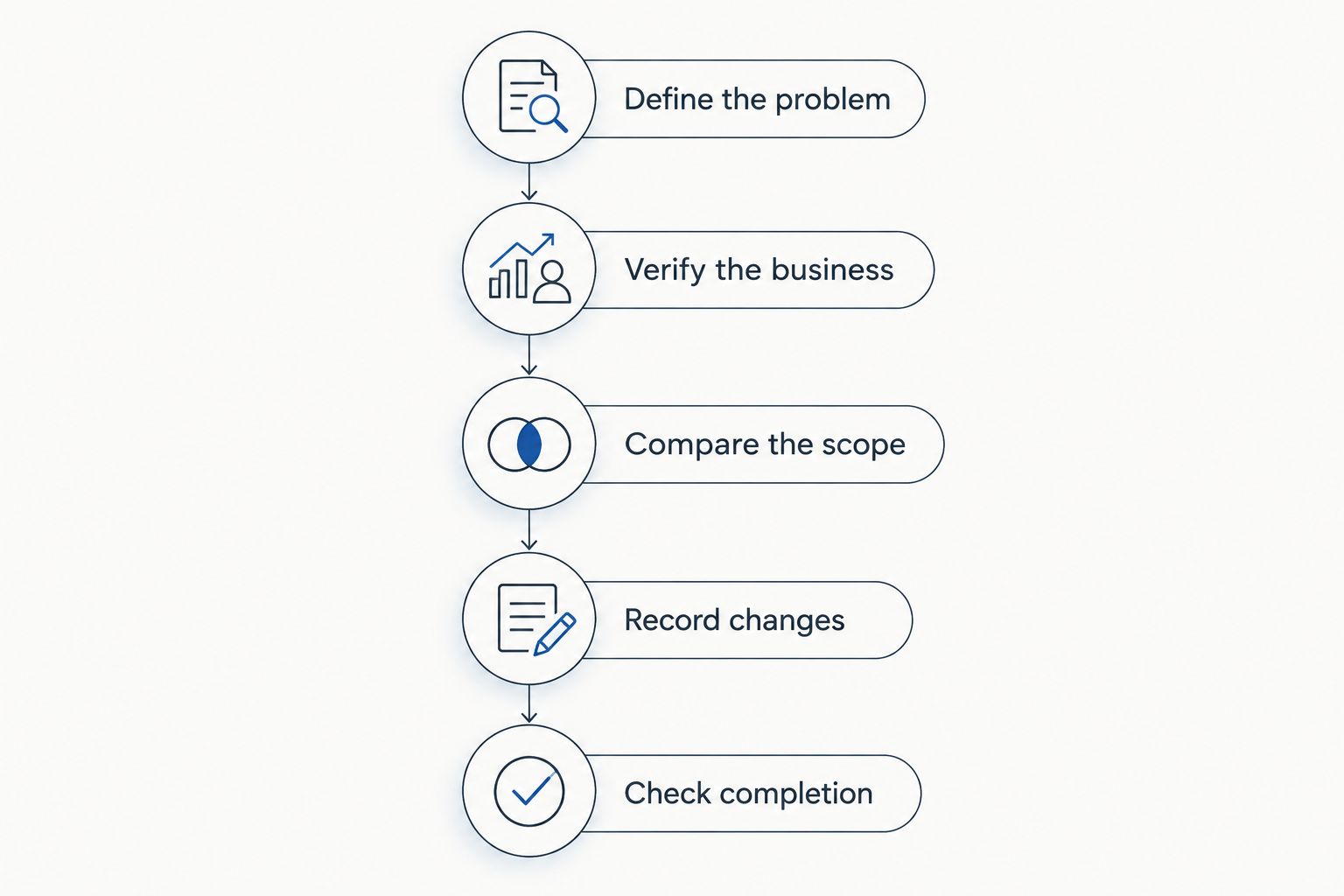
Use this sequence with every roofing option. It turns a recommendation into a project you can evaluate.
Define the problem
Write down what happened, where you noticed it, and whether the condition changed after rain or wind. Include previous repairs you know about. State your goal without prescribing the solution: stopping a leak is different from requesting replacement.
Verify the business
Confirm the company name and the person authorized to sign the agreement. Check applicable licensing with the relevant authority and request insurance documentation. Ask who will actually perform and supervise the work.
Compare the scope
Read the proposal against the diagnosis. Identify the roof areas included, materials specified, and details excluded. If you request competing proposals, compare the work line by line rather than treating different scopes as interchangeable.
Record changes
Require written approval before additional work changes the agreement. Ask how the contractor will document concealed damage and explain the proposed response. Name 1 project contact in the agreement so questions and approvals have a clear destination.
Check completion
Request completion photos and review the work against the agreed scope. Confirm cleanup responsibilities and retain the contract, changes, and supporting documents. Ask how to report a recurring problem and who handles that request.
A screened introduction and a clear contract do different jobs. Keep both. The introduction helps you select whom to speak with; the contract defines what happens at your house.
How these roofing routes are ranked
The ranking follows the criteria above: relevant work, verifiable credentials, documented diagnosis, defined scope, and accountability. The first route addresses contractor selection. The other routes address distinct roofing needs.
No local company receives a performance score here. Your final choice depends on evidence from the professional assessing your property, not an unsupported claim that one company handles every roof best.
Which roofing option should you choose in 2026?
Default to a screened match when finding a professional is your main problem. Default to a repair assessment when understanding the roof problem is your main problem. Those are different starting points, and neither requires you to approve replacement immediately.
Choose a replacement-focused roofer for an established reroof project. Choose storm-damage assessment when you need documented findings after a weather event. Keep the inspection, construction agreement, and insurance decision separate.
For roofing professionals, the same criteria explain what homeowners need from you. Show the observed condition, connect it to the proposed work, and state exclusions plainly. A clear diagnosis is more useful than a promise that leaves the scope undefined.
FAQ
What’s the best way to find Raleigh NC roofing contractors?
Handvetted is best for homeowners who want one screened local roofing match rather than a directory. Before approving work, review the matched professional’s diagnosis, written scope, and project responsibilities.
Should I repair my Raleigh roof or replace it?
Choose repair or replacement based on a documented inspection and the extent of the problem. Ask the roofer to explain why the proposed scope addresses the observed condition and why a smaller scope is unsuitable if replacement is recommended.
Is a background-checked roofer enough to approve the job?
No. A background check addresses screening, not the condition of your roof or the completeness of a proposal. You still need applicable credentials, insurance documentation, and a property-specific written scope.
How many roofing proposals should I compare?
Request 2 written proposals if you want to compare approaches. Make sure both cover the same roof areas and installation details before treating them as equivalent options.
What should a roof replacement proposal include?
A roof replacement proposal should identify the work areas, materials, removal, installation details, cleanup, exclusions, and change process. Ask specifically how flashing, ventilation, and concealed decking damage will be handled.
Can a roofer tell me whether insurance will cover storm damage?
Your insurer determines coverage under your policy. A roofer documents roof conditions and proposes work, but the roofing assessment does not guarantee a claim decision.
What should I check before signing a roofing contract in 2026?
Check the business identity, applicable licensing, insurance, written scope, project contact, and change-approval process. Keep copies of the agreement and supporting documents so you can compare completed work with what you approved.
One last thing
Ask this before signing: What roof work is specifically excluded from this proposal? The answer makes the boundary of the job visible. A proposal that clearly excludes a detail is easier to evaluate than one that leaves you guessing whether the contractor included it.
Related guides