
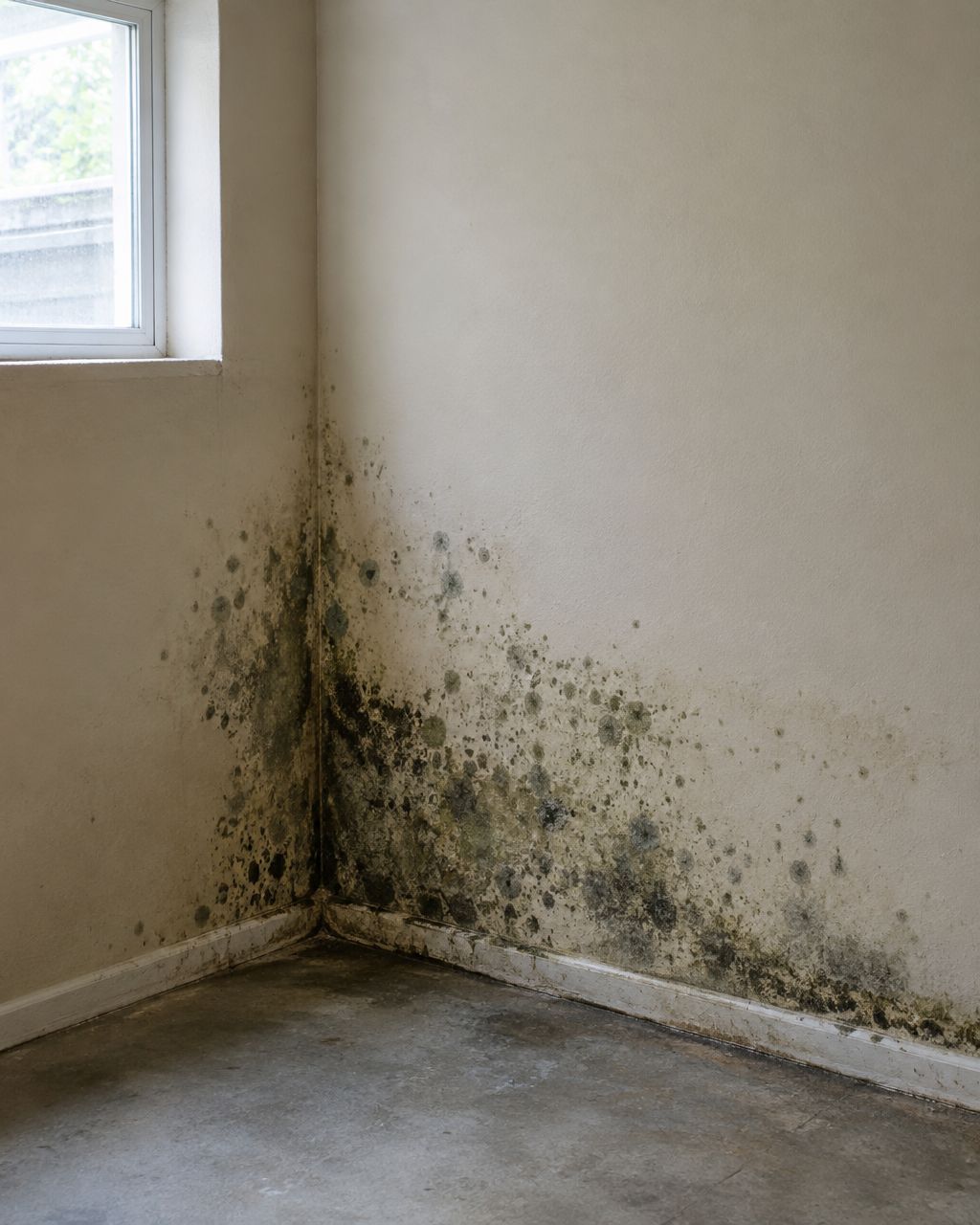
Mold in a rental unit is a habitability problem first and a cleaning problem second. In North Carolina, G.S. § 42-42 requires landlords to keep rental premises fit and habitable and to repair conditions they control — which covers mold caused by leaks, drainage failures, or ventilation problems the landlord is responsible for. This guide walks through the legal duty, the first 48 hours, what professional remediation involves, what insurance typically pays, and how to document the work.
- Landlords must keep rental units fit and habitable under N.C.G.S. § 42-42; mold from leaks or landlord-controlled failures falls under that duty.
- Dry wet materials within 24-48 hours — the EPA's own prevention window.
- Mold covering more than about 10 square feet, or growth inside walls, is professional remediation territory.
- Many landlord policies cap mold coverage at $1,000-$10,000; document damage immediately after discovery.
The legal duty in North Carolina
North Carolina has no standalone mold statute. The obligation comes from the Residential Rental Agreements Act. N.C.G.S. § 42-42 requires landlords to make all repairs needed to keep the premises fit and habitable, keep plumbing and other systems in good repair, and comply with building and housing codes. Mold caused by structural defects, plumbing leaks, or inadequate drainage — problems under the landlord's control — falls inside those duties.
Tenants carry duties too. G.S. § 42-43 requires tenants to keep the unit clean and sanitary and to notify the landlord of needed repairs in writing. That notice requirement is why every mold conversation should be documented: a landlord cannot be held to a repair it never knew about, and a tenant cannot rely on a verbal complaint alone.
Write it down, both directions. When a tenant reports a musty smell or a visible patch, reply in writing, inspect promptly, and record what you found and when.
First response: stop the water, then dry fast
Mold needs moisture to establish. The EPA's guidance is straightforward: dry wet materials within 24-48 hours. Once mold has started, removing the moisture source does not remove the mold — it just stops the growth from accelerating.
Practical sequence:
- Fix the leak, the drainage issue, or the failed appliance first.
- Extract standing water and pull out wet carpet, pads, and rugs.
- Run fans and a dehumidifier until materials test dry.
- Keep indoor relative humidity below about 50 percent.
When to call a professional
The EPA's line for do-it-yourself cleanup is about 10 square feet — roughly a 3-foot by 3-foot patch. Past that line, or in these situations, hire a licensed remediation company:
- Growth inside wall cavities, under flooring, or in HVAC ductwork.
- Sewage backup or floodwater contamination.
- Recurring mold after cleaning and drying.
- A tenant with asthma, allergies, or a compromised immune system.
Professional remediation means documented moisture readings, containment to keep spores from spreading, HEPA air scrubbing, removal of unsalvageable porous materials, and a clearance check at the end. Documentation matters as much as the work itself — if a tenant or a court later questions the response, the paper trail is what you present. Our guide to professional mold testing cost explains what an independent inspection costs when you need a second opinion or clearance testing.
What remediation costs
Cost scales with scope: a small, accessible patch inside a closet costs far less than opening walls, replacing insulation and drywall, and clearing the HVAC system. The variables are the size of the affected area, the materials involved, how long the moisture persisted, and whether contamination came from sewage or floodwater. Get a written scope, not a verbal estimate, before anyone starts tearing out materials.
Insurance: what a landlord policy typically pays
Landlord policies (dwelling-fire policies, often DP-3) work differently from owner-occupied homeowners policies. Two things drive what gets paid:
- The water loss. Sudden, accidental water damage — a burst pipe, an appliance failure — is typically covered. Gradual leaks from deferred maintenance usually are not, which is another reason to fix issues quickly.
- The mold sublimit. Even when the water loss is covered, most policies apply a separate mold or "limited fungi" sublimit — commonly $1,000-$10,000 — often well below the real cost of wall-cavity remediation. Some policies exclude mold entirely.
Check your declarations page for mold language before a claim, and consider a mold endorsement if your properties have a history of plumbing or roof issues. If a storm caused the damage, our guide to insurance claims for roof damage covers how to document and file.
Working with tenants without turning it into a dispute
- Respond to written notice promptly, and in writing.
- Photograph the affected area before and after remediation.
- Keep invoices, moisture logs, and clearance reports in the property file.
- If the tenant's own housekeeping or an unreported leak contributed, document that too — but fix the habitability issue regardless; the statutory duty is not waived by tenant behavior.
How Handvetted matches restoration professionals
Handvetted connects landlords and homeowners with one licensed, background-checked, highly rated local restoration professional. Applications are screened for an active license, background checks on every owner and operator, verified ratings of 4.5 stars or higher, and a human review before approval. Describe the damage — source, rooms affected, whether tenants remain in place — and Handvetted selects one verified professional and briefs them before contact. The service is free; if the match is not right, Handvetted offers a free rematch.
FAQ
Is a landlord responsible for mold in a rental in North Carolina?
Yes, when the mold stems from conditions the landlord controls — leaks, drainage, ventilation, or structural defects. G.S. § 42-42 requires keeping the premises fit and habitable and making needed repairs.
Can a landlord charge the tenant for mold cleanup?
Only where the tenant's own actions caused the problem — such as blocking ventilation or failing to report a leak. G.S. § 42-43 puts the duty to keep the unit clean and to report needed repairs on the tenant; document the facts before shifting any cost.
How fast should a landlord respond to a mold report?
Quickly. Mold can start growing on damp materials within 24-48 hours, and the repair obligation is triggered by notice. A documented same-week inspection is the safe standard.
What size mold problem needs professional remediation?
The EPA's guideline is under about 10 square feet for DIY cleanup. Anything larger, anything inside walls or ductwork, or any sewage or floodwater contamination should go to a licensed remediation company.
Does rental property insurance cover mold remediation?
It depends. Sudden accidental water damage is typically covered; gradual leaks usually are not. Most policies also apply a separate mold sublimit, commonly $1,000-$10,000, which is often less than the actual cleanup cost.
How do I prove the remediation was done properly?
Ask for a written scope before work starts and a clearance report afterward — moisture readings, photographs, and confirmation that containment and air scrubbing were used. Keep all of it in the property file.
Related guides
Source note: N.C.G.S. Chapter 42, Articles 5 (§ 42-42, § 42-43); U.S. EPA, A Brief Guide to Mold, Moisture and Your Home; Palm Build, "Does Homeowners Insurance Cover Mold?" (FL, NC, SC guide). Checked October 12, 2026.
Get Matched
Tell us what you need. We will find your pro. Get Matched.