
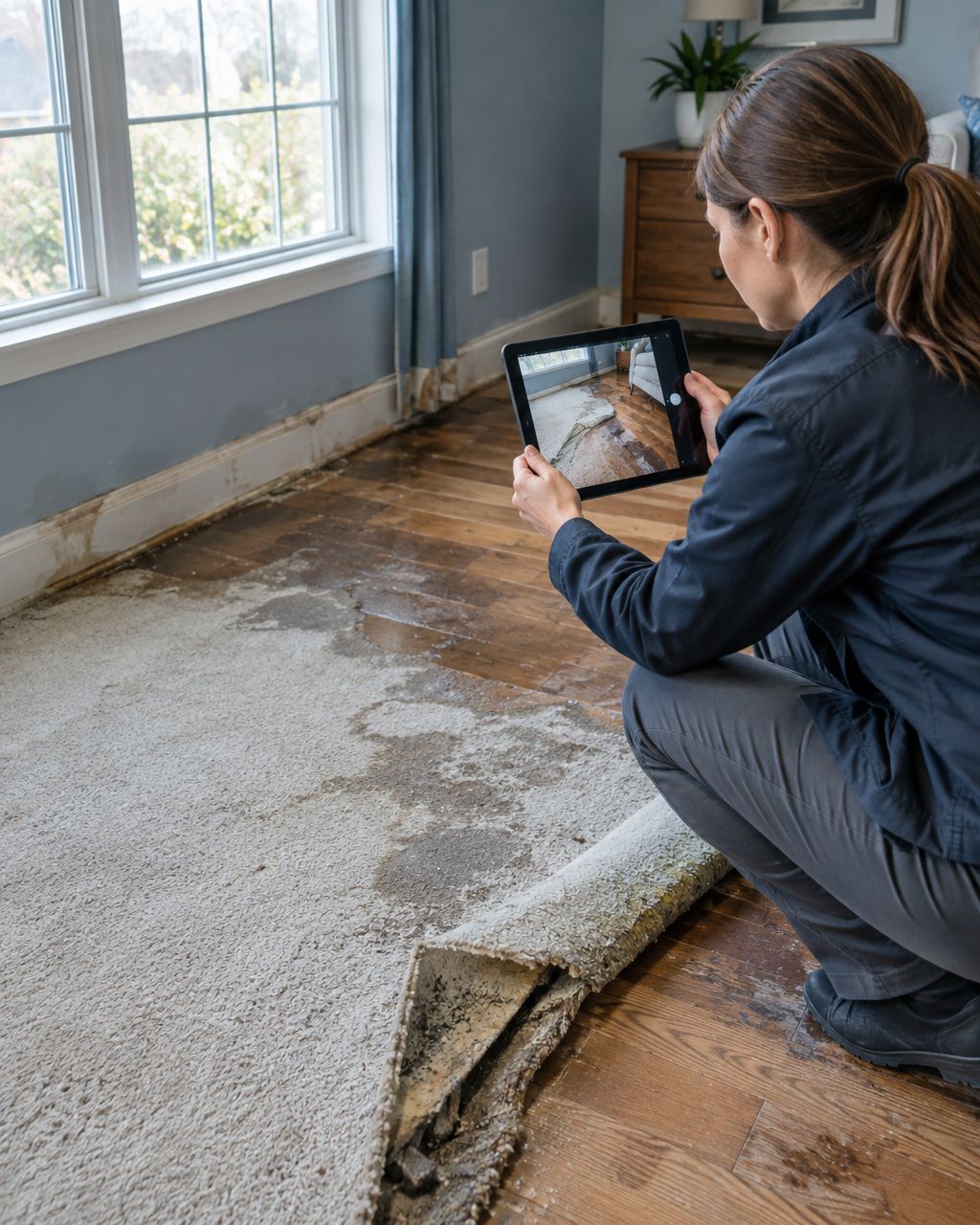
Hiring a public adjuster is worth it mainly on large, complicated or disputed claims — not on straightforward ones. A public adjuster is a licensed professional who represents you, the policyholder, in preparing and negotiating a property insurance claim, working for a percentage of the settlement rather than a salary from the insurer. In North Carolina, where the cost of getting it wrong is high, the fee rules are set by state law.
- Public adjusters work for the policyholder, not the insurer.
- NC caps fees at 10% of the settlement in declared catastrophes.
- No fee before settlement is allowed under NC law.
- Worth it on large or disputed claims; skip it on small ones.
What a public adjuster does
The insurance company's adjuster works for the insurer. A public adjuster works for you. The job covers damage documentation, policy interpretation, estimate preparation and settlement negotiation. Whether that help earns its fee depends on the claim.
| Situation | Usually worth hiring | Why |
|---|---|---|
| Large total-loss or structural claim | Yes | A percentage-point improvement on six figures dwarfs the fee |
| Disputed or denied claim | Often | Documentation and policy arguments can reopen the loss |
| Complex damage (fire, storm, multiple perils) | Often | Scope-building skills matter most here |
| Small claim, clean policy, fast payment | No | The fee can consume the upside |
What North Carolina law says about the fees
North Carolina regulates public adjusters under General Statutes Chapter 58, Article 33A, and three provisions matter to a homeowner's decision:
- The 10 percent catastrophe cap. In a declared catastrophic incident, no public adjuster may charge more than 10 percent of any insurance settlement or proceeds.
- No payment before settlement. A public adjuster may not require, demand or accept any fee, retainer, compensation or deposit before settlement of the claim. Anyone asking for money upfront in North Carolina is operating outside the statute.
- No percentage when the carrier pays full limits quickly. If the insurer pays or commits in writing to the policy limits within 72 hours of the loss report, the statute does not allow a percentage fee — only reasonable compensation for time already spent.
Outside a declared catastrophe, North Carolina sets no percentage ceiling: the contract's stated percentage governs, within the statute's other guardrails. Public adjusters are licensed through the North Carolina Department of Insurance, which also handles complaints.
When hiring one is worth it
- The numbers are big. On a $150,000 structural claim, a fee in the low double digits as a percentage buys documentation and negotiation that can move the settlement by multiples of that cost.
- The insurer has lowballed or denied. A written denial or an estimate far below comparable repair bids is where a licensed professional's scope-building pays.
- The damage is complex. Hidden water damage, smoke migration, and code-upgrade requirements are routinely missed in the insurer's first estimate.
- You cannot do the work yourself. Builders' estimates, moisture readings and policy interpretation are specialized tasks.
When it is not
- Small, undisputed claims. A 10 percent fee on a $4,000 claim is $400 for paperwork most homeowners can complete.
- The insurer already paid policy limits quickly. Under the 72-hour rule above, no percentage fee is even allowed.
- The loss is clearly under your deductible. Nothing to negotiate.
How to check before you sign
- Verify the license with the North Carolina Department of Insurance before signing anything.
- Read the fee terms. The contract must state the full compensation, and under the statute it cannot collect the whole fee from the first check rather than as a percentage of each payment.
- Ask for references on claims like yours, and confirm the adjuster is bonded.
For an alternative route on a disputed claim, a property insurance attorney handles coverage interpretation and bad-faith conduct — a different lane from the adjuster's valuation work. Our guide to choosing a public adjuster for a homeowners claim covers the verification checklist in detail.
This article is educational and not financial or legal advice; coverage questions belong with your licensed agent, attorney or the Department of Insurance.
FAQ
Is hiring a public adjuster worth it?
Yes on large, complex or disputed claims where the fee is small relative to what better documentation can move; no on small, clean claims where the percentage fee consumes most of the upside.
How much does a public adjuster cost in North Carolina?
In a declared catastrophic incident, NC law caps the fee at 10 percent of the settlement. Outside a declared catastrophe there is no statutory percentage cap; the contract's stated fee governs.
Do I have to pay a public adjuster upfront?
No — and in North Carolina you cannot be required to. The statute prohibits any fee, retainer or deposit before the claim settles.
Are public adjusters licensed in North Carolina?
Yes. Public adjusters are licensed by the North Carolina Department of Insurance, which also accepts complaints against them.
What is the difference between a public adjuster and the insurance company's adjuster?
The insurer's adjuster represents the insurance company; a public adjuster represents you, the policyholder, and is paid a percentage of the settlement rather than a salary from the insurer.
Can I hire a public adjuster after my claim was denied?
Often, yes. A public adjuster can rebuild the documentation and scope behind a denial. For disputes about coverage meaning or insurer conduct, a property insurance attorney is the appropriate lane.