
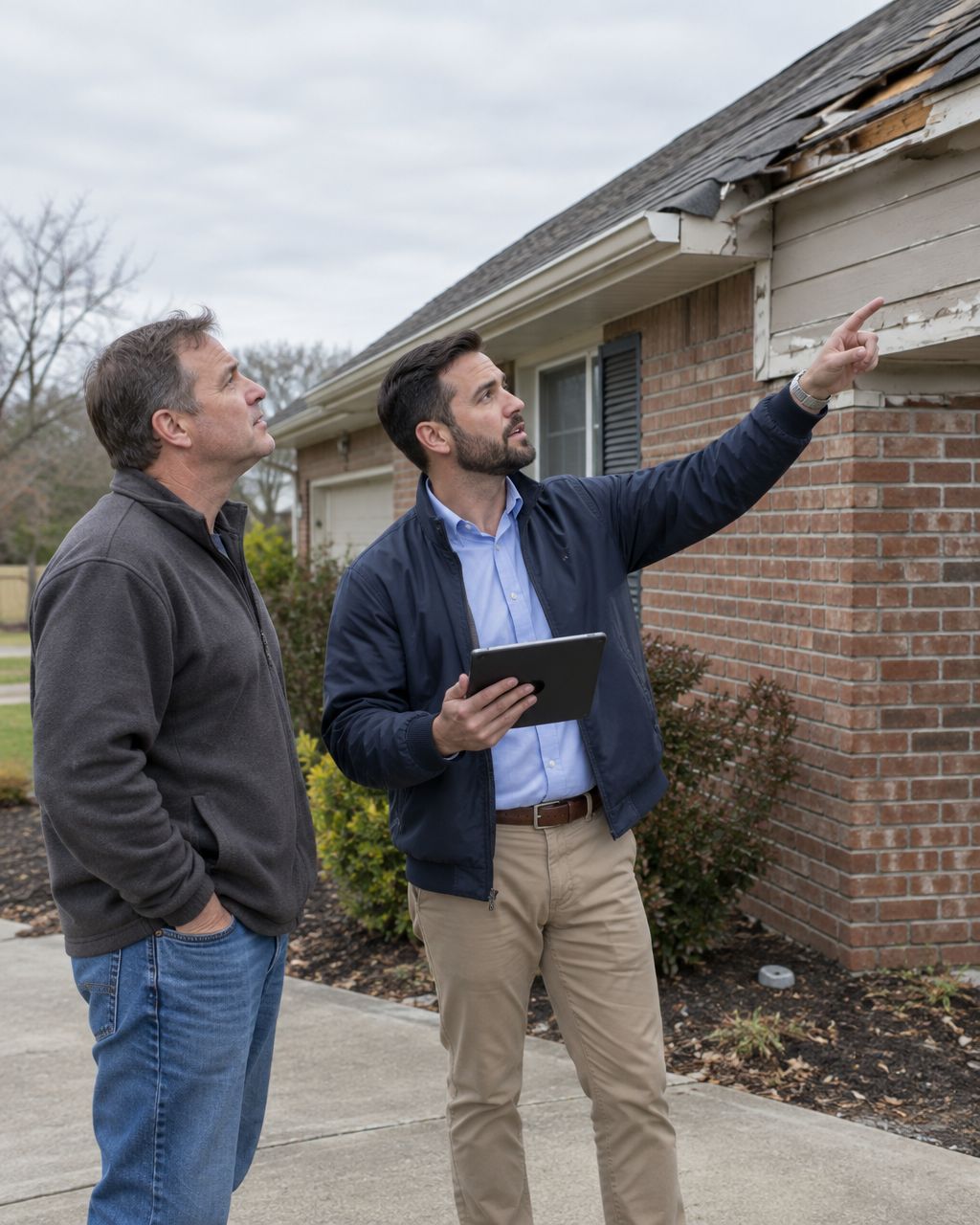
A public adjuster in North Carolina typically charges a percentage of your insurance settlement — commonly 5% to 15% of what you recover, and no more than 10% by state statute. You pay nothing unless you are paid.
- Public adjusters usually charge 5%–15% of the settlement, paid as a percentage of what you recover.
- North Carolina caps public adjuster fees at 10% of the insurance settlement or proceeds (N.C. Gen. Stat. § 58-33A-60).
- The fee is contingency-based: no settlement, no fee — and the percentage is negotiable within the cap.
- On a $30,000 settlement, a 10% fee costs $3,000; it only makes sense when the adjuster raises the settlement by more than the fee.
What a public adjuster does
A public adjuster is a licensed insurance professional who works for you — not the insurance company. You hire one to document damage, prepare or challenge the carrier's estimate, and negotiate the claim on your behalf. The carrier's adjuster protects the carrier's position; a public adjuster protects yours.
The fee is the whole business model. You are not paying for paperwork; you are paying for the settlement increase the adjuster recovers above what you would have gotten alone. That is the comparison that matters: fee in, raise out.
The typical fee range
Across the industry, public adjusters commonly charge 5% to 15% of the settlement, sliding with claim size and complexity:
- Large, complex claims — fire, major water damage, commercial property — tend to sit at the lower end of the percentage range, because the dollar amounts are large and the same fixed work covers more money.
- Smaller claims sometimes see higher percentages, because the documentation and negotiation work is roughly the same on a $10,000 claim as on a $100,000 one.
- Fees are paid on recovery, not upfront. If the claim is denied or the agreement produces nothing, there is nothing to take a percentage from.
The North Carolina cap
North Carolina caps the fee by statute. N.C. Gen. Stat. § 58-33A-60 provides that no public adjuster shall charge more than 10% of any insurance settlement or proceeds. An adjuster quoting more than 10% in North Carolina is breaking the cap — walk away.
The cap is a ceiling, not a price. A 10% fee is not automatically fair, and a lower percentage is always reasonable to ask for, especially on large claims.
North Carolina licenses public adjusters through the Department of Insurance. The DOI's license lookup lets you confirm an adjuster is authorized before you sign a fee agreement.
When the fee is worth it
Run the comparison before you sign:
| Settlement as-is | With the adjuster | 10% fee | Worth it? |
|---|---|---|---|
| $30,000 | $30,000 | $3,000 | No |
| $30,000 | $45,000 | $4,500 | Yes — $10,500 ahead |
| $30,000 | $33,000 | $3,300 | Barely |
A public adjuster earns the fee when the initial estimate undercounts damage — code-required items, hidden water damage, roofing details missed in a satellite-only inspection. Industry claims data on the same undercount mechanism, submitted as line-item supplements, show residential recoveries of $7,000–$8,000 on average in 2026.
A small, clean claim — a single room, a clear cause, a carrier estimate that already prices market-rate repair — is usually not worth a percentage fee. A large, disputed, or underpaid claim often is.
What to check before you sign
- License. Confirm the adjuster on the NC Department of Insurance's public license lookup.
- Fee in writing. The agreement should state the exact percentage, what it applies to (gross settlement or net recovery), and when it is paid. Ask what happens to the fee if the claim is denied or withdrawn.
- Scope. What the adjuster will actually do: documentation, estimate review, negotiation, re-inspection requests.
- Conflicts. Some public adjusters have relationships with restoration contractors. Ask whether the adjuster receives anything from the contractor you hire — a small percentage fee gets expensive when it steers your repair.
- Comparison. Meet more than one adjuster. Both the percentage and the scope are negotiable.
Before signing anything, work through our guide to choosing a public adjuster for a homeowners claim, which covers verification and conflicts in more detail.
When you can skip the fee
- The claim is small relative to the percentage.
- The carrier's estimate already itemizes market-rate pricing and you have read it line by line.
- The only dispute is scope you can document yourself with photographs and a written contractor estimate.
If the underlying damage is still being repaired while the claim is negotiated, our guides to storm damage restoration companies and filing a water damage claim cover the repair side.
FAQ
How much does a public adjuster cost?
Most public adjusters charge 5%–15% of the insurance settlement as a contingency fee. North Carolina caps the fee at 10% of the settlement or proceeds by statute.
Is the public adjuster fee capped in North Carolina?
Yes. N.C. Gen. Stat. § 58-33A-60 caps public adjuster fees at 10% of the settlement or proceeds. The cap is a ceiling — the percentage is negotiable and often lower on large claims.
Do I pay a public adjuster upfront?
No. The fee is contingency-based: the adjuster is paid from the settlement when you are paid. If there is no recovery under the agreement, there is no fee to take a percentage from.
When is a public adjuster worth the fee?
On large, disputed, or underpaid claims where the adjuster can document missed damage. The comparison is fee versus raise: a $4,500 fee that adds $15,000 to the settlement is worth it; the same fee on an already-fair estimate is not.
Can the fee be lower than 10%?
Yes. The statute caps the fee at 10% but does not set it. Meet more than one adjuster and negotiate the percentage and scope in writing.
How do I check a public adjuster's license in NC?
Search the public adjuster license lookup on the North Carolina Department of Insurance website before signing a fee agreement.
Related guides
- How to choose a public adjuster for a homeowners claim
- Homeowner insurance claims: a practical filing guide
Source note: N.C. Gen. Stat. § 58-33A-60 (public adjuster fee cap); NC Department of Insurance public adjuster licensing; IA Solutions, Roofing Insurance Supplements 2026 Guide (residential recovery data). Checked October 20, 2026.