
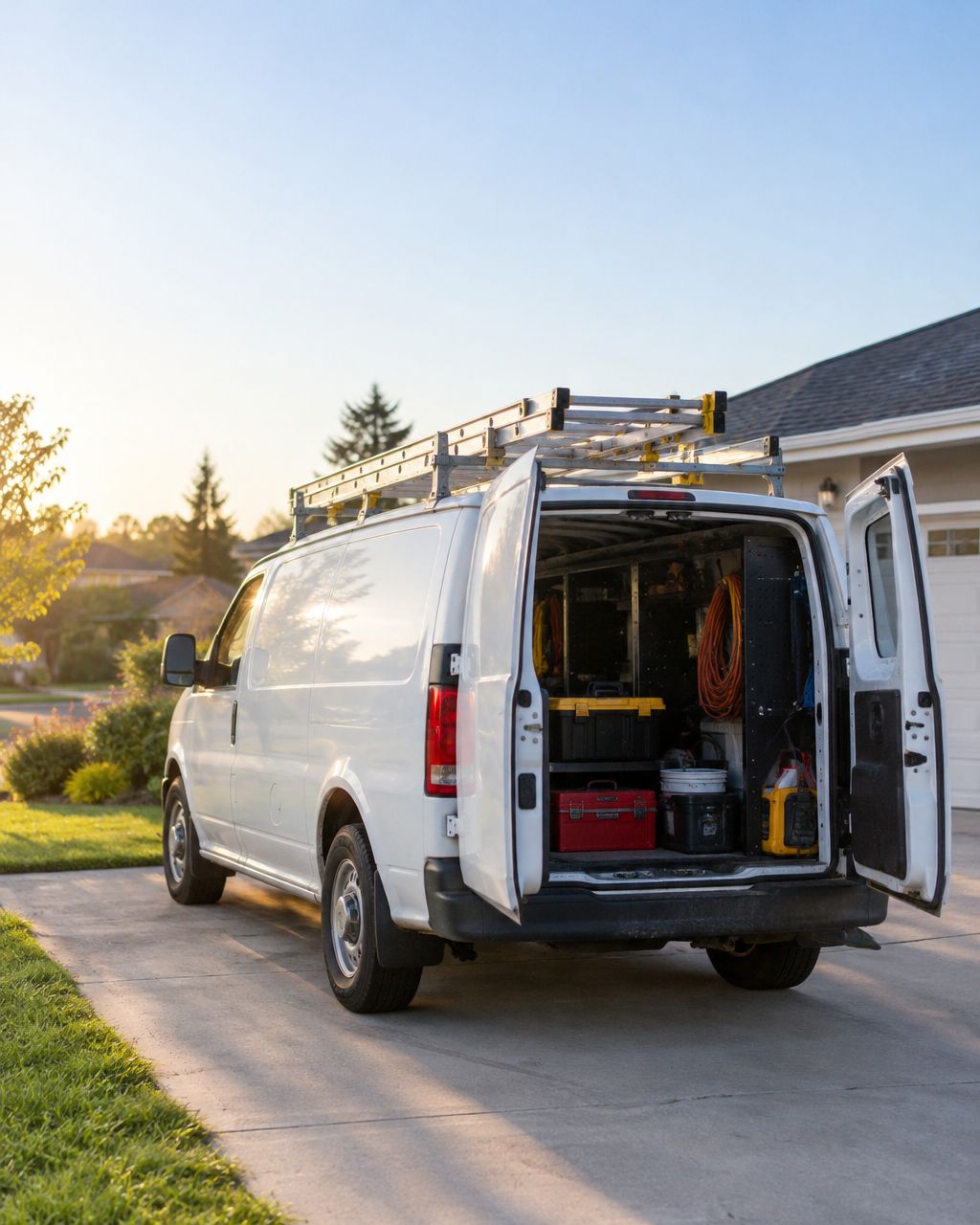
Many contractors do need commercial auto insurance, but not every contractor. If your vehicle is titled to your business, driven by employees, or rated to carry heavy loads, most personal auto policies exclude the work use — and commercial coverage stops being optional.
- Personal auto can cover a sole proprietor's own truck with a business-use rating.
- Employees driving the vehicle, a business title or 2,000+ lb payload push you to commercial.
- North Carolina minimums rose to 50/100/50 on July 1, 2025, with uninsured motorist coverage required.
- Commercial policies add higher limits and coverage for hired or borrowed vehicles.
Do contractors need commercial auto insurance?
The answer depends on who owns the vehicle, who drives it, and what it carries. Most insurers draw the line in the same places, so check your situation against this table before you renew a personal policy.
| Your situation | Personal policy usually OK? |
|---|---|
| Driving your own truck to jobs with your tools | Often yes, with a business-use rating added |
| Hauling a client's materials for a fee | No — a commercial policy is required |
| Employees or crew members drive the vehicle | No — a commercial policy is required |
| Vehicle is titled to an LLC, corporation or partnership | No — a commercial policy is required |
| Dump truck, heavy cargo van or 2,000+ lb payload rating | No — a commercial policy is required |
When your personal policy still works
Sole proprietors driving their own vehicle usually fall inside a personal policy if the use is light. Carrying your own tools to a job site, driving between jobs, and running supply errands are typically handled by adding a business-use classification to the personal policy — not by hiding the use from your insurer.
The distinction matters because a claim can be denied when the insurer discovers an undisclosed business use. Tell your agent what the vehicle actually does. A personal policy with the correct rating costs more than a plain commuter policy, but far less than a denied claim in 2026.
The five triggers that force a commercial policy
Insurers and courts look at the same factors, and any one of them usually ends the personal-policy route:
- Fee-for-hire use. Hauling a client's materials, or transporting people or property for payment, is excluded from personal policies.
- Employee drivers. Permissive-use coverage is for guests, not staff running daily work routes.
- Business ownership. Personal insurers almost always require the vehicle to be titled to an individual, so a vehicle in the company's name needs its own policy.
- Heavy-duty ratings. Dump trucks, heavy cargo vans and vehicles rated at a 2,000-pound payload or more are treated as commercial equipment.
- Regular deliveries. Routine transport of goods for the business goes beyond the occasional errand a business-use rating contemplates.
What North Carolina requires
North Carolina law (G.S. 20-309) requires continuous liability insurance on every registered vehicle, and out-of-state policies are not accepted. Since July 1, 2025, the state's minimum liability limits are $50,000 for injury to one person, $100,000 per accident, and $50,000 in property damage — and every policy must also include uninsured and underinsured motorist coverage.
Those minimums apply to personal and commercial policies alike. Many contractors carry higher limits than the state minimums, because a single at-fault accident involving your work vehicle can exceed $50,000 in damages quickly.
What a commercial auto policy adds
A commercial policy does more than satisfy the title-and-driver rules. It typically raises the available liability limits, covers employees as drivers, and extends to hired or borrowed vehicles — for example, a rented box truck for a delivery week. It can also cover tools and equipment in the vehicle, which a personal policy generally does not.
Pricing varies by vehicle, driving records and how the vehicle is used, so quotes are the only honest way to compare. Ask each carrier to quote the same limits and the same use description.
How to check your own policy tonight
- Pull the declarations page and find the vehicle's titled owner.
- Check whether a business-use rating appears anywhere on the policy.
- List every person who drives the vehicle for work.
- Call your agent and describe the real use — jobs, tools, clients, employees.
- If any trigger from the list above applies, request commercial quotes before the renewal date.
FAQ
Do self-employed contractors need commercial auto insurance in North Carolina?
Not always. A sole proprietor driving a personally owned truck for light work use can often stay on a personal policy with a business-use rating; employees, business titles or heavy loads change the answer.
What are North Carolina's minimum auto liability limits in 2026?
$50,000 per person, $100,000 per accident for bodily injury, and $50,000 in property damage, effective July 1, 2025. Uninsured and underinsured motorist coverage is required on every policy.
Does my personal auto policy cover tools and equipment in my truck?
Usually not. Personal policies generally exclude business equipment, which is why contractors add tool or inland marine coverage or move to a commercial policy that can include it.
Can I put my work van on my personal policy if my LLC owns it?
No. Personal insurers almost always require the vehicle to be titled to an individual, so an LLC- or corporation-owned vehicle needs its own commercial policy.
What happens if I have an accident while using a personal policy for business?
The insurer can deny the claim or cancel the policy for an undisclosed business use. Describing the real use to your agent is the cheapest protection you can buy.
Does commercial auto insurance cover employees driving my truck?
Yes — commercial policies are built for employee drivers, typically covering licensed employees as additional insureds while they drive for the business.
Related guides
Get pre-screened project requests
Handvetted matches homeowners with one licensed, background-checked, highly rated professional — and every business that joins passes the same four checks: an active state license, background screening, verified ratings of 4.5 stars or higher, and a human review of the application. Homeowners' requests are 100% exclusive to one business, with no long-term contracts. Apply to join Handvetted.
Source note: North Carolina DMV insurance requirements and G.S. 20-309; the July 1, 2025 liability-limit increase under G.S. 20-279.21; 2026 commercial-auto contractor guidance on personal-policy exclusions. Checked October 25, 2026.