
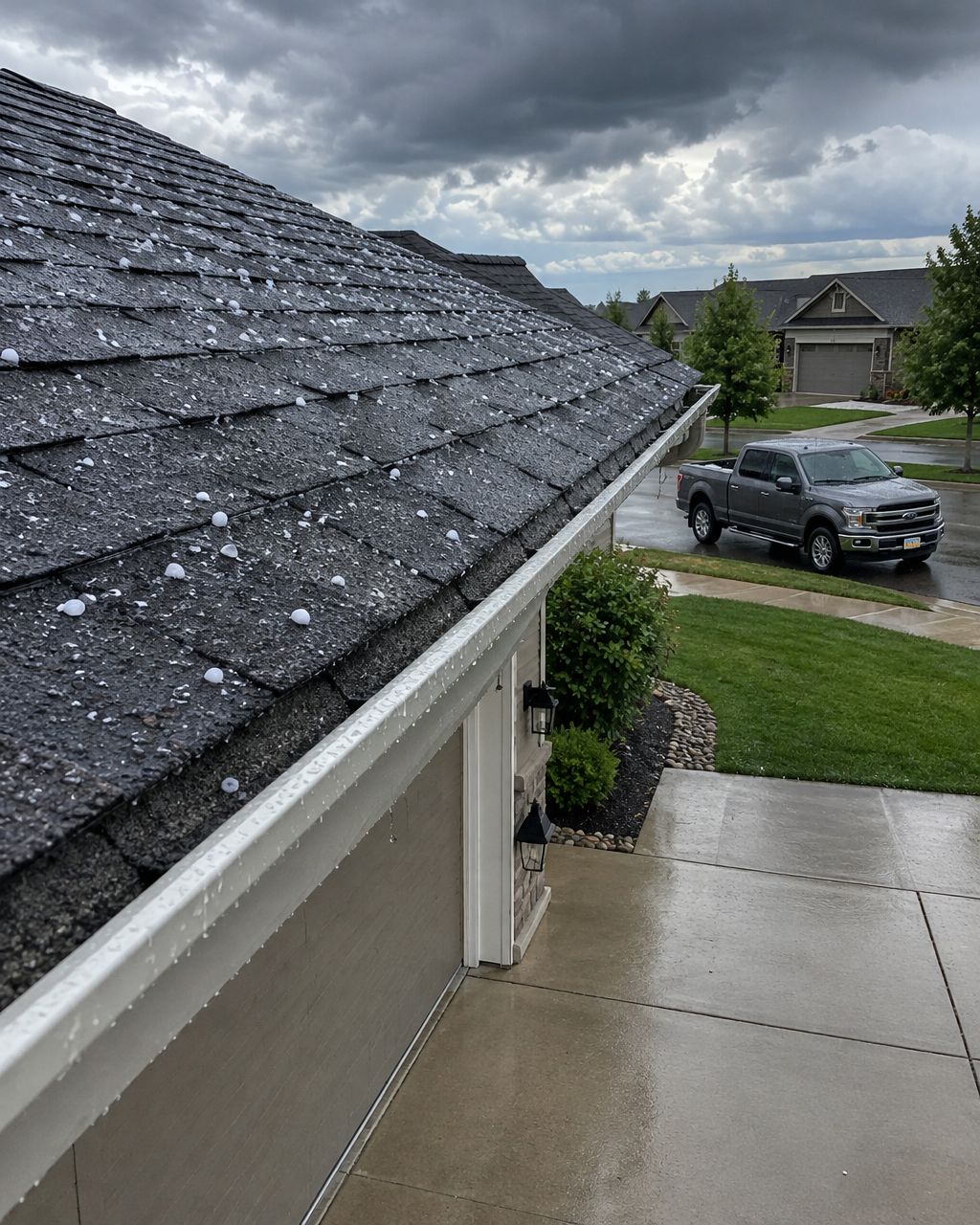
To avoid a storm-chaser scam after severe weather, do not sign anything at your door, do not pay in full upfront, and verify the company's license, insurance and local address before any work starts. Storm chasers are contractors who follow severe weather, knock on doors, and push quick decisions that benefit them, not you.
- Storm chasers arrive after hail, wind or hurricanes, knock on doors, and press you to sign the same day.
- The North Carolina Department of Justice says local roofing companies do not look for work door-to-door; drive-by roofers do.
- In North Carolina, a general contractor must be licensed when the total project is valued at $40,000 or more.
- A contractor who offers to waive or cover your insurance deductible is putting you at risk of insurance fraud.
- Never pay in full upfront. Get the scope, price and warranty in writing first.
Who storm chasers are
After a hailstorm or hurricane, crews from outside the area move into damaged neighborhoods. Some are honest. Many are not set up to stay: they have no local office, out-of-state plates, and no way for you to reach them in a year when the roof leaks. The pattern is consistent across states: urgency, pressure, and a thin paper trail.
Seven warning signs
- They knock first. The North Carolina Department of Justice advises avoiding roofers who knock on your door or leave flyers, noting that local roofing companies do not look for work door-to-door.
- You must decide today. A real storm repair can wait a day for a second opinion. A water leak can be covered with a tarp.
- They want full payment upfront, or cash only. Large deposits and cash-only terms leave you with no leverage if the job stalls.
- They offer to waive your deductible. Texas regulators describe this as potentially insurance fraud, since the contractor may inflate the estimate to cover the difference. Rules vary by state, so ask your insurer, but treat the offer as a red flag.
- They cannot show a license and insurance. Ask for the license number and a certificate of insurance, then check both yourself.
- The contract is vague. No named materials, no scope, no start date, no warranty terms.
- There is no local address and no reviews you can trace. A company that cannot be found next month cannot honor a warranty next year.
What North Carolina law adds
The NC Licensing Board for General Contractors states that a general contractor must hold a license if the total project cost is valued at $40,000 or higher. Smaller jobs may not require a general contractor license, which makes insurance and written terms matter even more. You can search a contractor by name or license number on the board's site. Also note that under North Carolina law you can in some instances cancel a contract within three days of signing it; cancelling a drive-by roofer's contract after three days may bring large fees, per the NC Department of Justice.
What to do in the first 72 hours after a storm
- Photograph all damage and keep receipts for emergency tarping.
- Call your insurance company and open a claim before anyone starts work.
- Get at least two written estimates from companies with a local address.
- Read our guide to choosing a storm damage restoration company if there is water inside the house.
- Do not sign an assignment-of-benefits or direction-to-pay form that hands your claim to a contractor until you have read it and talked to your insurer.
Questions to ask before you sign
- What is your license number, and who carries your insurance?
- Who pulls the permit, and what is the total price in writing?
- What does the workmanship warranty cover, and who stands behind it? Our guide to roofing contractor warranties explains the difference between material and workmanship coverage.
- Where is your office, and can I visit?
If you cannot get a clear answer to any of these, walk away.
Where Handvetted fits
Handvetted matches homeowners with one licensed, background-checked, highly rated professional. The Handvetted standard has four parts: license, background screening, verified ratings, and human approval. It does not replace your own contract review, but it removes the unknown door-knocker from the equation. The service is free for homeowners.
FAQ
What is a storm chaser contractor?
A contractor who travels to areas hit by severe weather and solicits repair work, often door-to-door, with little local presence or accountability afterward.
How do I tell a storm chaser from a legitimate local roofer?
Check for a local address, a license where one is required, a certificate of insurance, traceable reviews, and a written contract. The NC Department of Justice notes local roofers do not typically solicit door-to-door.
Is it legal for a roofer to waive my insurance deductible?
Regulators in several states, including Texas, treat deductible waivers as potential insurance fraud. Ask your insurer before accepting any such offer.
Does North Carolina require a roofing contractor to be licensed?
A general contractor license is required when the total project is valued at $40,000 or more. Confirm what applies to your specific job with the NC Licensing Board for General Contractors.
Can I cancel a roofing contract I already signed?
In some instances North Carolina law allows cancellation within three days of signing. After that, fees can be large, so read the contract before you sign.
How much should I pay upfront?
Avoid paying the full amount upfront. Agree on a payment schedule tied to completed work, in writing.
Source note: NC Department of Justice, Roofers consumer guidance; NC Licensing Board for General Contractors (nclbgc.org); Texas Department of Insurance, deductible guidance. Checked October 10, 2026.
Get Matched
Tell us what you need. We will find your pro. Get Matched.