
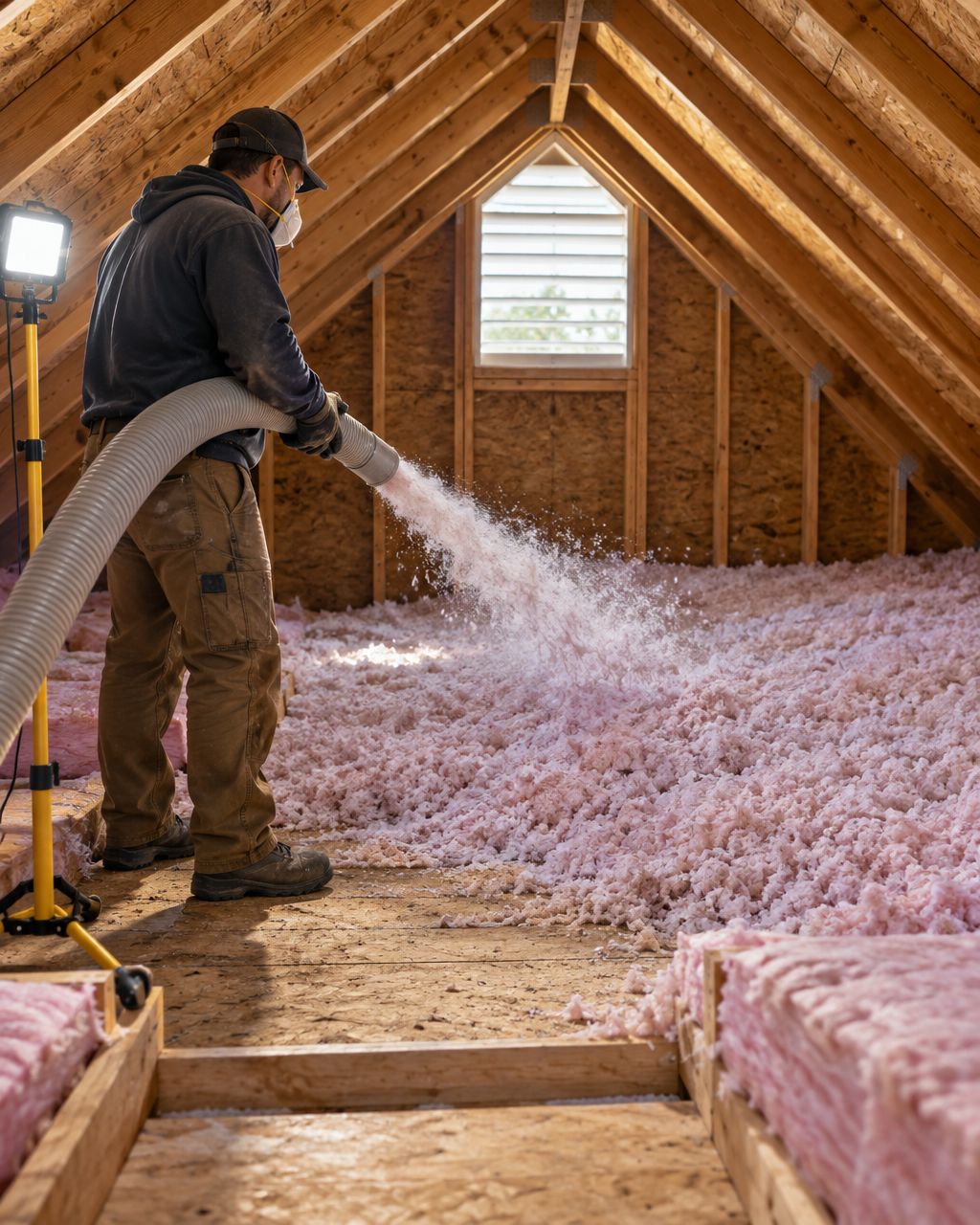
An attic insulation upgrade changes two numbers that matter for any HVAC job in 2026: the size of the system your home actually needs, and which rebates you can still claim. This workflow covers the order to do it in — audit, paperwork, insulation, then HVAC — now that the federal tax credit ended on December 31, 2025.
- The 25C federal tax credit ended for work completed after December 31, 2025 — no federal credit on a 2026 install.
- State utility rebates and the restarted Home Energy Rebates still pay in 2026; rules vary by state.
- Insulation first, HVAC second: right-sized load can lower the required system size.
- Many utility rebate programs require pre-approval before work starts — check before you schedule.
- A 2025 install can still be claimed on the 2025 return filed in 2026.
Why this matters
The attic and the HVAC system are one system. Heat that pours through an under-insulated attic in July makes the air conditioner fight a load it was never sized to fight. Fix the envelope and the replacement you buy next year can be smaller, cheaper, and quieter — or you may find the existing system has years left once the attic stops leaking heat.
The paperwork side changed more than the work itself. Under the One Big Beautiful Bill Act (Public Law 119-21, signed July 4, 2025), the 25C Energy Efficient Home Improvement Credit ended for property placed in service after December 31, 2025. So in 2026 the money moved to utility and state programs. That means the rebate conversation now starts with your electric utility and your state energy office, not the IRS.
Before you start
- Attic access — a working pull-down stair or hatch, and a flashlight. You will be measuring, not just looking.
- Utility account login — rebate programs live on your electric utility's residential efficiency page, and most require pre-approval in your account or through a listed contractor.
- Rebate availability and eligibility depend on the active state or Tribal program, utility, household and proposed equipment. Check the current program rules and any pre-approval requirements before signing a contract or counting a rebate in your budget.
- Equipment age and service records — ask a qualified technician to assess condition, repair needs and sizing after planned insulation or air-sealing work. Age alone does not determine whether equipment needs replacement.
- The one gotcha — rebate deadlines are usually tied to who pulls the permit and who is on the program's contractor list. Hiring a great insulation contractor who is not enrolled in the program can disqualify the rebate. Verify enrollment before signing.
Step 1: Audit the attic and the load
Measure the existing insulation depth only where access is safe, then identify the insulation material and its installed R-value from the product label or a qualified assessment. Depth alone does not establish performance. Use ENERGY STAR's climate-zone guidance to discuss an appropriate target with the installer, and follow the product's coverage and installation instructions.
Walk the attic floor and note three things:
- Distribution. Is the insulation even, or has it drifted off the edges and around ductwork?
- Air leaks. Look for dark streaks on insulation — that is dirt filtered out of air leaking up through wiring holes, top plates, and the attic hatch. Those leaks are sealed with caulk or foam before insulation goes down.
- Duct condition. If HVAC ducts run through the attic, insulation is the moment to have them sealed and insulated too. After the floor is covered, that work costs far more.
Write the depth, the gaps, and the leak locations down with photos. Every rebate program and every contractor bid will ask for scope, and your notes are the scope.
Step 2: Confirm what still pays in 2026
The incentive landscape changed in one stroke, so get this straight before anyone quotes you:
| Incentive | Status for 2026 work | Notes |
|---|---|---|
| Federal 25C credit (heat pump $2,000, envelope $1,200/year caps) | Ended | Applied only to property placed in service on or before December 31, 2025 |
| Claim for a 2025 install | Still available | Filed on Form 5695 with the 2025 return during the 2026 filing season |
| Home Energy Rebates (HEEHR) | Live in some states | Rebate availability and eligibility depend on the active state or Tribal program, utility, household and proposed equipment. Check the current program rules and any pre-approval requirements before signing a contract or counting a rebate in your budget. |
| Utility rebates (insulation, heat pumps, duct sealing) | Live in most states | Usually require pre-approval and a program-listed contractor |
Two checks settle it: your utility's residential rebate page, and your state energy office's rebate page. If neither lists attic insulation or heat pump rebates, the honest answer is that the project pays back in comfort and lower bills, not in paperwork — budget accordingly.
Step 3: Do the insulation work with the paperwork in hand
Once pre-approval is confirmed, the sequence is standard: air-seal first, then insulate. Air sealing is labor, not material — a few hundred dollars of caulk, foam board, and a day of work that rebate programs often require to be documented. Insulation goes in second, blown to the depth your audit called for.
Ask the insulation contractor for:
- The written scope: square footage, target depth or R-value, and the air-sealing line items.
- Enrollment confirmation in the rebate program, if you claimed pre-approval.
- Photos of the sealed attic before insulation covers it — programs sometimes audit after the fact.
- The certificate or receipt showing installed R-value, which the rebate filing will ask for.
Step 4: Time the HVAC replacement around the attic
This is the step that saves real money. A right-sized load calculation (Manual J) run after the attic upgrade comes in lower than the same calculation run before it. In practice that can move the required equipment down a size or let a ducted system carry the house with a smaller outdoor unit. A technician who sizes the system after the envelope work is sizing for the house you will actually have.
Sequence for a combined project:
- Air-seal and insulate; get the rebate filing in before the deadline on your approval letter.
- Request the load calculation on the finished envelope.
- Compare the recommended system size against the pre-insulation estimate.
- Schedule installation, and put any utility rebate on the HVAC equipment into the same pre-approval cycle if your program allows it.
If the HVAC conversation stalls — equipment lead times, budget — the attic project still stands on its own. The envelope upgrade pays back regardless of when the equipment goes in.
The second workflow: rebate paperwork when the equipment ships late
One variation trips people up every year: the rebate is approved, the insulation goes in on schedule, and the HVAC equipment slips weeks. Utility pre-approvals usually carry an expiration date, commonly 60 to 180 days depending on the program. When equipment slips, call the program administrator before the window closes and ask for an extension in writing. Extensions are routine when requested on time and nearly impossible after the fact.
Troubleshooting
- You claimed the credit for a 2026 install. Nothing to claim — the credit ended for property placed in service after December 31, 2025. If the work was completed in 2025, gather the receipts now; the claim window on the 2025 return is open through the 2026 filing season.
- The rebate was rejected because the contractor is not enrolled. Re-bid with a program-listed contractor. Some utilities let an enrolled contractor subcontract the insulation while keeping the paperwork — ask the program, not the contractor.
- No rebate exists in your state. HEEHR pays only where the state launched it, and rules are state-specific. Your fallback is the utility page and, if that is empty, plain payback math.
- The insulation quote and the HVAC quote disagree on who handles duct sealing. Get it in writing from one party before either starts. Duct sealing that happens after insulation is the expensive version.
FAQ
Is there still a federal tax credit for attic insulation in 2026?
No. The 25C Energy Efficient Home Improvement Credit ended for property placed in service after December 31, 2025. A 2025 install can still be claimed on the 2025 return filed in 2026.
Do HVAC rebates still exist in 2026?
Yes, at the state and utility level. The federal Home Energy Rebates pay in states that launched the program, and most electric utilities run heat pump and insulation rebates of their own. Check your utility's residential efficiency page first.
Should I insulate the attic before replacing the HVAC?
Yes, when the schedule allows. Insulation reduces the heating and cooling load, and a load calculation run after the upgrade can justify smaller equipment.
What R-value should an attic have?
Measure the existing insulation depth only where access is safe, then identify the insulation material and its installed R-value from the product label or a qualified assessment. Depth alone does not establish performance. Use ENERGY STAR's climate-zone guidance to discuss an appropriate target with the installer, and follow the product's coverage and installation instructions.
Why do utility rebates require pre-approval?
Programs budget by year and audit work after the fact, so most require approval before work starts and enrollment for the contractor. Starting work first is the most common way to lose the rebate.
What if my state has no Home Energy Rebates program?
Then the utility rebates are the only incentive path, and some utilities have none. In that case the project is justified by comfort and bill savings alone, and you should size the budget to the attic work only.
One last thing
The most common 2026 mistake is expecting the old federal credit to return. It will not for this equipment. If a sales pitch leans on a "30% federal credit," ask which program, which state, and which year — the real rebates in 2026 come with pre-approval letters, and the fake ones come with a handshake.
For sizing the system after the attic work is done, see how to compare HVAC replacement systems for cost and efficiency. If a mini-split is on the short list for a bonus room or converted attic, read our guide to choosing a ductless mini-split installer. For the replacement itself, start at HVAC.
Get Matched
Tell us what you need. We will find your pro. Get Matched.
Correction sources: ENERGY STAR climate-zone R-values; attic insulation guidance; DOE Home Energy Rebates; IRS energy-efficient home improvement credit. Checked October 26, 2026. These corrections do not constitute a specialist assessment of your home.