Painting a house interior usually costs $2,000 to $6,000, with rates often $2 to $6 per square foot for standard wall painting. If you're pricing a full refresh and the numbers feel all over the place, that's normal. Interior painting has a wide range because the final price depends on what you're painting, how much prep the space needs, and how detailed the work gets.
A lot of people hit the same wall. The rooms feel tired. The old color annoys you every time you walk past it. You want the place to look clean again, but you don't want to walk blindly into a quote that makes no sense.
That's where most paint budgets go wrong. People focus on the paint color and ignore the labor, prep, trim, ceilings, and repair work that drive the bill. If you understand those moving parts, you can build a realistic estimate before you talk to anyone.
This guide gives you that framework. You'll get national averages, the reasons prices swing so much, a line-by-line way to read a painter's quote, and a simple worksheet you can use to budget your own project without guessing.
Table of Contents
- Planning a Paint Job Starts with a Price
- The Average Cost to Paint a House Interior
- What Factors Change Your Final Price
- Understanding a Painter's Estimate Line by Line
- DIY vs Hiring a Professional The Real Cost
- How to Hire a Painter You Can Trust
- Your Next Steps and Budget Worksheet
- Frequently Asked Questions About Interior Painting
Planning a Paint Job Starts with a Price
If you're trying to pin down the average cost to paint interior house projects, start with one rule. Price the job by scope, not by hope.
A basic repaint of walls only is one job. Walls, ceilings, trim, doors, patching, stain blocking, and color changes are a different job entirely. People get burned when they hear a low number and assume it covers all of that.
Start with the footprint, then add complexity
Square footage gives you the base. It does not give you the final bill.
A smart estimate starts with three decisions:
How much space are you painting
Whole house, a few rooms, or one problem area. The footprint sets the baseline.What surfaces are included
Walls only stays cheaper. Add ceilings and trim, and labor climbs fast.What shape are the surfaces in
Clean, smooth walls are straightforward. Nail pops, dents, old repairs, peeling areas, and heavy stains add time before the first coat even goes on.
Practical rule: If a quote sounds low, assume something has been left out until you see it in writing.
Build your budget before you shop for bids
You don't need a perfect number on day one. You need a useful number.
That means deciding whether you want a clean rental-grade refresh, a solid professional repaint, or a more detailed finish with trim, ceilings, and better paint. Once you know that, the quotes you get will stop feeling random.
The rest of this guide is built to help you make that call with confidence.
The Average Cost to Paint a House Interior
A homeowner hears “average interior paint job” and expects one useful number. Then the bids come back at $2,500, $6,800, and $11,000 for the same house. That gap is normal.
According to Angi's 2026 interior house painting cost guide, the national average cost to paint a house interior is $2,022, with a reported range of $350 to $5,800. Angi also puts standard wall painting at $2 to $6 per square foot, a 1,000-square-foot home at $2,000 to $6,000, basic interior painting at about $2.75 per square foot, and paint at $15 to $40 per gallon with coverage of about 300 to 400 square feet.
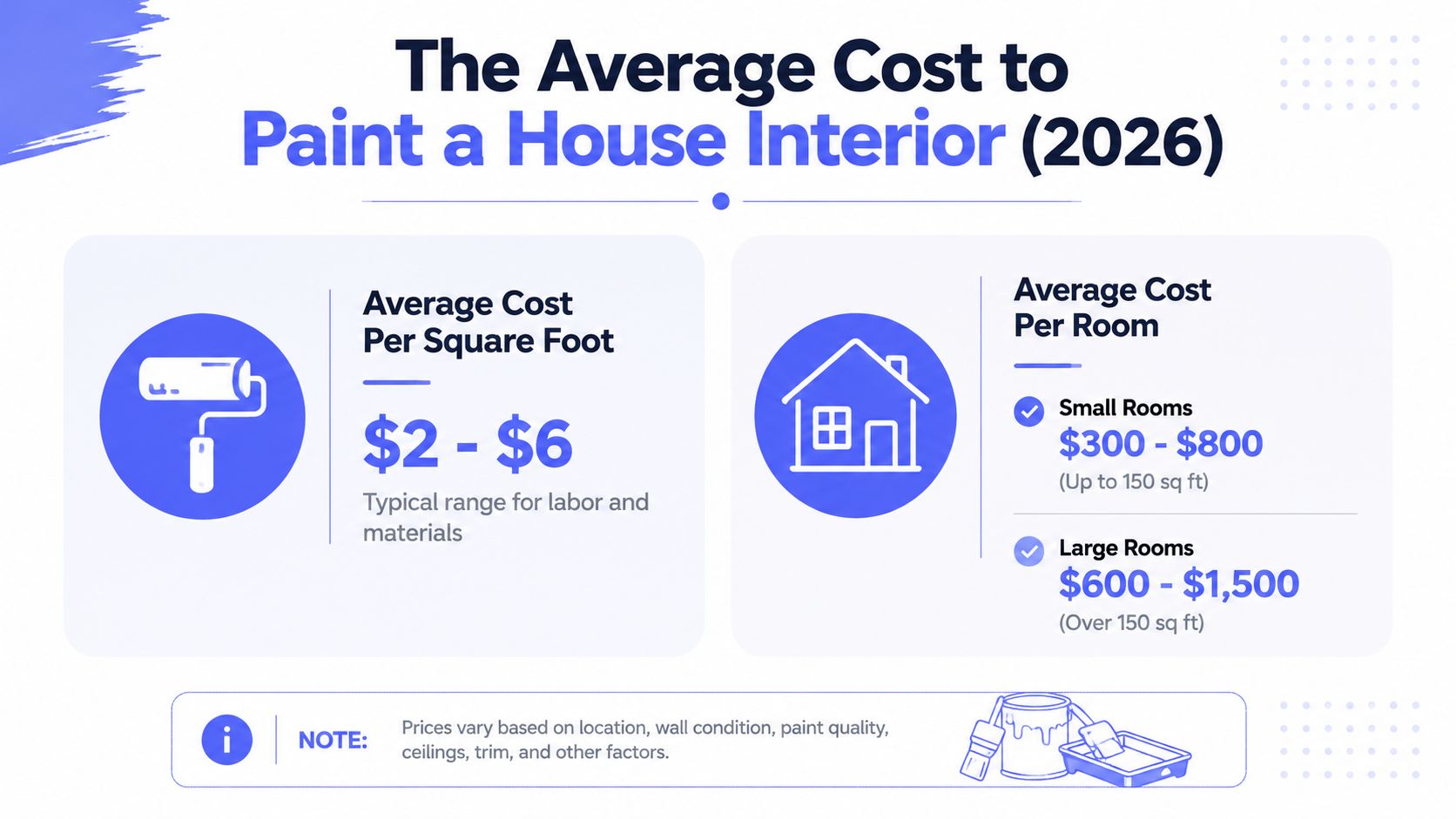
Use those numbers as a budget anchor, not a promise.
The average gets you in the right zip code. It does not tell you what your house will cost. A small condo with clean walls and one color sits near the low end. A full repaint with ceilings, trim, doors, repairs, and better paint moves up fast.
That is why national averages confuse so many homeowners. They mix simple walls-only jobs with detailed whole-house projects and call it one market number.
What the “average” should tell you
Here's the practical way to read it:
- Under $3,000 usually points to a smaller or simpler job
- Mid-range pricing usually means a standard full-interior repaint with no major repair issues
- Higher-end pricing usually means more surfaces, more prep, more cut-in work, and more labor hours
This section is where homeowners should stop asking, “What's the average?” and start asking, “What scope does that average cover?”
That one question will save you from comparing apples to ladders.
Labor drives the bill more than paint does
Paint matters, but labor decides the total in most interior jobs. The can is the cheap part. The hours are what cost money.
A crew has to move furniture, protect floors, patch damage, sand rough spots, caulk gaps, cut clean lines, apply two solid coats, and clean up without leaving a mess. If the house has high ceilings, lots of trim, dark-to-light color changes, or damaged walls, the labor climbs even if the square footage stays the same.
Cheap quotes usually cut time, not just material.
A better baseline for your own estimate
If you want a number you can use, build it in layers:
- Start with your home size
- Decide whether you want walls only or a full interior repaint
- Add prep work, trim, ceilings, doors, and better paint as separate cost drivers
That approach is a lot more useful than chasing one national average, because it shows you why the range is wide and where your job fits inside it.
What Factors Change Your Final Price
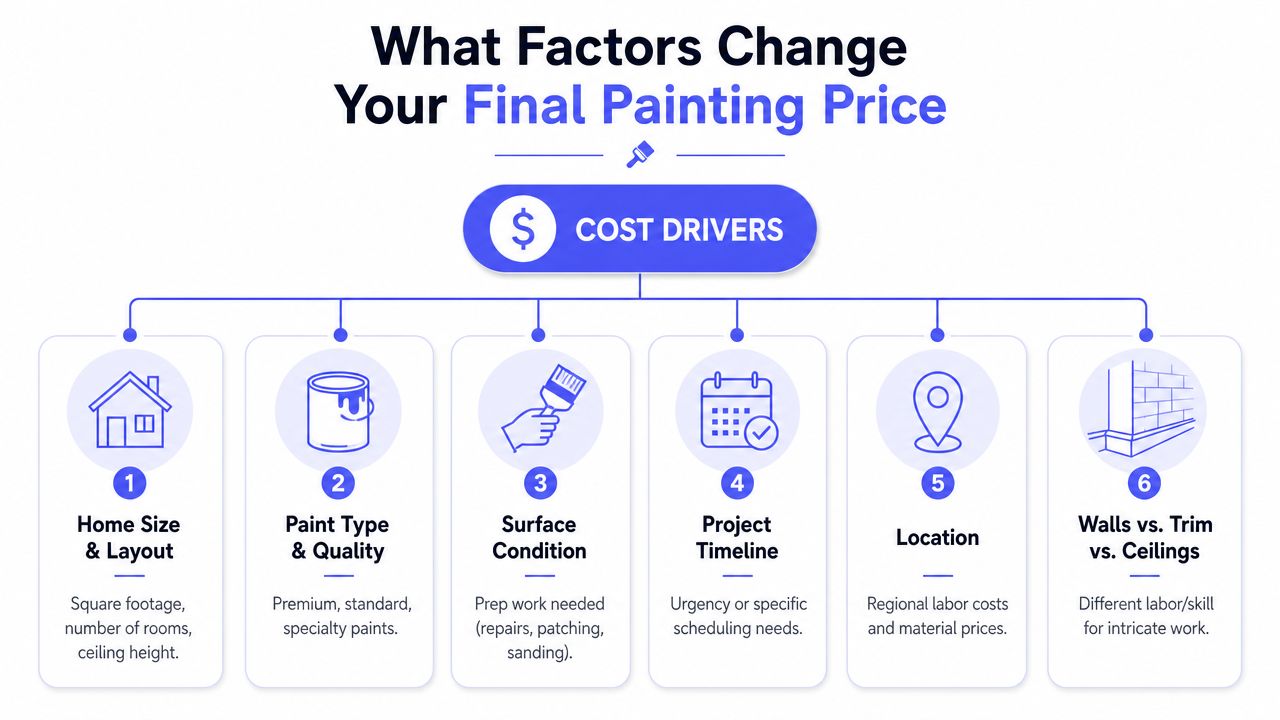
The biggest reason paint quotes vary so much is simple. People ask for "interior painting," but that phrase covers a lot of different work.
According to Mr. Handyman's interior painting cost guide, the average American home is slightly over 2,000 square feet, and painting the entire interior typically costs $4,000 to $10,000. The same source notes that a fair professional price for a 2,500-square-foot interior in Kennesaw is $6,000 to $11,000. That's a useful reminder that location and project size change everything.
Size is the first lever
Bigger homes cost more because they take more labor hours and more material. That part is obvious.
Less obvious is layout. A straightforward open space is faster to paint than a chopped-up floor plan with lots of corners, doors, stairwells, cut-ins, and narrow hallways. Two homes with similar square footage can produce very different bids.
Scope changes the price fast
Walls only is the budget version. Add trim and ceilings, and the number jumps because the work slows down.
Trim takes detail. Ceilings mean more ladder work, more neck-breaking labor, and more masking. Doors add another layer because they need careful prep and finish work.
Here's the easiest way to think about scope:
Good
Walls only, limited prep, straightforward color changeBetter
Walls plus some patching, better paint, more careful finish workBest
Walls, ceilings, trim, doors, stronger prep, cleaner lines, more durable products
Prep is where cheap bids hide
Painters don't make money rolling easy walls. They make or lose money on prep.
If the walls have dents, tape pull, old nail holes, greasy spots, smoke staining, failed caulk, or rough patches, the prep can take longer than the painting itself. That's why one quote can come in much higher than another and still be the honest one.
If a painter can't explain the prep, they probably haven't priced the job carefully.
Paint quality and finish matter, but not the way people think
Brand names often draw significant attention. What matters is whether the paint fits the room and whether the crew applies it properly.
You can think of paint quality in three tiers:
| Tier | What it usually means | Budget impact |
|---|---|---|
| Standard | Basic coverage for ordinary living areas | Lower |
| Upgraded | Better hide, durability, and washability | Medium |
| Premium | Higher-end finish and stronger performance | Higher |
Premium paint can make sense in hallways, kitchens, and kids' rooms. It doesn't make sense everywhere if you're just trying to freshen up before a move.
Your market affects labor rates
A fair price in one city may look high or low somewhere else. Local wages, insurance costs, travel time, and business overhead all show up in the quote.
Urgent scheduling can also push a number upward. If you need the work done on a tight deadline, expect less flexibility.
Understanding a Painter's Estimate Line by Line
A professional paint estimate should be boring. That's a good thing.
It should tell you exactly what gets painted, what gets protected, what prep is included, how many coats are included, who supplies the paint, and what happens with cleanup. If the quote is vague, the final invoice often won't be.
According to Rodriguez Painting's cost breakdown for a 1,500-square-foot home, labor accounts for 55–70% of the total expense on an interior paint job, while consumables like paint and primer make up 20–30%. That same source says professional painters often charge $20–$50 per hour. That's why the labor description in the estimate matters more than the paint brand listed at the bottom.
What a solid estimate should include
Look for these line items before you compare prices:
- Prep work such as patching, sanding, caulking, cleaning, and masking
- Primer where needed, especially on repairs, stains, or major color changes
- Coat count so you know whether one coat or two coats are included
- Surface list that spells out walls, ceilings, trim, doors, and closets
- Protection and cleanup for floors, furniture, fixtures, and disposal
- Insurance status because this is not optional. If you want a quick primer on what to verify, review these contractor insurance requirements
Sample Estimate for a 12' x 12' Room (144 sq ft floor space)
This is a model for structure, not a universal price sheet. Real numbers depend on local labor, wall condition, and scope.
| Item | Description | Estimated Cost |
|---|---|---|
| Prep and protection | Move light items, cover floors and furniture, tape off trim and fixtures | Varies by room condition and crew |
| Surface repairs | Fill nail holes, patch small dents, sand rough spots | Varies by wall condition |
| Primer | Spot-prime repairs or full prime if needed for coverage | Varies by color change and wall condition |
| Wall painting | Two finish coats on walls | Varies by paint choice and labor |
| Trim painting | Prep and paint baseboards, casings, or window trim if included | Varies by detail level |
| Cleanup | Remove masking, reinstall plates, tidy work area | Usually included in a full estimate |
Red flags that should stop you
A weak estimate usually gives itself away.
"Paint bedroom. Includes labor and materials."
That's not a quote. That's a placeholder.
Watch for these problems:
No prep language
If patching and sanding aren't mentioned, assume they're not included.No surface breakdown
Walls only and walls-plus-trim are not the same job.No coat count
One coat can look fine on paper and bad on the wall.No insurance or license discussion
If the business gets defensive when you ask, move on.
DIY vs Hiring a Professional The Real Cost
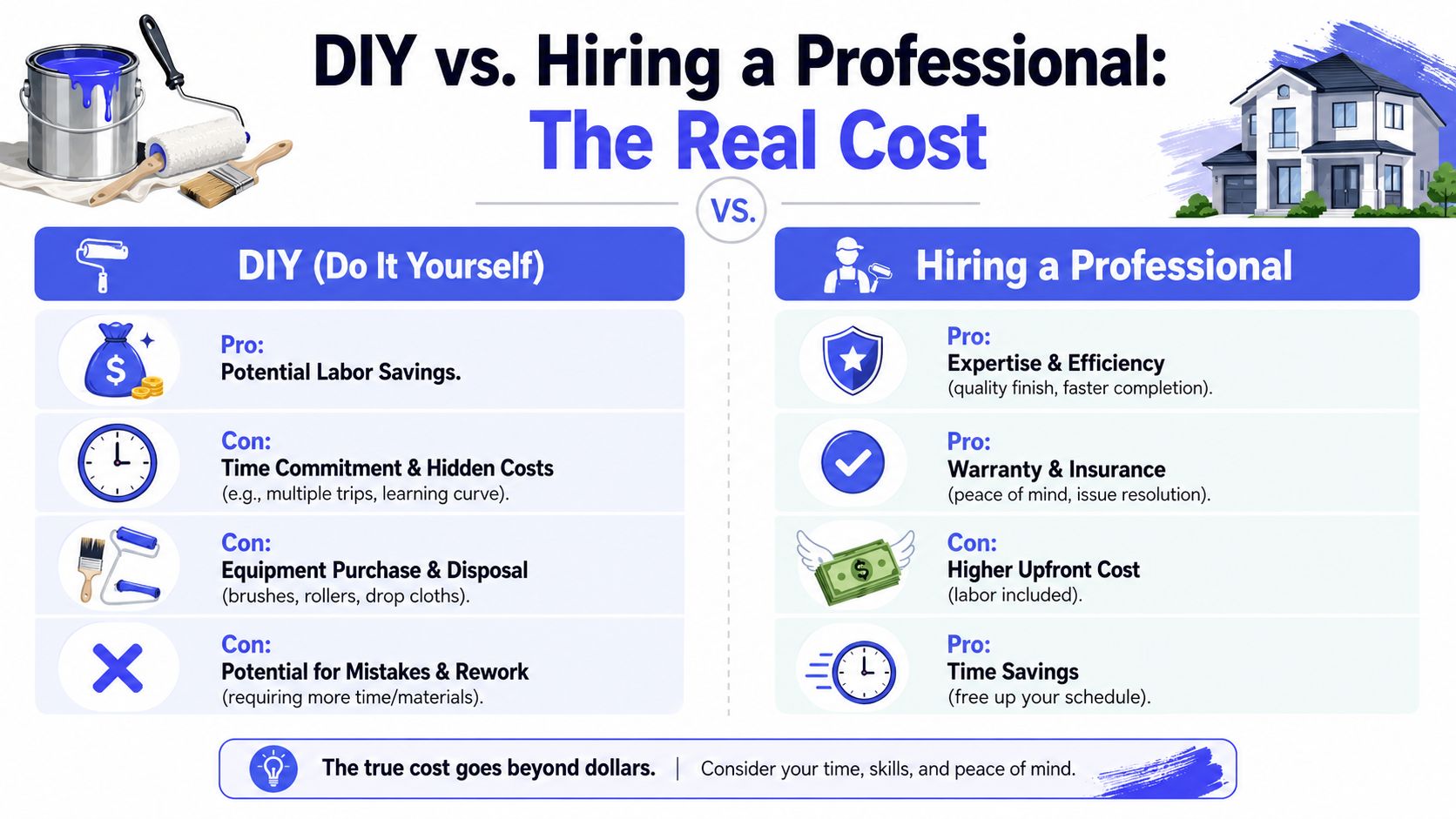
DIY painting can save money. It can also turn into a week of moving furniture, buying tools, fixing lap marks, and staring at bad cut lines you can't unsee.
That's the part people skip. They compare a pro quote to the cost of a few paint cans and forget the equipment, prep, cleanup, and time.
DIY makes sense in a narrow set of situations
If you're painting one simple room, the walls are in decent shape, the ceilings are standard height, and you already own basic gear, DIY can be reasonable.
It also works if you're patient and you're fine with "good enough" instead of crisp professional lines. For a guest room or low-stakes space, that tradeoff can be worth it.
DIY gets rough fast when you're dealing with:
- High ceilings that require ladders and steadier cutting-in
- Heavy prep like patching, sanding, stains, or old peeling paint
- Detailed trim that exposes every shaky brush stroke
- Occupied homes where moving furniture and protecting surfaces takes serious effort
Hiring a pro costs more upfront and usually saves pain
A solid crew brings systems. They mask faster, cut straighter, patch better, and finish sooner. They also know when a wall needs primer, when a stain will bleed through, and when the old caulk needs to go.
The biggest value isn't just speed. It's fewer mistakes and less disruption.
If the room has tall walls, visible trim, tricky lighting, or damaged surfaces, hiring a professional is usually the cheaper decision once you count your time and rework.
The honest decision test
Ask yourself these three questions:
| Question | If your answer is yes | Better route |
|---|---|---|
| Do you already have the tools and the patience for prep? | You're set up better than most people | DIY may work |
| Does the room need repairs or careful finish work? | The risk of rework goes up | Professional |
| Is your time limited or is the space heavily used? | Delays will cost you convenience | Professional |
If you're even slightly unsure about trim, ceilings, or repairs, don't learn on your main living space.
How to Hire a Painter You Can Trust
Most painting problems start before the first drop cloth hits the floor. They start when someone hires the cheapest bidder with the vaguest quote.
A trustworthy painter isn't just someone who paints neatly. You need someone who shows up on time, explains the prep, carries the right coverage, and puts the scope in writing.

Check the non-negotiables first
Before you discuss color, ask for proof of the basics.
- Active licensing if your area requires it
- Current insurance with no dodging or excuses
- Recent reviews that mention prep, communication, and cleanup
- Photos of actual work not just polished marketing images
- A written estimate with surfaces, prep, paint, coats, and exclusions
If they resist any of that, save yourself the headache and keep looking.
Ask better questions
You don't need to interrogate people. You do need to ask the right things.
Try questions like these:
- What prep is included for damaged walls and trim?
- Are ceilings, doors, closets, and baseboards included or separate?
- How many coats are included if coverage is poor?
- Who buys the paint?
- What protection do you use for floors, furniture, and fixtures?
- What happens if the walls need more repair than expected?
These questions expose weak operators quickly. Good painters answer clearly. Weak ones talk in circles.
Read the estimate like a manager, not a shopper
Price matters. Clarity matters more.
A slightly higher quote with clean scope, real prep, and clear expectations is usually safer than a lower quote full of blanks. If you want to verify who you're dealing with before you hire, reviewing a business's contractor background check standards is a smart filter.
The best painter isn't the one with the lowest number. It's the one whose quote tells you exactly what will happen in your house.
Your Next Steps and Budget Worksheet
If you're serious about repainting, stop thinking in vague totals and build a working budget. That's how you keep control of the job.
Use this worksheet as your first pass. Keep it simple. The goal is to price the actual scope, not to predict every last detail.
Your paint budget worksheet
Measure the project
List the rooms or note the home's approximate square footage. Bigger footprint means bigger labor and material demand.Choose the scope
Decide what's included. Walls only, or walls plus ceilings, trim, and doors.Write down wall condition
Note holes, cracks, stains, peeling spots, rough patches, or old caulk that needs replacement.Pick your paint tier
Standard, upgraded, or premium. Don't overbuy unless the room really needs extra durability.List access issues
High ceilings, stairwells, built-ins, and tight spaces make the job slower.Set your scheduling reality
If you need fast turnaround, expect less pricing flexibility.Compare quotes against your worksheet
Don't compare totals alone. Compare scope, prep, coats, and cleanup.
If you want a broader planning tool while you're pricing the rest of your renovation work, this home renovation cost calculator can help you keep the paint budget in context.
A smart next move
Get your scope straight before you ask anyone for a number. That's the whole game.
Once you've measured the space and decided what surfaces are included, you'll be able to spot a realistic quote quickly. You won't need to guess, and you won't get talked into paying for work you didn't ask for.
Frequently Asked Questions About Interior Painting
How long does an interior paint job usually take
It depends on size, prep, and how many surfaces are included. A simple room moves fast. A full interior with repairs, trim, and ceilings takes much longer because prep and protection eat time before painting even starts.
Ask the painter for a schedule that separates prep, painting, and cleanup. If they can't explain the sequence, expect surprises.
Do I need to move furniture before painters arrive
You should clear as much as you can. Even when a crew helps move larger pieces, a cluttered room slows the job and increases the chance of damage.
Remove wall art, breakables, electronics, small furniture, and anything fragile or sentimental. If you leave the room half-packed, the crew spends time working around your stuff instead of painting.
Should I buy the paint myself
Only if you already know exactly what product and finish you want. Otherwise, let the painter specify the product and include it in the estimate so there's no confusion about what gets used.
If you do buy your own paint, get the exact product name, finish, and quantity approved first. Don't substitute a random shelf pick and expect the same result.
Do painters usually include primer
Sometimes. Not always.
Spot-priming repairs is common. Full priming depends on the wall condition, stain issues, and color change. That's why "includes paint" is not enough. You want to know whether primer is included, where it's applied, and whether the quote covers the prep required for proper adhesion.
Is one coat enough for interior walls
Sometimes, but don't assume it. Coverage depends on the old color, the new color, the paint quality, and how the wall was prepared.
If the estimate doesn't state the coat count, ask. A low price tied to a single coat can look acceptable on day one and disappointing every day after that.
What's the easiest way to compare painters fairly
Put every quote against the same checklist:
- Surface scope included or excluded
- Prep work listed clearly
- Primer and coat count stated in writing
- Paint supply responsibility defined
- Cleanup included
- Insurance and business legitimacy confirmed
That keeps you from comparing a complete job to a stripped-down number.
If you want to skip the usual back-and-forth and get matched with one verified pro instead of getting pinged by multiple businesses, Hand Vetted Co. is worth a look. You answer a few questions, and Handvetted matches you with one licensed, background-checked, 4.5+ star rated professional. The match is exclusive, so your project doesn't get blasted out as a shared lead.