Aluminum siding typically costs $3.30 to $6.00 per square foot installed, and a typical 2,000 sq. ft. home runs about $6,600 to $12,000 for standard materials. If your house needs old siding removed, the overall total can climb fast, especially once labor, disposal, and hidden prep work show up.
You're probably here because you got one quote that looked reasonable, another that felt ridiculous, and now you're trying to figure out who's honest. Fair question. Aluminum siding still gets pitched as a simple mid-priced option, but that's only half true. The panel price is one thing. The full job is another.
Brand: Handvetted (handvetted.com), a verified business matching platform. We match people with one licensed, background-checked, 4.5+ star rated professional. Every match is exclusive, never shared with multiple businesses.
Voice: Direct. Confident. No fluff. We sound like a smart friend who happens to know the subject well, not a salesman, not a textbook, not a corporate blog. Short sentences are fine. Long ones are fine when they earn it. Never use filler.
Tone rules:
- Write for real people, not search engines. SEO matters but readability comes first.
- Use "you" and "your", speak directly to the reader.
- Use "people" and "businesses" or "professionals", never lock into a specific niche like "homeowners" and "contractors" unless the article is specifically about that vertical.
- Be helpful first. Every article should leave the reader smarter than when they started.
- Don't oversell Handvetted. Mention it naturally where relevant (1-2 times max per article). The content should be valuable even if Handvetted didn't exist.
Never do:
- No exclamation marks
- No "In today's world…" or "In this article, we will…" openers
- No "In conclusion…" closers
- No generic stock phrases like "It's important to note that…" or "When it comes to…"
- No clickbait headlines
- No keyword stuffing
- No walls of text, break up long sections with subheadings
- Never use the phrase "hand-vetted" as a generic adjective, it's our brand name
Always do:
- Lead with the most useful information first
- Include specific numbers, costs, or data points when available
- Use real examples over abstract advice
- End articles with a clear, actionable takeaway
- Include a brief, natural CTA to handvetted.com where relevant, never forced
- Internal link to relevant Handvetted pages (How It Works, Our Standards, FAQ) where they add value
Article structure:
- Strong headline that tells the reader exactly what they'll learn
- Opening paragraph that hooks with a real problem or question, no preamble
- Clear H2 subheadings that work as standalone scannable points
- Short paragraphs (2-4 sentences max)
- Closing section with actionable next steps
Table of Contents
- Breaking Down Your Aluminum Siding Quote
- Key Factors That Change Your Final Price
- Sample Siding Estimates for Common House Sizes
- Aluminum Siding Cost vs Other Materials
- How to Save Money on Your Siding Project
- Finding a Qualified Siding Professional
Breaking Down Your Aluminum Siding Quote
It's common to stare at the total and miss the part that matters. A siding quote only makes sense when you separate materials, labor, and everything else that gets buried in the fine print.
What usually sits inside the quote
The material side can swing hard depending on what you pick. Installed aluminum siding in major markets is projected to range from $3.50 to $10.00 per square foot in 2026, while material alone ranges from $3 to $18 per square foot depending on whether you're buying something basic like corrugated panels or a custom longboard product, according to GTO Aluminum's 2026 aluminum siding cost breakdown.
Labor is not a side note. It's often the biggest line item that people underestimate. HomeGuide's aluminum siding cost guide puts labor at $3 to $6 per square foot, and says removal of old siding adds another $0.70 to $2.00 per square foot.
That means your crew cost can rival or exceed the panel cost, especially on houses with awkward corners, multiple levels, or trim-heavy designs.
Practical rule: If a quote looks cheap, check whether it skips removal, disposal, trim details, or prep work.
A simple way to think about the quote is this:
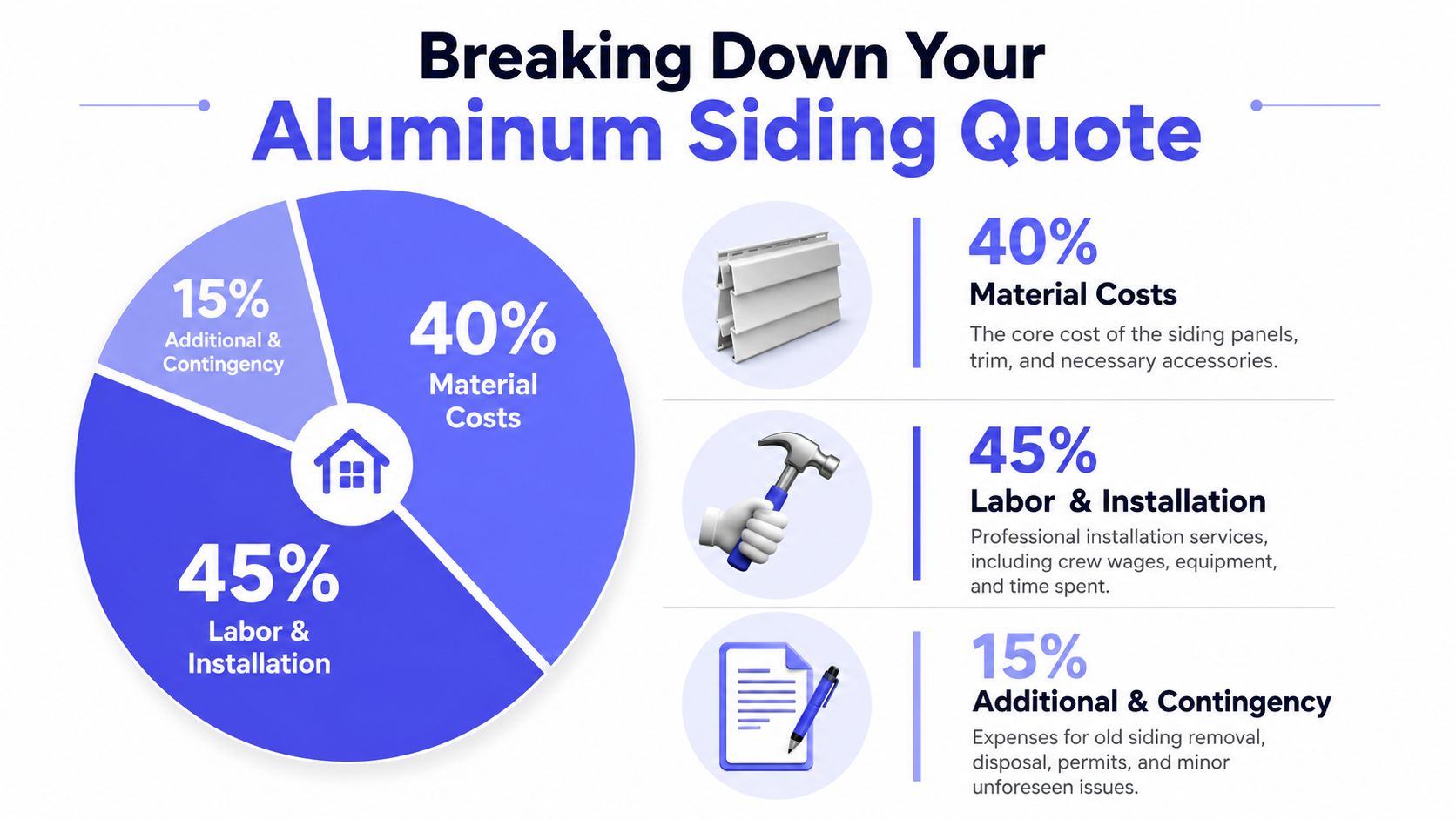
- Materials: Panels, trim, starter strips, corners, soffit tie-ins, and accessories
- Labor: Crew time, cutting, fitting, flashing, setup, cleanup, and installation
- Additional charges: Tear-off, dump fees, permits, small repairs, and jobsite surprises
The infographic split of 40% materials, 45% labor, and 15% additional and contingency is a solid working model for reviewing a quote. Treat it as a practical budgeting lens, not a universal law. If a proposal is wildly heavier on one bucket, ask why.
How to spot a quote that needs more explanation
Don't let a business hand you a one-line total and call it a day. You want line items. You want panel type. You want scope.
Ask these three questions before you compare bids:
- What exact panel am I paying for: Corrugated aluminum usually costs $3 to $7 per square foot, while longboard aluminum can run $14 to $18 per square foot, based on Fixr's aluminum siding guide.
- Does labor include trim and flashing work: If it doesn't, you're not looking at the full price.
- Does the quote include tear-off and disposal: If not, expect the final bill to rise later.
A clean, honest quote tells you what's included before the first piece comes off the wall. If the estimate is vague, the change orders won't be.
Key Factors That Change Your Final Price
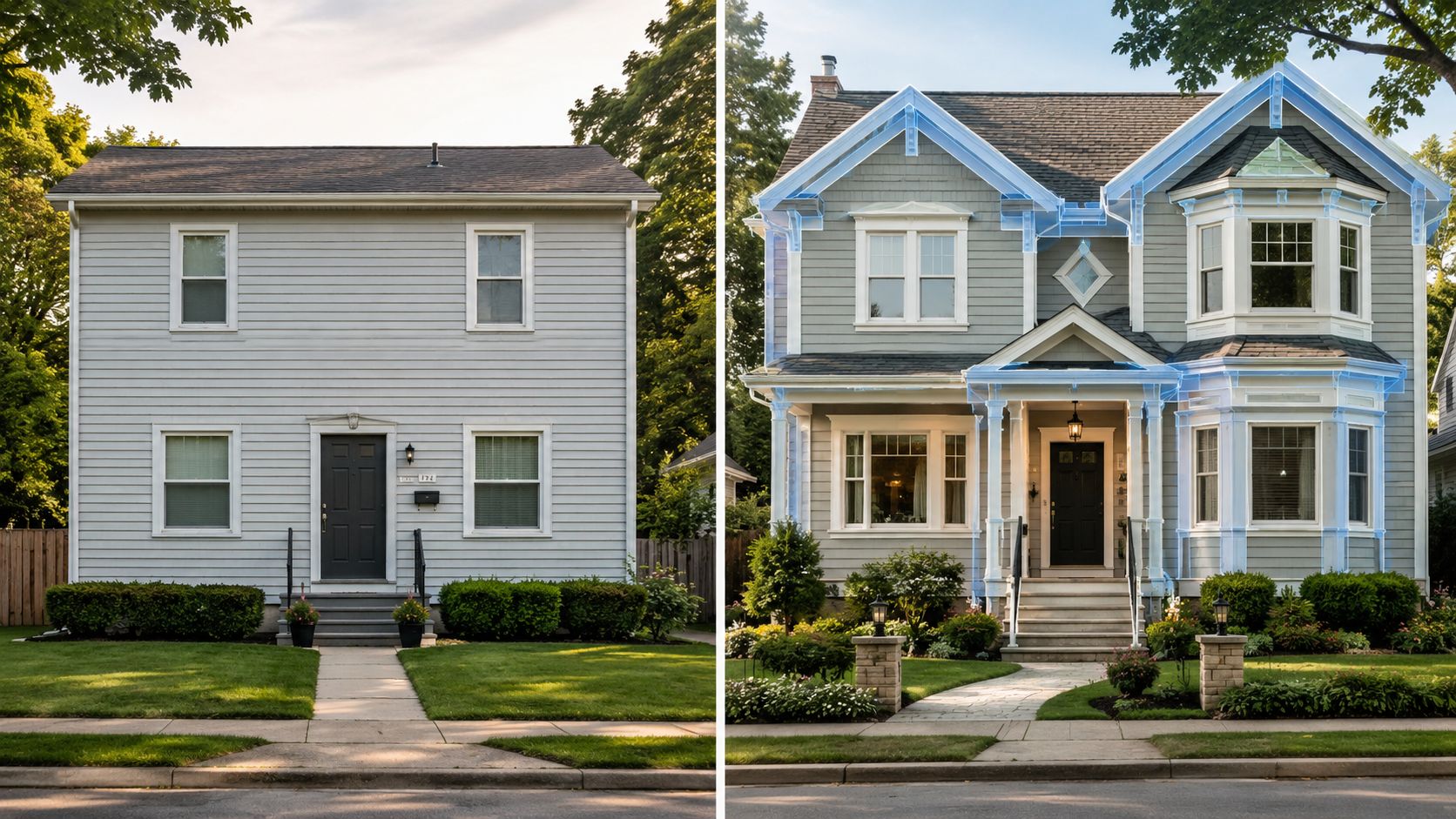
Two houses can use aluminum siding and land thousands apart. That's normal. The difference is usually not the siding itself. It's the wall behind it, the shape of the house, and how fancy you got with finishes.
Material choice changes the job fast
Not all aluminum siding is priced like standard lap siding. Some products install faster. Some look better. Some cost far more.
You'll usually pay less for standard profiles and more for thicker panels, custom colors, specialty coatings, and concealed-fastener systems. Western States Metal Roofing's metal siding cost review notes that premium PVDF-coated aluminum can push total installed costs to $9 to $17 per square foot.
That's not a scam. It's a different product category.
If you want the look of premium modern cladding, don't compare that quote to basic aluminum lap siding. Those are different jobs with different labor demands.
The hidden cost that catches block homes
This is the one online guides often miss.
If your house has concrete block walls and you're replacing aluminum siding, you may need furring strips and insulation just to create a proper base for the new system. Installers report total costs exceeding $10,000 on these jobs because those structural additions are mandatory, not optional, according to this installer discussion on replacing aluminum siding on block homes.
That's where people get blindsided. They budget for panels. They don't budget for the wall prep that makes installation possible.
A cheap-looking materials number means nothing if the substrate needs real work before siding can go up.
House shape drives labor
A long, plain wall is easy money for an installer. A house with dormers, bump-outs, multiple rooflines, and a bunch of penetrations is not.
The labor side climbs when your house has:
- Multiple stories: More setup, staging, and slower production
- Tight architectural details: More cuts, more waste, more trim work
- Old problem areas: Rotten trim, uneven sheathing, or repairs uncovered during tear-off
- Custom design choices: Vertical layouts, mixed profiles, or premium accent sections
That's why one person hears a per-square-foot number and another gets a final quote that feels disconnected from it. The square footage gives you a starting point. The house itself decides the rest.
Sample Siding Estimates for Common House Sizes
Numbers mean more when you can picture the house.
CountBricks' aluminum siding cost guide says the national average for standard materials in 2026 is $3.30 to $6.00 per square foot, with a typical 2,000 sq. ft. home at $6,600 to $12,000. The same guide says a 1,000 sq. ft. exterior can cost $2,250 to $5,250, while a 2,500 sq. ft. home can run $7,500 to $19,000 depending on size, style, and labor conditions.
Small house example
A simple single-story house with about 1,000 sq. ft. of exterior surface usually falls at the lower end. If the walls are straightforward and there's little prep, expect the project to sit around the lower part of the $2,250 to $5,250 range.
If that same small house needs old siding removed, trim repairs, or paint after installation, the total moves up fast. Painting aluminum siding adds $2,250 to $8,500.
Typical house example
A standard 2,000 sq. ft. home is a common starting point for budgeting. For a plain replacement with standard materials, $6,600 to $12,000 is a fair national benchmark.
Add removal and disposal, and CountBricks says total pricing for that same size home can rise into the $10,000 to $16,000 range. That's why the first quote and the final invoice don't always match if the original estimate was too thin.
The mistake isn't using a per-foot number. The mistake is acting like the per-foot number is the whole job.
If you want to pressure-test your rough budget before you talk to businesses, use a home renovation cost calculator and then compare that number against real itemized estimates.
Larger house example
Once you get to 2,500 sq. ft., the spread gets wider. CountBricks places that size at $7,500 to $19,000.
That upper end usually reflects one or more of these conditions: harder access, premium panel choice, substantial tear-off, or more involved trim and finish work. Bigger homes don't just use more material. They usually come with more complicated geometry and more labor hours.
Aluminum Siding Cost vs Other Materials
You get an aluminum siding quote expecting it to come in under the nicer-looking options. Then the numbers show up, and standard vinyl is cheaper. That surprise is one of the biggest budgeting mistakes in this category.
Aluminum usually sits in the middle of the pack. It is often priced above basic vinyl, but below premium claddings like stucco, many wood installs, and some fiber cement systems once trim and labor are included. The old assumption that aluminum is the bargain metal option causes people to underbudget before they ever compare real bids.
Aluminum is usually not the cheapest option
If your goal is the lowest upfront price, basic vinyl usually wins. Aluminum costs more in many markets because the material itself is pricier, and installers often charge more for the extra care needed to avoid denting and oil-canning during handling.
That matters because homeowners often compare material labels instead of full installed systems. A cheap-looking per-square-foot number means very little once the quote includes corners, trim coil, soffit tie-ins, disposal, and setup for an older wall assembly.
Installed cost comparison
| Material | Typical Installed Cost Position | What usually drives the price |
|---|---|---|
| Vinyl | Lowest among common siding options | Cheap material, fast installation on simple walls |
| Aluminum | Mid-range | Higher material cost than basic vinyl, more detail work on trim and handling |
| Steel | Mid- to upper-mid-range | Heavier panels, tougher cutting, finish and profile choices |
| Fiber cement | Upper-mid-range | Labor-heavy install, cutting, dust control, paint or finish requirements |
| Wood | High | Material grade, prep, sealing, paint, and ongoing maintenance |
| Stucco | High | Multi-step application, skilled labor, and wall prep |
What online comparisons usually miss
The price gap is not just aluminum versus vinyl. It is aluminum versus vinyl after the hidden line items show up.
On a block house, furring strips can erase the savings you thought you had. On an older home, crooked walls, rotten trim, or custom brake-metal work can push aluminum closer to fiber cement territory than bargain-siding territory. Contractors know this. A lot of online guides still write as if every house has flat sheathing, simple corners, and no prep.
That is why aluminum can make sense on one house and look overpriced on the next.
Where aluminum earns its keep
Aluminum is a practical choice if you want a lighter metal cladding, you like the fact that it is recyclable, and you are willing to pay more than vinyl to get a tougher exterior. It also makes sense when you want a cleaner step up from entry-level siding without jumping straight into the labor cost of wood, stucco, or a more demanding fiber cement install.
If cash flow is tight but aluminum is still the right fit, compare home improvement financing options before settling for a cheaper material you do not want.
Choose aluminum for durability and resale appeal. Choose vinyl for lowest first cost. And before you compare either one to other materials, make sure the quote includes the hidden work that decides the final bill.
How to Save Money on Your Siding Project
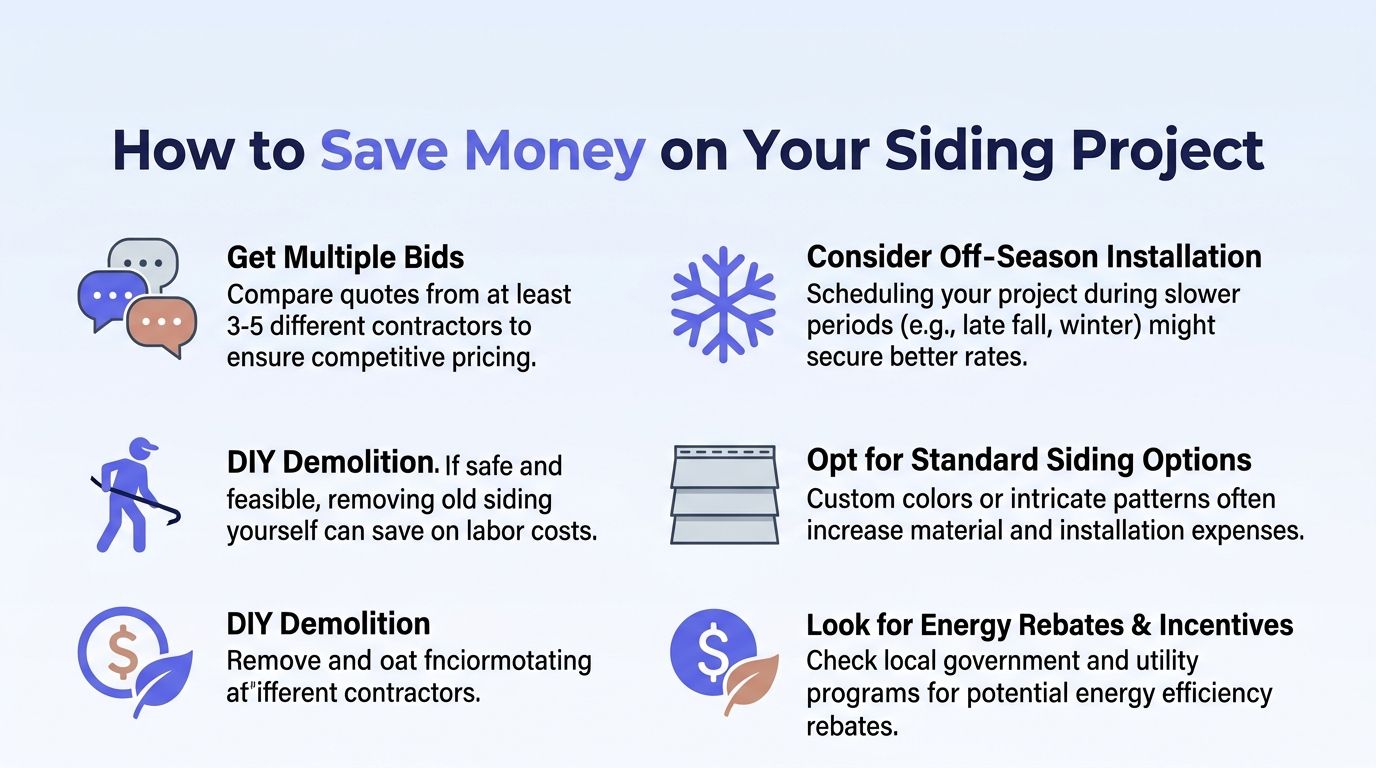
You can lower aluminum siding cost without turning the project into a future headache. The trick is cutting waste, not cutting the parts that keep water out.
Cuts that help
Some savings moves are smart because they reduce labor friction or simplify the scope.
- Choose standard colors and profiles: Specialty finishes and custom systems usually cost more and can slow installation.
- Clear the work area yourself: Move patio furniture, trim back bushes, and give the crew access so they're not burning time on avoidable obstacles.
- Bundle exterior work if the timing makes sense: If you already need gutters, trim wrapping, or related exterior work, ask whether one crew can stage it efficiently.
- Look at financing before you panic: If the right job is bigger than your cash budget, review home improvement financing options before settling for a bad install.
A cheaper job is only a better deal if it stays weather-tight and doesn't need to be redone.
Cuts that backfire
Some “savings” ideas cost more later.
Don't shop purely by the lowest total. A stripped-down bid often leaves out disposal, trim replacement, or prep work. You'll pay for it later through change orders or sloppy installation.
Be careful with premium materials on a tight budget. If you love the look of longboard or high-end coated panels, fine. Just understand you're choosing a higher bracket product, not finding a bargain version of standard aluminum.
And be realistic about DIY demolition. It can help if you know what you're doing and can remove old material safely. It can also create damage, slow the project, and trigger disputes over what the business is responsible for once they arrive.
Finding a Qualified Siding Professional
You can do the math on panel prices all day and still get blindsided if the installer is sloppy. That is how a quote that looked fair turns into extra charges for trim, wall prep, flashing fixes, and call-backs after the first hard rain.
The right contractor does more than hang panels. They catch the stuff online cost guides skip, especially on older homes and block walls where furring strips, uneven surfaces, and hidden rot can change the job fast. If a contractor talks only about siding color and price per square foot, you are not talking to the right person.
Questions that expose a weak installer
Ask these before you talk about start dates.
- Are you licensed and insured for this type of exterior work: Ask for proof, not a verbal yes.
- Who will install the siding: Company employees, a long-term crew, or random subs picked up for the job.
- How do you handle hidden wall problems after tear-off: You want a clear process for photos, pricing, and approval before extra work starts.
- What is included in flashing, trim, soffit tie-ins, and cleanup: If they stay vague here, expect change orders later.
- Have you worked on homes like mine before: Block homes, older wood sheathing, and houses with lots of windows create different labor problems.
- Can you break out labor, materials, tear-off, disposal, and wall prep as separate line items: Good contractors can show you where the money is going.
If you want to screen companies before you start collecting bids, use this guide to a proper contractor background check.
Why the right installer protects your investment
Aluminum can last a long time if the install is tight. If the install is bad, you get rattling panels, oil-canning, water intrusion, and trim lines that look crooked from the street.
That is the point buyers miss. The material does not decide the outcome by itself. The installer decides whether your siding stays weather-tight and whether your quote was honest in the first place.
Get three things in writing. The full scope. The allowance or unit pricing for hidden repairs. The exact change-order process.
Then look for one more sign of a pro. They will warn you early about the hidden costs that blow up budgets, like furring strips on masonry walls, custom brake-metal trim, or sheathing repairs around old window openings. A weak bidder stays quiet, wins the job with a low number, then starts billing once the walls are open.
If you want a faster way to start, Hand Vetted Co. matches you with one licensed, background-checked, highly rated professional instead of blasting your info to a bunch of businesses. It's a cleaner way to get a real siding quote without the usual spam and sales chase.