An installed above-ground pool with a deck typically lands around $5,000 to $20,000, and it can climb past that fast. In a lot of real projects, the deck costs more than the pool itself, especially once you add stairs, railings, and site prep.
That's the part most advice gets wrong. People shop the pool kit, see a manageable number, and assume the rest is minor. It usually isn't. If you're trying to understand the cost of above ground pool with deck installed, you need to price the whole build as one project, not as a pool plus a “small extra” for decking.
Table of Contents
- The Real Answer to Your Pool Budget Question
- Total Cost Breakdown Pool and Deck Combined
- Why Your Deck Can Cost More Than Your Pool
- Hidden Costs and Site Factors You Cannot Ignore
- Creating a Realistic Project Timeline and Budget
- Finding a Pro and Finalizing Your Project
The Real Answer to Your Pool Budget Question
Many still treat an above-ground pool like the budget option by default. That's only true if you keep the build simple. Once you add a real deck, the numbers move into a different category.
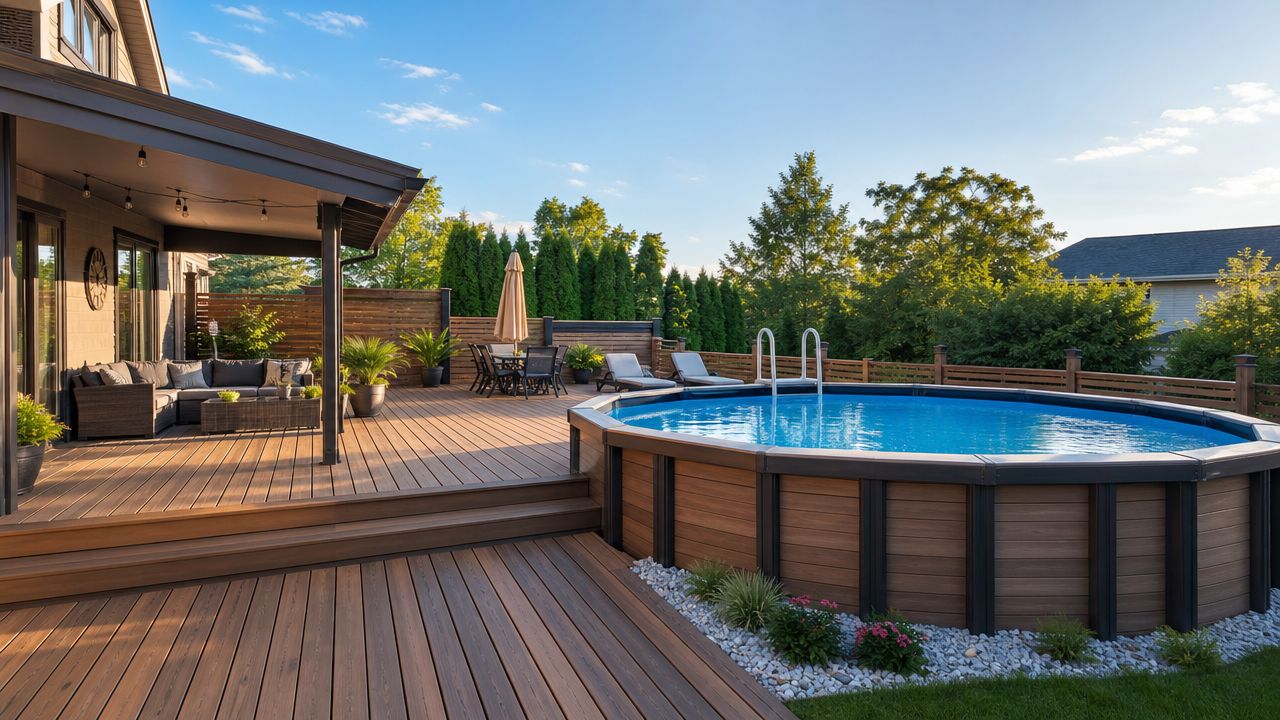
The better way to think about it is this. You are not buying a pool. You are buying a pool structure, access structure, and site-ready installation. That changes the budget conversation immediately.
A useful industry benchmark is blunt about it: a professionally built pool deck alone commonly runs $7,000 to $25,000+ or about $35 to $75 per square foot, which is why the deck can cost more than the pool and change the whole affordability picture, as noted by River Pools and Spas on fully installed above-ground pool and deck costs.
Practical rule: If your plan includes a wraparound deck, don't start by asking what the pool costs. Start by asking what the deck costs.
That's where online calculators miss the mark. A lot of them show a pool kit price, maybe an installed pool range, then mention decking as an afterthought. In the field, decking is often the line item that decides whether the project stays reasonable or gets shelved.
Here's what works. Set a total project budget first, then decide how much deck you need. A smaller platform for safe entry and a place to sit can keep the project grounded. A full surround with wide walk zones, railings, and multiple stairs looks great, but it behaves like a major deck build because that's what it is.
The first budgeting mistake people make
They compare an above-ground pool to an in-ground pool using pool-only pricing.
That comparison falls apart once the deck gets substantial. A deck-heavy above-ground install can stop feeling “cheap” very quickly. If your yard also needs leveling, drainage correction, or tricky access, the budget pressure gets worse.
What usually works better
A clean, realistic plan usually looks like this:
- Keep the deck purpose-driven: Build enough deck for entry, circulation, and one seating zone.
- Avoid unnecessary curves: Curves, offsets, and custom framing raise labor fast.
- Price the ugly work early: Leveling, drainage, and utility routing need answers before you fall in love with the design.
Total Cost Breakdown Pool and Deck Combined
The most useful cost model has three buckets. Pool kit. Installation and site prep. Decking. If you don't separate those clearly, the quote gets muddy and surprises show up later.
Independent pricing guidance puts the pool at about $1,500 to $8,000 for the kit, plus roughly $1,000 to $3,000 for installation, while decking commonly adds another $2,000 to $10,000 or more depending on size and material, according to SwimmingPool.com's above-ground cost breakdown.
The three buckets that matter
1. Pool kit
This is the shell, frame, liner, and the basic components that make the pool itself possible. Costs move based on size, shape, and frame material. Better kits cost more up front, but they also tend to fit better into permanent backyard builds.
2. Installation and site prep
This covers setting the pool, preparing the ground, and handling the labor needed to get the pool assembled correctly. This is also the bucket where simple yards and difficult yards part ways. A flat, accessible site is one thing. A sloped backyard with drainage trouble is another.
3. Deck materials and labor
People frequently under-budget. The deck isn't just boards. It's footings, framing, hardware, stairs, railings, and finish work. Once the deck has to wrap a curved pool or tie into uneven grade, labor climbs.
A realistic quote should show all three buckets separately. If it doesn't, it's harder to see where the risk sits.
Sample budgets for common project tiers
Here's a clean way to frame the budget.
| Budget Tier | Pool Kit | Installation & Site Prep | Deck (Materials & Labor) | Estimated Total Cost |
|---|---|---|---|---|
| Low-end simple build | $1,500 | $1,000 | $2,000 | $4,500 |
| Mid-range practical build | $4,000 | $2,000 | $6,000 | $12,000 |
| Higher-end deck-heavy build | $8,000 | $3,000 | $10,000+ | $21,000+ |
These aren't fantasy numbers. They follow the cost buckets above and show why the combined price matters more than any one line item.
Where people misread the budget
The pool is usually the easiest number to shop because kits are visible and comparable. The deck is not. Deck bids move with layout, footing requirements, access, and finish details, so two projects with the same pool can have very different totals.
A practical way to judge a quote is to ask which part is carrying the budget. If the answer is “the deck,” that doesn't mean something is wrong. It often means the quote is honest.
Watch for these trade-offs:
- Bigger pool, smaller deck: More swimming area, less lounging space, lower structural deck cost.
- Smaller pool, larger wraparound deck: Better entertaining layout, but often a higher overall project cost.
- Basic access deck: Usually the cleanest way to keep the project affordable.
Why Your Deck Can Cost More Than Your Pool
If you remember one thing, remember this: the deck is the biggest lever in the whole job.
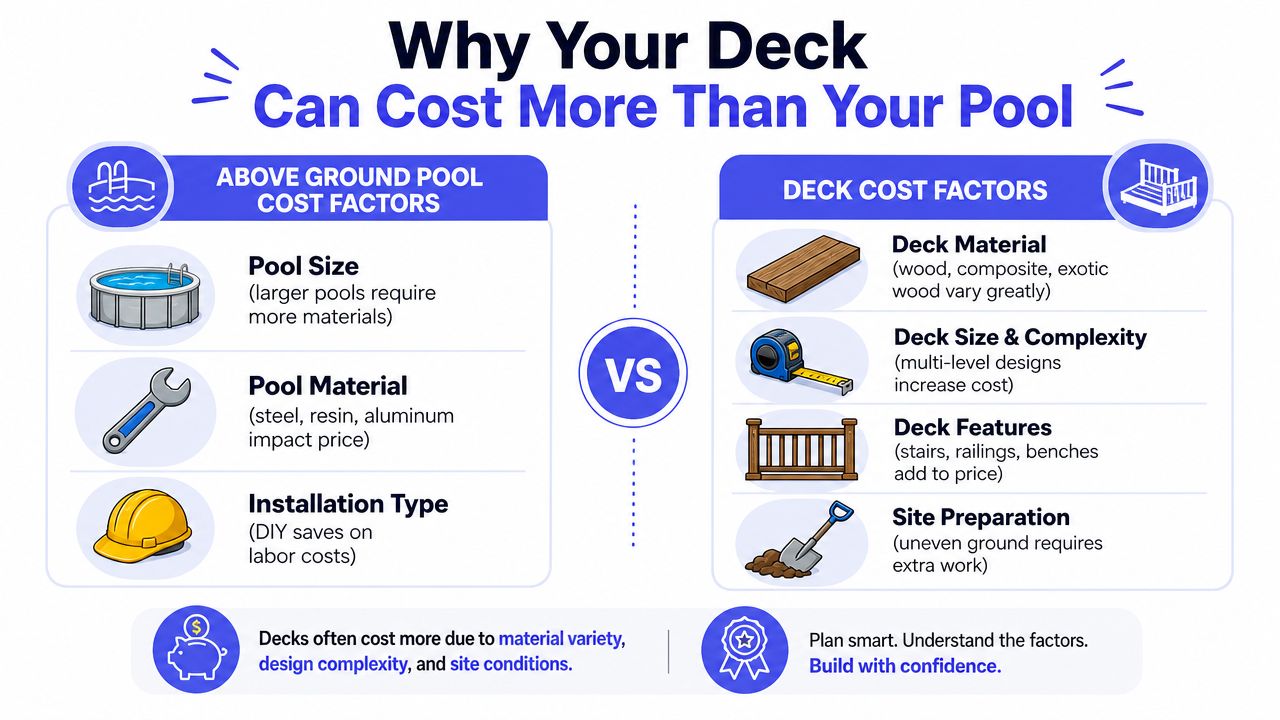
That's not because deck builders are padding numbers. It's because deck pricing follows square footage and structural complexity, not just pool size. Professional pool-deck construction commonly runs around $35 to $75 per square foot, and a large wraparound deck can cost as much as or more than the pool equipment and installation combined, based on Sidex Pros' pool deck pricing guide.
Square footage changes everything
A deck grows fast on paper. People start with “just enough for chairs,” then add a stair, then a landing, then another side for traffic flow. Suddenly the deck is doing far more than access. It's acting like an outdoor room built around a curved obstacle.
That matters because every extra section means more framing, more footings, more cuts, and more finish detail. Around pools, stairs and guardrails also become part of the safety conversation, so the structure isn't optional fluff.
Design choices that blow up the quote
Some choices are straightforward budget drivers.
- Wraparound layouts: These eat material and labor because they follow more perimeter and need more support points.
- Curves and custom geometry: Straight framing is faster. Curved cuts and radius framing are slower.
- Multiple stairs and entry points: Great for traffic flow. Hard on the budget.
- Higher-end decking materials: Better feel and lower upkeep can be worth it, but the upfront quote rises.
- Railings everywhere: Often necessary, rarely cheap.
If you want the resort look, budget for a real deck project. Don't expect a pool add-on price.
A lot of people ask whether they should buy a larger pool or build a larger deck. In strict budget terms, the deck often has more power to move the final number. That's why a modest pool with a substantial wraparound deck can outprice a larger pool with minimal decking.
What tends to work in practice
The best value usually comes from a targeted deck footprint. Give yourself one solid entry area, enough perimeter for safe movement, and one seating zone. That layout handles actual use without forcing the project into luxury-deck pricing.
If the budget is tight, keep these instincts:
- Prioritize function first: Safe entry and dry standing room matter more than full perimeter decking.
- Stay simple in shape: Rectangles and clean lines save labor.
- Leave room for a future phase: It's often smarter to build a smaller deck well than a huge deck poorly.
Hidden Costs and Site Factors You Cannot Ignore
The quote that feels “too good” usually leaves out the messy work.
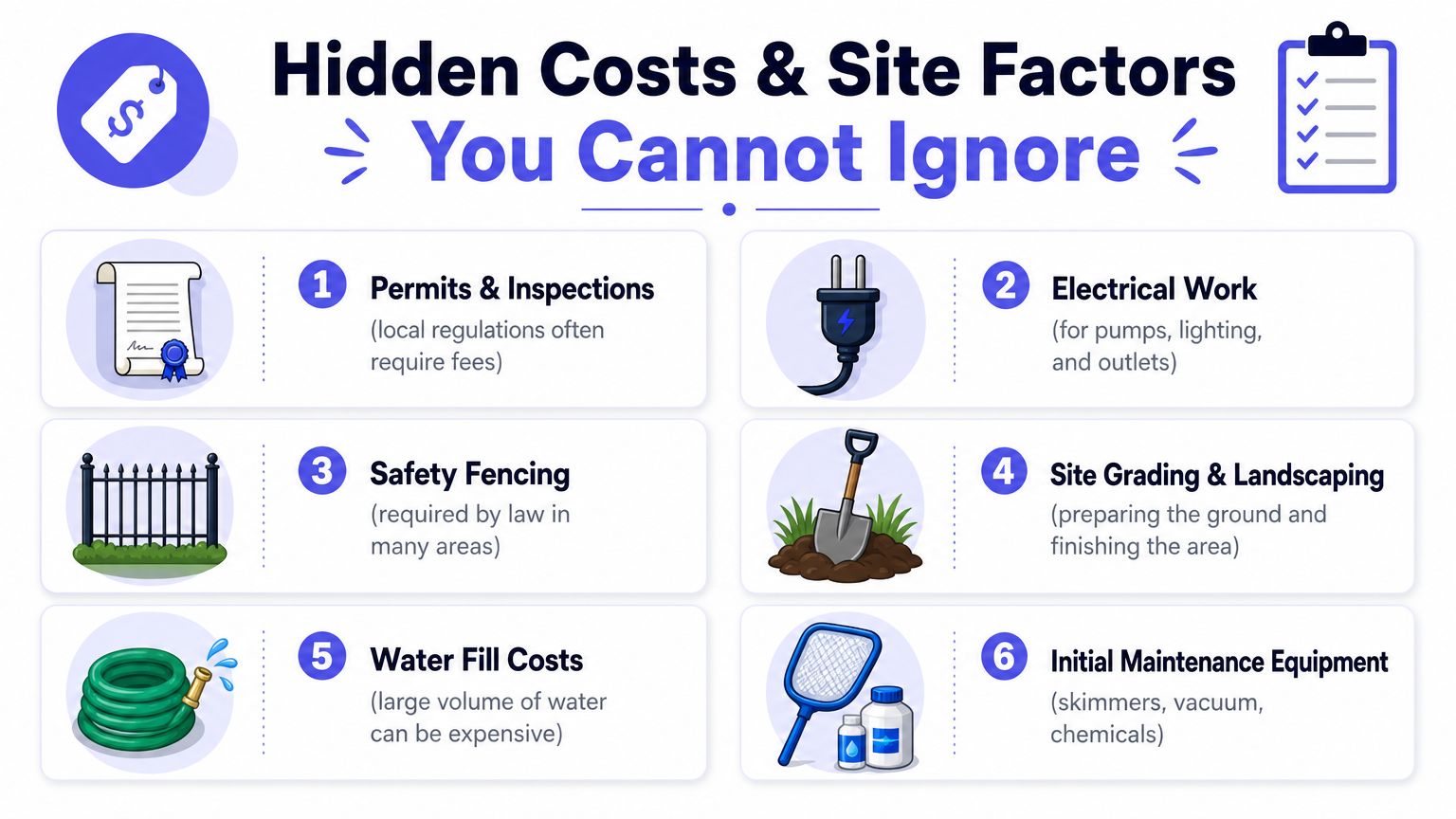
Current cost guidance notes that pricing depends on pool size, shape, frame material, labor, permits, fencing, and accessories, but many pages still leave out how much grading, leveling, drainage correction, or utility work can add to a decked install. That's why final cost is so sensitive to backyard conditions and local labor, as explained by Carlton Pools on above-ground pool cost variables.
What gets missed on early quotes
The pool needs stable, level ground. The deck needs footings and a reliable structure. If your yard has a slope, soft spots, standing water, or awkward access, labor expands before the attractive parts even begin.
The common misses are usually these:
- Permits and inspections: Pool work and deck work often trigger separate review requirements.
- Electrical work: Pumps, outlets, and any lighting need to be planned correctly around water.
- Safety fencing: In many places, this isn't optional.
- Drainage fixes: Water has to move away from the pool area and away from deck footings.
- Landscaping repair: Heavy work tears up grass and edges. Someone has to put that back together.
- Startup accessories: Ladders, steps, covers, and maintenance gear all count toward the total project spend.
The yard decides whether your “standard install” stays standard.
One more practical point. Before you install any pool, check how it may affect coverage and liability with your insurer. Handvetted's guide to homeowners insurance coverage considerations is a useful place to start before the project is locked in.
Questions to settle before anyone starts digging
These questions save money because they surface problems while changes are still cheap.
Is the site level enough for both the pool and the deck footings?
Don't assume “close enough” works. It doesn't.Where does water go during a heavy rain?
If runoff heads toward the pool pad or under the future deck, fix that first.How will crews and materials reach the backyard?
Tight gates, long carries, and fences affect labor.What safety rules apply in your area?
Fencing, gates, setbacks, and inspections can reshape the layout.
If a contractor gives you a pool-and-deck number without asking about those items, the number probably isn't complete.
Creating a Realistic Project Timeline and Budget
People often expect this job to move like a kit assembly. It doesn't. A clean install with a deck has several moving parts, and delays usually show up before construction, not after.
Major home-improvement estimates put the pool itself at about $1,000 to $6,000, with a dedicated above-ground pool deck adding another $1,000 to $5,000 for a 300- to 600-square-foot deck, bringing a common all-in installed range near $2,000 to $11,000 before upgrades like fencing, electrical work, or major site prep, according to NerdWallet's installed pool and deck pricing overview.
How the job usually unfolds
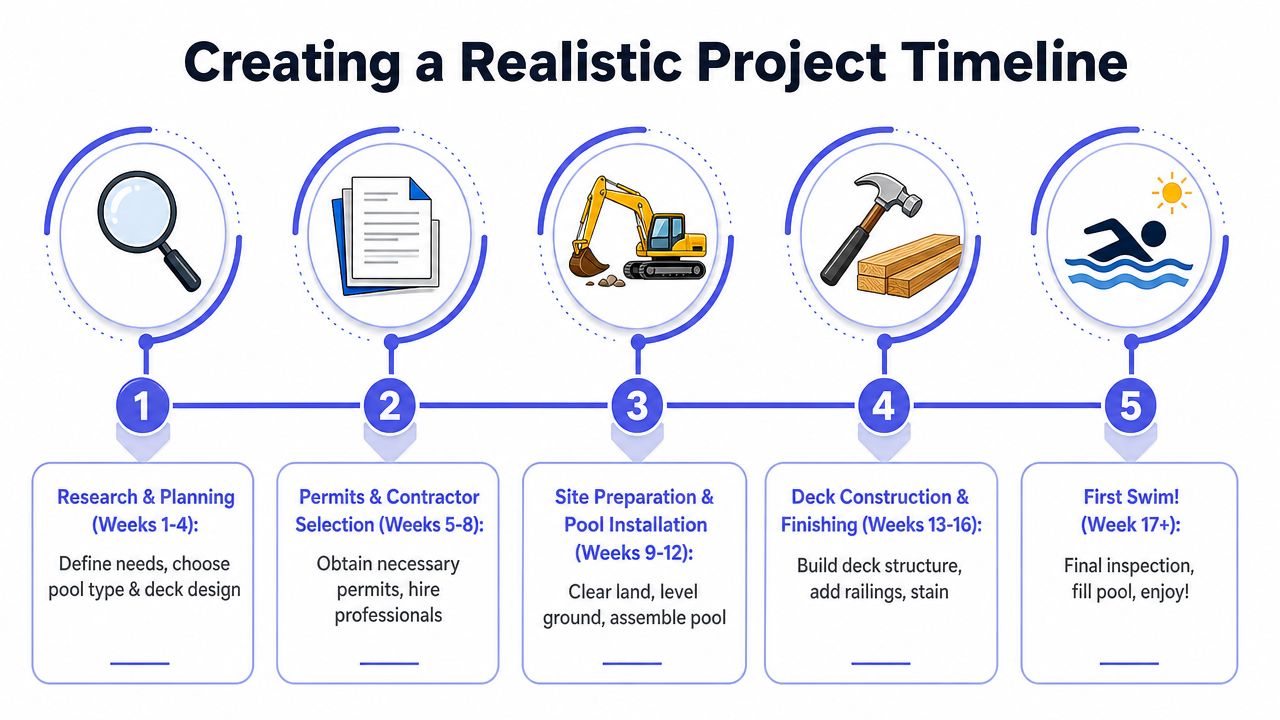
A typical project has five phases.
Planning and design
The planning and design phase involves settling the pool size, deck footprint, and placement in the yard. It sounds simple, but it is crucial for preventing most expensive mistakes.
Permitting and approvals
This step can feel slow because it often is. Decks and pools both trigger code review in many places, and revisions can happen if setbacks or safety details are off.
Site prep and pool install
Crews prep the ground, verify level, and install the pool. If the site fights back, this phase gets longer.
Deck construction
Once layout is locked, deck framing and finish work move in. This is often the longest hands-on part of the build because it includes structure, stairs, railings, and details.
Final checks and startup
Inspection, cleanup, water fill, and system testing happen at the end. Don't plan your first pool party the day after framing starts.
How to budget without fooling yourself
The cleanest way to handle the budget is to separate base project cost from yard-dependent extras.
A financing plan helps if you're trying to avoid cutting corners on the structural parts. If that's part of your decision, Handvetted's overview of home improvement financing options is worth reviewing before you sign a contract.
Use a simple budgeting approach:
- Base budget: Pool, install, and the exact deck scope you know you want.
- Condition budget: Reserve room for site issues, utility work, and permit-driven changes.
- Ownership budget: Leave room for chemicals, power use, seasonal setup, and regular upkeep.
The cheapest plan on paper often becomes the expensive plan once field conditions show up.
The best timeline habit is simple. Don't buy the pool first and figure out the deck later. Buy the project as one coordinated job. That prevents the classic problem where the pool goes in quickly, then the deck design has to work around decisions that already got locked.
Finding a Pro and Finalizing Your Project
A solid build starts with a solid quote. If the professional can't explain the pool, site prep, and deck structure in plain language, keep looking.
A separate pricing benchmark shows above-ground pool installation alone commonly runs about $1,012 to $5,967, with the deck as an additional cost layer, while premium setups can reach $20,000 or more for large aluminum pools plus installation, according to Angi's above-ground installation cost guide. That spread is exactly why you need someone who can price your specific yard instead of handing you a generic package.
What a solid quote should include
Good quotes are boring in the best way. They're detailed.
Look for these items:
- Pool scope: Exact kit or system being installed, not just “above-ground pool.”
- Site prep detail: Leveling, removal, grading, or drainage notes should be written down.
- Deck scope: Footings, framing, decking surface, stairs, and railings should all be visible.
- Exclusions: Anything not included should be stated clearly.
- Permit responsibility: You need to know who is pulling what.
- Cleanup and final walkthrough: Don't assume this is included.
One useful check is basic screening. If you're vetting a business yourself, review licensing and background standards carefully. Handvetted's page on contractor background check expectations gives a practical benchmark for what proper screening should look like.
Quick answers to the last few questions
Can you DIY this to save money?
Some people can handle parts of it, but combining a pool install with a structural deck is where DIY mistakes get expensive. Water, structure, and code work don't forgive shortcuts.
Do you always need a permit?
Not always in the same way everywhere, but you should assume there will be rules around the pool, the deck, or both until your local authority says otherwise.
What's the most common budgeting regret?
Building too much deck too soon. People rarely regret a smaller, well-built deck. They do regret oversized layouts that strain the budget and delay the project.
The best move is to get one detailed quote that treats the job as a single build, then pressure-test the scope before signing.
If you want to skip the usual lead-form spam and talk to one qualified business, Hand Vetted Co. matches you with a single licensed, background-checked, highly rated professional for your project. It's a cleaner way to price a pool-and-deck job when you want a real quote, not five random sales calls.