
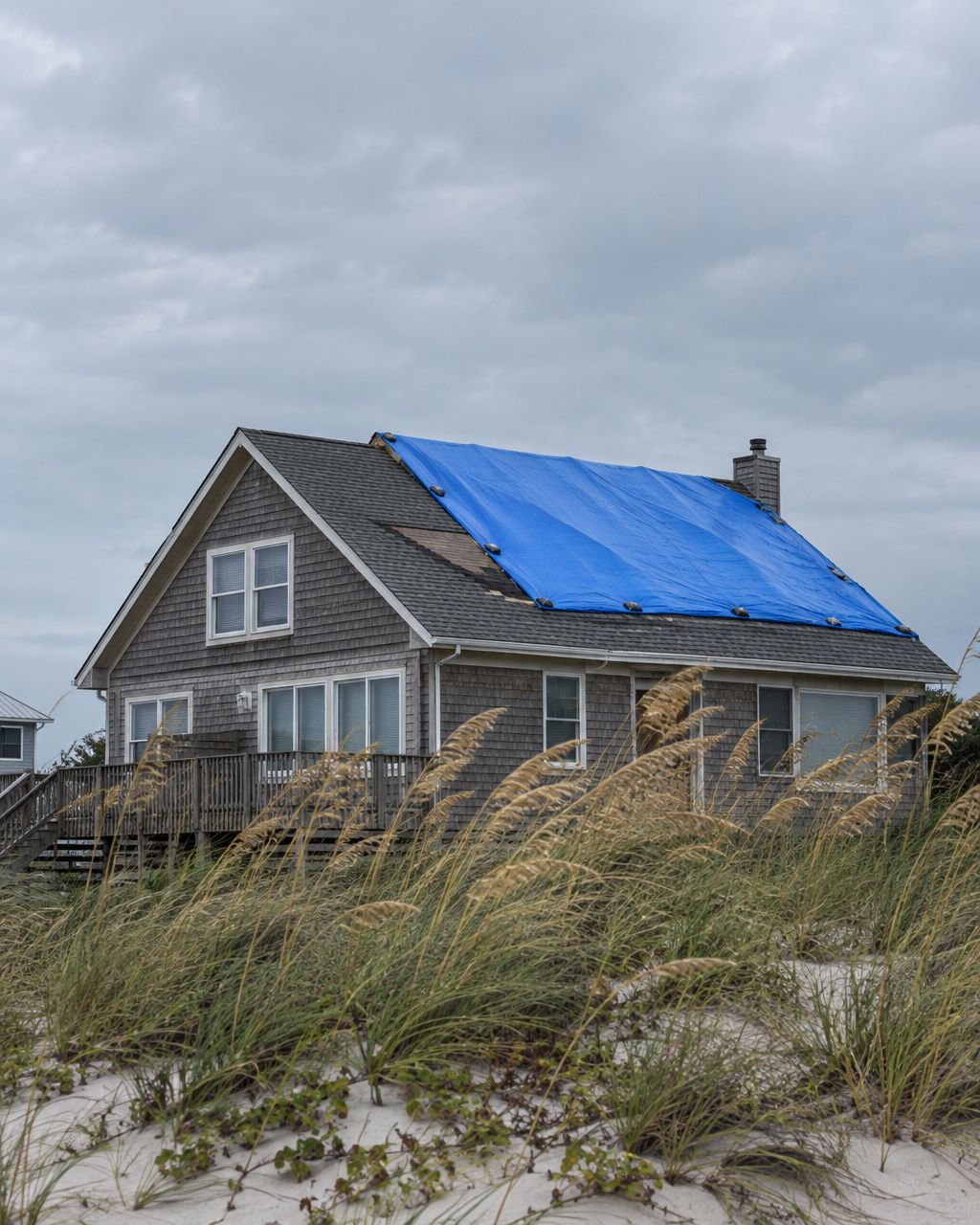
On the North Carolina coast, storm damage repair starts with knowing which of three insurance carriers covers the damage. A standard HO-3 policy generally excludes wind and hail in Beach Plan zones, the NC Insurance Underwriting Association (Beach Plan) covers wind and hail by statute, and the National Flood Insurance Program covers rising water — three carriers, one storm. Repair follows the policies, not the other way around.
- Coastal NC homes often have three carriers: standard HO-3, the Beach Plan for wind and hail, and NFIP for flood.
- Named-storm deductibles are a percentage of dwelling coverage — 5% of a $400,000 home is $20,000 out of pocket.
- Document everything before cleanup: photographs, serial numbers, receipts for tarps and board-up.
- Storm-chaser crews follow coastal storms; verify licensing, local references, and insurance before signing.
Three policies, three answers
- Standard homeowners (HO-3). In coastal wind zones, many standard carriers exclude wind and hail because the Beach Plan is designed to take that risk. Fire, theft, and non-storm water damage stay with the HO-3 carrier.
- NCIUA (Beach Plan). Created by state statute to provide essential wind and hail coverage in the eligible coastal counties where the voluntary market will not write it. Eligibility requires an active primary policy from an admitted carrier. Windstorm and hail deductibles are a percentage of Coverage A (dwelling), shown on the declarations page (NC DOI).
- NFIP flood. Covers rising water, storm surge, and flood-borne damage. A flood policy is separate from both of the above.
After a hurricane, all three can be involved — wind tore the roof, surge soaked the ground floor, and the standard carrier handles the interior water damage that traced back to a covered peril. Coordinating them is the hard part of a coastal claim.
The named-storm deductible is the real out-of-pocket number
Wind and hail deductibles in coastal policies are commonly expressed as a percentage of dwelling coverage, not a flat dollar amount. North Carolina's Department of Insurance uses this example: a 1% deductible on $200,000 of coverage means $2,000 out of pocket per wind or hail claim. Property People Law's 2026 coastal-claim guide uses a larger example: 5% of a $400,000 dwelling is $20,000 before any payment. Read your declarations page now, before the storm, so the number does not surprise you at the worst possible time.
First days after the storm
- Safety first. Do not enter damaged structures until it is clear they are stable; watch for downed lines and gas odor.
- Document before touching anything. Photograph the exterior, interior, and water line from multiple angles. Note the date, the storm, and what you saw.
- Separate the damage by cause. Wind-torn shingles, surge-flooded floors, and a pipe split by cold each trace to a different policy. The repair scope needs to match the coverage, or part of the claim will bounce.
- Tarp and board up. Keep receipts — reasonable mitigation is typically reimbursable.
- Report to each carrier involved. Wind and hail go to the Beach Plan where applicable; flood goes to NFIP; other perils go to the HO-3 carrier.
The repair sequence
Coastal storm repair runs in stages:
- Emergency mitigation. Tarping, board-up, water extraction, drying. Days.
- Assessment and scope. Adjuster inspections, estimates, permit review. Weeks.
- Structural and envelope repair. Roof, siding, windows. Weeks to months depending on material availability.
- Interior rebuild. Drywall, flooring, cabinetry, finishes. Weeks to months.
Material and labor availability after a named storm stretches every timeline. Get written scopes, not verbal estimates, and keep change orders documented.
Hiring in a storm market
Storm-chaser crews follow hurricanes. They arrive, do fast work, and are gone before the warranty question comes up. Verify before signing:
- A local, verifiable address and a track record of projects in your county.
- An active North Carolina license or registration appropriate for the scope (the state general-contractor license applies at $40,000 and above).
- Proof of liability and workers' compensation coverage.
- Written scope, payment schedule, and warranty terms — with no blank spaces.
Our storm damage restoration services guide covers the process end to end, and our emergency roof repair guide covers the first-hours response.
How Handvetted matches coastal restoration professionals
Handvetted connects homeowners with one licensed, background-checked, highly rated local restoration professional. The published standard has four parts: an active license confirmed through official registries, background screening of every owner and operator, verified ratings of 4.5 stars or higher, and human review of every application. Describe the damage — wind, flood, or both, which rooms, whether the roof is open — and Handvetted selects one verified professional and briefs them before contact. Free for homeowners, with a free rematch if the first match is not right.
FAQ
Who pays for wind damage on a North Carolina coastal home?
Usually the NC Insurance Underwriting Association (Beach Plan) in Beach Plan zones, where standard HO-3 policies typically exclude wind and hail. Check your declarations page for which carrier writes each peril.
How is a named-storm deductible calculated?
It is a percentage of your dwelling coverage (Coverage A), not a flat dollar amount. A 1% deductible on $200,000 of coverage is $2,000; 5% on $400,000 is $20,000.
Does homeowners insurance cover flooding from a hurricane?
Not through the standard HO-3 policy. Rising water, storm surge, and flood-borne damage are covered by a separate NFIP flood policy.
What should I do first after a storm?
Confirm safety, then photograph everything before cleanup begins. Reasonable mitigation like tarping and board-up is typically reimbursable — keep the receipts.
How do I avoid storm-chaser scams?
Verify a local address, a North Carolina license or registration appropriate for the scope, proof of insurance, and a written scope with warranty terms. Be wary of crews that appear immediately after the storm and want a signature on the spot.
How long does coastal storm repair take?
Mitigation runs days, scope and assessment weeks, structural repair and interior rebuild weeks to months — stretched further by material and labor shortages after a named storm.
Related guides
Source note: Property People Law, "North Carolina Beach Plan (NCIUA) Claims: A 2026 Guide for Coastal Property Owners"; NC Department of Insurance, "Windstorm and Hail"; Insurance Information Institute, "Background on Hurricane and Windstorm Deductibles". Checked October 12, 2026.
Get Matched
Tell us what you need. We will find your pro. Get Matched.