
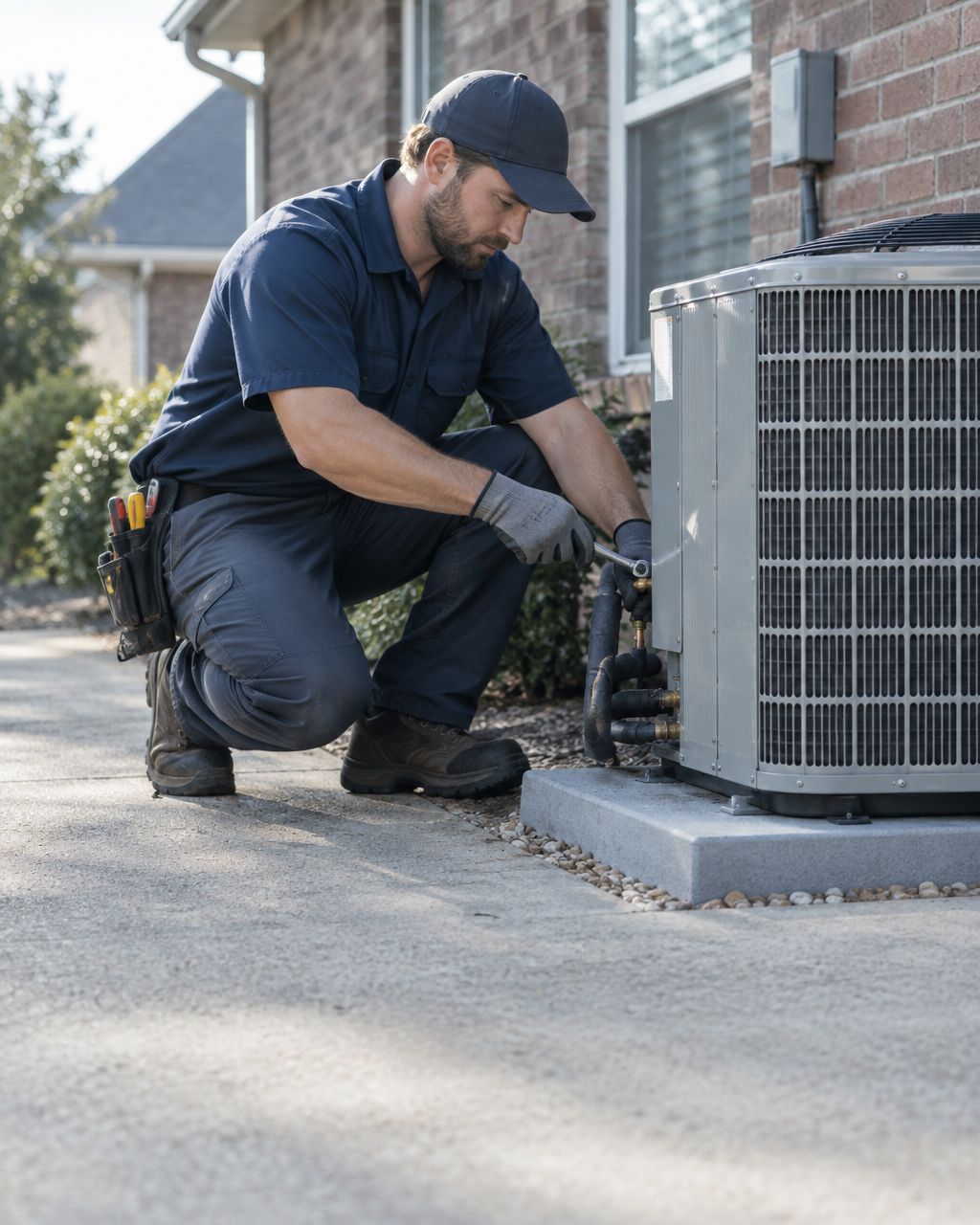
Replacing the HVAC system in a rental property is a $5,000-$15,000 decision that usually arrives at the worst moment: a tenant calls on the first cold morning, the system is dead, and North Carolina's landlord-tenant law expects heat to work. This guide covers what a replacement costs in 2026, how to sequence the work around an occupied unit, and what to check before signing any bid.
- A full furnace-and-AC replacement runs $5,000-$15,000 installed; a heat pump system runs $4,000-$14,000.
- North Carolina licenses heating contractors through the State Board of Examiners of Plumbing, Heating & Fire Sprinkler Contractors.
- A dead heating system in an occupied rental is a habitability issue under N.C.G.S. Sec. 42-42, not just a repair.
- Non-emergency replacements are easiest to schedule between tenancies.
- Ask every bidder for the Manual J load calculation in writing.
Why HVAC decisions hit landlords differently
A homeowner replacing their own system weighs comfort and cost. A landlord weighs the same two things plus a third: the lease. North Carolina law requires rental units to be kept in fit and habitable condition, and working heat is part of that duty. When the system fails in an occupied unit, the repair clock is short.
Three things separate landlord replacements from owner-occupied ones:
- The equipment belongs to the property, not the household. Efficiency choices pay off across tenancies, not for the person in the home today.
- Access is regulated. North Carolina requires at least 48 hours' notice before entering for non-emergency repairs, so a planned replacement needs coordination a homeowner never thinks about.
- The work has to survive tenants, not owners. Mid-tier, durable equipment with a solid warranty usually beats premium efficiency for a rental.
What an HVAC replacement costs in 2026
National 2026 installed-cost ranges, equipment and labor included:
| System type | Typical installed cost | Notes |
|---|---|---|
| Furnace only | $3,500-$7,500 | Gas or electric; depends on efficiency and home size |
| Central AC only | $4,000-$8,000 | Condenser, coil, line set, electrical |
| Full system (furnace + AC) | $5,000-$15,000 | Most common landlord scenario |
| Heat pump system | $4,000-$14,000 | Single system heats and cools; average near $10,000 |
Ductwork is the hidden line item. In older homes, duct replacement or major repair often adds $2,000-$6,000. Ask for it on the bid, not after demolition.
The steps, in order
1. Confirm what you owe the tenant first
Working heat is part of North Carolina's habitability requirement (N.C.G.S. Sec. 42-42). If the system is out in winter, treat it as urgent regardless of budget. Plan access with the required notice: state law expects at least 48 hours before non-emergency entry. Emergencies are the exception, but a routine replacement is not an emergency.
2. Verify the contractor's license
North Carolina requires a license to contract for heating work. The State Board of Examiners of Plumbing, Heating & Fire Sprinkler Contractors licenses heating and cooling contractors; refrigeration contractors are licensed by a separate state board. Technicians handling refrigerant must hold EPA Section 608 certification, and contractor applicants need thousands of documented hours of experience. Search the business on the board's public license lookup before the site visit.
3. Demand the load calculation, not just the price
A correct replacement is sized to the house. Insist on a Manual J load calculation that accounts for insulation, windows, square footage, and orientation. Oversized systems short-cycle and wear out faster; undersized ones run constantly and fail warranty claims for "undersized" complaints later. One number to remember: if two bids differ by thousands and only one carries a load calculation, the calculation is the reason.
4. Pick equipment for a rental, not for a listing photo
- Mid-efficiency, high-reliability usually beats maximum efficiency for rentals.
- Standard warranties of 10 years on parts matter more than premium features.
- Heat pumps can be the economical choice in North Carolina's moderate climate because one system does both jobs.
- Ask whether smart thermostats are included; they give you visibility without entering the unit.
5. Schedule around the tenancy
If the system still runs, schedule replacement between tenancies. Nobody moves a tenant out for a furnace, but a vacancy is the cleanest window for duct work, permits, and inspections. If the work must happen mid-lease, give the required notice in writing, explain the timeline, and keep crews inside normal working hours.
6. Handle the permits and the tax question
HVAC replacement generally needs a mechanical permit and inspection in North Carolina jurisdictions, and the licensed contractor should pull it. On the money side, a full system replacement may be depreciable over time rather than a same-year repair deduction. Ask a tax professional before booking the expense.
Common mistakes landlords make
- Skipping the permit. An unpermitted install can surface at sale, complicate an insurance claim, and cost multiples of the permit fee to fix.
- Taking the lowest bid without comparing scope. Compare line items: equipment model, efficiency rating, ductwork, permits, disposal, warranty registration.
- Replacing only half the system. Mixing a new condenser with a mismatched old furnace can void equipment warranties.
- Ignoring the ductwork condition. New equipment pushing air through leaking ducts wastes the investment.
- No written warranty terms. Our guide to comparing HVAC systems for cost and efficiency covers what a complete written scope looks like.
FAQ
How much does HVAC replacement cost in a rental home in 2026?
A full furnace-and-AC replacement runs $5,000-$15,000 installed, and a heat pump system runs $4,000-$14,000. Ductwork repair or replacement in older homes can add $2,000-$6,000.
Is the landlord responsible for heating in North Carolina?
Yes. North Carolina's landlord-tenant law requires rental units to be kept in fit and habitable condition, and working heat is part of that duty. A failed system in winter is an urgent repair.
Does North Carolina license HVAC contractors?
Yes. Heating and cooling contractors are licensed by the State Board of Examiners of Plumbing, Heating & Fire Sprinkler Contractors, with refrigeration under a separate state board. Verify the license before work starts.
Can a landlord enter to repair the HVAC without notice?
Not for a routine replacement. North Carolina requires at least 48 hours' notice before non-emergency entry. True emergencies, such as a gas leak, are the exception.
Should I replace the furnace and AC together?
Usually yes when both are aging. Matching components protect warranty coverage and reduce repeat labor costs. If only one unit is new and the other is near end of life, ask the contractor to compare both paths in writing.
Are HVAC repairs on a rental tax deductible?
Repairs are typically deductible as expenses, while a full replacement may need to be depreciated over time. Rules change and depend on your situation, so confirm with a tax professional.
Source note: Sears Home Services and ConsumerAffairs 2026 HVAC cost guides; NC State Board of Examiners of Plumbing, Heating & Fire Sprinkler Contractors; N.C.G.S. Sec. 42-42. Checked October 13, 2026.
Get Matched
Tell us what you need. We will find your pro. Describe the property and the job at Handvetted HVAC, or Get Matched in two minutes. Free for property owners, always.