You're probably tired of paying for leads that sound promising in the CRM and turn into silence in the world. The phone rings, the email hits your inbox, and by the time you reply, the prospect has already talked to three other businesses, booked someone else, or disappeared.
That's the core problem with a lot of contractor leads in home improvement. Volume looks good on paper, but revenue comes from exclusive, high-intent, well-qualified leads that your team can close. If you want a pipeline that makes money instead of just keeping your sales rep busy, stop shopping for the cheapest inquiry and start buying, building, and tracking for cost per closed job.
Table of Contents
- Why Most Contractor Leads Are a Waste of Time
- Sourcing Leads Who Are Ready to Hire
- How to Qualify and Convert Leads Instantly
- Tracking the ROI of Your Home Improvement Leads
- When to Use a Vetted Lead Matching Service
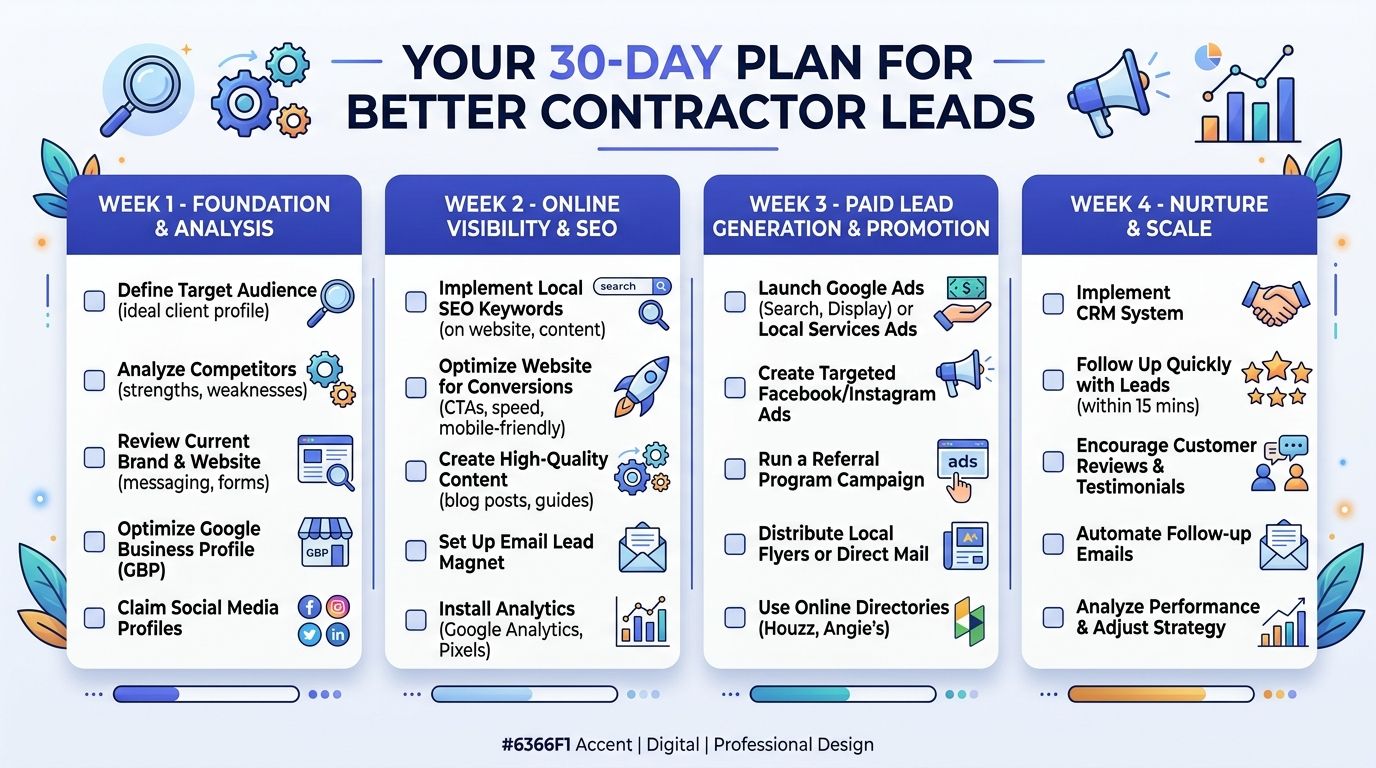
- Your 30-Day Plan for Better Contractor Leads
Why Most Contractor Leads Are a Waste of Time
A busy inbox can fool you fast. It feels like demand, but shared inquiries, weak screening, and slow follow-up usually produce wasted calls, missed appointments, and a sales team chasing people who were never serious.
The key question is simple. Are the leads exclusive, high-intent, and qualified before your team ever reaches out? That is what drives revenue. A benchmark set shows home improvement lead costs ranging from about $45 in some categories to $228 for roofing, and another set puts roofing near $79, HVAC near $45–$104, and plumbing around $52–$167 depending on channel and source, which is exactly why home improvement lead cost guide should be read as a warning, not a shopping list. The spread shows a simple truth. This is not one market, it is a group of different markets wearing the same label.
Cheap leads often cost more
Low CPL is a vanity metric if the lead never closes. Shared prospects, poor screening, and price shoppers drain your team's time and crowd out better opportunities.
Practical rule: judge the lead by what it turns into, not what it costs at the top of the funnel.
Home improvement firms often set aside 5%–15% of projected revenue for lead generation, and that only works when the pipeline is built around profitable jobs, not raw inquiry counts. If you are buying leads just to keep the calendar full, you are paying for motion, not margin.
The right lead feels different
A good lead comes in with urgency, a clear project type, and enough context to qualify it quickly. The prospect knows what they want, knows where the work is, and is ready for a real conversation.
That is why a search for lead generation near me should not lead you to the cheapest option. It should lead you to the clearest path to booked, profitable jobs. Shared lead lists make a business look active. Exclusive, pre-screened opportunities make it profitable.
Sourcing Leads Who Are Ready to Hire
The fastest way to improve lead quality is to stop acting like every inquiry deserves the same attention. Some channels attract people who are still researching. Others attract people who are close to a decision. You want both, but you want them for different reasons.
Build content that answers the first questions
People often research for weeks or months before they contact anyone, and the best content captures that early-stage demand by answering the questions they ask first, like cost, timeline, and what to expect before hiring. That's the “invisible market,” the group you never see in a marketplace but can still win with the right content strategy (invisible market guide).
Write the page that says what your sales rep says on the phone, only faster. Explain the project, set expectations, and remove confusion. A buyer who feels informed is more likely to request a quote.
Use local search to look trustworthy
Your Google Business Profile and local pages do a lot of heavy lifting before a prospect ever reaches out. Reviews, recent photos, clear service descriptions, and fast responses all help people decide whether you look like a serious option.
Independent contractor guidance also points to trust signals like active profiles, recent photos, and review responses as part of the decision process in urgent categories (local trust guidance). That matters because urgent jobs attract spammy outreach and low-quality competition. You need to look established before you can look affordable.
Use paid channels with intent, not volume
Google Ads and Local Services-style campaigns work because they put you in front of people who are actively searching for help now. The intent is stronger than what you get from generic lists, and stronger intent usually means fewer wasted conversations.
A good example is the way some businesses pair high-intent content with a clean request flow. If your site educates well and your ad points to the right page, you filter out casual browsers before they waste your team's time. The same logic applies to direct matching services like how Handvetted works, where the lead arrives already aligned to the service and the location.
Don't rely on one channel
A balanced mix is safer than betting everything on one source. One guide recommends roughly 30% referrals, 30% social media advertising, 20% Google Ads or Local Services Ads, and 20% other sources like aggregators, direct mail, or partnerships (lead generation guide). That's not a magic formula, but the logic is solid. Overdependence on one channel leaves you exposed when costs rise or quality drops.
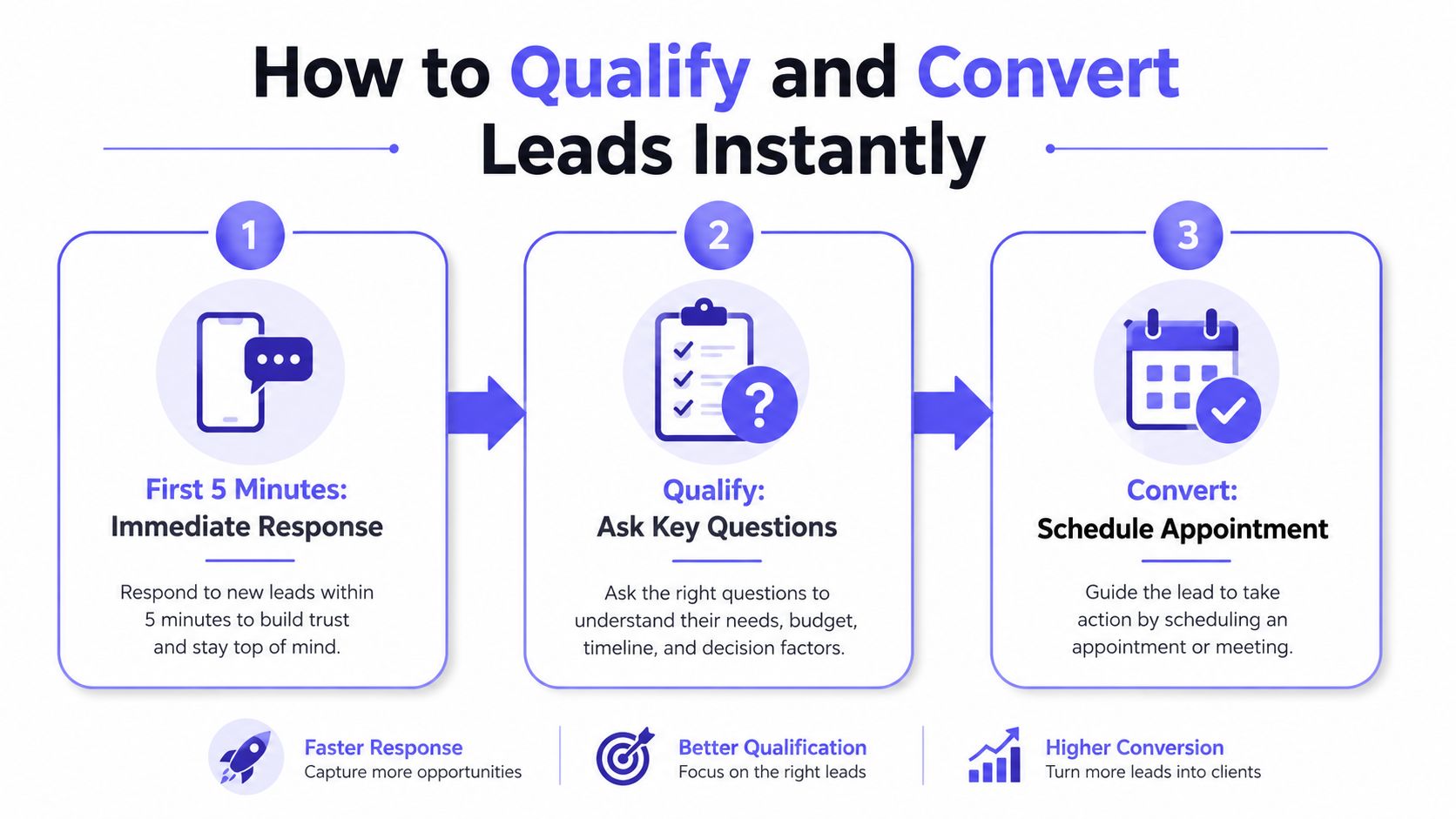
Use your content, local presence, and paid traffic to attract serious buyers. Then make the request path simple enough that qualified people can raise their hand without friction.
How to Qualify and Convert Leads Instantly
A lead that looks good on paper can still go cold if your team drags its feet. The first responder usually wins the conversation, and the first few minutes matter more than most contractors admit. The tracking data points in the same direction, with fast response tied to stronger qualification and much higher conversion than delayed contact (contractor lead tracking statistics).
Respond like the job already matters
Call, text, or email right away. Today is too late. Business hours are too slow.
Simple rule: if your team cannot respond inside 5 minutes, the lead is already slipping away.
The lead is most valuable before the prospect starts comparing bids or loses momentum. Treat the first contact as revenue protection, because that is what it is. Every minute you wait gives the homeowner more time to shop, stall, or forget why they reached out in the first place.
Use a short qualification framework
You do not need a long script. You need a filter that tells you whether the lead fits your business and your schedule. Ask about Budget, Authority, Need, and Timeline.
- Budget: “What range are you planning for this project?”
- Authority: “Are you the person making the final decision?”
- Need: “What problem are you trying to solve?”
- Timeline: “When are you hoping to get this started?”
This keeps the call focused on whether the project is real, whether the buyer can move, and whether the work belongs in your pipeline. It also cuts through the polite small talk that wastes time and hides weak intent.
Follow up more than you think you should
Industry guidance says about 80% of sales require at least 5 follow-ups, so a 6-plus touch sequence is a practical benchmark (lead closing rate guide). Use phone, text, and email, and tie every touch to the specific project. Generic check-ins get ignored.
A simple sequence works better than improvisation:
- Minute 1 to 5, call and text
- Same day, email with the next step
- Next day, follow up if there's no response
- Two more touches over the next several days
- Close the loop with a final, professional check-in
Persistence works when it feels organized. You are not chasing people. You are making it easy for a serious homeowner to take the next step while the project is still top of mind.
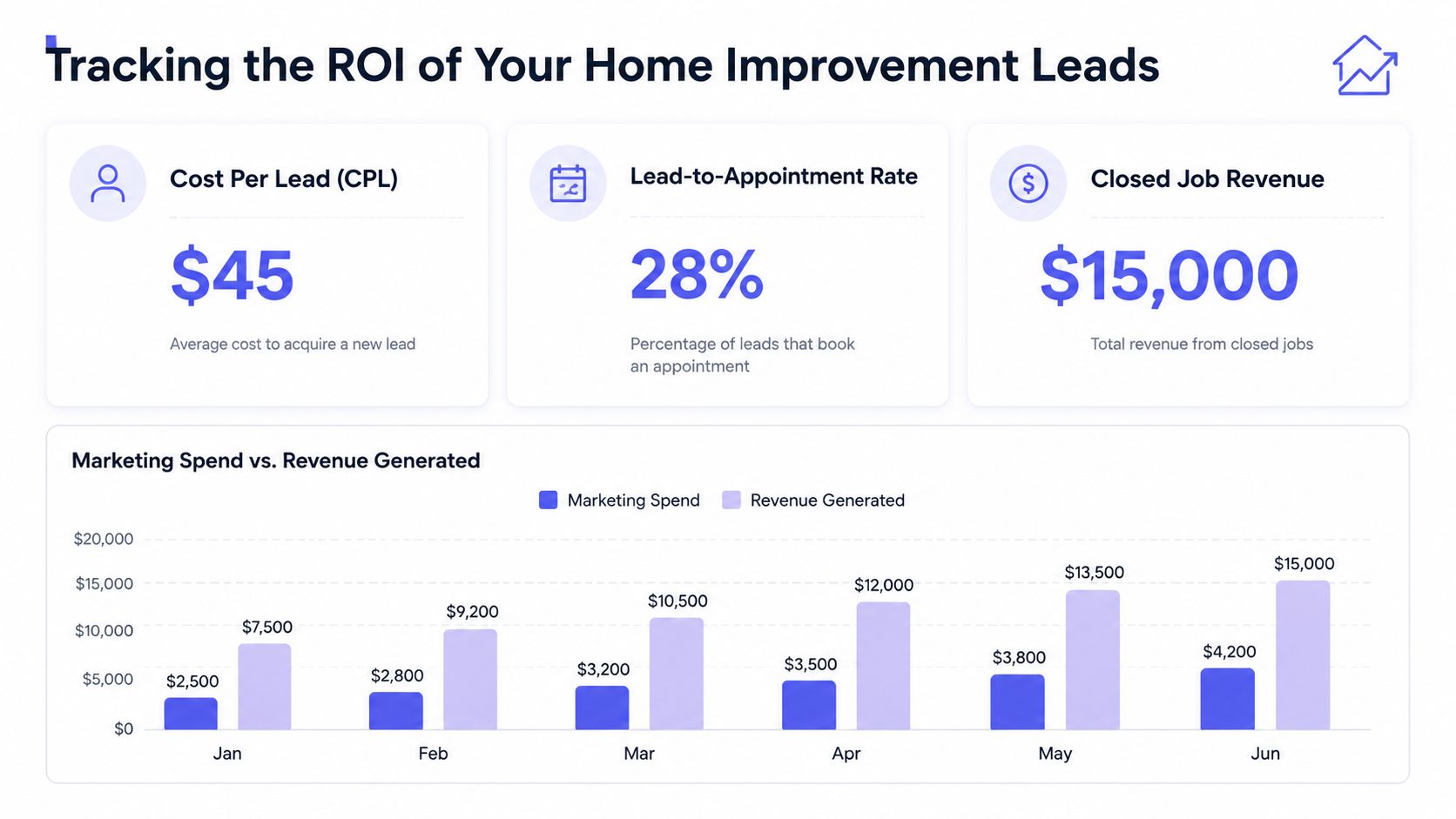
Fast response plus sharp qualification beats slow optimism every time. If your team can do both, your lead source starts producing more closed jobs instead of just more activity.
Tracking the ROI of Your Home Improvement Leads
CPL is a distraction when you treat it like the scorecard. A cheaper lead that never turns into booked, profitable work costs more than a pricier lead that closes cleanly. The metric that matters is cost per closed job.
A contractor can see this fast with a simple example. If you spend $1,000 on lead sources in a month and close two profitable jobs, your cost per closed job is $500. If another source costs $700 and closes zero jobs, that number is not an efficiency win, it is wasted spend. Track the money against completed work, then make budget decisions from that view.
Track source to closed job
Every estimate needs a source tag. Referral, organic, paid, marketplace, cold outreach, whatever brought the homeowner in, mark it in the CRM or on the estimate record before the details get lost. At the end of the month, sort closed jobs by source and compare what turned into revenue.
That gives you win rate by lead source at the quote level, which is the comparison that matters (win rate by lead source). A source that creates activity but not signed work is not a growth channel. It is overhead with a sales pitch.
Best practice: optimize for closed jobs, not raw inquiries.
Keep the tracking system simple
You do not need a heavy stack to start. A spreadsheet, a consistent intake form, and a disciplined sales log can show you where jobs really come from. The point is accuracy, not software theater.
Miss the source data and you lose the whole story. You cannot tell which channel produces revenue and which one only fills the inbox. That is why many businesses keep funding weak traffic, because nobody has a clean view of what is paying back.
If you want a cleaner process, use a lead management workflow like how HandVetted works to keep source tracking, qualification, and handoff organized from the start.
Read the economics correctly
A cheap lead can still be a bad buy if it takes too many touches to close or produces low-value jobs. A more expensive lead can be the better decision if it is exclusive, qualified, and ready to schedule. The spread in lead costs reflects quality, intent, and channel mix, not just price.
That is the part many contractors miss. They chase low cost-per-lead and end up paying more per closed job because the leads were weak, shared, or far from ready to buy.
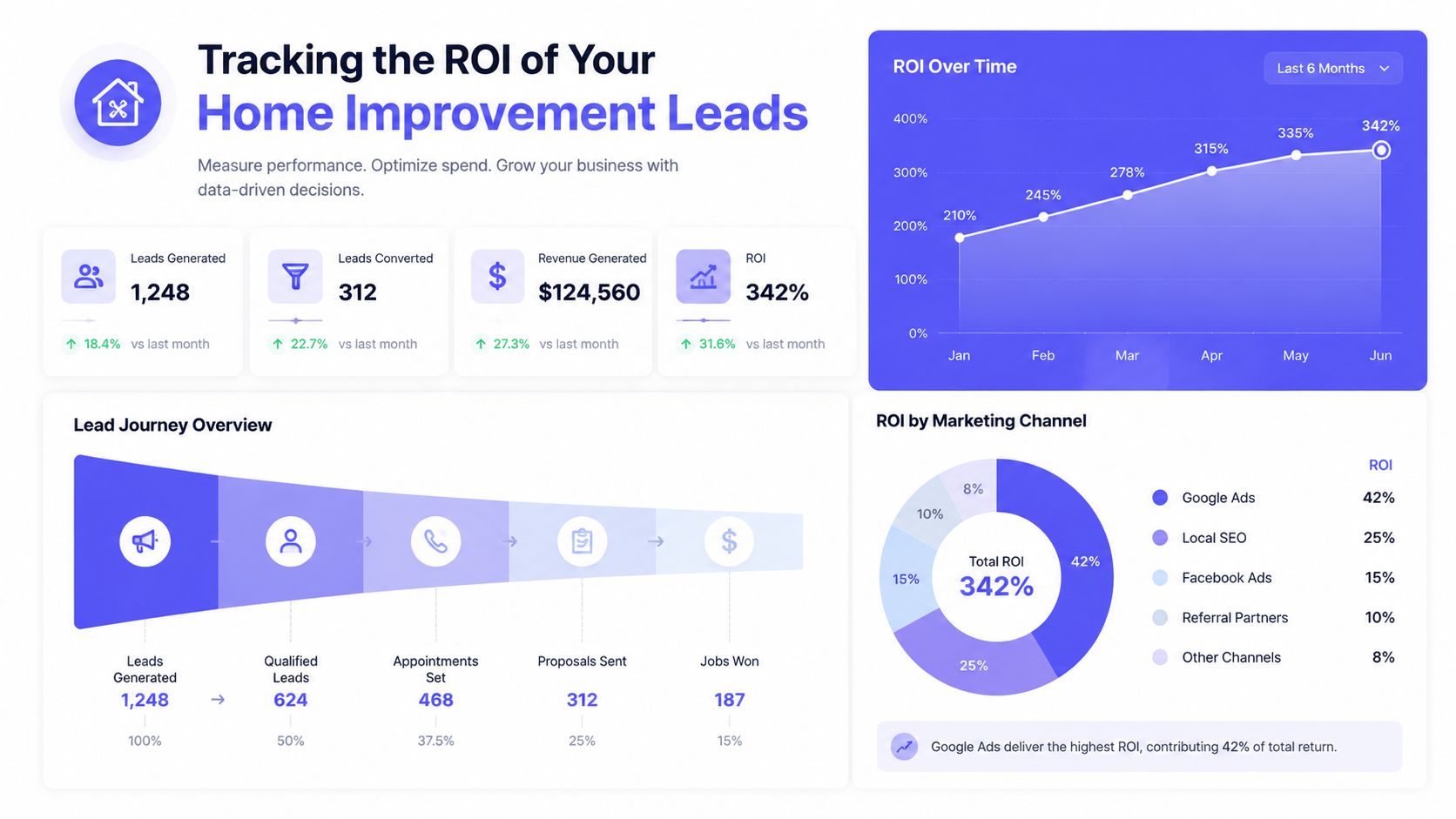
If a source cannot be tied to closed work, it does not deserve more budget. Cut it, fix it, or reprice it based on the actual economics.
When to Use a Vetted Lead Matching Service
A contractor can pour money into ads, content, and follow-up systems and still end up with a pipeline full of tire-kickers. That is the point where a vetted lead matching service starts to make sense. If your goal is more booked jobs from fewer, better opportunities, buying quality can beat chasing raw volume.
DIY, marketplace, or exclusive matching
DIY gives you the most control. You own the content, the ad account, the tracking, and the customer relationship. You also own the work, the learning curve, and the delay before the system pays off.
Traditional lead marketplaces sit at the other end. They may move fast, but they often send the same inquiry to several businesses. That turns the sale into a race, and the contractor with the lowest price or the fastest reply usually wins, even if the fit is poor.
Exclusive matching takes a different path. The lead is screened, briefed, and assigned to one business. That removes the scramble, protects the conversation, and usually gives you a cleaner shot at closing a profitable job.
Pick the model that matches your capacity
If your calendar is full and your team replies quickly, exclusive requests are worth paying for because they protect margin. If your pipeline is uneven and you need a steadier flow of qualified opportunities, a vetted matching model can cut wasted time. If you have the discipline to build content, manage ads, and track source quality, DIY still gives you the strongest long-term asset.
The mistake is buying cheap shared leads when your team cannot work them properly. That is how contractors blame the source for slow closes, when the actual problem is the follow-up process or the lack of capacity to handle low-intent inquiries.
What to look for in a partner
Look for pre-screening, exclusivity, and a clear handoff. The lead should also be matched to the right type of business, not blasted to a list and left to sort itself out.
Handvetted's model fits that logic because it keeps each request exclusive and routes the prospect to one verified professional through a brief qualification process. If you're comparing how Handvetted works against a marketplace, the difference is simple. One creates competition. The other reduces it.
If your main problem is quality, not quantity, exclusive matching is usually the better buy. If your real problem is structure, fix the structure first.
Your 30-Day Plan for Better Contractor Leads
Start with the ugly truth about your pipeline. Audit every source, every closed job, and every no-show. If you can't tell which lead source makes money, you're guessing.
Week 1, clean up the tracking
Tag every source in your CRM or spreadsheet. Separate referrals, organic, paid, marketplace, and direct matches. Then calculate which ones close.
Week 2, fix response time
Build a system that gets a real human answer inside 5 minutes. Train the team on a short qualification script and make sure someone owns the handoff.
Week 3, publish one high-intent page
Create one page that answers the questions people ask before they request quotes. Make it useful, specific, and easy to act on. If local visibility matters in your market, pair that page with your local search work and local SEO for contractors.
Week 4, test one exclusive source
Add one better-quality source alongside your current mix. Don't flood the market with more spend. Compare the close rate, the booked appointments, and the actual jobs.
A better lead system isn't built in a day, but it can be corrected in a month if you focus on what closes. Start there, and the rest gets easier.
Hand Vetted Co. matches people with one verified professional, so your pipeline isn't diluted by shared, low-intent inquiries. If you want more contractor leads home improvement businesses can close, visit Hand Vetted Co. and compare how an exclusive match feels from the first call.