A licensed plumber handles most dishwasher installations involving water and drain connections. A licensed electrician is required when the job adds a new circuit, installs an outlet, or uses a hardwired connection, and U.S. dishwasher labor typically runs about $150 to $350 for a standard installation, rising to $300 to $1,300 or more when plumbing or electrical work is needed.
You're probably asking because the old dishwasher is sitting in the kitchen, the replacement is boxed up, and nobody has given you a straight answer about who should install it. The practical answer depends on what already exists behind the cabinet. A like-for-like swap is a different job from adding a dishwasher to a kitchen that has never had one.
The mistake I see most often is booking an appliance delivery service before checking the water, drain, and power connections. If the installer arrives and finds no supply line, no compliant drain route, or no suitable circuit, the appliance stays in the box and you pay for another appointment. Identify the scope first, then hire the trade responsible for that scope.
Table of Contents
- The Three Installation Scenarios That Determine Who You Call
- Comparing Plumbers, Electricians, Appliance Techs, and Handymen
- Plumbing and Electrical Requirements That Trigger Licensing
- Typical Costs and Timelines for Professional Installation
- Permits, Inspections, and Regional Code Differences
- Red Flags and How to Verify Credentials Before Hiring
The Three Installation Scenarios That Determine Who You Call
The fastest way to answer who installs dishwashers is to inspect the appliance location before you call anyone. Open the cabinet beside the dishwasher space and look for a water supply connection, a drain connection, and a grounded electrical connection. What you find places the project into one of three categories.
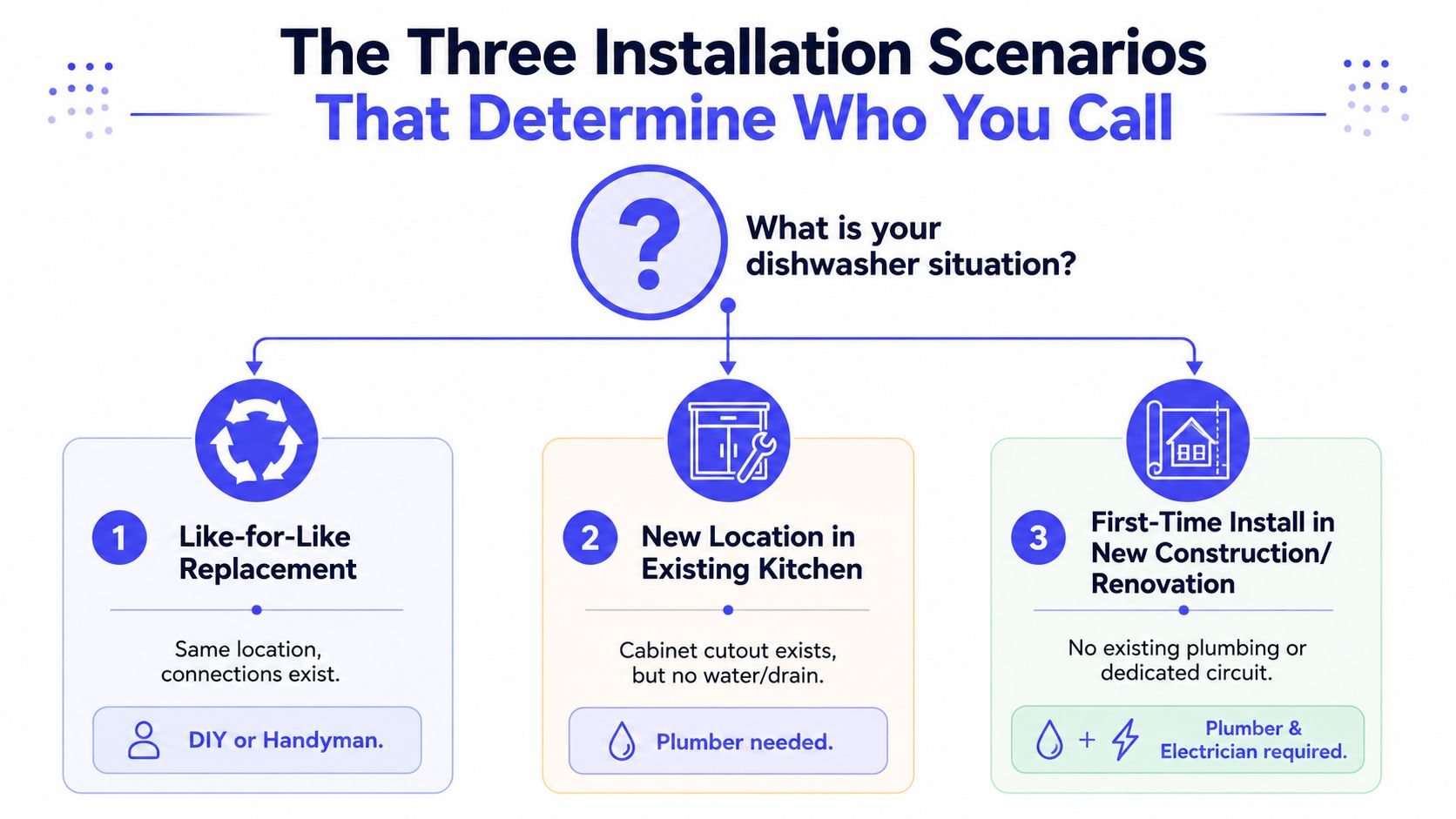
A like-for-like replacement
The simplest case is an old dishwasher coming out and a new one going into the same opening. The water, drain, and power hookups already exist, and you aren't changing their location.
An appliance installation professional may handle this job. A capable handyman may also manage a straightforward replacement where local rules allow it, but I recommend a plumber if you aren't certain that the supply, drain, and shutoff connections are sound. A standard replacement often takes 1 to 2 hours, according to dishwasher installation cost guidance. The critical risk is a leak or incorrect drain connection, not the act of sliding the appliance under the counter.
A new dishwasher location with existing kitchen space
The cabinet opening may already be there, but the space lacks a water supply or drain connection. That isn't an appliance swap. It's plumbing work.
Call a licensed plumber. The plumber needs to route the hot-water supply, connect the drain correctly, and determine whether the existing sink plumbing can accept the dishwasher discharge. Don't schedule a retailer technician for this situation unless the retailer has confirmed in writing that the service includes new plumbing.
A first-time installation or full renovation
A first-time dishwasher install can require new plumbing and a new electrical connection. The plumber handles water and drainage. The electrician handles a new outlet, circuit, or hardwired connection.
Book both trades, or hire a renovation professional who coordinates licensed plumbing and electrical subcontractors. A single person may coordinate the project, but that doesn't mean one worker is legally qualified to perform every part of it.
Practical rule: Existing hookups usually mean an appliance installer or plumber. New water work means a plumber. New water work plus new electrical work means a plumber and an electrician.
Comparing Plumbers, Electricians, Appliance Techs, and Handymen
Each trade covers a different part of the job. Confusing those boundaries leads to canceled appointments, incomplete installations, and change-order fees.
| Professional Type | Simple Swap | New Plumbing | New Electrical | Licensing Required |
|---|---|---|---|---|
| Licensed plumber | Yes, especially when water connections need inspection | Yes | No, unless local rules permit limited connection work | Plumbing license may be required by location |
| Licensed electrician | Usually not the primary installer | No | Yes, including new circuits, outlets, or hardwiring | Electrical license may be required by location |
| Retailer-sent appliance technician | Often, if hookups are ready and the service scope allows it | Usually limited or excluded | Usually limited or excluded | Qualified installation service, with local limits |
| General handyman | Sometimes, where permitted and experienced | Not the right choice for new water routing | Not the right choice for new circuits or hardwiring | Requirements vary, but trade licensing still controls regulated work |
Licensed plumbers
A plumber is the right lead for a replacement when the existing water connections need inspection, adjustment, or repair. The plumber can check shutoff access, supply-line condition, drain routing, and backflow protection. For a first-time location, the plumber owns the new water and drain work.
Confirm the exact scope before booking. If you need broader electrical guidance before hiring another trade, review this guide to hiring an electrician.
Licensed electricians
An electrician handles the electrical portion when the installation adds a circuit, changes the panel, installs an outlet, or uses a hardwired connection. This trade does not replace a plumber for drain or water work. If the project needs both utility connections, schedule both trades or use a renovation professional who coordinates licensed subcontractors.
Retailer-sent appliance technicians
Retailer installation works well for a ready-to-connect replacement with clear access and compatible hookups. The appointment usually covers appliance placement and standard connections within the retailer's service scope. Missing plumbing, an unsuitable circuit, cabinet obstruction, or code-sensitive work can stop the installation and require another contractor.
Ask what happens if the technician finds a problem. A low initial fee does not help if the visit ends without a working dishwasher.
General handymen
A handyman can handle a simple swap when the hookups are ready, the person has relevant experience, and local law permits that work. Verify insurance, recent dishwasher-installation experience, and the exact tasks included.
Use a licensed plumber for new water routing or drain modifications. Use a licensed electrician for a new circuit, outlet, panel work, or hardwiring. A handyman may coordinate these trades, but should not perform regulated work outside the permitted scope.
Plumbing and Electrical Requirements That Trigger Licensing
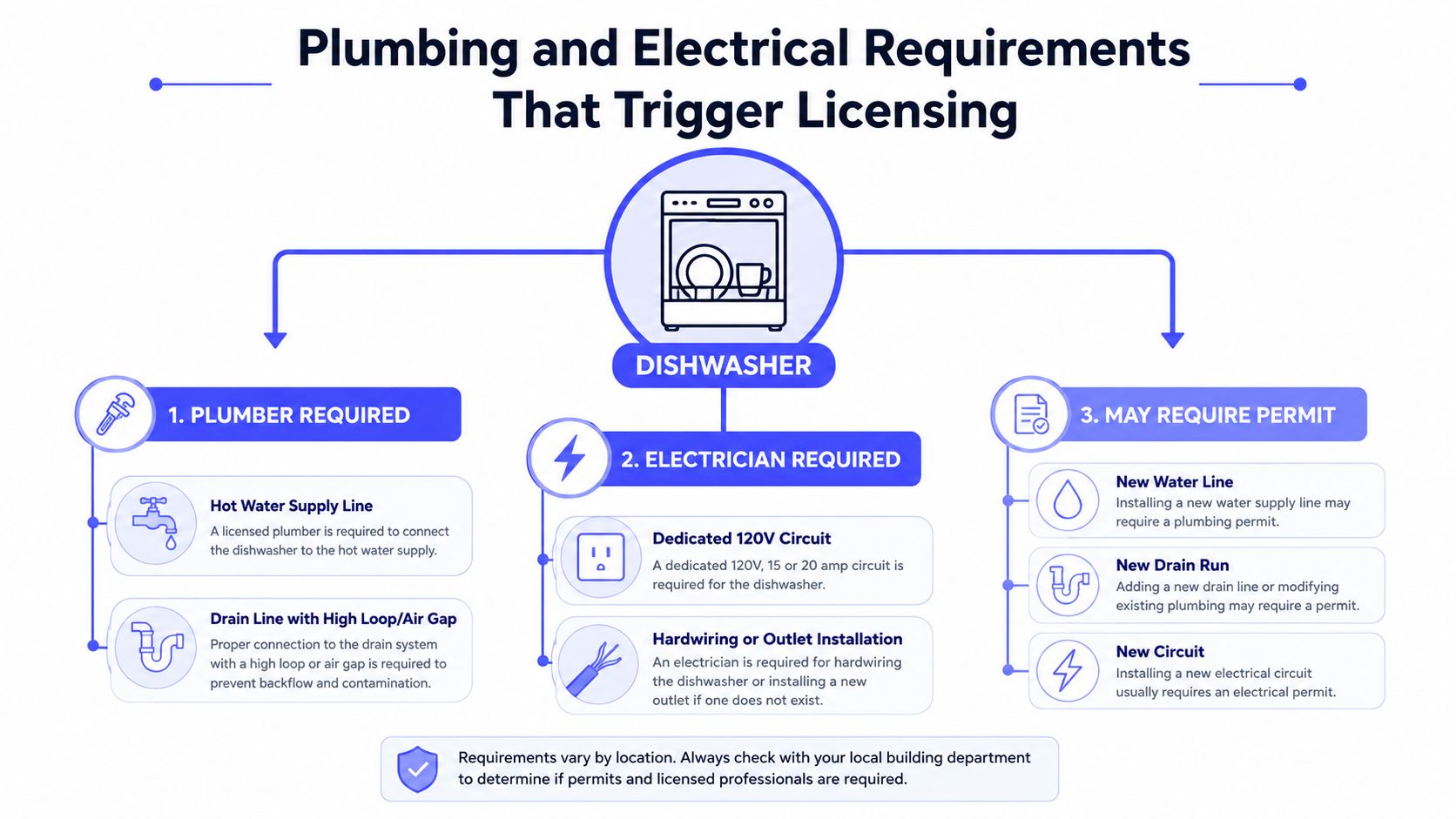
A dishwasher installation crosses plumbing and electrical work. The required trade depends on whether you are replacing an existing unit with usable hookups or creating new utility connections.
The plumbing scope
The appliance needs a hot-water supply connection and a drain connection, as described in the Whirlpool installation instructions. The supply line must connect to a suitable hot-water source with an accessible shutoff. The drain must be routed to prevent contaminated sink water from flowing back toward the dishwasher.
Drain protection commonly uses a high loop or air gap, based on the model instructions and local requirements. A plumber should inspect the sink tailpiece, garbage disposal inlet, and existing drain assembly to confirm that each can accept the dishwasher hose.
If the project adds a water line, changes the drain, or modifies the connection under the sink, hire a licensed plumber. A loose fitting can leak inside the cabinet, while poor drain routing can cause odor, standing water, or backflow.
The electrical scope
A typical setup uses a grounded, dedicated 120-volt, 60-Hz circuit rated for 15 or 20 amps, subject to the model instructions and local code. The manufacturer installation manual also addresses a separate circuit and a grounded three-prong outlet or equivalent grounded connection.
Call a licensed electrician if the kitchen lacks a dishwasher circuit, the existing outlet is improperly shared, or the new model requires hardwiring. Adding a circuit can involve cable routing, breaker work, grounding, and checking panel capacity. That work belongs to a licensed electrician, not an appliance installer.
Code check: If the project changes the home's water, drain, outlet, circuit, or hardwired connection, treat it as trade work until your local authority or licensed professional confirms otherwise.
Typical Costs and Timelines for Professional Installation
A reliable quote starts with the connection points, not the appliance price. A replacement with usable hookups follows a different scope from a first-time installation that needs plumbing, electrical work, materials, or permit coordination. Require an inspection before accepting a firm price.
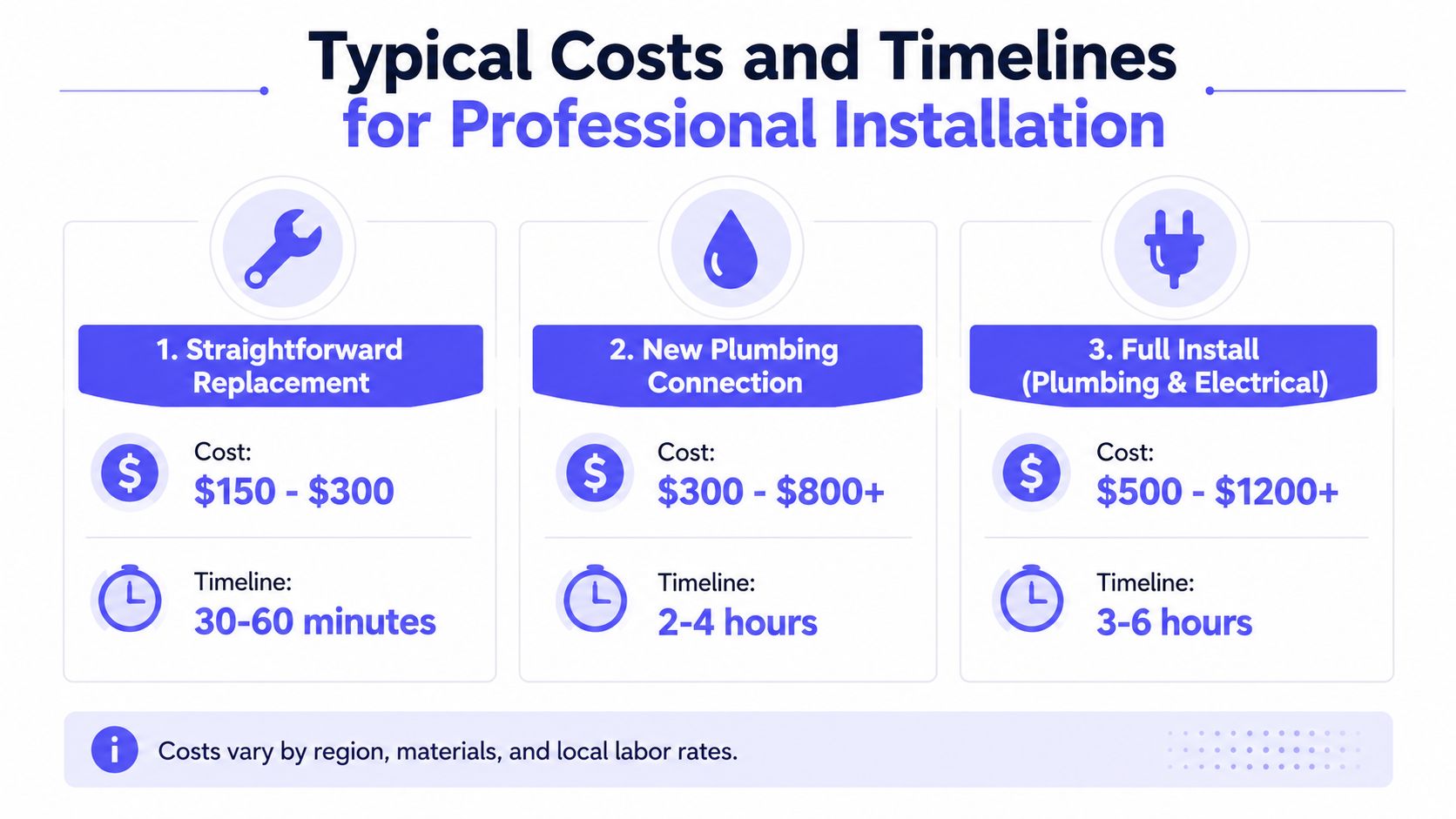
Typical dishwasher labor runs about $150 to $350. Work that adds plumbing or electrical changes can reach $300 to $1,300 or more, according to dishwasher installation cost estimates. Treat these figures as planning guidance, not a guaranteed quote. The final amount depends on access, existing connections, cabinet fit, and the trades involved.
What a straightforward replacement includes
A simple replacement involves disconnecting the old unit, connecting the new supply and drain lines, completing the electrical connection, leveling and securing the dishwasher, then testing operation and leaks. The work often takes 1 to 2 hours, as noted in the installation cost guide.
Confirm whether the quote includes removal and disposal. It should also state its assumptions about the cabinet opening, shutoff valve, drain connection, and electrical supply. If any connection fails inspection, the installer should identify the added work before proceeding.
Why new utility work costs more
New plumbing can require access work, fittings, supply-line routing, drain changes, and testing. New electrical work may involve an outlet, cable, breaker, grounding, or panel assessment. Cabinet alterations create a separate scope when the opening is incorrectly sized or positioned.
A low quote may cover only appliance connection to existing hookups. Request an itemized estimate, as you would when reviewing kitchen sink installation costs. Make sure it separates labor, materials, cabinet work, testing, and any required trade visits.
How to compare estimates
Give each professional the same information: appliance model, installation location, cabinet-interior photos, outlet and shutoff photos, and whether the space has held a dishwasher before. Ask whether the estimate includes materials, testing, removal, permits, and return visits.
A first-time installation usually takes longer than a standard replacement because utility work must be planned and coordinated. Have the contractor identify who handles each task. If both plumbing and electrical work are required, use licensed trades for those scopes rather than accepting an appliance-installation price that leaves the actual requirements undefined.
Permits, Inspections, and Regional Code Differences
The answer to who installs dishwashers changes with the jurisdiction. A U.S. article that says “call a plumber” may be directionally correct for the water connection but incomplete if your project adds electrical work or triggers a permit.
A simple replacement using existing connections may not require the same approval as new utility work. City guidance says permits are commonly required when an appliance installation alters or adds electrical, plumbing, venting, gas-line, or water-line features. Boston's appliance permitting guidance states that a contractor with a valid Massachusetts trade license must apply for the relevant plumbing and electrical permits and perform the related work.
Ask these questions before booking
- Does this installation require a plumbing permit in my location?
- Does adding an outlet or circuit require an electrical permit?
- Who pulls the permit, the contractor or the property owner?
- Will an inspection or compliance certificate be required?
- Does the installer's license cover this exact scope?
The regional difference is especially clear outside the United States. Australian guidance identifies licensed plumbers for water and drain connections, licensed electricians for fixed electrical connections, and possible compliance certificates after the work. Review the Australian dishwasher installation guidance if that is where the project is located.
Don't treat compliance as paperwork
A permit question can expose an unqualified quote. Someone who says permits are never needed, refuses to identify the responsible license holder, or proposes bypassing a required inspection is giving you a reason to stop the job before it starts.
Code details also affect drainage configuration, grounding, circuit arrangements, and manufacturer requirements. Your installer should explain which rule applies locally and document any required approval.
Red Flags and How to Verify Credentials Before Hiring
The safest hiring process starts before anyone arrives with a dishwasher dolly. Send the professional photos, describe whether the location has existing hookups, and ask for a written scope that separates appliance installation from plumbing and electrical work.
Five warning signs
- No license number: The person won't identify the plumbing or electrical license covering regulated work.
- Cash-only pricing: The quote avoids written terms, receipts, insurance information, and clear responsibility.
- No local references: The professional can't provide recent customers or verifiable examples of similar work.
- A quote without a site review: The price ignores the condition of the shutoff, drain, outlet, cabinet, and access.
- No liability insurance: The professional won't provide evidence of coverage for property damage or job-site incidents.
One red flag may reflect poor communication. Several together indicate that you should keep looking. A dishwasher leak can damage cabinetry and flooring, so the cheapest verbal promise isn't the same as a controlled project.
Five checks before you schedule
- Request the license number. Ask for the applicable plumbing or electrical credential, not just a business registration.
- Verify it independently. Use your state or local contractor board and confirm the license is active and matches the person or company.
- Request insurance proof. Ask for current liability coverage before work begins.
- Call recent references. Ask whether the professional completed the promised scope, protected the property, and returned to correct issues.
- Get the estimate in writing. Require labor, materials, removal, permits, testing, and exclusions to appear clearly.
You can also use a matching service that screens professionals before making an introduction. Hand Vetted Co. describes checks covering active state licensing, background screening, verified ratings, and human review, while its contractor background check information explains the screening approach.
The practical hiring standard is simple: the installer should know which connections they own, which work requires another trade, and which local approvals apply. If they can't answer those questions before the appointment, they won't become more reliable after the dishwasher is under the counter.
Hand Vetted Co. connects you with one verified professional for qualifying home projects, including kitchen and bath renovation work that may include dishwasher installation. Visit Hand Vetted Co. to submit your project details and get a single exclusive match instead of sorting through multiple competing calls.