A homeowner gets three roofing quotes and thinks they're comparing the same job. They're not, because one bid is buying speed, another is buying lower cost, and the third is protecting quality.
Table of Contents
- The Quote Problem Every Homeowner Runs Into
- What the Iron Triangle Means
- Two Versions of the Triangle You Will Meet
- How the Triangle Plays Out on Real Home Projects
- Choosing Which Corner to Flex on Your Project
- When the Triangle Breaks and Why That Matters
- Why Regulated Home Services Face a Triangle of Their Own
- Putting It All Together and What to Do Next
The Quote Problem Every Homeowner Runs Into
You ask for three bids, and suddenly you've got three different realities on your kitchen table. One roofer wants to start next week, one says three weeks, and one says he can do it fast if you're fine with a thinner warranty and fewer material upgrades. That's not bad math. It's the iron triangle showing up in plain clothes.
A lot of people assume quotes are comparable because they all name the same project. They don't. A contractor can lean on time, cost, or quality, but not all three at once without changing something else. That's why one bid feels cheap, another feels slow, and a third feels expensive but safer.
If you've ever wondered why the “lowest” quote seems like the best deal until you read the fine print, this is why. A cheaper bid often cuts somewhere you won't see right away, maybe in prep work, materials, testing, or crew time. A faster bid often trades off the same way, just in a different place. If you want a cleaner way to sort through who is set up to deliver what you need, start by checking the professional behind the quote, not just the number on the page. A background check and verification process like the one described at Hand Vetted's contractor background check is one way people try to reduce the guesswork.
A quote is never just a price. It's a choice about what gets protected and what gets squeezed.
That's the operating system underneath home projects. Once you see it, the random-looking spread in bids starts making sense.
What the Iron Triangle Means
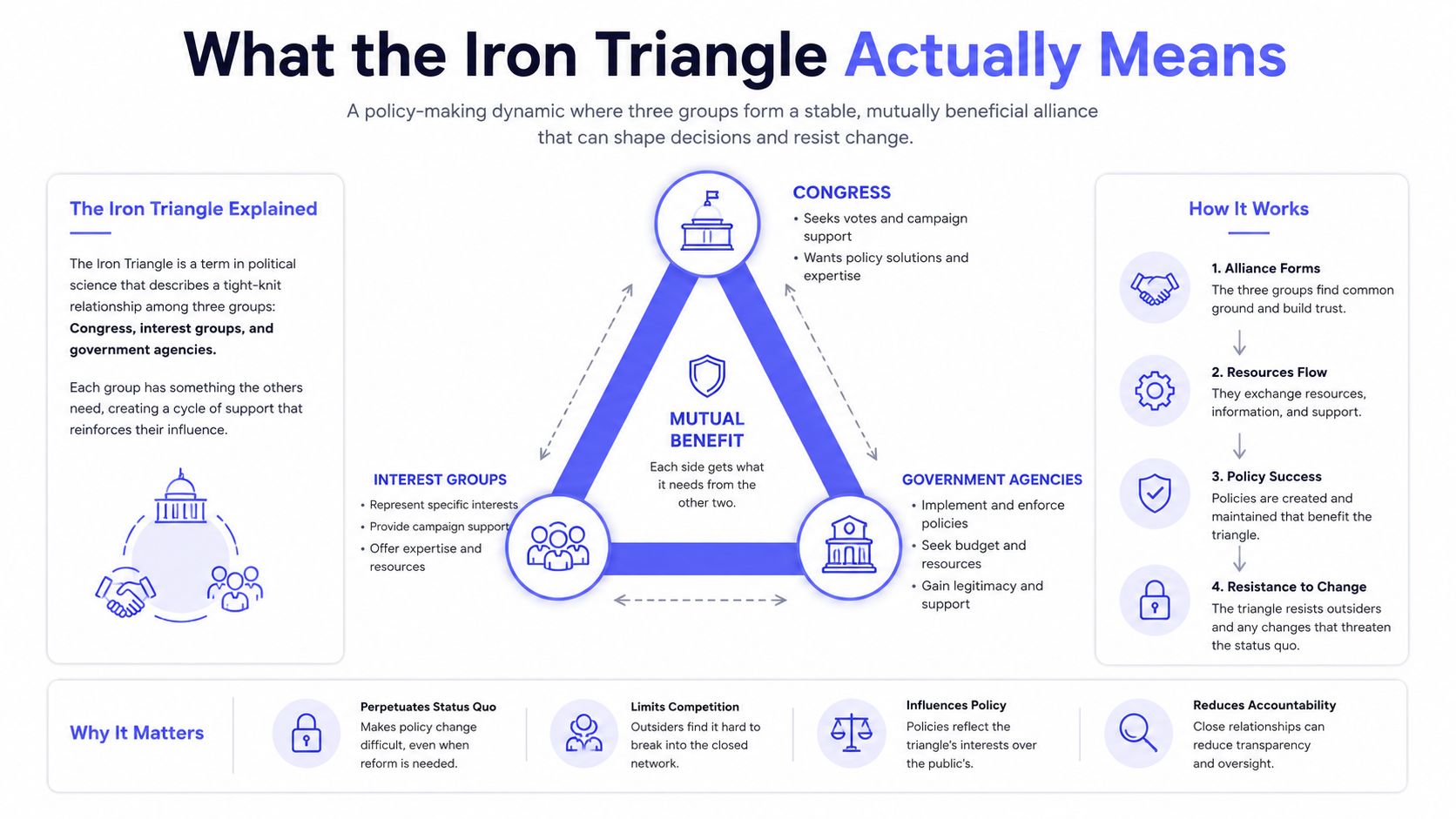
The iron triangle, also called the triple constraint, is the relationship among time, cost, and quality. In project work, those three corners move together, and tightening one usually pushes at least one of the others. That is the basic rule, and it stays stubborn because it reflects how work gets done, not how people wish it worked. A peer-reviewed SSRN paper describes these three variables as the classic vertices of the iron triangle and says the links among them are significant, which is the academic way of saying they do not operate separately from each other (SSRN paper on the triple constraint).
A kitchen remodel makes the trade-off easy to see. You want a bigger island, better cabinetry, and a faster finish date. You can get a strong result, but you do not get to stretch every side of the triangle without paying for it somewhere. Add scope, and the schedule usually grows, the budget usually grows, or the finish quality gets squeezed.
Practical rule: if one corner is required, decide which of the other two can move.
That is why the model survived decades of project management research. A major review looked at 45 years of project management research using 109,804 records from 1970 to 2015 and found time and cost remained core elements, with quality also supported as the third vertex (45-year review of project management research). The triangle lasts because it gives you a simple way to ask the right question before work starts, not after the change orders pile up.
Two Versions of the Triangle You Will Meet
The phrase iron triangle shows up in two different worlds, and mixing them up wastes time. In project management, it means time, cost, and quality. In U.S. politics, it means a durable three-way relationship among congressional committees, federal bureaucracy, and special interest groups that shapes policy over time (EBSCO Research Starters on the iron triangle in U.S. politics).
| Dimension | Project Management | U.S. Policy |
|---|---|---|
| Core actors | Project team, client, contractor | Committees, agencies, interest groups |
| Main trade-off | Time, cost, quality | Policy influence, oversight, implementation |
| What gets protected | Delivery feasibility | Entrenched policy goals |
| What can slip | Schedule, budget, finish standard | Broader public input |
The political version matters because it explains why some systems stay hard to change. A more detailed academic description says the triangle aligns regulated industry or other special interests, legislative oversight committees, and a regulatory agency or bureaucracy, and that this often protects and promotes the regulated industry (Pitt summary on political iron triangles). That same logic shows up in home services, insurance workflows, and financing processes, where rules, gatekeepers, and industry actors can make access feel slow and uneven.
For a homeowner, the key difference is simple. In a remodel, the triangle is about trade-offs inside a job. In policy, it is about who shapes the rules around the job. Both versions show durable influence, but they work at different levels and produce different outcomes.
How the Triangle Plays Out on Real Home Projects
A roof quote can look smart on paper and still leave out the parts that keep the job from becoming a headache. One bid may skip ice-and-water shield where another includes it, or assume less prep, lighter cleanup, or fewer hours in the field. The contractor is not just pricing material, they are choosing how much quality to protect while keeping cost down. If storm damage puts the house on a tight clock, the faster crew may be protecting time by moving faster and leaving less room for error.
Three project examples people recognize fast
- Roof replacement: A lower bid may save money by trimming underlayment, flashing detail, or labor time. The homeowner thinks they are buying the same roof, but they are really accepting a different standard of finish and risk.
- HVAC swap: A speed-focused install can get equipment in quickly, but commissioning often gets shortchanged. If the system is not checked carefully, the homeowner may end up with comfort problems or callbacks later.
- Kitchen renovation: Scope creep is the classic budget killer. Add custom storage, upgraded finishes, and a layout change, and the triangle starts pushing back through delays or higher cost.
A later review of Standish Group material cited in the UTS review pointed to a familiar pattern in complex projects, where many jobs were not completed successfully and a sizable share were abandoned before the finish. That is not a home remodel statistic, but it is a useful warning. Complex work breaks when people act as if scope, schedule, and budget can all expand without consequence.
If a contractor says every corner can stay perfect, ask which part of the job they are quietly compressing.
The useful habit is simple. Do not just ask, “How much?” Ask, “What are you flexing to make that number work?” A home renovation cost calculator can help frame the question before you sign, because once you see the trade-off, the quote stops being a mystery and becomes something you can judge.
Choosing Which Corner to Flex on Your Project
The first rule is blunt. Protect the corner that protects safety and long-term cost, then flex the corner that hurts least in practice. A leaking roof with active water damage should not flex on time. A cosmetic refresh can usually flex on material grade or pace without much regret.
That rule works because not every corner matters equally on every job. If the work affects structural integrity, weather protection, or hidden systems, quality is usually the corner you guard most tightly. If the work is mainly visual, you can often accept a longer schedule or a simpler finish without creating bigger problems later.

A useful way to sort the decision is to ask three questions before signing anything.
- What breaks first if this job goes wrong? If the answer is water damage, mold, structural issues, or system failure, protect quality.
- What hurts most if the job runs long? If the answer is disrupted living, business downtime, or exposed property, protect time.
- What can I live with if we simplify? If the answer is a less fancy finish or fewer upgrades, flex cost or scope.
For people comparing bids, a cost calculator can help frame the discussion before the contract is signed. A tool like Hand Vetted's home renovation cost calculator can help you think through the budget side without pretending every project has the same priorities.
The contractor side works the same way in reverse. A business that's already overloaded may need to flex on speed, not quality, because rushing the wrong job creates callbacks and reputational damage. If you choose the wrong corner to flex, you don't save money. You just move the pain down the road.
When the Triangle Breaks and Why That Matters
People talk about the iron triangle as if it's a law of physics. It isn't. Recent research treats it more like a heuristic, something useful that can be weakened when systems get better at coordination, verification, and workflow design. A 2022 structural-equation study tested Kissick's model and still found cost, quality, and access tightly linked, but the authors framed the triangle as a model to be examined, not an absolute rule (2022 study on Kissick's model).
That matters because better systems can change the trade-off. Digital scheduling can reduce wasted time. Better intake can filter out bad-fit requests before they consume a crew's day. Cleaner verification can reduce rework and cut down on the back-and-forth that usually eats into quality.
The triangle bends when a system stops wasting effort on the wrong work.
That's the part most popular explanations miss. They stop at “you can't have it all,” which is too neat and too fatalistic. In real life, good process design can improve more than one corner at once, even if it can't erase the trade-off entirely.
For home services, the big leak is often bad matching. Every hour a professional spends chasing unqualified leads is an hour not spent on the job that pays, and that lost time shows up as slower response, rushed estimates, or lower attention on the work that matters. Exclusive, pre-screened matching is one way to attack that waste before it spreads through the whole schedule.
The fair question is whether access gets rationed more cleanly or more unfairly when demand spikes. That's where smarter routing helps. If a system can direct the right request to the right professional faster, it can reduce the number of people stuck waiting while still preserving quality.
Why Regulated Home Services Face a Triangle of Their Own
A homeowner dealing with a roof leak, an HVAC failure, or a permit-heavy remodel runs into a version of the iron triangle that looks a lot like the one used in policy and project management. Access, cost, and quality still pull against one another, but regulated home services add another layer. Insurance carriers, mortgage lenders, code enforcement, and licensed professionals all shape who gets served quickly, who waits, and who pays more. When demand jumps after a storm or during a busy season, access tightens first, and then cost rises or quality gets squeezed.
That pressure shows up before a crew ever steps on site. A lot of delay comes from noise, not real work. If the front end is full of unlicensed leads, poor-fit requests, or buyers who are not ready to move, everyone downstream loses time. In a constrained market, the people with the weakest negotiating power often lose access first, which is the fairness problem described in health access research and echoed in other regulated workflows.
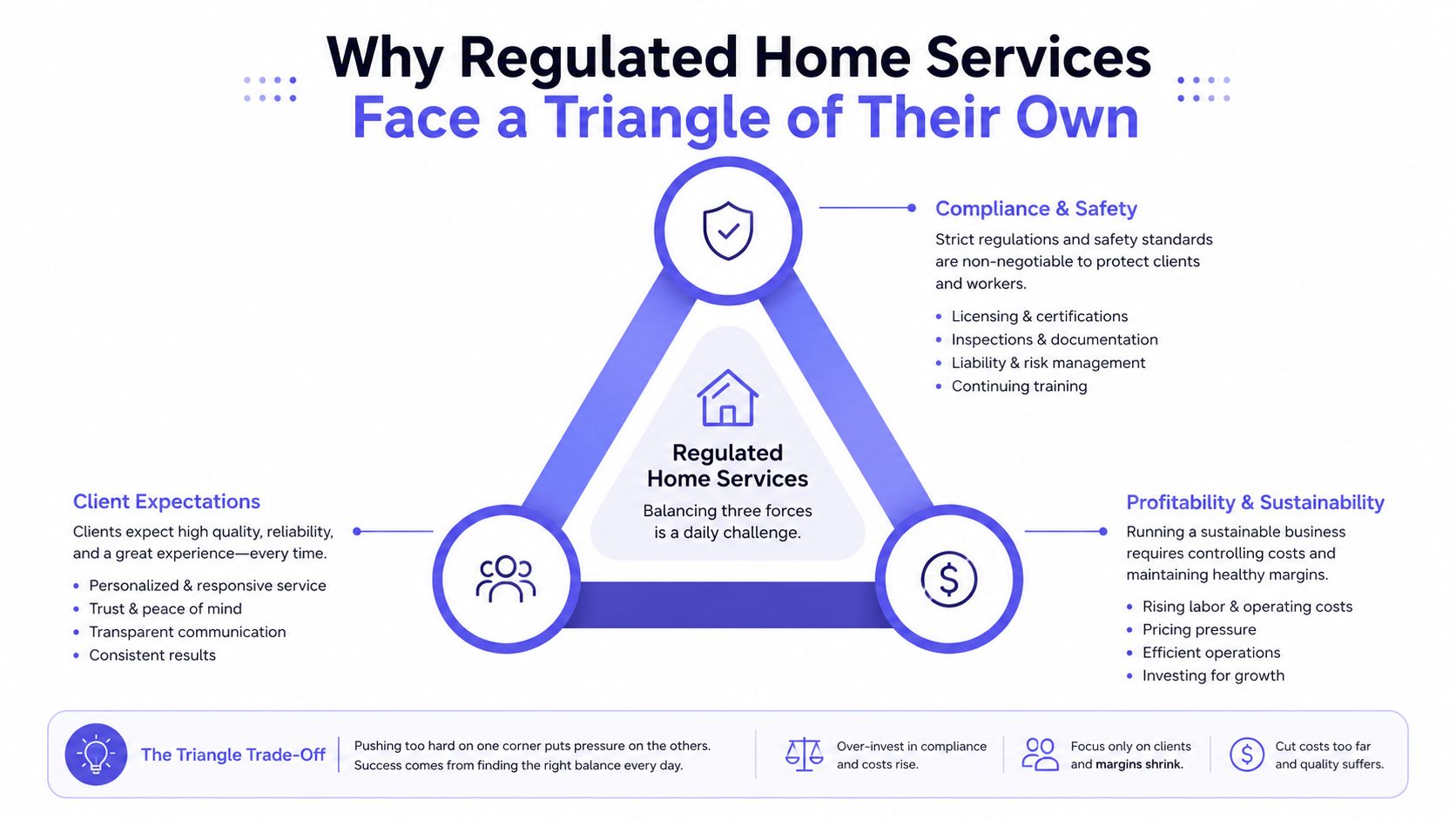
Exclusive matching changes the equation by cutting out the waste that steals capacity. If a verified request goes to one qualified professional instead of getting sprayed across a market, the business can spend more time on actual service and less time on chase work. That does not erase the triangle, but it makes the corners less hostile to each other. It also gives homeowners a clearer path through the rules, including practical requirements like contractor insurance requirements that often decide whether a job can move forward at all.
For contractors, the point is compliance and profitability without chaos. For customers, the point is access without having to sift through a pile of competing pitches. For everyone involved, the best system is the one that protects quality while reducing the time tax that bad matching creates.
Putting It All Together and What to Do Next
Why is the triangle still used if it has flaws? Because it still describes the actual trade-offs many people face. Can quality be the corner that flexes without regret? Sometimes, but only on work where the finish standard doesn't affect safety or long-term cost. How do you tell which corner a contractor is trading on? Ask what gets faster, cheaper, or simpler when the price changes.
Before your next project, decide which corner matters most and say it out loud before anyone starts work. Then choose a professional whose business model protects that corner instead of fighting it. A verified, exclusive match can keep the process tighter, reduce wasted time, and make the trade-offs easier to see before they turn into change orders.
If you want a cleaner way to compare professionals without sorting through spam, duplicated leads, or competing pitches, visit Hand Vetted Co.. Hand Vetted Co. matches you with one verified professional for your project, so you can focus on the trade-offs, not the noise.