Budget about $1,000 to $4,000 per year for the average cost of maintaining a pool. That range sounds wide because it isn't just about weekly cleaning. It usually includes some mix of routine service, chemicals, utilities, and repair work that sneaks up on you when equipment ages or the season changes.
If you're staring at your pool and wondering whether it's a fun backyard feature or a slow leak in your bank account, that's the right question to ask. A lot of pool guides stop at the cleaning bill. Real ownership costs don't. The pump still runs, the water still needs balancing, parts still wear out, and in some climates you also pay to open and close the pool every year.
That's why the average cost of maintaining a pool can feel manageable one month and annoying the next. A calm season with stable water chemistry is one thing. An older pump, a heater issue, or a rough opening after winter is another.
Table of Contents
- The Real Cost of a Swimming Pool
- The Four Pillars of Pool Maintenance Costs
- What Drives Your Pool Costs Up or Down
- DIY vs Professional Service A Cost Comparison
- Smart Ways to Lower Your Pool Maintenance Costs
- Red Flags That Require a Professional
- Finding and Vetting Your Pool Pro
The Real Cost of a Swimming Pool
Pool ownership gets sold as a simple trade. Pay for the pool, enjoy the pool. The maintenance side is where people get surprised.
For in-ground pools, most owners spend between $80 and $260 per month on basic maintenance, which works out to roughly $1,000 to $4,000 per year for chemicals, routine cleaning, and basic equipment checks. Labor can push the monthly cost closer to $300 with weekly professional service, based on Swimply's pool maintenance cost guide.
That basic range is useful, but it hides an important truth. Some pools stay near the low end for long stretches because they're smaller, in milder climates, and have newer equipment. Others drift upward because the owner is paying for frequent visits, dealing with older systems, or trying to keep up with a surface or plumbing issue that never fully goes away.
What that number usually includes
A normal maintenance budget tends to cover a few recurring tasks:
- Water testing and balancing: Keeping sanitizer and pH in line so the pool stays usable and doesn't damage surfaces or equipment.
- Cleaning work: Skimming, brushing, vacuuming, and filter attention.
- Basic equipment oversight: Watching the pump, filter, and visible system performance before a small issue turns expensive.
If you're still deciding between pool types, it helps to compare ownership costs before installation. This look at above-ground pool costs with a deck is a good reminder that build price and maintenance price are two different decisions.
Practical rule: The average cost of maintaining a pool only looks reasonable if you budget for the full year, not just the next service visit.
The Four Pillars of Pool Maintenance Costs
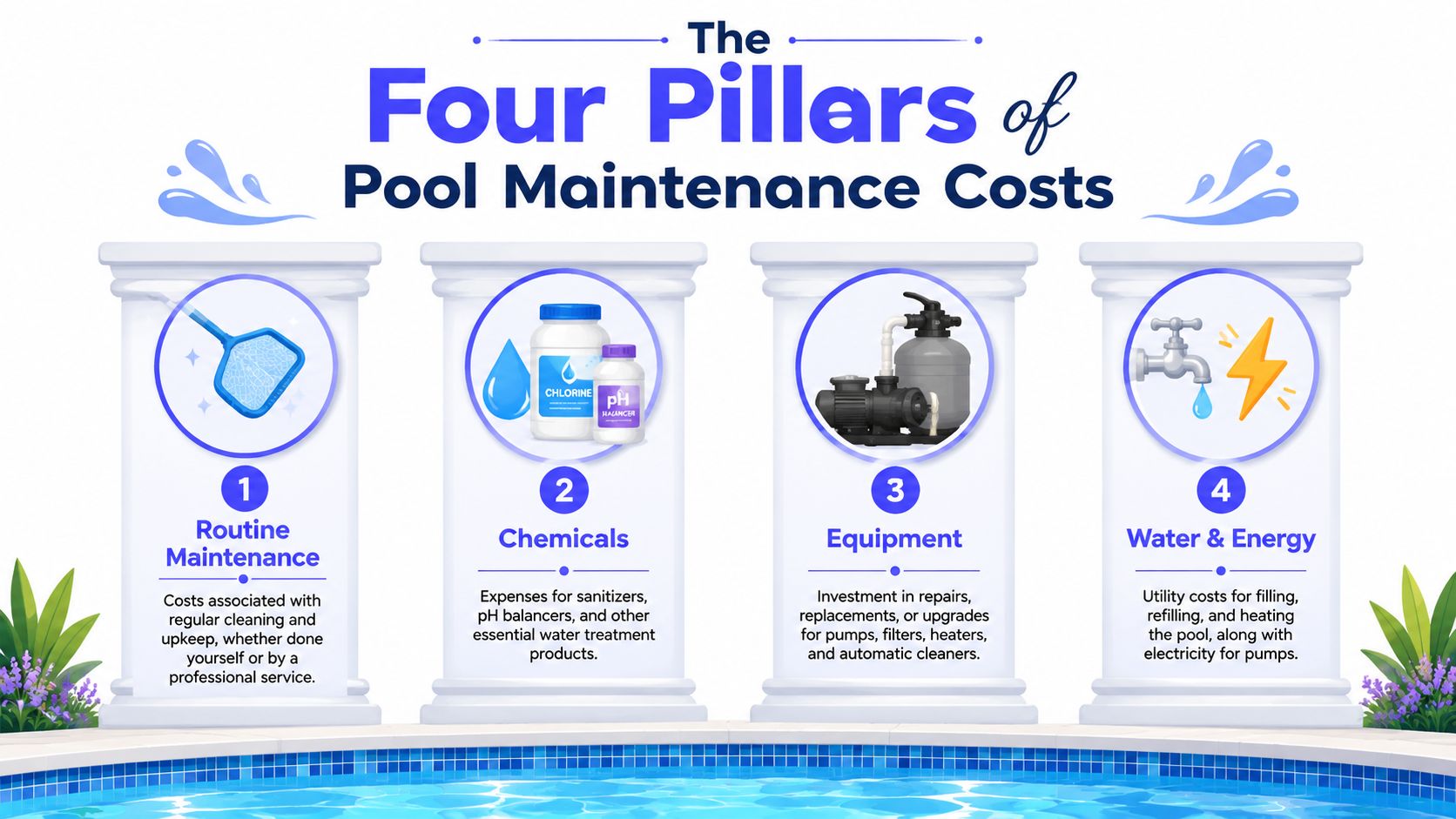
A pool can look perfect on Saturday and still hand you a bigger-than-expected bill by the end of the month. That usually happens when owners budget for cleaning but forget about chemical restocking, power draw, water loss, and the repair fund every pool eventually needs.
A practical budget works better when you split ownership costs into four buckets and track each one. Broad annual estimates for pool upkeep often land in the $1,000 to $4,000 per year range once you include routine care, supplies, utilities, and periodic repairs, according to this pool maintenance cost breakdown.
Routine care sets the baseline
Routine care is the part you feel in your schedule. Skimming, brushing, vacuuming, testing, and cleaning the filter are recurring jobs whether you do them yourself or hire them out.
This bucket usually looks manageable on its own. It stops being manageable when it slips. Miss a couple of weeks in hot weather, and you often spend more on chemicals, extra cleaning time, and equipment strain just to get back to normal.
The other three pillars are where budgets get stretched
Owners who only track the weekly service bill miss the full cost of ownership. The larger expenses often come from categories that are less visible day to day, especially utilities and repairs that should be averaged across the year instead of treated like surprises.
| Cost pillar | What it covers | Why it matters |
|---|---|---|
| Routine maintenance | Cleaning, testing, balancing, basic checks | Keeps water clear and catches small problems before they turn into repair calls |
| Chemicals | Sanitizer, pH adjustment, shock, algae treatment | Protects swimmers and prevents damage to surfaces and equipment |
| Equipment | Pump, filter, heater, cleaner, replacement parts, service calls | Older systems can turn a cheap month into an expensive season |
| Water and energy | Top-offs, backwashing, pump runtime, heating, seasonal opening and use | Utility bills rise with weather, usage, and inefficient equipment |
A few of these costs are easy to underbudget:
- Chemicals: Retail pool supply pricing from Leslie's Pool Supplies shows how sanitizer, shock, algaecide, and balancing products add up over a season, especially in hot weather or after heavy use.
- Water and power: Pumps run for hours, heaters draw hard when temperatures swing, and refill water adds up if you have splash-out, evaporation, or a small leak.
- Equipment wear: Pump seals, filter media, salt cells, pressure gauges, cleaner parts, and heater components do not fail every month, but they should still be part of your yearly math.
I have found that the cleanest way to budget a pool is to treat repairs like tires on a car. You know they are not a weekly expense, but you also know they are coming. Set aside money every month for equipment aging and you avoid the mistake a lot of first-time owners make, which is assuming a calm season means a cheap year.
Pools get expensive for the same reason houses do. The routine bills are predictable. The bigger trouble usually starts with deferred maintenance, older equipment, and utility use that climbs over time.
What Drives Your Pool Costs Up or Down
Two pools can sit in the same neighborhood and cost very different amounts to maintain. The water doesn't care what your neighbor pays.
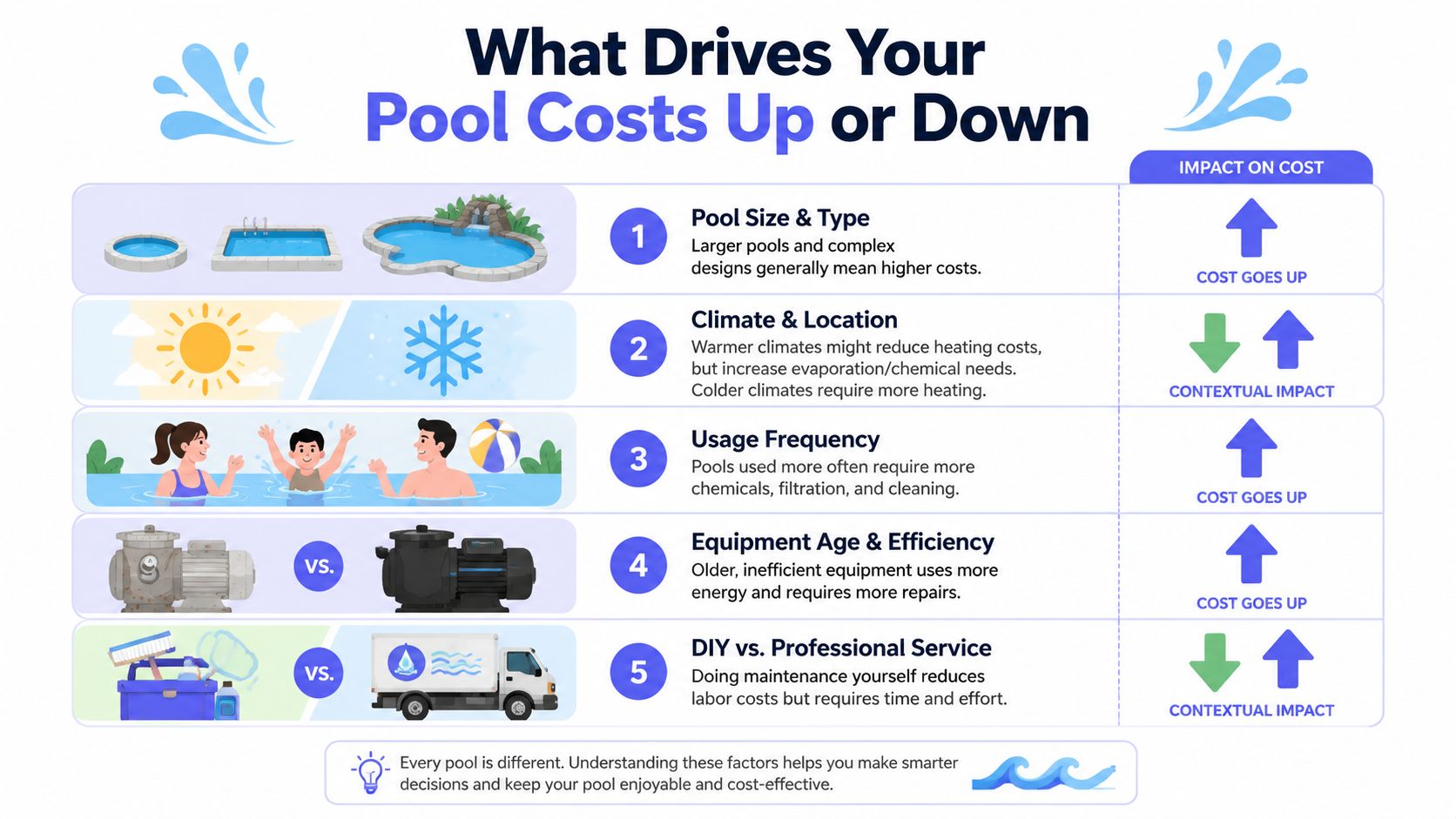
The biggest cost drivers are pool material, climate, how often you use the pool, and how old the equipment is. If you want a realistic budget, start there.
Pool material changes the math
Pool type has a real effect on long-term maintenance.
A cited industry comparison says vinyl-liner pools typically run about $1,200 to $1,500 per year, fiberglass pools may hold major repair spending to about $500 to $600 per year, and concrete pools carry higher long-term costs when replastering is factored in. The same source notes concrete pools may need replastering every 10 to 15 years, with costs framed at roughly $10,000 annually if amortized over that period, based on this pool type cost comparison.
That matches what many owners learn the hard way. Fiberglass is usually easier to live with. Vinyl can be manageable until liner timing catches up to you. Concrete looks great and offers flexibility, but it asks more from your wallet over time.
Climate equipment and habits matter more than people think
Climate changes both routine care and long-term wear.
In a milder region, you may avoid winterization headaches. In a colder region, seasonal setup and shutdown are part of the yearly rhythm. In a hot region, you may not pay for winter closing, but evaporation, chemical demand, and longer running time can keep costs high in a different way.
A few practical factors push costs up or down fast:
- Pool size: More water means more chemical adjustment, more debris to manage, and longer circulation time.
- Heater use: Heated pools are more comfortable. They're also more expensive to own.
- Equipment age: An old pump or filter system can turn a stable budget into a repair budget.
- Surrounding trees and landscaping: More leaves and debris mean more cleaning and more strain on filtration.
- Light use versus heavy use: A lightly used pool can sometimes be run more efficiently, but skipping core care too often usually backfires.
One issue rarely gets enough attention. Longer ownership cycles create delayed costs that don't show up in monthly guides, leading people to underestimate concrete especially. A long-term ownership analysis notes that concrete pools typically require $10,000 to $16,000 resurfacing every 10 to 15 years, and many owners don't model how delaying deep cleaning, acid washes, or resurfacing can create larger problems later, as discussed in this long-term pool ownership analysis.
If you want the lowest-maintenance version of pool ownership, don't just ask what service costs this month. Ask what the shell and equipment will demand over the next decade.
DIY vs Professional Service A Cost Comparison
This is the fork in the road for most pool owners. You either spend your own time or you spend money on labor and oversight.
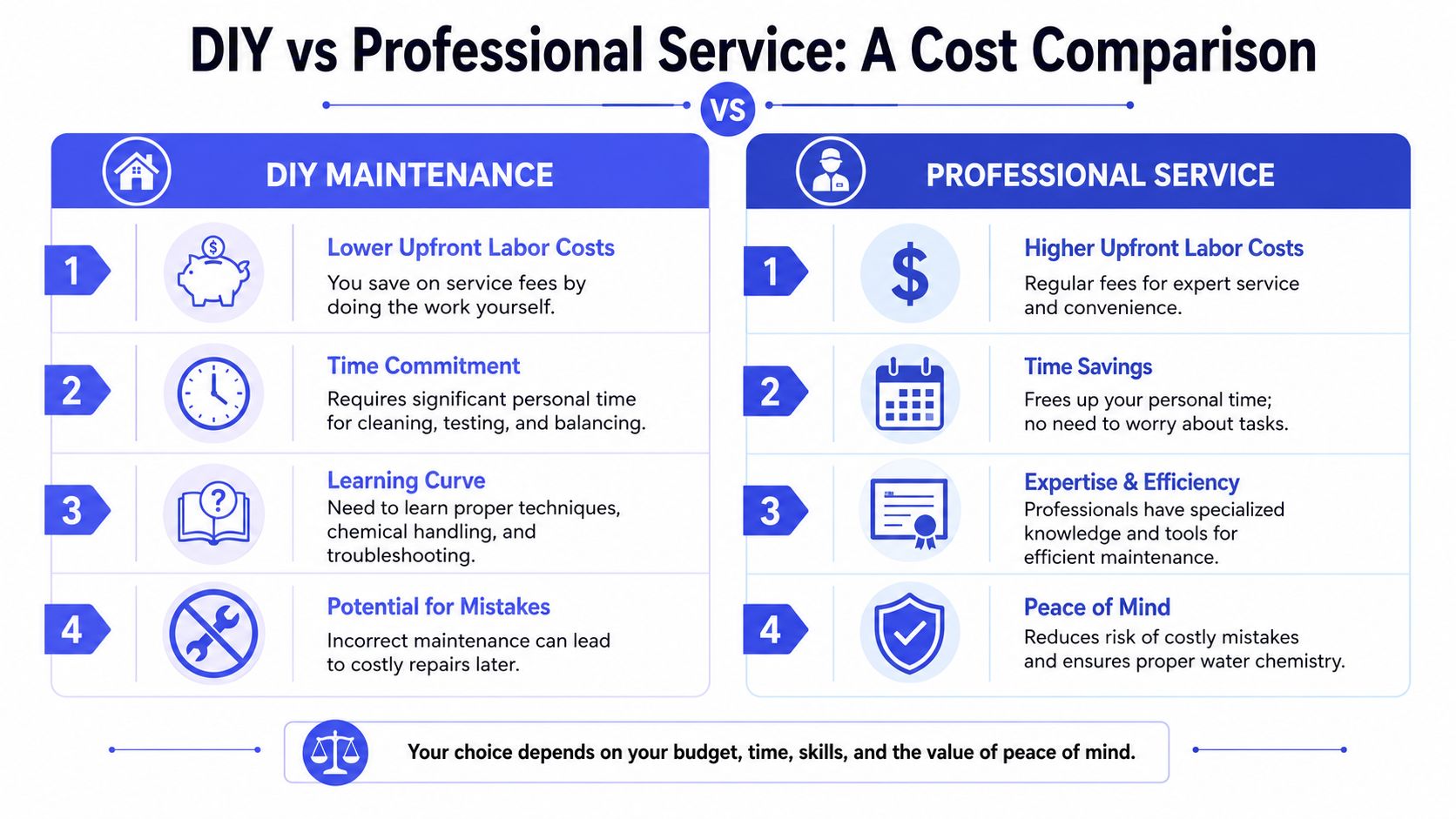
There isn't one right answer. A clean, lightly used pool with an attentive owner can often be handled well on a DIY basis. A pool with aging equipment, recurring chemistry issues, or limited owner time usually gets cheaper to manage when a competent pro stays ahead of problems.
What DIY really saves
DIY cuts labor costs. That part is true.
But DIY only works when you stay consistent. You need to test the water, brush the walls, empty baskets, clean out debris, watch filter pressure, and notice changes before they turn into algae, scale, or equipment stress. If you miss the rhythm, the savings disappear fast.
DIY tends to work best for people who:
- Check the pool regularly: Not occasionally. Regularly.
- Don't mind chemical handling: Some people hate it. Some don't.
- Can spot small changes: A weaker return flow, unusual pump sound, or drifting chemistry matters.
- Have stable equipment: DIY is easier when the system itself is dependable.
The part that doesn't get said enough is that DIY mistakes are usually expensive in slow motion, not all at once. Poor chemistry can gradually shorten the life of surfaces, seals, and equipment.
What you're paying for with a pro
Professional service buys consistency, trained eyes, and time back in your week.
In the United States, professional pool maintenance typically costs about $116 to $356 per visit, with an average of roughly $236 per routine service call. Annual spending for recurring visits averages about $960 to $1,800, excluding major repairs but including basic chemical balancing, skimming, vacuuming, and equipment checks, according to HomeAdvisor's pool maintenance pricing data.
A fair way to look at it is this:
| Option | Best for | Trade-off |
|---|---|---|
| DIY maintenance | People with time, interest, and a stable pool system | Lower labor spend, higher personal effort and higher risk of missed issues |
| Professional service | Busy owners, older pools, or anyone who wants fewer surprises | Higher recurring cost, but less hands-on work and better early problem detection |
What's usually included in routine service is pretty standard: balancing, skimming, vacuuming, and equipment checks. What usually isn't included is also important. Repairs, replacement parts, and seasonal opening or closing often cost extra.
Hiring a pro isn't just about convenience. It's often about keeping small technical problems from becoming expensive repairs.
Smart Ways to Lower Your Pool Maintenance Costs
Most pool savings come from discipline, not magic products. The cheapest pool to own is the one that stays chemically stable, runs efficiently, and avoids preventable repairs.
Cut waste before you cut service
A lot of owners try to save money by stretching maintenance intervals too far. That usually backfires. A better move is to reduce waste inside the system.
Use this checklist:
- Keep water balanced consistently: Balanced water is cheaper than corrective treatment. Once the chemistry drifts hard, you use more product and put more stress on surfaces and equipment.
- Run the pool with a plan: Don't leave the system on autopilot if your pool use changes by season. Light-use periods may support a leaner operating pattern, but the water still needs monitoring.
- Use a pool cover when practical: Covers help reduce debris load and evaporation. That means less refill water, less cleaning, and less chemical loss.
- Clean baskets and filters on schedule: A dirty filter or packed skimmer basket makes the whole system work harder.
- Trim back nearby landscaping: Leaves, pollen, and seed drop create constant cleanup and chemistry problems.
Spend small to avoid spending big
The smarter savings are often boring.
Buy reliable test supplies and use them. Replace worn seals or lids before they create bigger leaks or strain. Don't ignore weak circulation, cloudy water, or small surface issues because the pool is still technically usable.
Here's what does not work:
- Skipping testing because the water looks fine
- Turning a blind eye to unusual pump noise
- Letting algae start because treatment seems expensive
- Putting off a minor repair until swim season is in full swing
One clean habit beats a dozen emergency fixes. If you're trying to lower the average cost of maintaining a pool, the goal isn't to do less. It's to do the right things earlier.
Red Flags That Require a Professional
Some pool problems are maintenance problems. Others are repair problems pretending to be maintenance problems.
Once you cross that line, trying to save money with guesswork usually costs more.
Problems that stop being DIY fast
Call a pro if you notice any of these:
- Water that won't clear after normal correction: That can point to filtration failure, hidden contamination, or chemistry problems beyond routine balancing.
- Grinding, whining, or rattling from the pump or filter system: Mechanical noise rarely fixes itself.
- Visible leaks or unexplained water loss: Plumbing leaks and structural leaks can damage more than the pool.
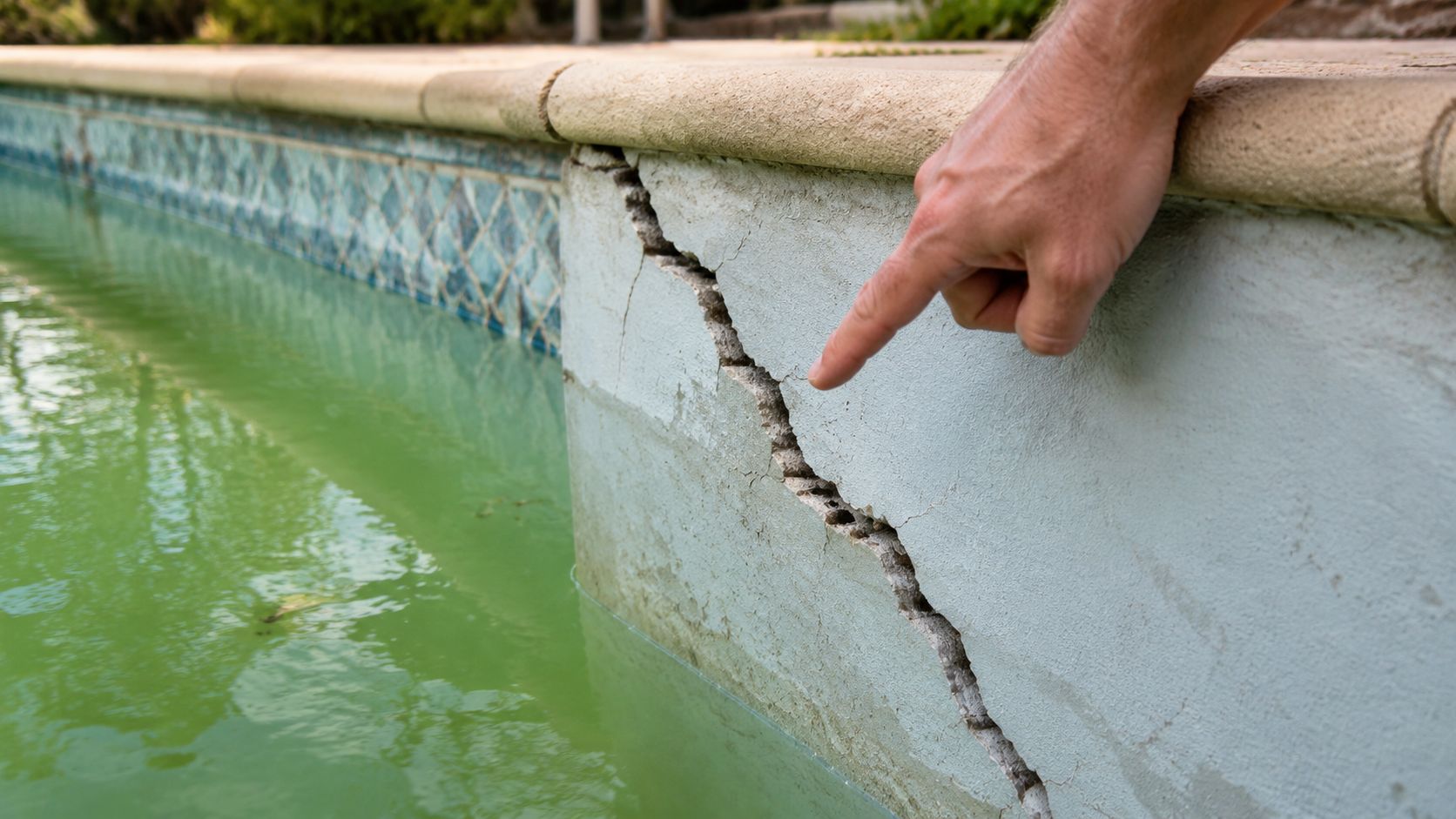
- Cracks in the shell or decking near the pool: Surface issues can be cosmetic, but some signal movement or structural trouble.
- Electrical issues: Tripping breakers, dead equipment, or anything that looks unsafe around water is not a DIY experiment.
- Heater performance that suddenly changes: That can be a straightforward service call or a sign of a larger equipment problem.
If you're hiring anyone for repair work, insurance matters. This guide to contractor insurance requirements is worth reviewing before you let someone work on a system tied to water, power, and expensive equipment.
A pool can tolerate cosmetic neglect longer than it can tolerate mechanical or electrical neglect.
Finding and Vetting Your Pool Pro
If you're getting quotes, ask direct questions and listen for direct answers.
Start with the basics:
- Licensing and insurance: Ask what they carry and whether it's current.
- What routine service includes: Get clear on chemicals, vacuuming, filter cleaning, and basic checks.
- What counts as extra: Repairs, emergency calls, opening, closing, and specialty cleaning should be spelled out.
- How they handle equipment issues: You want to know whether they diagnose, repair, subcontract, or just report.
- Who is on site: Background checks and accountability matter, especially for recurring service at your home.
If you want a cleaner way to screen the person behind the truck, this guide on contractor background checks helps you vet the basics before you commit.
The practical takeaway is simple. Budget for the whole ownership cycle, not just the cleaning visit. If you can handle routine care well, DIY can work. If your pool is older, your time is tight, or you're seeing red flags, bring in a qualified professional before a small issue gets expensive.
If you want help finding a trustworthy pro without chasing multiple bids and sales calls, Hand Vetted Co. matches you with one licensed, background-checked, highly rated professional. You can also review How It Works, see Our Standards, or check the FAQ before you get matched.