A realistic 2026 roof replacement cost estimate for standard asphalt shingles is roughly $9,000 to $18,000 on an average U.S. home. Across most projects, the broader range runs from about $5,800 to $46,000, depending on roof size, pitch, material, tear-off work, structural repairs, and location.
You're probably looking at a contractor's bid right now and wondering whether the number is reasonable or padded. That uncertainty is justified. Two roofs with similar home footprints can produce dramatically different invoices because contractors price the actual roof system, not the square footage of the building alone.
A sound estimate accounts for roof geometry, access, labor availability, material selection, disposal, permits, flashing, ventilation, and whatever the tear-off reveals underneath. A suspiciously low quote usually leaves something out. A vague high quote makes it impossible to see what you're paying for.
Table of Contents
- What a Realistic Roof Replacement Cost Estimate Looks Like in 2026
- The Cost Drivers That Move Your Estimate Up or Down
- How to Calculate Your Own Estimate From Square Footage
- Comparing Roofing Materials by Installed Cost
- How Regional Labor Markets Shift the Final Number
- Questions That Separate a Good Quote From a Vague One
- Your Next Steps and How to Get a Vetted Pro
What a Realistic Roof Replacement Cost Estimate Looks Like in 2026
Standard asphalt shingle replacement on an average U.S. home generally lands between $9,000 and $18,000, while the broader national range runs from roughly $5,800 to $46,000 according to NerdWallet's 2026 roof replacement cost guidance. That range is wide because “average roof” is a weak estimating category.
A simple, low-slope ranch with one layer of shingles and easy ground access belongs near the lower end. A tall house with steep planes, multiple valleys, dormers, damaged decking, premium materials, and difficult staging can move toward the upper tens of thousands.
Practical rule: Treat the national range as a screening tool, not a quote. Your roof's actual geometry and local crew availability matter more than an online average.
A useful roof replacement cost estimate behaves like a system of interacting multipliers:
- Roof area determines the base quantity of material and installation.
- Pitch and height affect safety equipment, staging, and crew speed.
- Material tier changes both material cost and installation labor.
- Tear-off conditions determine disposal volume and labor.
- Decking and structural repairs can appear only after removal begins.
- Flashing, ventilation, and underlayment define whether the replacement is complete.
- Permits and code requirements vary by jurisdiction.
- Regional labor rates can shift the final price even when materials stay similar.
Historical reporting points to the same conclusion. One 2026 industry dataset places the average U.S. residential replacement at $17,631, about 33% above the 2021 to 2024 four-year average, while claim counts fell nearly 20% in the prior year, as reported by The Roofing Brief. Labor shortages, material inflation, and storm exposure have changed the baseline.
The right approach is to calculate a rough range, then pressure-test contractor bids against a detailed scope. Don't compare totals until you know whether each contractor included the same tear-off, flashing, ventilation, decking allowance, warranty, and disposal work.
The Cost Drivers That Move Your Estimate Up or Down
A contractor's number usually moves through several distinct cost drivers. They don't all carry equal weight, but each can change the bid.
Size and roof complexity
Roofing is measured by actual roof surface, not the home's floor footprint. A larger roof requires more material, but a cut-up roof with valleys, hips, dormers, skylights, and penetrations also takes longer to install than a plain gable roof of similar area.
Pitch and height
Steep slopes slow the crew and require more safety preparation. Harnesses, roof brackets, staging, additional setup, and careful movement all add labor. A two-story steep roof is a different production problem from a single-story ranch.
Material selection
Architectural asphalt is a common baseline. Metal roofing can cost roughly two to four times more than asphalt on the same house, according to RoofPitch's 2026 cost model. Slate and tile sit higher still because they're heavy, slower to install, and often need specialized labor.
Tear-off layers
One or two existing shingle layers create more work than a clean deck. The crew has to remove, load, transport, and dispose of the old material. Ask whether the quote includes tear-off by layer or hides it inside a single labor line.
Decking and structural repairs
Rotten sheathing, sagging rafters, and moisture damage can't always be confirmed before tear-off. A responsible quote includes a clearly defined unit price or allowance for replacement rather than an open-ended “repairs as needed” clause.
Underlayment and flashing
Underlayment, ice-and-water protection, drip edge, valley metal, chimney flashing, plumbing boots, and wall flashing protect the system from water intrusion. A quote that only names shingles is incomplete.
Permits and code work
Permit handling and code upgrades vary by municipality. Confirm who pulls the permit, who schedules inspection, and whether ventilation or edge protection upgrades are included.
Disposal and access
Dumpsters, hauling, driveway protection, limited access, and long carries can add cost. Disposal becomes more significant when the old roof contains multiple layers or heavy materials.
Warranty tier
A manufacturer warranty and a contractor workmanship warranty aren't the same thing. Premium warranty packages may require specific products, installation methods, documentation, and approved contractors. Get the exact terms in writing.
Regional labor scarcity
Labor can represent 40% to 60% of total project cost and may run 8% to 12% higher than in prior years, according to Roofing Center's 2026 pricing analysis. That's why the same material package can produce very different bids in different markets.
A single rafter replacement paired with added ice-and-water shield can add $1,500 to a quote. Don't reject that charge automatically. Ask for photographs, measurements, the unit pricing, and the reason the repair is necessary.
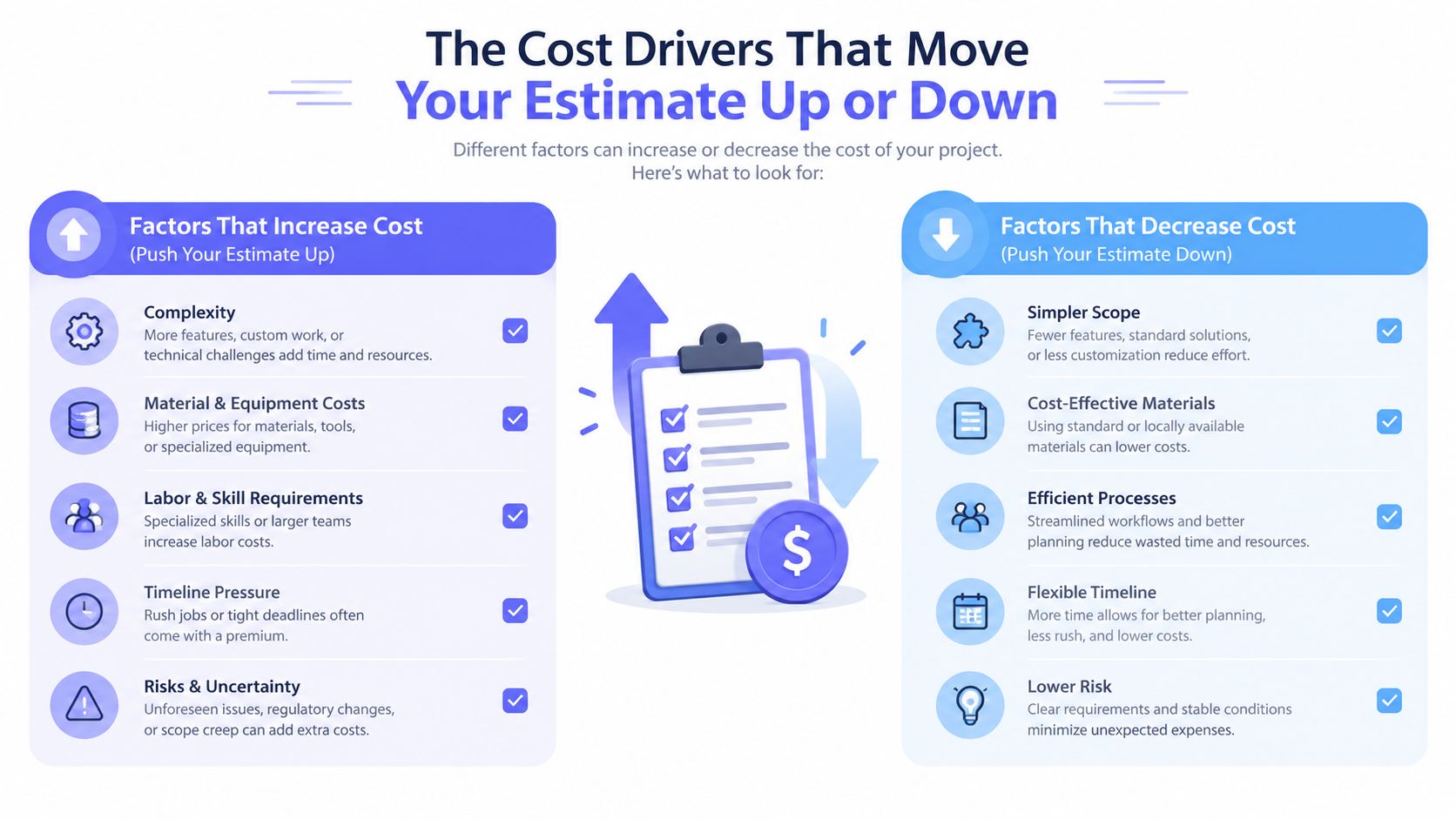
The next step is simple math. Use it to create a baseline before contractors add the less visible parts of the system.
How to Calculate Your Own Estimate From Square Footage
Start with the building footprint, then adjust for pitch. A roof replacement cost estimate should use the roof's surface area, not the number listed for the home's interior living space.
For a 2,000-square-foot single-story ranch with a 6/12 pitch, use a 1.12 pitch multiplier. That produces 2,240 square feet of roof surface. Architectural asphalt installed at roughly $450 to $650 per roofing square, where one roofing square equals 100 square feet, produces a rough installed range near $10,000 to $14,500.
| Step | Calculation | Result |
|---|---|---|
| Building footprint | 2,000 square feet | 2,000 square feet |
| Pitch adjustment | 2,000 × 1.12 | 2,240 square feet |
| Roofing squares | 2,240 ÷ 100 | 22.4 squares |
| Installed architectural asphalt | 22.4 × $450 to $650 | About $10,000 to $14,500 |
That calculation gives you a useful starting point, not a binding proposal. The Modernize roof cost calculator also explains why contractors apply pitch adjustments when estimating actual surface area.
The math won't reveal rotten decking, deteriorated flashing, inadequate ventilation, permit requirements, or difficult material access. It also won't tell you whether the contractor has priced one tear-off layer or several. For a practical way to organize scope assumptions and budget questions, use this project budget example.
Write down the area, pitch, material, tear-off assumption, and repair allowance before requesting bids. That makes it much harder for a contractor to compare a complete system against a stripped-down number.
Comparing Roofing Materials by Installed Cost
Material choice changes the estimate more dramatically than many people expect. The following comparison uses the same 2,000-square-foot roof so the difference comes from the roofing system rather than changing the project size.
The figures below are planning ranges supplied for this comparison. Broader 2026 installed-price guidance places asphalt around $4.50 to $9 per square foot, metal around $8 to $15, and tile or slate around $12 to $25 or more, as shown by Housecall Pro's roofing price guide. Local labor, tear-off, structural work, and accessories can push any system outside its planning band.
| Material | Installed Cost per Sq Ft | Total for 2,000 Sq Ft | Typical Lifespan |
|---|---|---|---|
| Three-tab asphalt | $5.50 to $8.50 | $11,000 to $17,000 | Shorter service life |
| Architectural asphalt | $7.50 to $11.50 | $15,000 to $23,000 | Moderate service life |
| Standing-seam metal | $10 to $16 | $20,000 to $32,000 | Long service life |
| Clay or concrete tile | $12 to $20 | $24,000 to $40,000 | Very long service life |
| Natural slate | $18 to $30 | $36,000 to $60,000 | Longest service life |
The table shows why “cheapest per square foot” isn't enough. Three-tab asphalt may reduce the upfront invoice, while architectural asphalt generally provides a more substantial system without moving into premium-material territory. Metal, tile, and slate require a larger initial budget but can serve for far longer when properly installed.
Weight is the silent multiplier. Tile and slate may require structural reinforcement that adds $2,000 to $8,000, depending on the building and scope. Confirm the roof structure can carry the selected material before accepting a premium-material quote.
Ask before upgrading: Is the existing structure suitable for this material, and is reinforcement included in the written price?
Use lifespan as a planning factor, not a promise. Installation quality, ventilation, weather, maintenance, and product specifications all affect actual performance.
How Regional Labor Markets Shift the Final Number
The same 2,000-square-foot architectural asphalt roof can produce very different totals across the country. The spread isn't explained by shingle cost alone. Crews price availability, safety demands, insurance overhead, local code work, travel, and storm-driven demand into the job.
| Region / Metro | Typical 2026 Range | Primary Driver | Demand Pressure |
|---|---|---|---|
| Midwest, Indianapolis or Kansas City | $13,000 to $17,000 | Lower labor overhead and moderate access | Normal seasonal demand |
| Southeast, Atlanta or Charlotte | $14,000 to $19,000 | Growing labor competition and weather exposure | Seasonal demand |
| Northeast, Boston or Hartford | $18,000 to $25,000 | Higher labor overhead and older housing stock | Tight skilled-labor supply |
| Coastal California, Los Angeles or San Diego | $22,000 to $30,000 | High operating costs and compliance overhead | Strong metro demand |
| Post-storm or tight-supply markets, Miami or New Orleans | $25,000 to $35,000 | Crew scarcity and storm recovery work | Heavy storm-season pressure |
These figures are planning ranges, not universal regional prices. A simple roof in a high-cost market may still beat a complicated roof in a lower-cost market. The point is to compare bids against local conditions, not against a national calculator.
A 2026 industry report also estimates a typical asphalt replacement at about $15,652 for an average 2,226-square-foot roof, with a normal band from $13,304 to $18,000 across 100 metros, according to The Roofing Brief's market report. That supports a practical conclusion: regional labor markets and storm exposure shape the final number alongside roof size.
Rural counties within the same state often run 15% to 25% below the nearest metro, but distance can erase that advantage if crews must travel, stage equipment, or absorb lodging costs. Ask local contractors whether their bid includes travel, permit runs, and material delivery.
If a quote differs sharply from the local cluster, don't assume the highest contractor is exploiting you or the lowest contractor is generous. Compare scope first.
Questions That Separate a Good Quote From a Vague One
A good quote lets you identify what the contractor will install, remove, repair, and guarantee. A vague quote gives you one attractive number and plenty of room for change orders.
Copy these questions into an email or take them to the walkthrough.
Scope and pricing
- Is this a binding proposal or an initial estimate? Ask which conditions allow the contractor to change the price.
- What exactly is included? Require separate descriptions for shingles, underlayment, drip edge, flashing, ventilation, fasteners, cleanup, and disposal.
- How many tear-off layers are included? Ask for the added price if the crew finds another layer.
- What is the decking replacement price? Get a unit price per sheet or defined repair method, plus a photo requirement before extra work starts.
- Are permits and inspections included? Confirm who applies, pays, and schedules them.
Crew, timing, and protection
- How many people will be on the crew, and what's the projected timeline? A small crew may need more calendar time, while a large crew may require more staging and site protection.
- How will you protect landscaping, siding, windows, and driveways? The answer should cover tarps, magnetic cleanup, material placement, and final inspection.
- What happens if weather interrupts the work? Ask how the exposed roof will be dried in and protected.
Credentials and payment
- Can you provide the license number and current insurance certificates? Verify the license with your state contractor board and confirm that coverage is current.
- What are the manufacturer and workmanship warranty terms? Get exclusions, registration requirements, transfer rules, and claim procedures in writing.
- What payment schedule do you use? Avoid a large upfront deposit that leaves you carrying the contractor's material and labor risk.
- Can you provide references from jobs completed in the last 90 days? Recent references reveal communication, cleanup, and change-order behavior better than polished marketing.
The question that catches hidden risk is the contingency question: “What allowance have you included for concealed decking or structural repairs, and what evidence must you show before billing beyond it?”
For a more complete walkthrough script, use these project-scoping questions.
Watch vague lines such as “miscellaneous,” “labor,” or “materials” without quantities. Those labels make bids look simple while hiding the assumptions that control your final invoice.
Your Next Steps and How to Get a Vetted Pro
Start with a clean baseline. Request two to three written quotes from licensed and insured local roofers, and give each contractor the same information about roof size, material preference, known leaks, access, and timing.
Then verify the people behind the bids.
- Check the license. Use your state contractor board or licensing agency. Match the legal business name and license status.
- Confirm insurance. Request current certificates, not a verbal assurance.
- Cross-check reviews. Compare Google, BBB, and trade-specific platforms. Look for recent projects and patterns in communication, cleanup, and warranty response.
- Compare the product line. A quote naming only “architectural shingles” is incomplete. Ask for the manufacturer and exact product line.
- Confirm the water-management system. Ask what type of underlayment, ice-and-water protection, flashing, drip edge, and ventilation the crew will install.
- Read the cost breakdown. Labor, materials, tear-off, disposal, permits, and allowances should appear as separate line items.
The guide to finding a good roofer is useful if you want a more structured screening process. You can also request photos of comparable work, ask who will supervise the crew, and confirm whether subcontractors will perform any part of the installation.
Storm-heavy markets create a second problem: availability. Lead times stretch after major weather events, and emergency demand gives crews less reason to negotiate. Schedule early, ideally four to eight weeks before your desired start date, so you have time to inspect bids, verify credentials, and resolve permit questions instead of accepting the first available crew.
Hand Vetted Co. is one option for people who'd rather compress the screening work. The platform connects you with one professional and checks licensing, background screening, recent 4.5-plus-star ratings, insurance, and human review criteria before making the match. You can still follow the do-it-yourself path, but the matching service handles part of the search and verification process.
Before signing, put the final scope in one document. It should identify the product, quantities, tear-off assumptions, repair rules, payment schedule, warranty terms, permit responsibility, cleanup standard, and start window.
Hand Vetted Co. connects you with one verified professional for a roofing project instead of sending your information to multiple businesses. If you want help screening licensed, insured, highly rated roofers before comparing your roof replacement cost estimate, visit Hand Vetted Co..