The best way to clean mold is a sequence, not a spray. Fix the moisture source first, remove unsalvageable porous material, scrub hard surfaces with water and detergent, and dry everything within 24 to 48 hours when possible.
Bleach-first advice keeps getting repeated because it sounds decisive. In the field, it usually misses the point. Mold comes back when water keeps feeding it, and the cleanup that works is the one that stops the leak, removes what can't be saved, and leaves the area dry and verifiable.
Table of Contents
- Best Way to Clean Mold
- Gear Up with the Right Protective Equipment
- Cleaning Methods for Every Surface Type
- When DIY Ends and Professional Remediation Begins
- Disposal and Drying Verification Steps
- Prevention Habits and Next Steps
Best Way to Clean Mold
Bleach gets too much credit. A significant bottleneck is access and moisture verification, not the cleaner sitting in the bucket. The CDC and EPA both start with the same practical order, fix the moisture source, then clean visible mold from hard, nonporous surfaces with water and detergent and dry the area right away, because moisture control is what keeps the problem from coming back. The EPA also treats unsalvageable contaminated material as waste, not a cleaning target, which is why the job starts with source control and removal, not fragrance or disinfectant.
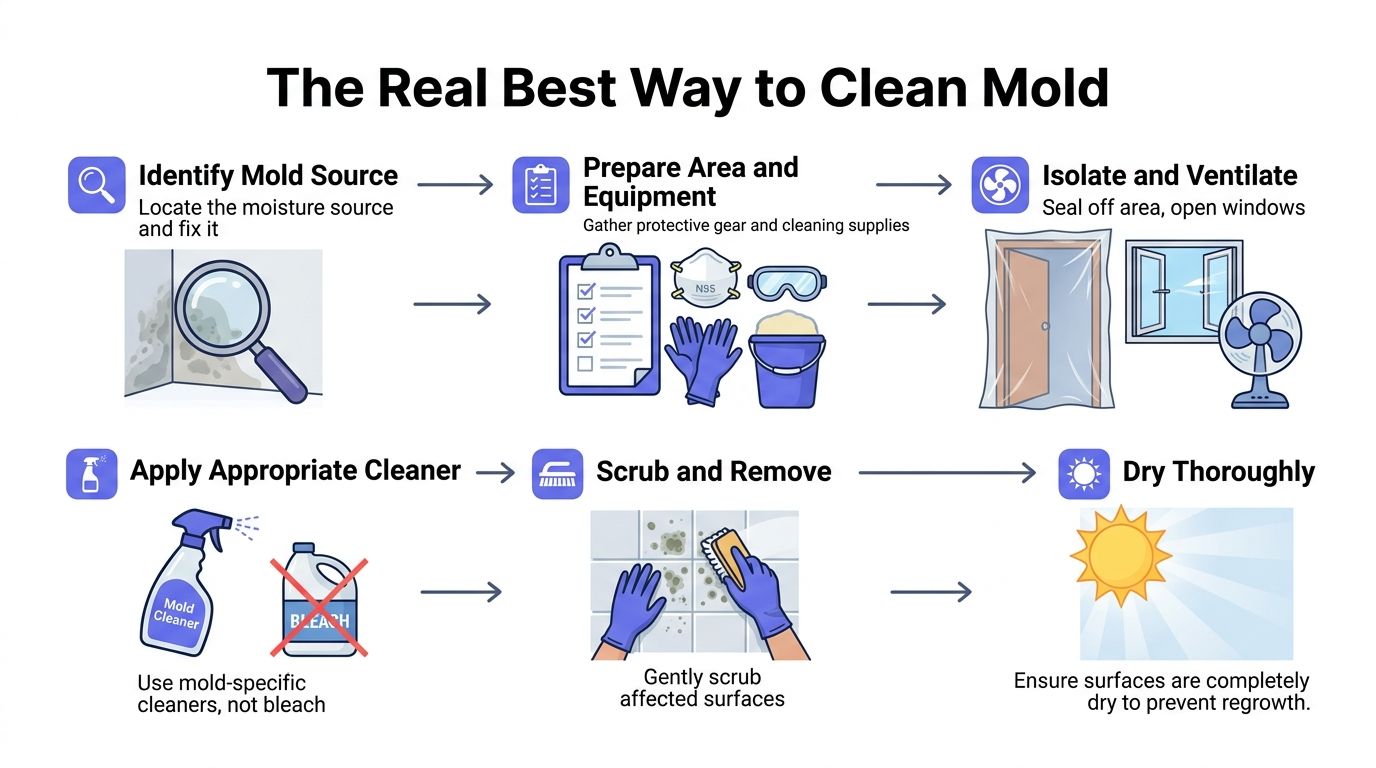
What actually works
The sequence is simple, even if the job isn't. Stop the water intrusion. Pull out materials that can't be salvaged. Scrub what's left with detergent and water. Then dry the area completely and keep humidity low so mold doesn't return. That is the evidence-based approach in the CDC cleanup guidance, and it shows up again in public-health guidance across major markets, including the U.S. and Canada. CDC mold cleanup guidance
Practical rule: If the material stayed wet long enough for mold to take hold, do not treat cleaning as a cosmetic fix. Treat it as moisture repair plus removal.
The biggest mistake is trying to “kill” mold on a surface that is still damp behind the finish. Paint, caulk, and disinfectant will not solve that. The CDC specifically says not to just paint or caulk over the problem, because covering mold traps the same moisture that started the growth in the first place.
Small jobs are still sequence jobs
For small mold cleanup on hard, non-porous surfaces, the right move is still the same sequence. Dry the area fast, scrub visible growth with detergent and water, and dry completely. The CDC's cleanup material says homes and contents should be dried within 24 to 48 hours when possible, which is the window that matters most for recurrence. CDC mold cleanup PDF
That does not mean every job is a DIY job. It means the cleaning method should match the material. Tile and glass can usually be cleaned. Ceiling tiles, carpet, and other porous materials often cannot be brought back once mold has penetrated them.
Gear Up with the Right Protective Equipment
Mold cleanup gets risky the moment you disturb it. The dust you do not see is usually what people breathe, so setup matters before you touch a wall, floor, or cabinet.
The gear I'd want on before scrubbing
A solid cleanup setup starts with a respirator, gloves, eye protection, long sleeves, and shoe covers. Long gloves that reach to the middle of the forearm help protect your skin, and moving air with fans or open windows can help when it does not spread debris into cleaner parts of the space. Those details sound basic, but they are what keep a small cleanup from turning into a wider mess. CDC and EPA cleanup guidance
- N95 Respirator: Filters airborne mold spores during disturbance.
- Rubber Gloves: Protects hands from mold and cleaning solution.
- Eye Protection: Keeps debris and splash back out of your eyes.
- Long-Sleeved Clothing: Covers skin and limits direct contact.
- Disposable Shoe Covers: Helps keep spores from traveling into clean areas.
Containment matters just as much as PPE. Plastic sheeting and tape help seal off a work zone so you are not carrying spores into bedrooms or living areas. In a small space, that may be as simple as closing doors, covering an opening, and keeping the airflow directed away from clean rooms instead of through them.
The real goal is not to make the room sterile. It is to keep the messy room from becoming every room.
A lot of people skip ventilation because they think opening a window is enough. It helps when practical, but it does not replace containment or proper cleanup. If the mold is on porous material, already spread into hidden spaces, or tied to a bigger water problem, stop and reassess before you disturb more of it.
Cleaning Methods for Every Surface Type
Different surfaces call for different moves. A cleaner that works on tile can be the wrong choice on drywall, and a brush that helps on grout can chew up softer material. The primary bottleneck is usually access and moisture control, not finding a stronger spray.
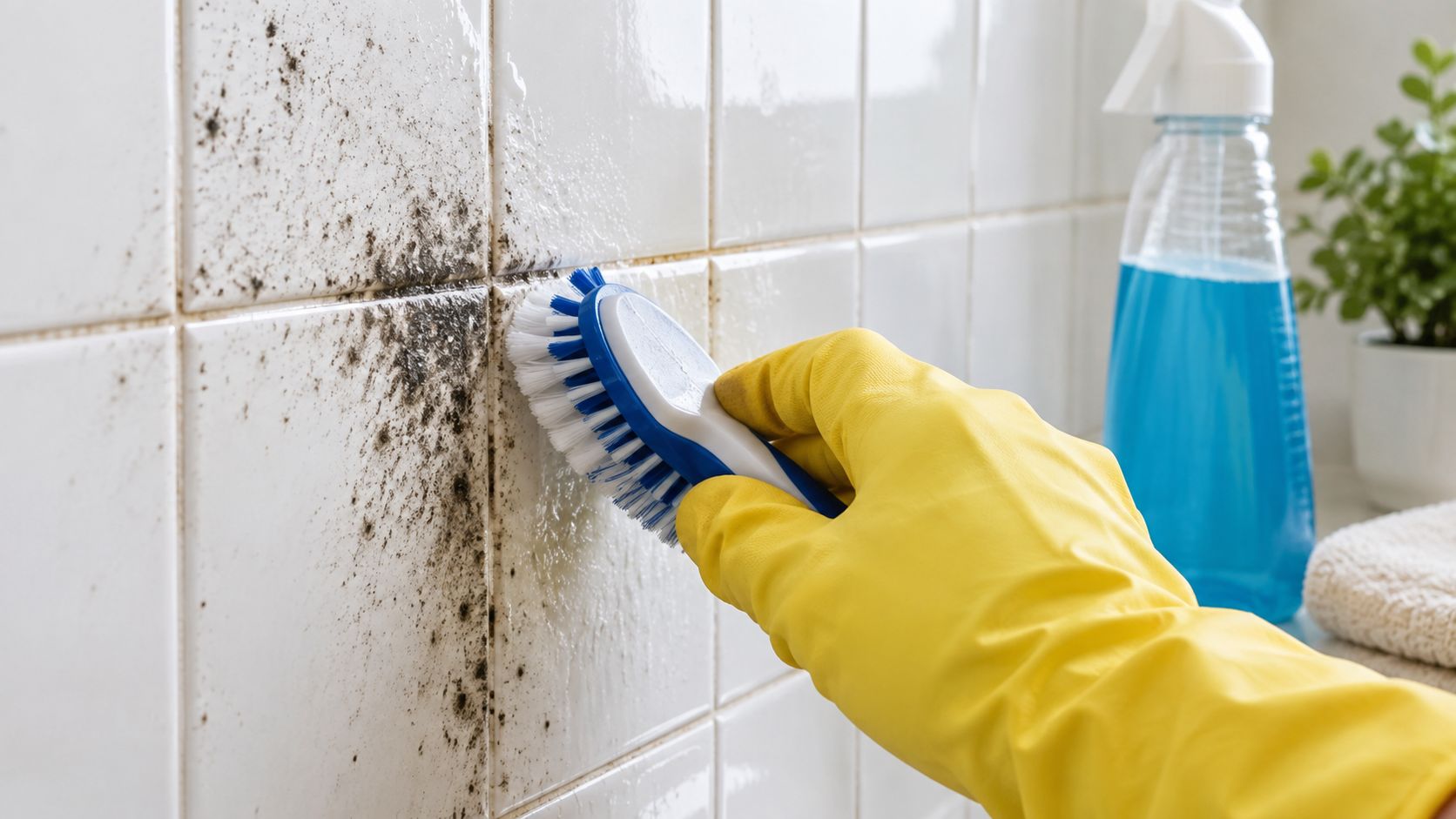
Hard, non-porous surfaces
Tile, glass, sealed metal, and similar surfaces should be cleaned with water and detergent, then dried right away. That approach works because you are removing visible mold from the surface instead of trying to rescue a material that is already compromised. Scrub until the visible growth is gone, then dry the area immediately so lingering moisture does not keep feeding regrowth.
If you are dealing with a shower track, window edge, or the back side of a cabinet, access is usually the problem, not the cleaner. A dedicated toothbrush, a narrow cloth wrapped around a small tool, or a thin cleaning head can reach those seams without blasting debris into the room. Controlled contact matters more than aggressive scrubbing.
Porous and semi-porous materials
Drywall, carpet, and other porous materials are where DIY optimism usually runs out. Porous materials like ceiling tiles and carpet may need disposal if mold has penetrated them, because surface cleaning will not reach what is embedded inside. Wood framing can sometimes be cleaned if the growth is superficial, but once the material has taken on a lot of water, removal or professional remediation is usually the safer call.
Concrete is different again. First, the moisture source has to be fixed. Then PPE goes on, and you avoid a standard vacuum because it can spread spores. A HEPA vacuum can be used for debris removal, while some remediation guidance also describes a bleach mix of one cup of household bleach per gallon of water with 15 to 20 minutes of dwell time before scrubbing and rinsing on surface mold on non-porous concrete. Concrete mold guidance
If you can't reach it cleanly, don't improvise in a way that spreads it. Better access beats harder scrubbing.
For commercial carpet or delicate materials, the cleaning question can turn into a replacement question fast. If you are deciding whether a carpet issue is still a cleaning job or already a removal job, this breakdown on average carpet cleaning price context can help frame whether you are comparing cleaning, restoration, or disposal.
When DIY Ends and Professional Remediation Begins
The job changes once mold is tied to hidden moisture, repeated return growth, or materials you cannot reach without opening the assembly. At that point, the question is less about which cleaner works and more about whether you can verify dryness and control spread before the area gets closed back up.
Read the room before you read a label
Professional remediation usually means containment, negative air pressure, HEPA vacuuming, and moisture meter verification before anything is sealed again. Those steps matter because a surface can look clean while framing, drywall, or subflooring still holds water out of sight. If that moisture stays in place, mold comes back and the repair work starts over.
A large U.S. review of mold cleanup behavior found that cleanup practices vary by sociodemographic and allergy factors, which points to a practical reality, the right response depends on the occupant as much as on the stain. Some people can handle a small surface cleanup. Others react strongly to the same exposure and should bring in help sooner. CDC-linked review on mold cleanup behavior
Clear reasons to stop DIY
- Hidden growth: If mold shows up behind walls, under flooring, or inside cavities, surface cleaning will not reach the problem.
- HVAC involvement: If mold is in ductwork or the air handler, the system can move contamination through the space.
- Recurring growth: If the same patch keeps returning, the moisture source is still active.
- Health concerns: If mold worsens allergies or breathing issues, exposure control matters more than speed.
- Large or layered damage: If porous materials are saturated, a cleanup bucket will not solve it.
A practical next check is the cost of the decision, not just the stain. If you are trying to separate a real remediation job from a small inspection or testing visit, this guide to professional mold testing cost helps frame when it makes sense to call in outside help.
When a project crosses that line, it usually needs someone with the right gear, the right containment setup, and a way to verify the area is dry before it closes up again. If you need help finding a screened restoration pro instead of sorting through a pile of sales calls, a matching service like Handvetted can connect you with one verified option.
Disposal and Drying Verification Steps
Pulling the visible mold off is only part of the job. If contaminated material sits in the space, or you close up an area before it is dry, you have set the conditions for the same problem to return as soon as the next wet spell hits.
Bag it, seal it, and get it out
The disposal step is simple in practice. Materials that cannot be salvaged should be double-bagged in 6-mil or thicker polyethylene bags and taken out as ordinary construction waste. That keeps debris from shedding through the house while you move it, and it keeps salvageable material separate from items that should go straight to disposal.
Drying is a verification step, not a guess
Drying needs proof, not a feeling. After the surface is dry to the touch, the remaining residue still needs to be removed, since dead mold fragments can still cause problems for sensitive people. Guidance reviews of state cleanup practices note that HEPA vacuuming is often skipped, which leaves fine debris behind even after the obvious growth is gone. State mold cleanup guidance review
A moisture meter is worth using before you reinstall trim, patch drywall, or close a wall. Touch tells you the surface feels dry. The meter tells you whether the material underneath is still holding water. If either one points to lingering moisture, the job is not finished.
Practical rule: Do not rebuild until the material is dry, not just the room.
Often, decent DIY cleanup efforts fall short. People clean what they can reach, then seal the space before the moisture has cleared. The wall gets closed up, trapped dampness stays in place, and the growth cycle starts again. If you are planning a larger restoration, this water damage restoration sequence is a useful reference for the order of work.
Prevention Habits and Next Steps
Once the mold is gone, the habit that keeps it gone is moisture control. Clean rooms can still grow mold if condensation, leaks, or poor ventilation keep feeding damp spots. The cleaner matters less than whether you can keep water out, dry materials fully, and verify that hidden areas are no longer damp.
What to keep doing
- Check leak-prone areas: Look under sinks, around windows, and near appliances where water can hide.
- Dry water fast: If something gets wet, do not leave it sitting for days.
- Keep air moving: Use fans and open windows when practical, especially in damp rooms.
- Watch recurring corners: Shower edges, window tracks, and cabinet backs deserve regular checks.
- Act on smell and staining: Musty odor or new discoloration usually means water is still getting in.
The same principle shows up in public guidance from the CDC and EPA, moisture control is the foundation. If you fix the leak, dry the area, and keep humidity down, you cut off the conditions mold needs to return. The practical lesson is simple, prevention is a moisture problem before it is a cleaning problem. CDC mold cleanup guidance
If the job has crossed into professional territory, Hand Vetted Co. can connect you with a verified restoration professional when needed. That fits mold and water-damage work well because the first call should be to someone who can find the moisture source, check whether materials are dry, and tell you whether the space is ready for repairs.
If you are dealing with recurring mold, a hidden leak, or a space that needs more than surface scrubbing, visit Hand Vetted Co. and request a verified restoration match. You will get a licensed professional who is briefed before they call, which makes it easier to move from guesswork to fixing the actual moisture problem.