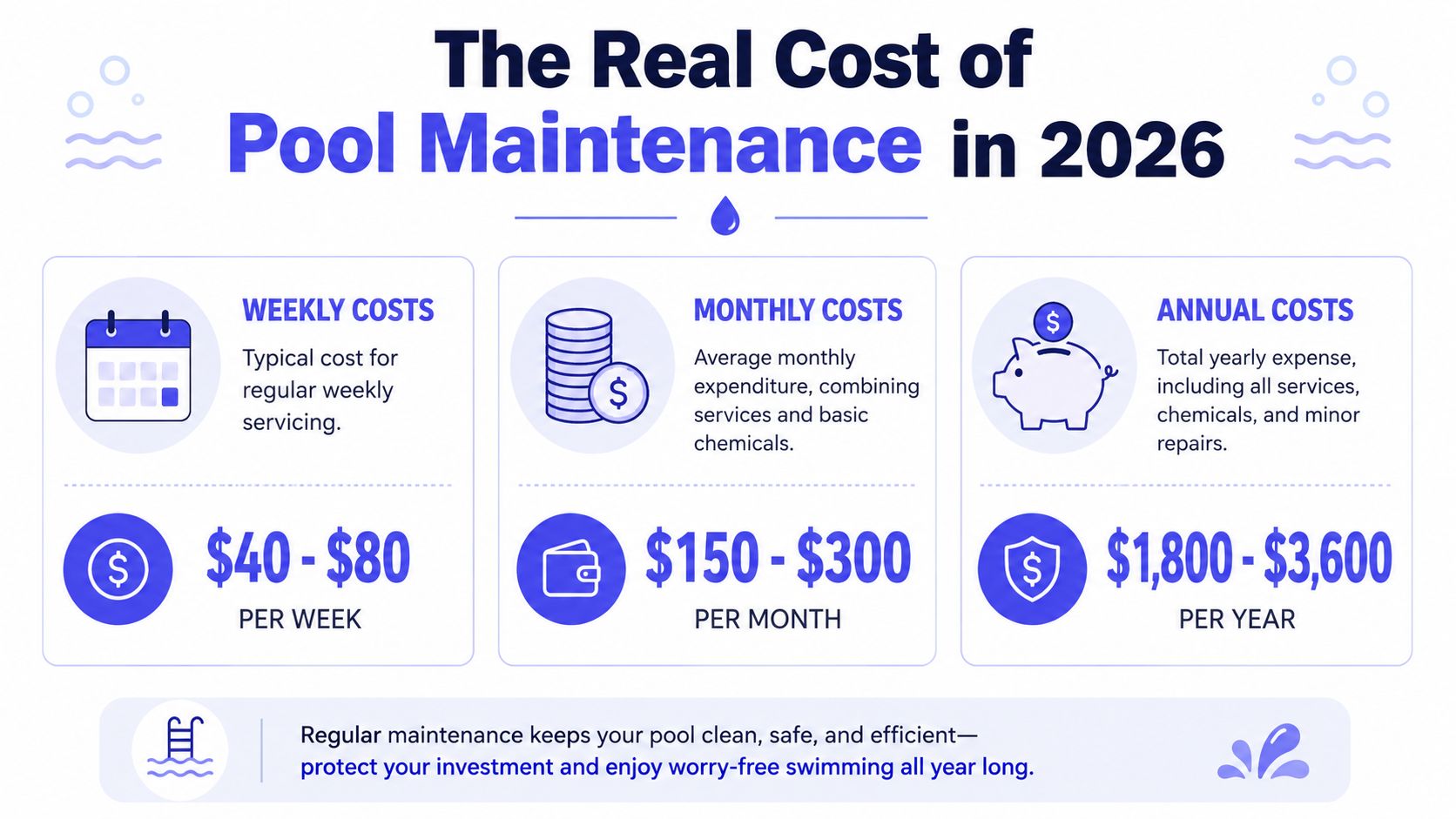
Pool service usually runs $150 to $300 per month, and individuals with professional weekly care land around $2,000 to $3,000 per year all-in. That's the number many seek, but it's also the figure that misleads, because your actual bill swings hard based on pool type, climate, equipment, and whether you're really doing maintenance or just postponing repairs.
If you're staring at your pool and wondering whether it's a manageable luxury or a quiet money pit, that's the right question. I've seen people budget for skimming and chlorine, then get blindsided by filter neglect, electric bills, seasonal service, or a resurfacing job they should've planned for years earlier. The average cost of pool maintenance matters, but the specific answer is always tied to how you own the pool.
Table of Contents
- The Real Cost of Pool Maintenance in 2026
- What Actually Drives Your Pool Maintenance Bill
- Professional Service vs DIY A Cost Comparison
- Beyond Weekly Cleaning Hidden and Long-Term Costs
- How to Create an Accurate Pool Maintenance Budget
- Hiring a Reliable Pool Service Professional
The Real Cost of Pool Maintenance in 2026
You buy a pool expecting a steady monthly bill. Then summer hits, the pump runs longer than you thought, the water starts drifting out of balance after a stretch of heat, and the “weekly service” quote suddenly does not cover half the work you assumed it did.
That is why a single national average is useful only as a rough reference point. Pool ownership costs break into different budget lanes depending on how you run the pool, how much work you do yourself, and how hard your equipment works in your local utility market. In other words, two owners with pools the same size can end up with very different annual totals.
Three budget scenarios that are closer to real life
A smarter way to budget is to start with the kind of owner you are.
Hands-on DIY owner: You handle testing, cleaning, and routine chemical care yourself. Your cash costs stay lower, but your time commitment is real, and one bad month of neglect can erase the savings fast.
Hybrid owner: You do the simple weekly work and call in a pro for openings, closings, filter service, or problem-solving. For a lot of pool owners, this is the best value. You keep control of the routine costs without being the person diagnosing every equipment issue.
Full-service owner: You pay for recurring visits and expect the pool to stay swim-ready with minimal effort from you. This is the easiest path, but it is also where quote confusion starts. A low monthly service price can look great until you get separate charges for chemicals, filter cleanings, seasonal visits, and equipment calls.
What basic recurring service usually covers
Most standard service plans include the routine work that keeps water from getting ugly:
- Water testing and chemical balancing
- Surface skimming and debris removal
- Brushing and vacuuming
- Basic filter and circulation checks
That list sounds complete. It usually is not.
What usually shows up as an extra charge
The gaps matter more than the base plan. Ask about these items before you compare prices:
- Deep filter cleaning
- Pool opening and closing
- Shock treatments outside the normal visit
- Equipment diagnostics and service calls
- Acid washing or stain treatment
- Repairs for pumps, heaters, salt systems, or automation
My rule is simple. If a service quote feels cheap, assume something meaningful is missing until the company proves otherwise.
Why averages miss the point
Pool maintenance costs are not shaped by cleaning alone. They are shaped by ownership style and by hidden operating pressures, especially utilities and equipment runtime. The regional electrification paradox matters here too. In some markets, newer electric pool equipment lowers fuel-related costs but pushes power use and seasonal operating patterns into a different pricing problem. That can raise total ownership cost even when the equipment looks more efficient on paper.
Budget from a scenario, not from a headline average. Start with the kind of owner you are, then leave room for the extras that show up in the first year and keep showing up after that.
What Actually Drives Your Pool Maintenance Bill
You can have two neighbors with pools that look almost identical from the fence and end up with very different annual costs. One runs a modest, predictable setup. The other keeps feeding a pool that burns through power, chemicals, and parts. That gap usually starts with design choices and local conditions, not with the weekly cleaning bill.
Pool type changes the math fast
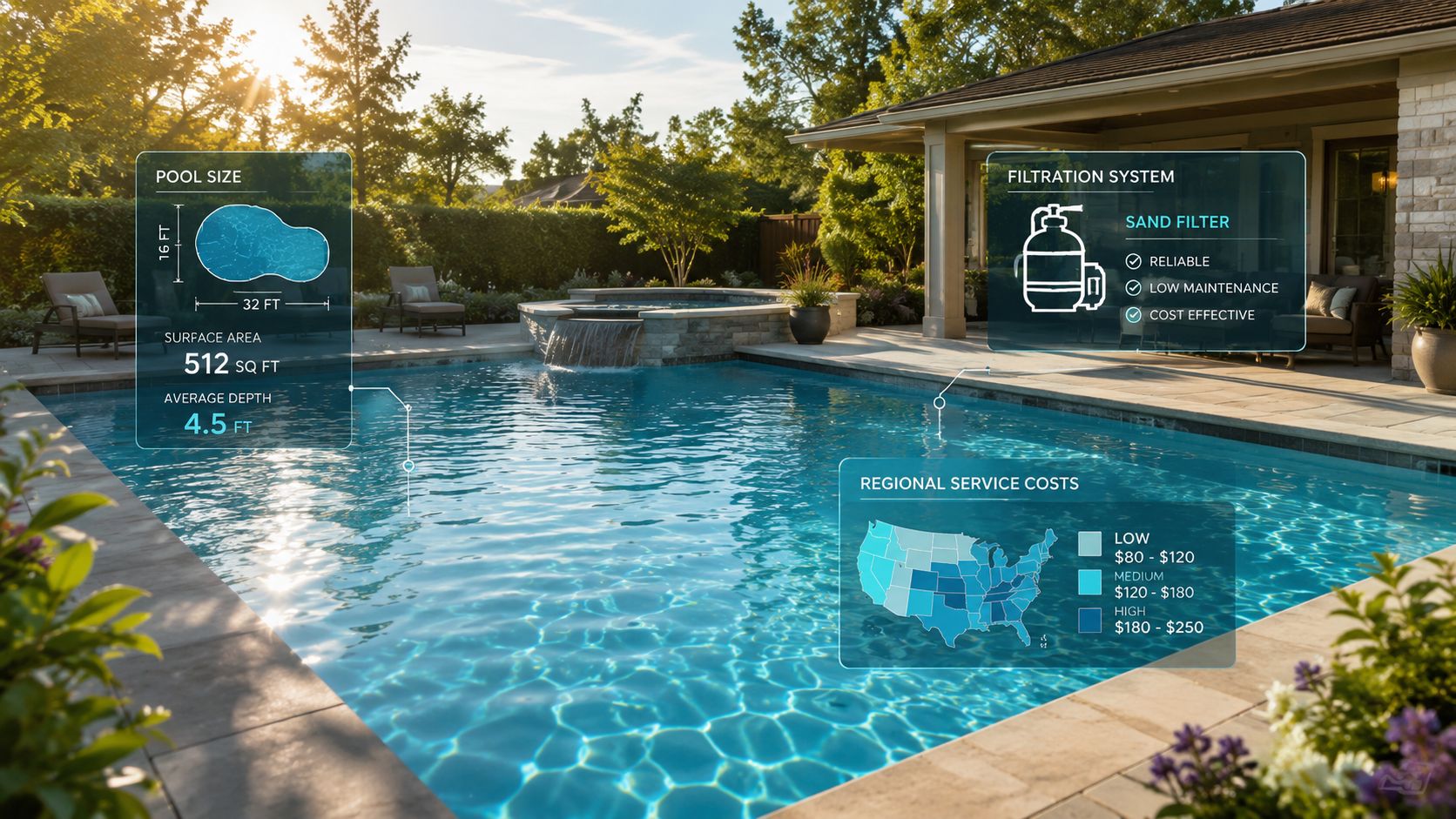
Start with the shell and surface. Concrete, vinyl, and fiberglass do not age the same way, do not clean the same way, and do not create the same long-term expenses.
Concrete is usually the high-maintenance choice. It is tougher on chemistry, more prone to surface-related upkeep, and expensive when resurfacing day arrives. Vinyl often keeps routine care simpler, but liner replacement is part of the deal and it is not a small line item. Fiberglass is often easier to live with day to day, especially on brushing and surface care, but that does not make it cheap in every market.
If you own an inground pool, budget by pool type, not by the broad label “inground.”
Climate and season length change your baseline
Location shifts your costs before you buy a single chemical bucket. Heat raises evaporation. Rain dilutes water balance. Wind drops in more debris. Long swim seasons force longer pump runtimes, more testing, and more opportunities for algae to get established.
A pool in a year-round or near year-round market will not behave like one that gets covered for months. That is the mistake I see owners make all the time. They grab a national average, ignore their local weather, and then wonder why their utility bill and chemical spend keep overshooting the plan.
Equipment decides whether your pool is cheap to run or annoying to own
This is the cost driver owners underestimate. The equipment pad is where the regional electrification paradox shows up in real life.
A newer electric setup can look efficient on paper and still raise ownership cost in the wrong rate environment. If your region has high electricity prices, long cooling seasons, or peak-rate pricing, a variable-speed pump, electric heater, salt system, and automation package can shift your bill upward even while each component looks more efficient than the older alternative. In lower-rate markets, that same setup can save money and reduce hassle.
River Pools and Spas notes that pool type and equipment choices can create a wide spread in annual electricity costs for inground pools, especially between vinyl and concrete systems with different pumping and heating demands. That tracks with owner experience. Utility costs are not just about how often you swim. They are about what your equipment needs to do to keep the water usable.
The cost drivers I would rank first
If you want a realistic budget, put the big drivers in the right order:
- Equipment efficiency and runtime. Ugly utility bills often stem from these.
- Climate and season length. Longer operation means more power, more chemicals, and more wear.
- Pool surface and design. Surface material affects cleaning, repair timing, and long-term upkeep.
- Water features and heating habits. Spillovers, spas, and warm water all cost more than owners expect.
- Service quality. Good service catches small problems before they turn into equipment repairs.
Start your budget with power use and equipment age. Chemicals matter, but they are rarely the reason a pool becomes expensive to own.
If your pool costs feel out of line, inspect the equipment pad first, then look at your local utility rates and runtime settings. That is where the hidden money usually goes.
Professional Service vs DIY A Cost Comparison
You test the water on Sunday, skim a few leaves, and assume you saved money. Then the filter pressure creeps up, the pump runs harder than it should, and a small chemistry miss turns into cloudy water by Thursday. That is how DIY gets expensive.
The comparison is not just monthly service fees versus a bucket of chemicals. It is labor, consistency, equipment awareness, and how likely you are to stay on schedule in July when it is hot and you are busy.
A practical benchmark from HomeAdvisor's pool maintenance cost guide puts routine pool maintenance in a broad range that often lands around roughly $80 to $150 per month for owners handling basic upkeep, while professional service commonly runs higher depending on visit frequency, testing, chemicals, and whether the company is only cleaning or also monitoring equipment. That spread is why a single national average is not very useful.
What you are really paying for
Professional service buys time and consistency first. A good tech also notices the stuff owners miss, rising filter pressure, a pump basket that is pulling air, a salt cell starting to scale up, or a cleaner that is not covering the full floor.
DIY buys lower cash outlay only if you treat it like a routine, not a weekend chore you do when the water looks off.
If you want the short version, use this rule. DIY works for disciplined owners with simple pools and reliable schedules. Professional service is the better deal for busy households, larger pools, pools with heaters or spas, and anyone who does not want to learn water chemistry the hard way.
DIY vs Professional Pool Maintenance Cost and Time
| Factor | DIY Maintenance | Professional Service |
|---|---|---|
| Typical monthly cost | Lower out-of-pocket cost for test kits, chemicals, and cleaning supplies | Higher monthly spend for scheduled visits, testing, cleaning, and service labor |
| Typical annual cost | Usually cheaper if you stay consistent and avoid cleanup mistakes | Usually higher, but often more predictable for budgeting |
| Time required | Several hours per week during the season, plus time learning the system | Minimal owner time beyond approval, access, and occasional check-ins |
| Skill needed | You need to handle testing, dosing, cleaning, and basic equipment troubleshooting | The company handles the technical work, but you still need to confirm what is included |
| Risk of missed maintenance | Higher if you travel, get busy, or only react when water looks bad | Lower with a competent company on a fixed schedule |
Three realistic budget scenarios
This is the part pool owners should use for planning.
Budget-first owner. You handle testing, brushing, skimming, and basket cleaning yourself. You call a pro only for openings, closings, or repairs. This is the lowest-cash approach, and it works best on a basic pool with no spa, no heavy leaf load, and no ignored equipment issues.
Hybrid owner. You do the simple weekly work but pay for periodic pro checkups or seasonal chemistry resets. I like this option for owners who want to control costs without becoming their own full-time pool tech. It also makes sense if you are already comparing broader ownership costs, like the installed cost of an above-ground pool with a deck, and want a realistic middle-ground maintenance plan.
Hands-off owner. You pay for full service because your schedule is packed or the pool setup is more demanding. If you have a heater, attached spa, automation, water features, or older equipment, this is often the smartest choice. The bill is higher, but surprise cleanup costs are less likely.
Where DIY owners lose money
The expensive mistakes are rarely dramatic at first. They are the slow, boring ones.
Skipped filter cleaning, inconsistent testing, poor chlorine management, and delayed response to pressure changes all raise costs over time. You save on service calls, then give the money back through algae cleanup, extra chemicals, higher power use, or equipment strain.
That is also where regional costs distort the math. In areas hit by the regional electrification paradox, a more electric-heavy setup can push utility costs up enough that a neglected DIY pool becomes far more expensive than the owner expected. In a lower-rate market, the same owner might get away with more mistakes and still feel like DIY is winning.
My recommendation is simple. Choose DIY only if you will test on schedule, clean the filter on schedule, and learn your equipment pad. If you know you will fall behind, hire a pro and budget for it upfront. That is cheaper than pretending you are a DIY pool owner when you are really doing part-time neglect.
Beyond Weekly Cleaning Hidden and Long-Term Costs
You buy the pool, set up weekly care, and the budget looks manageable. Then year three or year seven shows up with a liner, surface, pump, or opening bill you never treated like part of the cost. That is how pool ownership gets expensive.
The big repairs people forget to budget for
The expensive items are predictable. They just do not arrive every month.
Expect a vinyl liner every 7 to 10 years for $3,000 to $6,000 or a concrete pool resurfacing job every 10 to 15 years for $5,000 to $10,000. Smaller repairs also keep showing up over time. Onshore Mortgage's guide to pool maintenance costs notes that minor annual repairs typically add $200 to $600 per year.
That should change how you budget. A pool is not a weekly service expense. It is a weekly service expense plus a replacement schedule.
If you are comparing ownership paths, including the long-term tradeoffs in this guide to the cost of an above-ground pool with deck installed, compare ten-year cost, not just install price. That is the only comparison that means anything.
The smaller line items that quietly drain the budget
The sneaky costs are not mysterious. Owners just push them into the "deal with it later" bucket.
HomeGuide's pool maintenance pricing overview shows that pool opening or closing services often run $150 to $300 each, and acid washing can cost $250 to $600. Those are standard charges, not rare penalties for doing something wrong.
Repair bills also come in uneven waves. Angi's pool repair cost guide shows a wide range for pool repairs because the category covers everything from small fixes to major equipment problems. That is exactly why I tell owners to keep a repair reserve instead of pretending every year will be a cheap year.
One more cost gets missed all the time. Electricity.
A pool with a variable-speed pump, heater, automation, cleaner, and spa spillover can look efficient on paper and still cost more to run in markets where electric rates are high. That regional electrification paradox matters more over ten years than one low opening quote or one cheap month of chemicals.
Budget for the ownership cycle, not last week's cleaning bill.
My advice is simple. Set aside money in three buckets: routine care, seasonal or periodic services, and equipment or surface reserves. If you only budget for the first bucket, the pool will eventually blow up your numbers.
How to Create an Accurate Pool Maintenance Budget
A pool budget should cover routine care, utilities, and the money you need to set aside for bigger repairs later. The total annual cost of ownership, including maintenance, utilities, and long-term repair reserves, typically falls between $3,000 and $6,000, and heated pools or pools with older equipment can rise to $7,000 to $10,000+, according to Swimply's 2026 pool maintenance cost ranges.
That's the number I'd use for planning. Not for panic. For planning.
A simple budget framework that works
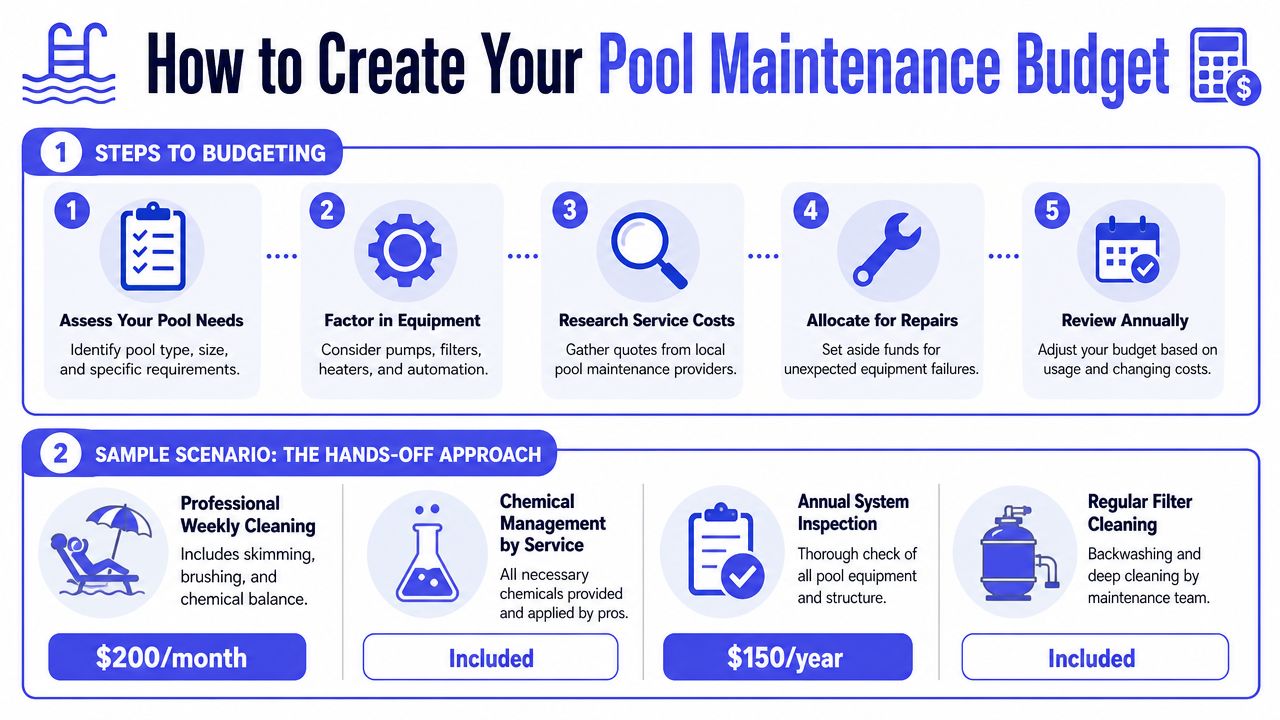
I like to build pool budgets in two buckets: routine monthly cost and long-term reserve.
For a hands-off owner, plan around a recurring professional service bill, utility costs, and a repair reserve. You're paying more each month, but you're buying reliability and freeing up your weekends. That's usually the right call if you travel often, rent the property, or know you won't stay on top of maintenance.
For a weekend DIYer, budget lower for monthly supplies but keep a separate reserve for pro-only tasks. DIY works best when you're disciplined enough to do the repetitive work and humble enough to call for help before a system problem grows teeth.
A practical budgeting checklist:
- Start with your service model. Decide whether you're paying monthly for pro care or handling routine work yourself.
- Add utility reality. Pumps and heaters can make a modest pool feel expensive fast.
- Create a repair reserve. If you don't reserve money, every repair feels like a surprise.
- Review once a year. Equipment ages. Use changes. Utility costs shift.
If you want a broader planning tool for the house itself, not just the pool, a home renovation cost calculator can help you map where pool costs sit next to bigger property expenses.
Smart ways to lower your pool costs
Not every savings tip is worth your time. These are.
- Fix the equipment side first. If the pump runtime or efficiency is poor, no chemical coupon is going to save your budget.
- Keep water balanced consistently. Small corrections beat expensive recovery work.
- Don't skip filter care. Delayed filter maintenance often turns into pump or circulation problems.
- Buy service intentionally. A slightly more expensive company that includes real system care can cost less over time than a bargain provider that only skims and leaves.
Your cheapest month and your cheapest year are usually not the same thing.
Hiring a Reliable Pool Service Professional
If you're going to hire help, hire carefully. Pool service is one of those trades where a bad provider can keep your water looking acceptable while subtly costing you money.
What to verify before you hire anyone
I'd check these items before I let anyone touch the equipment:
- Licensing where required. You want someone operating legally and within local rules.
- Liability insurance. If something goes wrong on your property, this matters immediately.
- Recent reviews with real volume. A high rating means more when it's backed by enough recent customer feedback.
- Clear scope of work. You need to know whether filter cleaning, equipment inspection, and seasonal service are included.
If you're already screening service businesses for bigger home projects, the same logic applies to pool care. Verification shouldn't stop at a business card. This overview of a contractor background check is a good reminder of what people should confirm before hiring anyone around their property.
How to compare quotes without getting fooled
Don't compare monthly prices alone. Compare what each company does.
Ask direct questions:
- Do you deep-clean filters, or is that billed separately?
- Do you inspect pumps, heaters, and valves during routine visits?
- Who supplies chemicals?
- What seasonal services are extra?
- How do you handle repairs and approvals?
A reliable pro won't dance around those questions. They'll answer them plainly and in writing.
My opinion is simple. If your pool is expensive to build, it's expensive enough to protect properly. Cheap service is only a deal when the work is complete and competent. Otherwise, you're just paying less for deferred problems.
If you'd rather skip the vetting process yourself, Hand Vetted Co. matches you with one licensed, background-checked, 4.5+ star rated professional instead of blasting your request to a bunch of businesses. You can also review How It Works, see Our Standards, or check the FAQ before you book.