A professional toilet replacement in 2026 usually lands between $635 and $1,151 per toilet. The catch is that this average often falls apart once the old toilet comes off and someone finds a bad flange, a leaking valve, or a soft subfloor.
That's the situation a lot of people are in right now. You thought you were buying a toilet and paying for a basic install. Then you start getting quotes, and suddenly one plumber says it's a simple swap while another warns there could be repair work underneath. Both can be right.
Most toilet jobs are sold like they're routine. Some are. But older bathrooms have a habit of hiding problems until the toilet is lifted, and that's where budgets get wrecked. If you want the actual new toilet cost, you need to separate the fixture price, the installation price, and the repair risk that most guides barely mention.
Table of Contents
- The Real New Toilet Cost in 2026
- Toilet Prices Explained by Type
- Decoding Professional Installation Costs
- The Hidden Costs That Inflate Your Bill
- DIY vs Professional Installation
- Budgeting for Your New Toilet
- How to Get an Accurate Quote and Hire a Pro
- Frequently Asked Questions About Toilet Replacement
The Real New Toilet Cost in 2026
The clean answer is this: as of May 2026, the estimated national average cost to install a toilet starts at $635 and can reach up to $1,151 per toilet, and most homeowners spend about $375 on installation alone, separate from the fixture price, according to Synchrony's toilet replacement cost guide.
That number is useful. It's also incomplete if you treat it like a guaranteed project price.
A basic replacement is one of the simpler plumbing jobs in a house. If the rough-in is standard, the shutoff works, the flange is solid, and the floor under the toilet is dry and stable, the job stays boring. Boring is good. Boring is cheap.
The problem is that toilets sit on one of the most failure-prone spots in a bathroom. Slow leaks at the wax ring, years of cleaning chemicals, rusty bolts, and old shutoff valves all tend to show up at the same time.
What the average number gets wrong
The average new toilet cost gets people in trouble because it blends easy jobs with ugly ones. If you've got an older bathroom, a quote that only covers a remove-and-reset install is just a starting point.
Practical rule: If your home is older and nobody has pulled that toilet in years, assume the first quote is for the visible work, not the full job.
That doesn't mean you should panic or expect a disaster. It means you should budget like an adult and not like a product page.
My recommendation
Treat toilet replacement as a fixture purchase plus labor plus repair risk. If a plumber can't explain those three buckets clearly, keep shopping. You want someone who prices the obvious part of the job and talks openly about what could be hiding underneath.
Toilet Prices Explained by Type
The fixture itself has one of the widest price spreads in the bathroom. The price for a new residential toilet unit ranges from $75 for a basic model to over $8,000 for a luxury smart toilet, with the average cost being around $500, and high-efficiency toilets typically costing between $300 and $700, based on HomeAdvisor's toilet price breakdown.
That spread isn't random. You're paying for design, flushing system, efficiency, and features that may or may not matter to you.
What most people actually buy
Homeowners don't need a spaceship toilet. They need a dependable unit that fits the bathroom, flushes well, and doesn't become a maintenance headache.
If you're buying for a hallway bath, guest bath, rental, or everyday primary bathroom, I'd stay focused on practical categories:
- Basic model: Cheapest upfront. Fine for a strict budget, but don't expect much refinement.
- Standard two-piece toilet: Usually the value pick. Easy to source, easy to service, and usually the smartest spend.
- High-efficiency toilet: Worth a serious look if you care about water savings and long-term utility costs.
- Pressure-assisted model: Good if flushing performance is the top priority, but the added mechanical complexity isn't for everyone.
- Smart toilet: Nice if you really want heated seats, automatic lids, and bidet functions. Not a value buy for everyone.
Buy the toilet for the bathroom's job, not for the showroom gimmicks.
2026 Toilet Fixture Cost by Type
| Toilet Type | Average Price Range (Fixture Only) |
|---|---|
| Basic model | $75 and up |
| Standard toilet | Around $500 for what most people spend |
| High-efficiency toilet | $300 to $700 |
| Luxury smart toilet | Over $3,000 and up to over $8,000 |
A few practical notes matter here. Two-piece toilets are usually easier to replace and easier to service later. One-piece toilets look cleaner and are easier to wipe down, but they're heavier and often cost more. Bowl shape and seat height also affect price, though the bigger cost jump usually comes from efficiency upgrades and smart features.
If you want my blunt opinion, the sweet spot is often a midrange high-efficiency toilet. It avoids the junk tier, skips the luxury nonsense, and gives you a product that feels current without blowing up the budget.
Decoding Professional Installation Costs
Labor is where quotes start to drift. For straightforward toilet replacements where the subfloor and flange are intact, labor costs generally range from $100 to $150. If the previous toilet leaked or the flange is broken, labor can increase by $100 to $400, according to ConsumerAffairs' toilet replacement labor guide.
That's why one plumber can quote a simple install and another gives you a wider range. The second one may just be more honest.
What a standard install usually includes
A basic professional installation usually covers the predictable stuff:
- Removing the old toilet: Disconnect water, pull the unit, and clear the area.
- Setting the new toilet: Install with a fresh seal and secure it properly.
- Reconnecting the water supply: Hook up the line and test for leaks.
- Checking operation: Flush test, tank fill check, and basic stability check.
That's the standard lane. If everything is intact, the job should stay in that lane.
What drives labor higher
Toilet installs stop being simple when the old unit comes off and the plumber finds damage, corrosion, or movement where there shouldn't be any. A flange that's cracked, a toilet that had been rocking, or signs of old seepage at the base can all turn a swap into a repair call.
Here's what I tell people to look for before they even ask for a quote:
- Check for movement. If the toilet rocks, the seal may already be compromised.
- Look for staining at the base. That can point to old leaks.
- Test the shutoff valve. If it won't close cleanly, don't assume it survives the job.
- Notice floor softness. A soft floor near the toilet usually means trouble, not coincidence.
A quote that only says “install customer-supplied toilet” is too thin. You want the plumber to state what's included, what's excluded, and what conditions would trigger added work.
The Hidden Costs That Inflate Your Bill
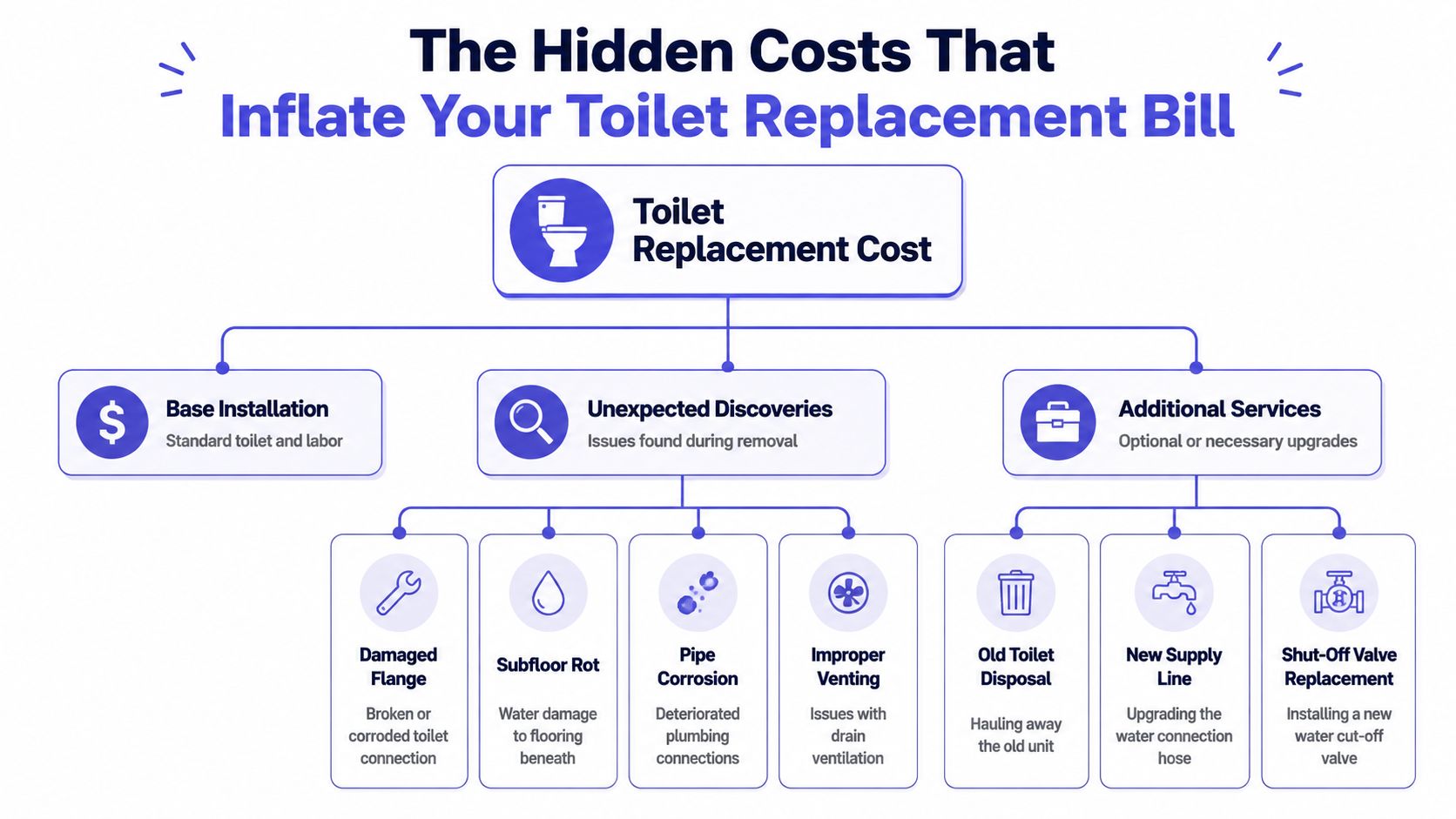
Most toilet replacement articles miss the part that hurts people: the old plumbing around the toilet is often the expensive part, not the new toilet.
Data from 2026 shows 20 to 30% of standard toilet swaps in homes over 25 years old require unexpected fixes like flange, valve, or subfloor repairs. Those repairs add an average of $200 to $600 to the bill, and replacing a toilet flange alone adds $145 to $300, based on Horow's 2026 toilet replacement cost guide.
That's the number people should pay attention to.
The older-home problem nobody budgets for
If your house is over 25 years old and that toilet has been sitting there forever, don't budget like you're swapping a lamp. Budget like someone may uncover neglected plumbing and water damage the second the base comes loose.
A lot of bathrooms look fine from the outside. That means nothing. I've seen clean-looking toilets lifted off floors that were soft underneath, with corroded hardware and a flange hanging on by luck.
If you're already planning a broader bathroom update, it's smart to review a full bathroom remodel checklist before you start. Toilet work has a way of exposing bigger bathroom issues.
The surprise items that change the job
These are the usual offenders:
- Damaged flange: This is the ring that anchors the toilet to the drain. If it's broken or corroded, the toilet won't seal properly.
- Bad shutoff valve: Old valves seize, drip, or fail when touched after years of sitting.
- Subfloor rot: A slow leak around the wax ring can damage the floor beneath the toilet.
- Supply line replacement: Sometimes the old connection shouldn't be reused even if it technically still works.
Moving the toilet is a different animal entirely. If you're changing location instead of replacing in place, Angi's toilet installation cost guide says moving a toilet costs about $3,000 on average, and flange replacement adds $145 to $300.
The fastest way to waste money on toilet replacement is pretending the floor, flange, and valve don't matter.
A cheap toilet installed over bad plumbing is not a bargain. It's just a delayed repair bill.
DIY vs Professional Installation
Yes, you can install a toilet yourself. No, I don't think it's a task for everyone.
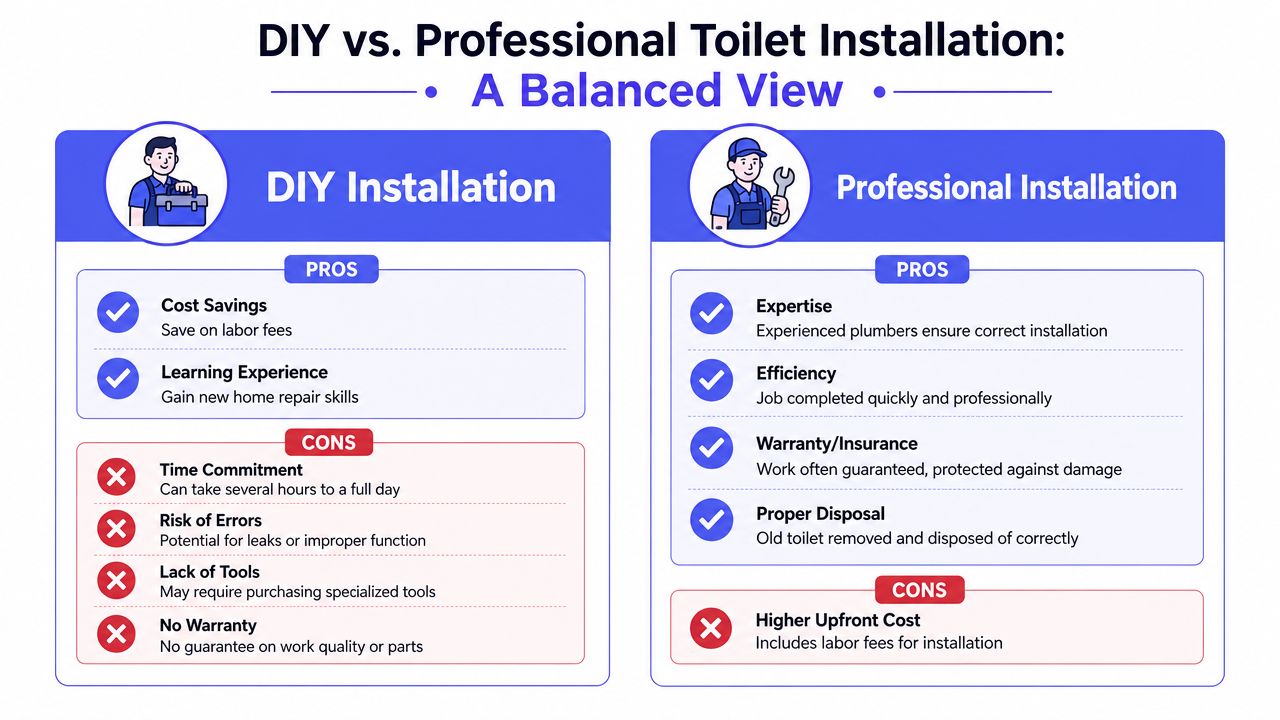
The labor savings are real. If the job is perfectly straightforward, you avoid paying for professional installation. That sounds attractive right up until you crack the base, pinch the seal, miss a leak, or fail to spot the floor damage under the old toilet.
Where DIY can save money
DIY makes some sense if all of these are true:
- You've done plumbing repairs before: Not watched videos. Done them.
- The existing toilet has no leak history: No wobble, no staining, no soft floor.
- The shutoff valve works properly: You can isolate the fixture without drama.
- You're replacing like for like: Same location, standard setup, no layout changes.
If that's your situation, fine. It might be a reasonable Saturday project.
Why I still recommend hiring a pro
Toilets are simple until they aren't. The risk is not the bolt tightening. The risk is the hidden failure you don't catch.
A professional knows what a failing flange looks like. A professional notices when the toilet was shimmed because the floor is uneven. A professional can tell the difference between a minor issue and the start of a bigger bathroom problem.
My take: Saving a little on labor isn't worth it if one slow leak can damage the floor and force a bigger repair later.
There's also the simple fact that toilets are heavy, awkward, and easy to crack. Porcelain doesn't forgive mistakes. One bad move and your “money-saving” install turns into another trip to buy another fixture.
If you're unusually handy and the bathroom is in great shape, DIY can work. For everyone else, professional installation is cheap insurance.
Budgeting for Your New Toilet
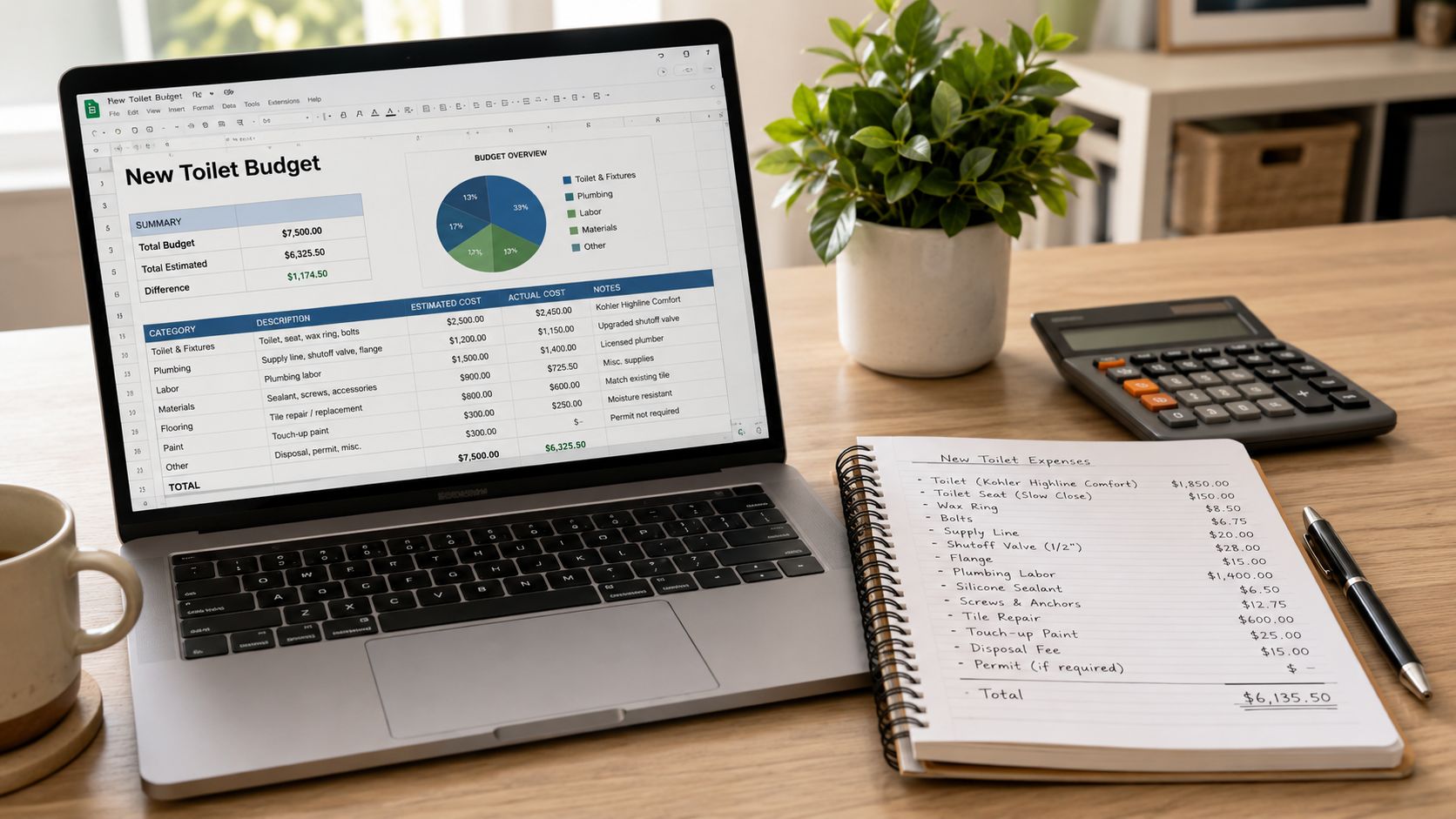
A smart budget for a new toilet cost isn't one big number. It's a stack of smaller numbers with room for reality.
Start with the fixture. Add installation. Then leave room for the ugly stuff you hope won't happen. If you skip that third part, you're not budgeting. You're guessing.
Build your budget in the right order
Use this order because it keeps you honest:
- Pick the toilet first. The fixture can range from $75 to over $8,000, though a common price point is around $500, as noted earlier from HomeAdvisor.
- Add standard installation. Don't assume the lowest labor number applies to your bathroom.
- Create a repair cushion. Older bathrooms deserve breathing room in the budget because hidden work is common.
- Decide what's worth upgrading now. A shaky shutoff valve or sketchy supply line is cheaper to deal with during the install than after a leak.
If paying upfront is the hard part, review some practical home improvement financing options before you commit. A toilet replacement isn't glamorous, but it's still a real home expense.
Why a better toilet can cost less over time
I'll tell you to spend a little more. A WaterSense toilet is one of the few upgrades that can justify itself.
According to the EPA's WaterSense residential toilet guidance, WaterSense certified toilets use 1.28 gallons per flush or less, saving a typical family nearly 13,000 gallons of water and over $170 per year. Over the toilet's lifetime, those savings can reach about $3,400.
That's why I like a good high-efficiency toilet. It may cost more upfront than the bare minimum model, but at least you're paying for something useful. Lower water use. Lower operating cost. Better long-term value.
How to Get an Accurate Quote and Hire a Pro
Bad toilet quotes usually happen for one reason. The plumber is pricing blind.
If you want a useful quote, give the pro enough information to spot risk before they show up. That won't eliminate surprises completely, but it cuts down the nonsense.

What to send before asking for a quote
Send these details upfront:
- Photos of the toilet and floor area: Include the base, supply line, shutoff valve, and the space around it.
- Age of the home: Older plumbing matters.
- Any leak history: Mention rocking, seepage, staining, or soft flooring.
- Your toilet choice: If you already bought one, share the model.
- Whether this is a same-location replacement: If you're moving it, say so immediately.
That last point matters because relocation is a plumbing project, not a simple install.
How to compare quotes without getting fooled
A good quote doesn't just list a price. It tells you what's included and what could raise the bill.
Ask these questions:
- Does the price include removal of the old toilet
- What happens if the flange is damaged
- Is shutoff valve replacement included or extra
- What conditions would change the labor price
- Will you inspect the subfloor once the toilet is removed
If you're screening businesses, don't skip the basics. Verify licensing, check recent reviews, and make sure there's real screening behind the company, not just a nice website. If you want a better standard for that process, review how contractor background checks should work before you hire anyone.
Frequently Asked Questions About Toilet Replacement
How do I know if a new toilet will fit
Check the rough-in before you buy. That's the distance from the finished wall behind the toilet to the center of the floor bolts. Also confirm you have enough room for the tank, bowl shape, and door swing. A toilet can be “standard” and still fit badly in a tight bathroom.
How long does toilet replacement usually take
A straightforward replacement is usually a fairly quick job for a pro. The timeline changes fast if the old toilet is stuck, the flange is damaged, the shutoff valve fails, or the floor underneath needs repair. If the bathroom is older, assume the schedule depends on what's found after removal.
Do you need a permit to replace a toilet
For a simple same-location replacement, permits often aren't required, but local rules vary. If you're moving the toilet, opening walls, changing drain lines, or doing broader bathroom work, permit requirements become much more likely. Call your local building department if there's any doubt. That five-minute check is cheaper than dealing with corrections later.
If you want a faster way to find someone trustworthy, Hand Vetted Co. matches you with one licensed, background-checked, 4.5+ star rated professional instead of blasting your info to a bunch of businesses. That's a better way to handle a toilet replacement, especially if you're worried the “simple install” might turn into hidden plumbing work.