A typical junk removal job costs about $241 to $250, with most residential projects landing between $150 and $350. In 2026, a full truckload commonly reaches $600 to $800 or more, while a single-item pickup often stays near $60 to $150.
That spread is why junk removal pricing confuses people. A small curbside pickup and a packed garage may both get described as “junk removal,” but they consume very different amounts of truck space, labor, and disposal capacity. The quote also changes with material type, access conditions, local disposal fees, and the time of year.
The national average is a useful starting point, not a promise. Use the figures below to estimate your project before a hauler arrives, then insist on a clear, all-in price before work begins.
Table of Contents
- The Real Numbers Behind Junk Removal Pricing
- How Load Size Determines Your Base Cost
- Volume vs Weight vs Per-Item Pricing Models
- Material Types and Seasonal Swings That Change Your Bill
- DIY Hauling vs Hiring a Professional Service
- Questions to Ask and Red Flags to Watch For
- Practical Ways to Lower Your Junk Removal Bill
The Real Numbers Behind Junk Removal Pricing
The most useful budget anchor is the national average of about $241 to $250 per job. Consumer pricing guides place typical full-service work between roughly $60 and $700 or more, while several residential guides put most ordinary projects in a narrower $150 to $350 range. Those benchmarks come from HomeAdvisor's junk removal pricing guide, which also explains why load size, labor, and disposal fees create such a wide spread.
A modest curbside pickup may sit below the average. A multi-room cleanout, heavy debris load, or difficult interior removal can move far above it. The headline average gets pulled upward by large or heavy hauls, so someone clearing a few boxes and a broken chair shouldn't use the national average as an automatic quote.

Match your project to the right budget band
Think in three broad categories:
- Small pickup: A few items, curbside material, or a minimum load. Single-item and minimum-load pricing usually applies here.
- Standard residential job: A room, attic, basement, or garage project that uses a meaningful portion of the truck. The $150 to $350 residential band is the practical planning range for many households, as reported by the HomeAdvisor pricing data.
- Large removal: A major cleanout or full truck. Current consumer guidance places full truckloads around $600 to $800 or more, with some national estimates reaching approximately $550 to $730 for a truck of roughly 450 cubic feet, according to Extra Space Storage's 2026 pricing overview.
The pricing system is usually based on load size or cubic volume, not a flat hourly charge. Labor and travel still matter, but the main question is how much capacity your material occupies.
Budget rule: Estimate the truck space first. Treat the item list as supporting information, not the primary pricing unit.
Before requesting a quote, photograph the entire pile, identify anything unusually heavy, and note whether the crew must work inside the property. That information gives the hauler enough context to avoid an artificially low phone estimate.
How Load Size Determines Your Base Cost
Most full-service haulers price by the fraction of a truck your items occupy. The smallest tier is often a 1/8-truck minimum, while a full vehicle commonly holds about 13 to 17 cubic yards, according to Junk Trash Removal's load-based pricing guide.
Use the table as a planning tool, not a binding quote. Local labor, disposal rules, access, and material composition can move the final number.
Common load tiers
| Load Tier | Cubic Yards | Estimated Cost |
|---|---|---|
| Minimum load | About 45 to 60 cubic feet | Roughly $70 to $175 |
| Single-item pickup | Below 1 cubic yard | Roughly $60 to $400 |
| Small partial load | 2 to 3 cubic yards | Roughly $75 to $125 |
| Medium partial load | 3 to 4.5 cubic yards | Roughly $125 to $200 |
| Quarter truckload | About 3 to 4.25 cubic yards | About $100 to $200 |
| Half truckload | About 6.5 to 8.5 cubic yards | About $175 to $400 |
| Full truckload | About 13 to 17 cubic yards | About $600 to $800 |
The minimum tier is the price floor for many providers. A published junk removal pricing guide places the common minimum band around 45 to 60 cubic feet, with typical pricing of roughly $70 to $175.
A single hot tub can consume a surprisingly large portion of a truck because it's bulky and difficult to stack. By contrast, flattened cardboard, bagged clothing, and disassembled shelving may occupy less space than the original pile suggests. A two-car garage cleanout can easily move into a half-load or full-load quote, depending on furniture, appliances, and construction material.
Why larger loads cost less per cubic yard
A hauler pays for dispatching a crew, driving to the property, loading material, and transporting it to a transfer station or landfill. Those costs exist even for a small pickup. As the load grows, the same trip and crew can handle more material, so the marginal price per cubic yard usually falls.
One industry benchmark places junk removal near $1.50 per cubic foot, or about $40.50 per cubic yard, according to RamoVer's 2025 material and volume guide. Don't multiply that figure blindly, because minimum charges and special handling can dominate a small job. Use it to understand the direction of the pricing curve, then ask where your load falls within the company's tier system.
Volume vs Weight vs Per-Item Pricing Models
The pricing model can matter as much as the amount of junk. Two haulers may remove the same items but calculate the bill differently, especially if the load includes dense debris, a piano, appliances, or material with special disposal requirements.
Volume-based pricing
Volume pricing charges for the truck space your items occupy. It works well for mixed household junk, furniture, boxes, and ordinary cleanouts because the hauler can inspect the pile and quote a fraction of the vehicle.
This model usually favors a mixed load that's bulky but not unusually dense. It can work against you if the crew estimates space conservatively, or if heavy material triggers a surcharge that wasn't explained before loading.
Weight-based pricing
Weight pricing becomes more relevant for dense or difficult items. Concrete, masonry, soil, and certain appliances can consume less visible space while adding significant disposal and handling weight. A guide from Doorstep HQ on pricing junk removal jobs notes that heavy items such as pianos and large appliances may use weight-based or item-based charges, with cited per-item amounts ranging from about $100 to $650, depending on the item.
Ask directly whether the quote includes weight limits, landfill charges, or heavy-material adjustments. “One truck” doesn't mean the same thing for empty furniture and dense demolition debris.
Per-item and hybrid pricing
Per-item pricing can be the better choice for one clearly defined object, such as a sofa, mattress, appliance, or treadmill. It gives you a simpler comparison because the price is tied to the item rather than an uncertain pile.
Hybrid quotes combine a base volume rate with special handling, disposal, labor, or access charges. That's where many disputes start. A quote may sound low until the hauler adds fees for stairs, disassembly, heavy debris, or restricted disposal items.
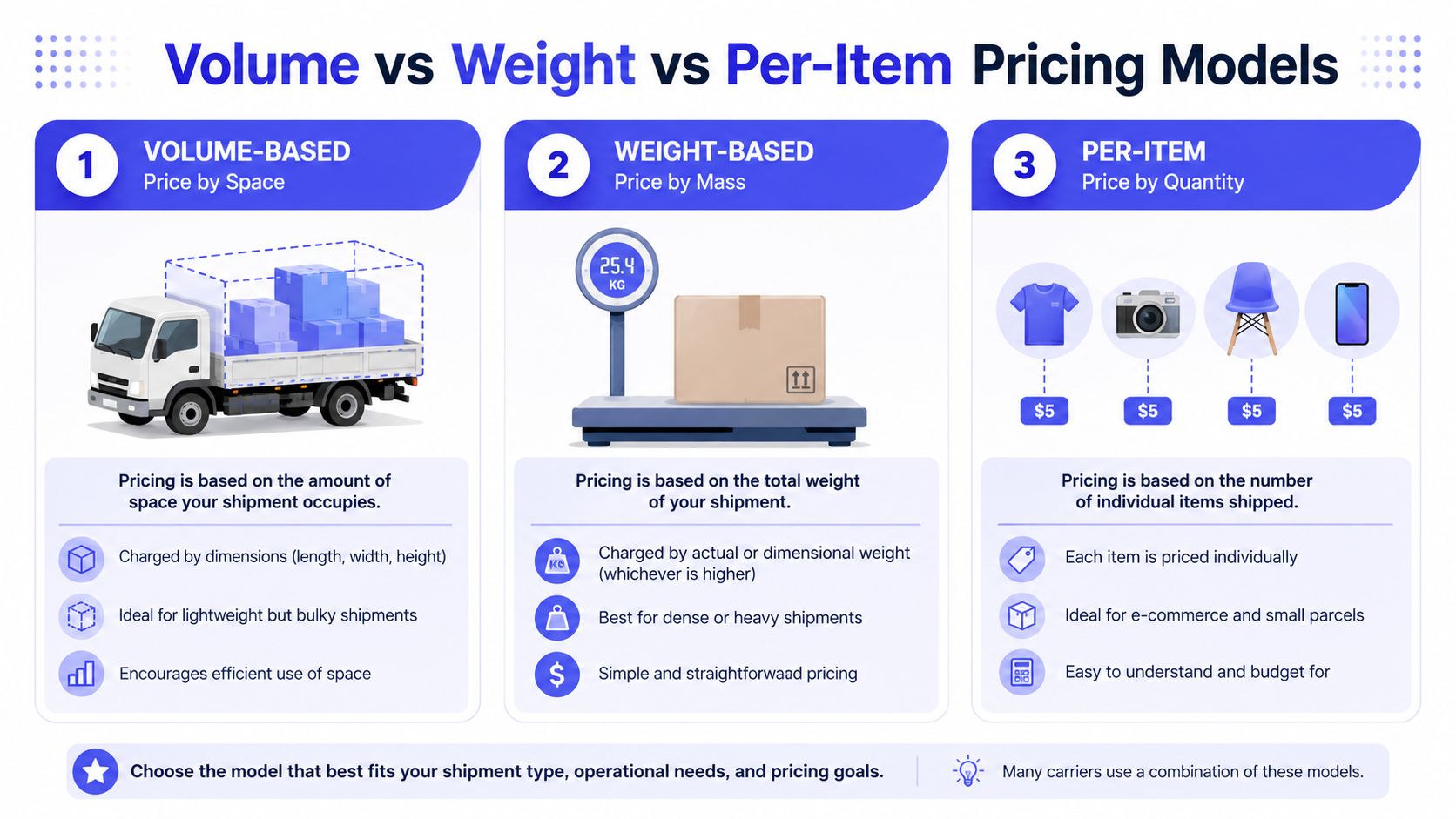
Ask one precise question before booking: “Is this quote based on volume, weight, per item, or a combination, and what can change it on site?”
The same discipline applies to other labor-based services, where clear units and included work matter. This guide to pressure washing rates is a useful comparison because it shows why the pricing unit should be defined before work starts.
Material Types and Seasonal Swings That Change Your Bill
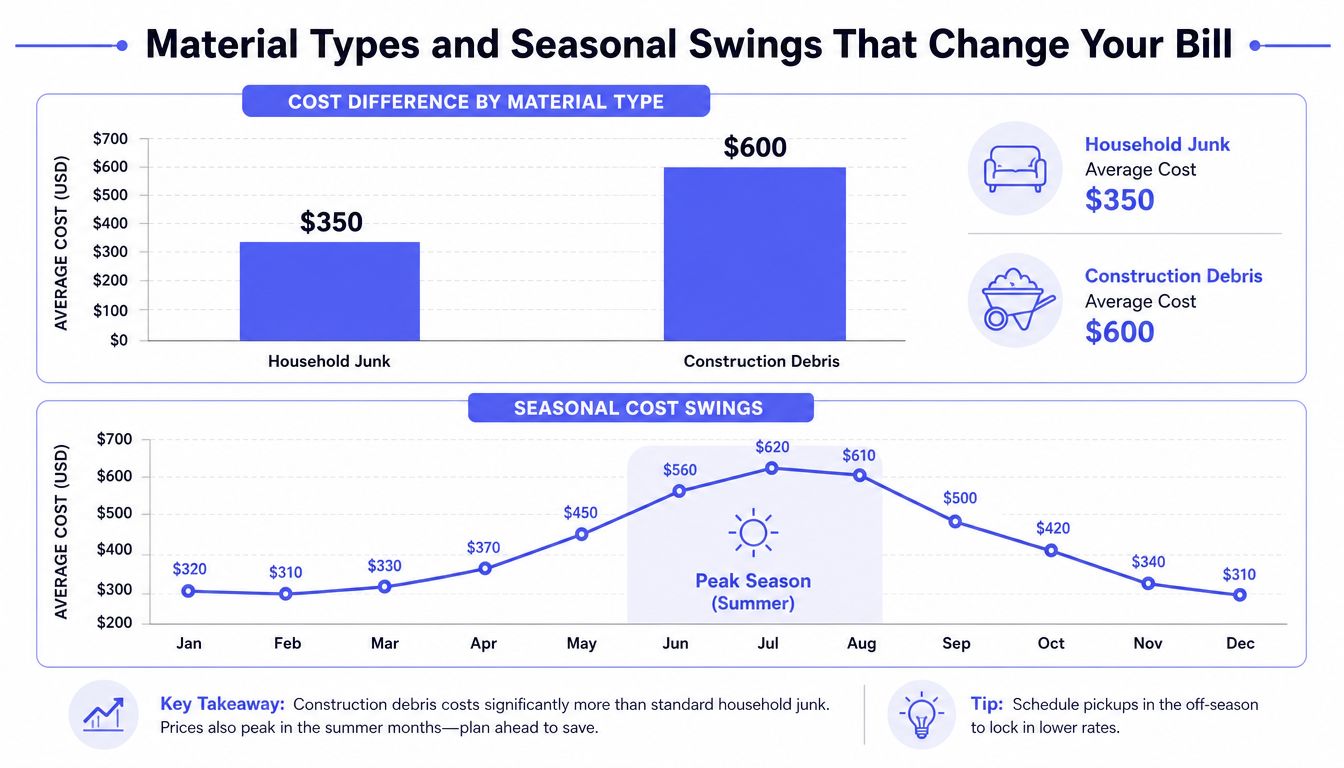
A pile's appearance does not determine its disposal cost. The same truck space can hold lightweight household items or dense concrete, drywall, soil, and masonry, with very different handling and disposal charges. Material type often changes the quote before the truck is full.
Standard household junk is commonly priced around $40 to $60 per cubic yard. Heavy or difficult debris can reach $60 to $80 or more per cubic yard, while construction debris often falls near $60 to $95 per cubic yard. Yard waste is lower in the cited ranges, around $15 to $25, with one benchmark placing it at approximately $18 per cubic yard.
Separate the pile before you call
Sort the load into clear groups before requesting an estimate:
- Household contents: Furniture, boxes, clothing, and general clutter usually fit the ordinary volume model.
- Construction debris: Drywall, lumber, fixtures, and renovation waste may require higher handling and disposal charges.
- Yard waste: Branches, leaves, and similar material can follow a separate disposal route and lower rate.
- Dense materials: Concrete, tile, soil, and masonry can reduce vehicle capacity because weight becomes the limiting factor.
Describe each group precisely. Send photos, but do not rely on photos alone. An image shows volume and access, yet it may not reveal density, contamination, or the disposal route. Ask whether the hauler prices mixed materials separately, because combining everything into one vague category can produce an on-site adjustment.
Timing changes the quote
Seasonality can raise the price even when the job itself stays identical. One analysis found comparable jobs averaged $387 in summer versus $287 in winter, a 34.8% seasonal premium, according to Junk Pro's seasonal pricing analysis.
Providers do not all use the same calendar or premium. If removal is not urgent, request an off-peak appointment and compare it with a peak-season quote before booking.
Local landfill and transfer-station charges create another variable. National pricing ranges cannot capture every local disposal rule, so require the hauler to state whether disposal is included and which materials trigger an adjustment. A quote that identifies those conditions protects your budget better than a low headline price.
DIY Hauling vs Hiring a Professional Service
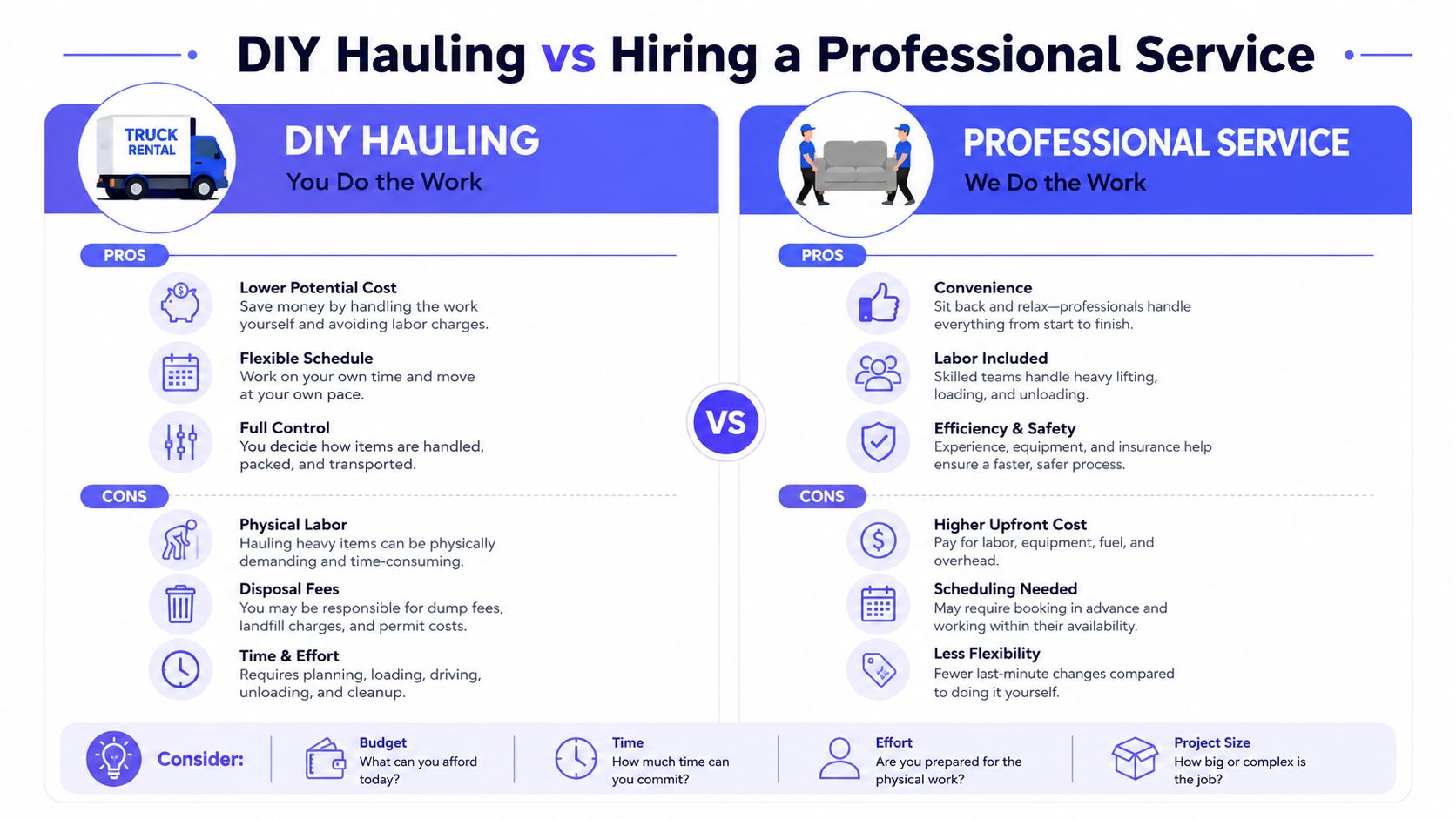
DIY hauling looks cheaper until you count every input. You may need a truck or trailer, fuel, disposal charges, loading help, protective equipment, and time away from work. The physical risk also matters, especially with appliances, awkward furniture, and dense debris.
A professional quote bundles loading, transportation, and disposal into one service price. That upfront figure may be higher than a bare truck rental, but it eliminates several variables that can make a self-haul more expensive than expected.
A practical decision test
For a small single-item pickup, DIY can make sense if the item is already outside, you have a suitable vehicle, and the disposal route accepts it. Hiring a service becomes more attractive when the item is inside the property, requires stairs or disassembly, or is too heavy for one person.
A standard garage cleanout is the middle case. If you can sort, load, drive, and unload efficiently, self-hauling may work. If the pile includes mixed materials, bulky furniture, or multiple disposal destinations, a full-service crew often earns its premium through labor and coordination.
For a full-house or estate clearout, the decision usually turns on time and complexity rather than the truck alone. Repeated trips, sorting, donation handling, and disposal logistics can overwhelm a DIY plan quickly.
Count the hidden DIY costs
List these before deciding:
- Truck or trailer: Include the rental period and any extension charges.
- Fuel: Account for every trip, not just the drive from your property to the disposal site.
- Disposal: Confirm tipping charges before loading. Heavy materials may be priced differently from ordinary household junk.
- Labor: Value your own time and any help you'll need.
- Risk: A damaged vehicle, strained back, or broken doorway can erase the apparent savings.
For a broader comparison of labor-based service pricing, this guide to moving company hourly rates offers a useful reminder: the labor component deserves its own line in the budget.
If the job requires several trips or heavy lifting inside the property, compare the complete DIY cost with one all-in professional quote. Don't compare a rental fee with a finished removal service.
Questions to Ask and Red Flags to Watch For
A low phone estimate is worthless if the crew can change it after arriving. Get the pricing rules in writing before you authorize loading.
Ask these questions first
- What pricing model do you use? Confirm whether the bill is based on volume, weight, per item, hourly labor, or a hybrid.
- Is the quote binding? Ask whether the written price includes labor, loading, transportation, disposal, cleanup, and taxes or fees.
- What can change the price? Require specific examples, such as stairs, long carry distances, disassembly, dense debris, or restricted materials.
- Are you licensed and insured? Request licensing details and proof of active insurance if the answer is vague.
- Where does the material go? A credible provider should explain its disposal, recycling, or donation process without evasive language.
You should also ask whether the crew will reprice the job if the pile differs from the photos. An on-site adjustment can be reasonable when the scope changed. It's not reasonable when the company uses a deliberately low estimate to get through the door.
Walk away from these warning signs
- Cash-only demands: A provider that refuses normal payment records creates unnecessary risk.
- No written estimate: Verbal promises are difficult to enforce.
- Unmarked vehicles: Professional presentation isn't everything, but secrecy about the operator is a warning.
- Vague disposal answers: You deserve to know whether prohibited or hazardous materials are accepted.
- Pressure to decide immediately: A legitimate estimate should stand on its terms without intimidation.
Before relying on online ratings, use this guide to spotting fake reviews to evaluate whether the feedback looks genuine, recent, and tied to the actual business.
Practical Ways to Lower Your Junk Removal Bill
The best savings come from reducing billable volume, clarifying materials, and choosing a quote structure that fits the job.
- Sort before requesting quotes: Remove donations, recyclables, and items another service can handle. A smaller pile may qualify for a lower load tier. Ask the hauler to reprice the revised volume before booking.
- Separate heavy debris: Keep concrete, soil, masonry, and construction waste together. This lets the provider identify disposal requirements instead of treating the whole load as an unknown mixed pile.
- Book during slower periods: Ask about off-peak availability if your schedule is flexible. Seasonal demand can affect quotes, so compare dates rather than assuming the first available appointment is cheapest.
- Bundle small jobs: Combine a basement pickup, garage pile, and curbside items in one visit. For example, adding a curbside furniture pickup to a planned garage cleanout may avoid a separate dispatch charge. Ask for one flat-rate quote covering the combined load.
- Send complete photos: Show every item, the access route, stairs, and any long carry distance. Include an approximate volume and identify dense or restricted materials. Accurate details reduce surprise repricing.
- Compare pricing models: Per-item pricing can suit one appliance, while volume pricing may cost less for a mixed cleanout. Request the same job under both models when the provider offers that choice.
Before loading starts, get the maximum price in writing, confirm surcharges, and ask whether the quote is flat-rate or subject to on-site changes. Do not authorize work until the final number is clear.
Hand Vetted Co. connects you with one verified professional instead of sending your information to multiple competing haulers. Visit Hand Vetted Co. to request a qualified match and start with a clearer quote conversation.